Never Hesitate to Meditate

Yoga was the first thing that helped me to change my life. My practice led me to meditation, which I now dedicate 15 minutes everyday to cultivating. Yoga and meditation have been two constants that have helped me to stay sane during this self-quarantine and I am hoping that it will help you. Anytime I suggest meditation to someone, the first thing they say is I can’t meditate, my mind has too much chatter or I can’t sit for that long. Trust me, I never thought I would be able to meditate because my mind is constantly racing, but meditation was just what I needed. I had to learn to let go of expectations and judgement and this meant if my mind was quiet for 5 seconds during the 15 minutes, that’s an accomplishment. There is a reason it’s called a practice and not a perfect. Reading “How to Meditate: Secrets to the Easiest and Most Effective Meditation Technique” by Lary Terkel was one of the first steps that I took on my journey to meditation. This book is perfect for beginners and I share one of my favorite techniques with you under the pranayama section.

I also found a meditation partner, someone to hold me accountable. We agreed a couple years ago to start meditating for 15 minutes everyday and we would text one another a thumbs up when we were done. When someone is holding you accountable, you feel more compelled to make the time rather than the excuse. I don’t think I would have made meditation a daily habit if it wasn’t for my friend.

Preparing a Space

Let me just start by saying you can meditate anywhere and with nothing but yourself. The main thing is that it’s a quiet space away from interruptions where you can get comfortable. One of my favorite places to go is my local park. I grab my headphones, phone (for my meditation app or music) and a blanket, find a nice tree to sit under and meditate out in nature.

Here is a list of things that I use to help make my space a little more peaceful and help bring me into meditation mode.

  • Cleanse yourself by smudging with Sage, Palo Santo or Cedar. Cedar is a little different because it doesn’t come in a stick. With Sage and Palo Santo I like to light it, by holding it under the flame for at least 20 to 30 seconds or until it lights. I start by swirling the smoke around my heart center using circular motions. I then move it up to my head, circling the smoke around my head and then down the entire length of my body, front and back. I allow the smoke to surround these areas all while maintaining the intention that I am cleansing any and all negativity from my body and replacing it with love, light and peace. The most important thing with smudging is just the intention.
  • Light candles
  • Apply or Diffuse Essential Oils
    • Serenity (Doterra Blend)
    • Frankincense
    • Myrrh
    • Sandalwood
    • Neroli
    • Vetiver
    • Cedarwood
    • Lavender
    • Peace (Doterra Blend)
    • Align (Doterra Blend)
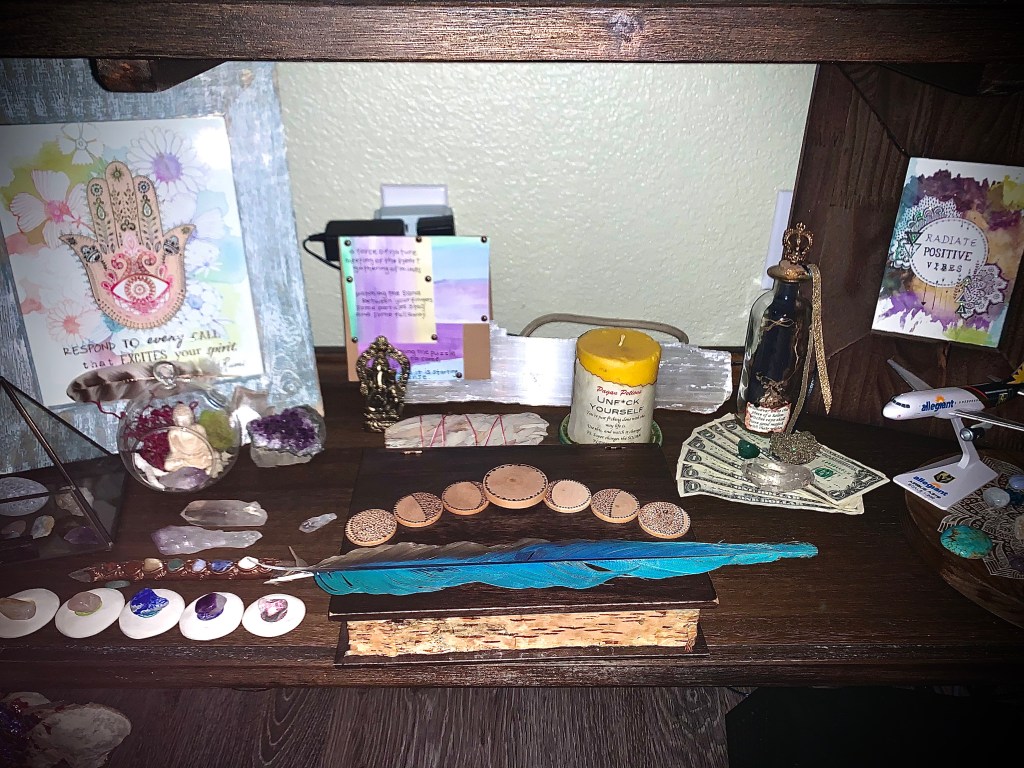
  • Build an alter with some of your favorite photos, crystals and symbols of what you are manifesting in your life. Below is a picture of my altar on the bottom shelf of my book case to give you some inspiration on what to include.
  • Have a cushion or blanket to place under your sacrum and help you get more comfortable.
  • Crystals
    • Clear Quartz
    • Amethyst
    • Black Tourmaline
    • Rose Quartz
    • Selentite

Different people and different books will recommend contradictory stones and essential oils to use for various things. I’ve listed above some of my personal favorites but this doesn’t mean they are the best ones for everyone. When it comes to crystals and oils, much of choosing the right one is intuition. You can walk into a crystal store and one stone will just speak to you, you will be drawn to it for no explainable reason. The same can happen with oils. You just always find yourself gravitating to a certain scent, but it’s probably because that is what your body needs at this moment. If you have a crystal or oil at home that you love, meditate with it. There really are no rules.

Yoga

Fun Fact: Yoga was created to help people condition their bodies to be able to sit through meditation. So the ultimate goal of yoga is not about handstands and scorpion pose, but rather meditation. Quieting the mind and bringing stillness to the body. For this blog post I will switch things up share the yoga poses first and then my favorite pranayama method for silencing my internal dialog since this is the order you will use them.

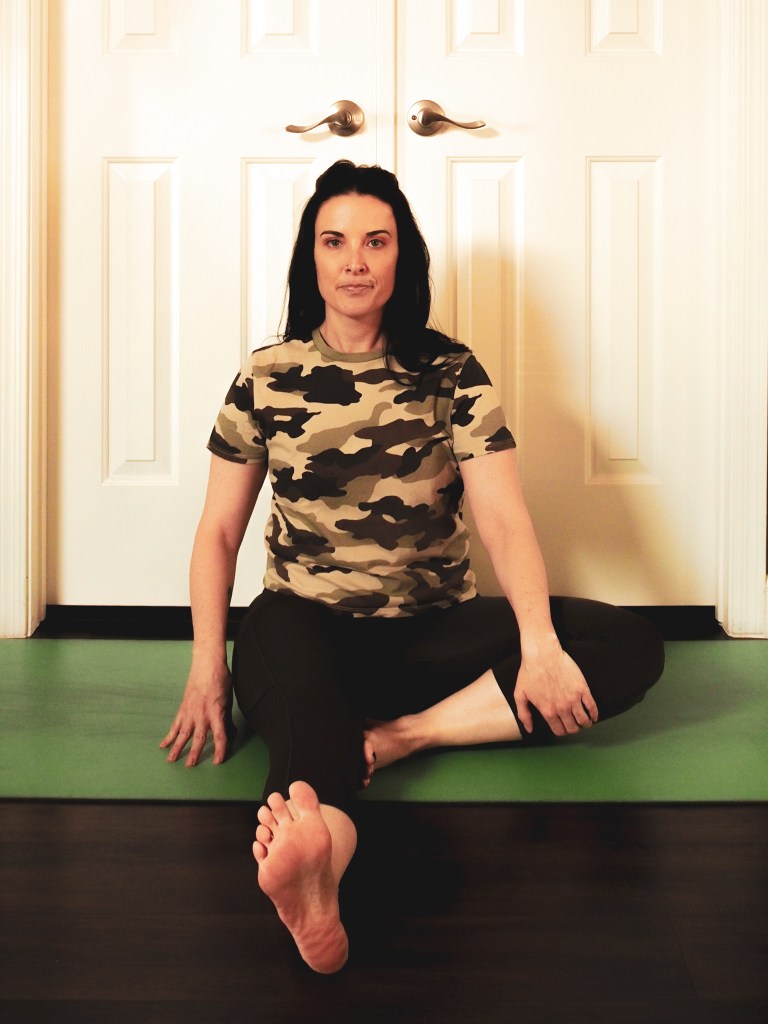
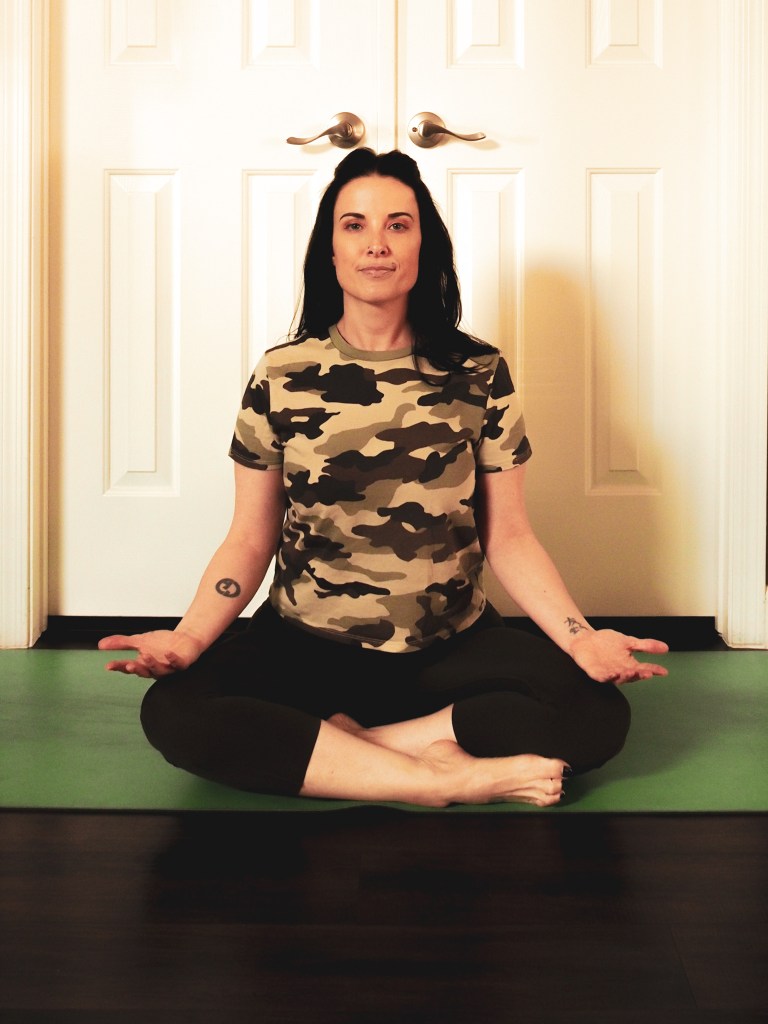
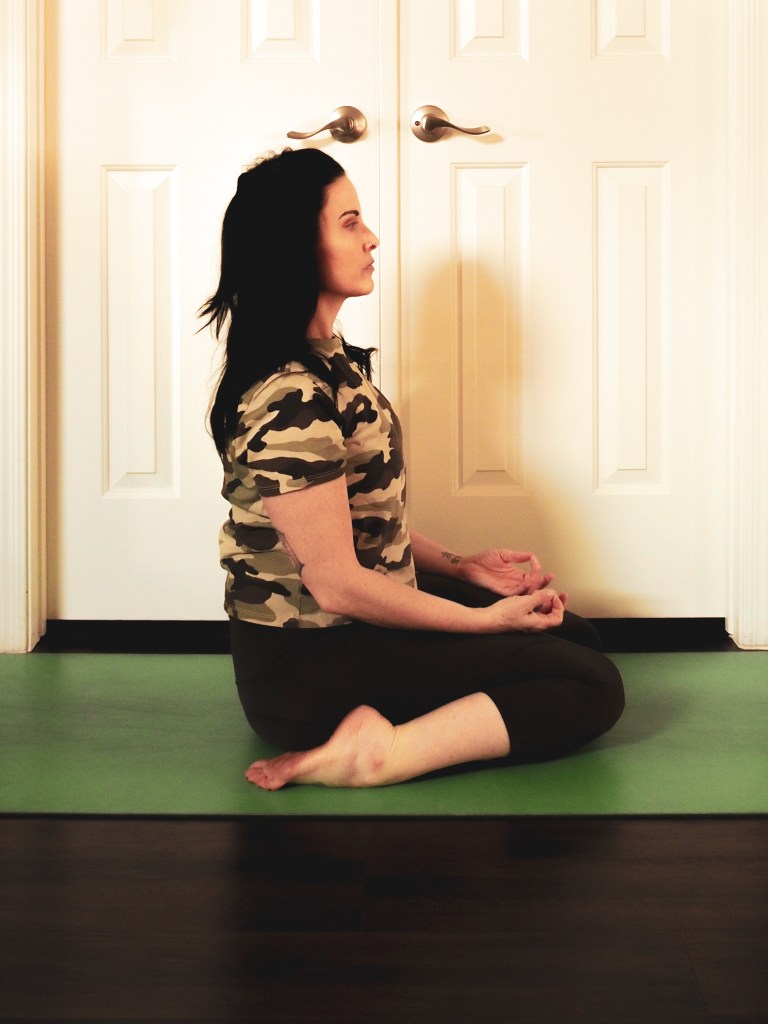
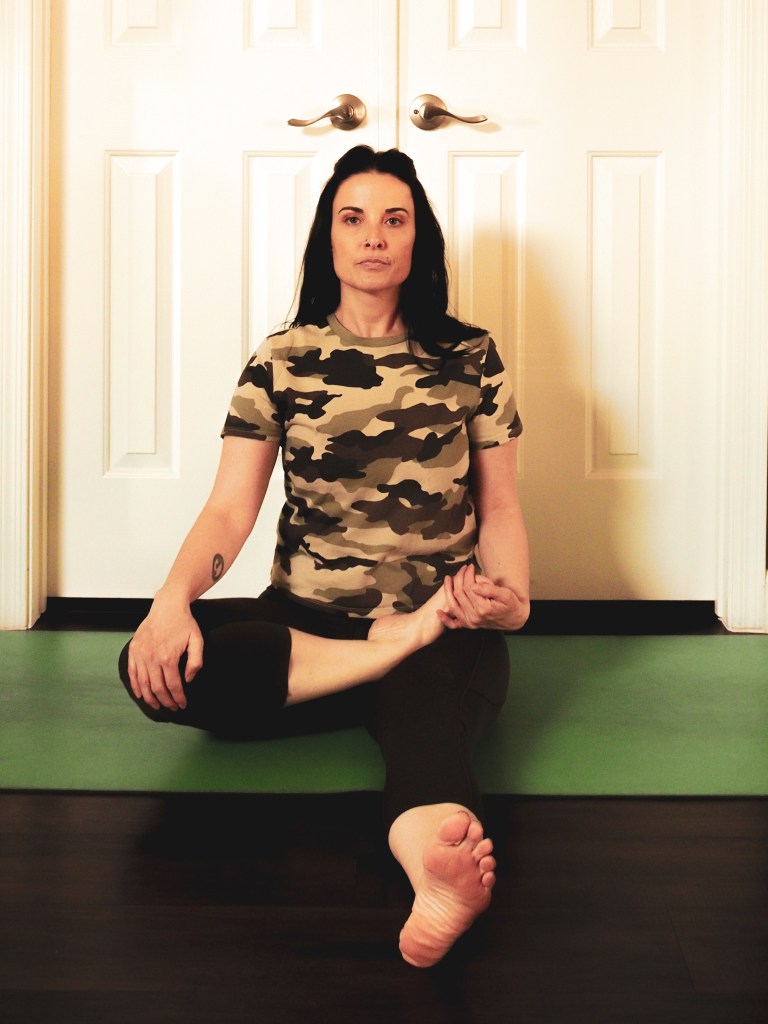
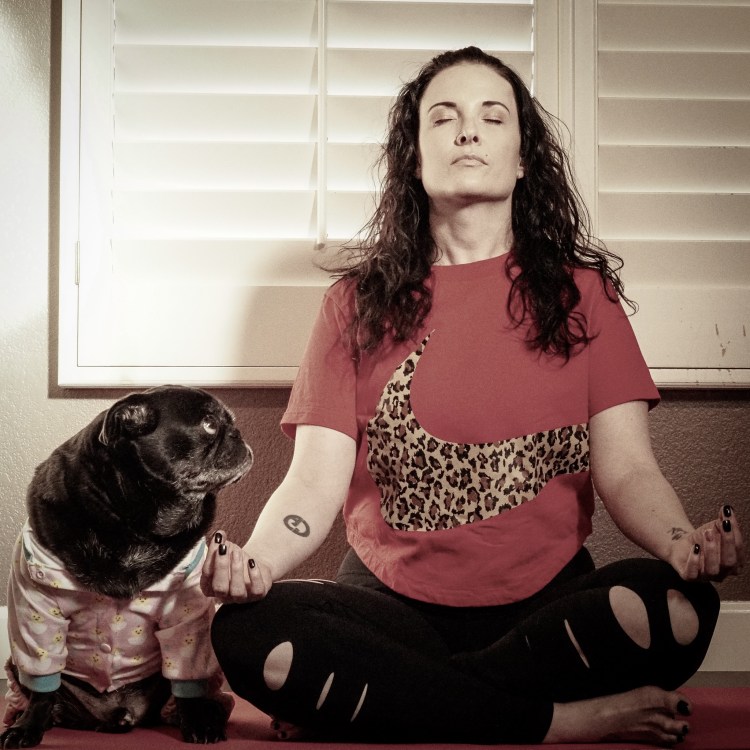
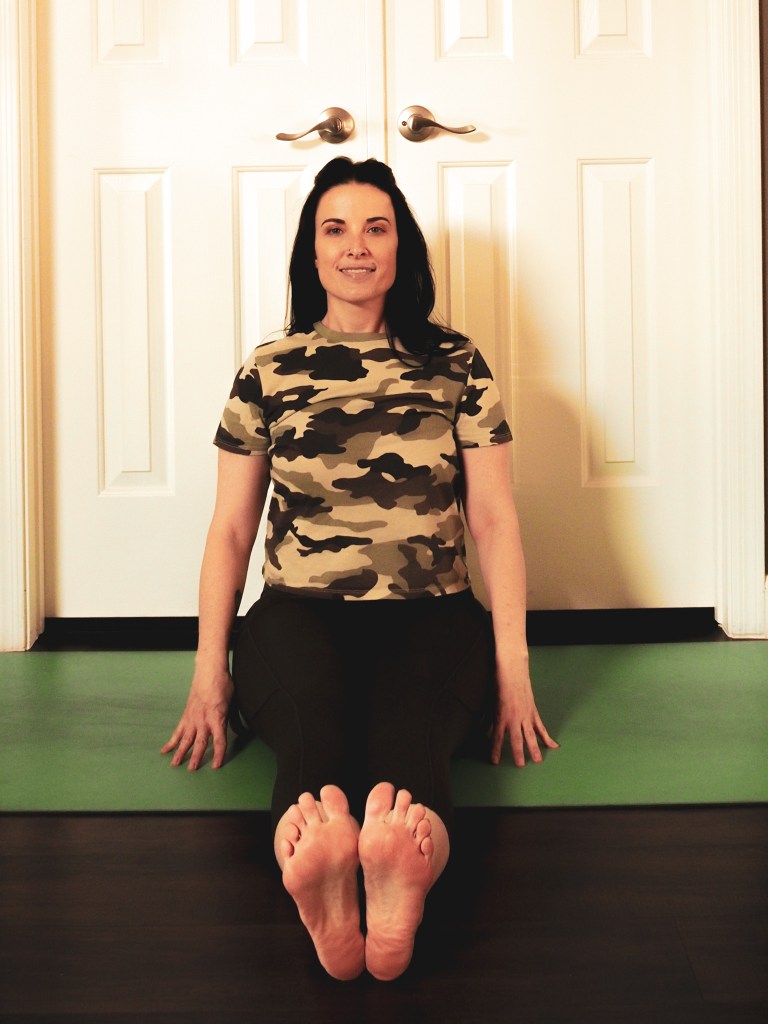
Easy Seated (Sukhasana) is a simple cross-legged sitting position. For those new to yoga and new to meditation this is a great pose to start with.

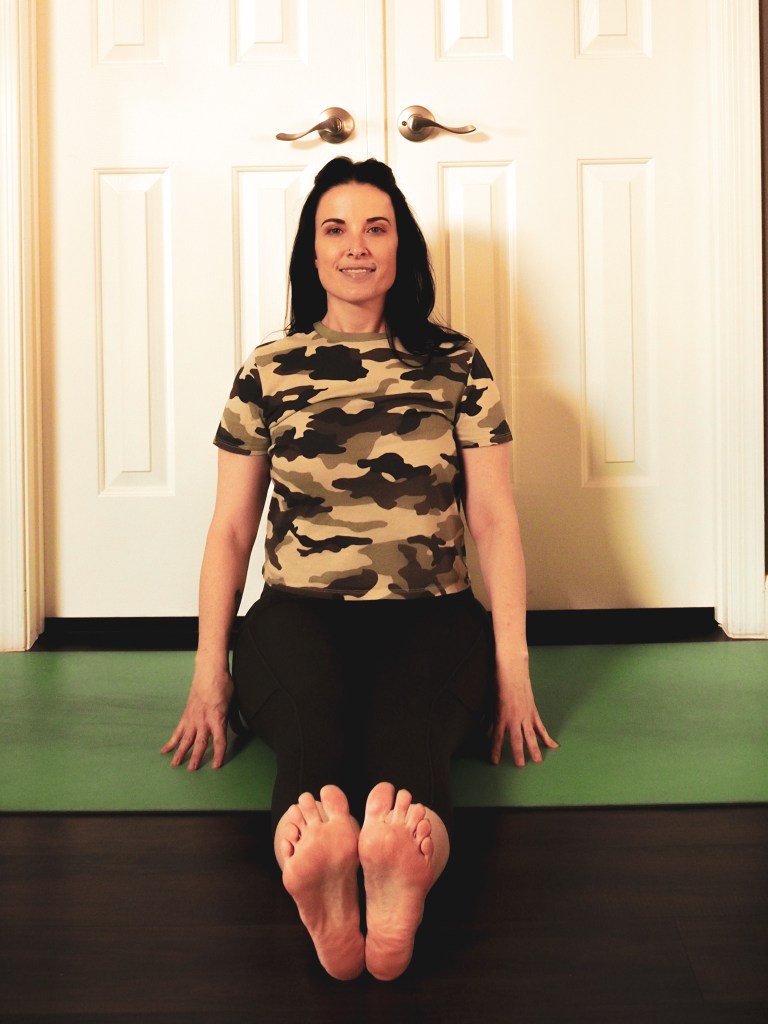
  • Sit on the ground with the legs extended out in front of you in Staff Pose (Dandasana).
  • Sit up nice and tall, letting the crown of the head press up toward the ceiling.
  • Arms at your sides, shoulders relaxed and away from the ears (Image 1).
  • Bend the left leg, placing the soul of the foot along the inner thigh of the right leg (Image 2).
  • Bend the right leg and bring the foot up and let it rest in front of the left shin.
  • The left foot should be tucked into the crook of the right knee (Image 3).
  • You can place a folded blanket under your sit bones to elevate your torso.
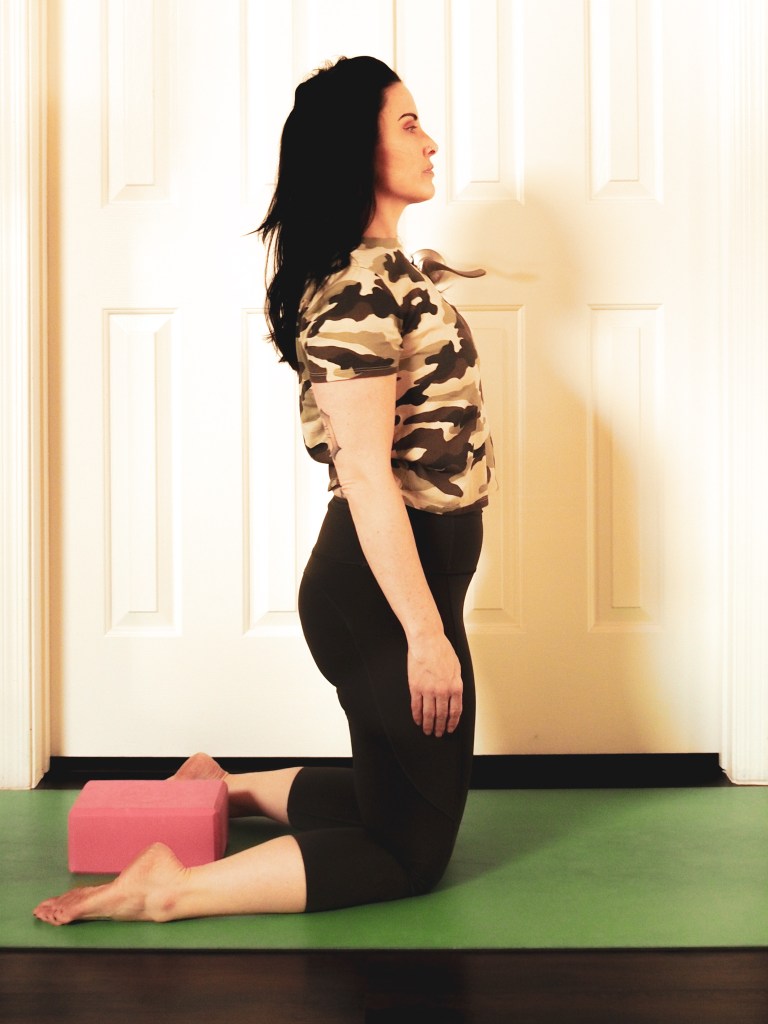
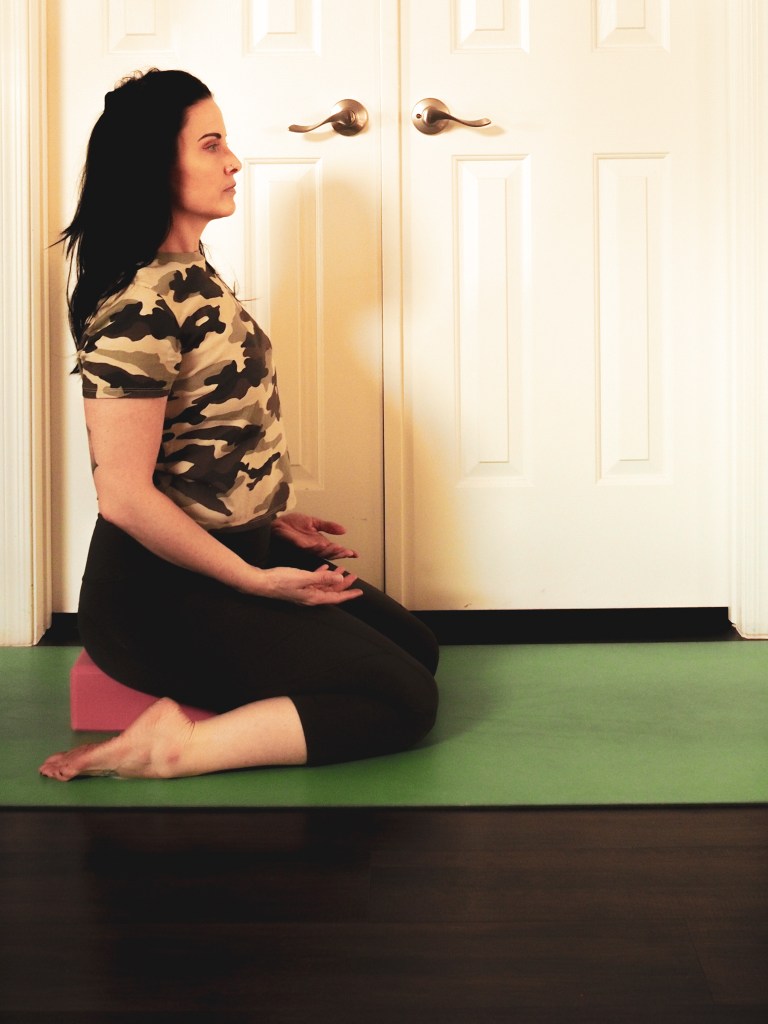
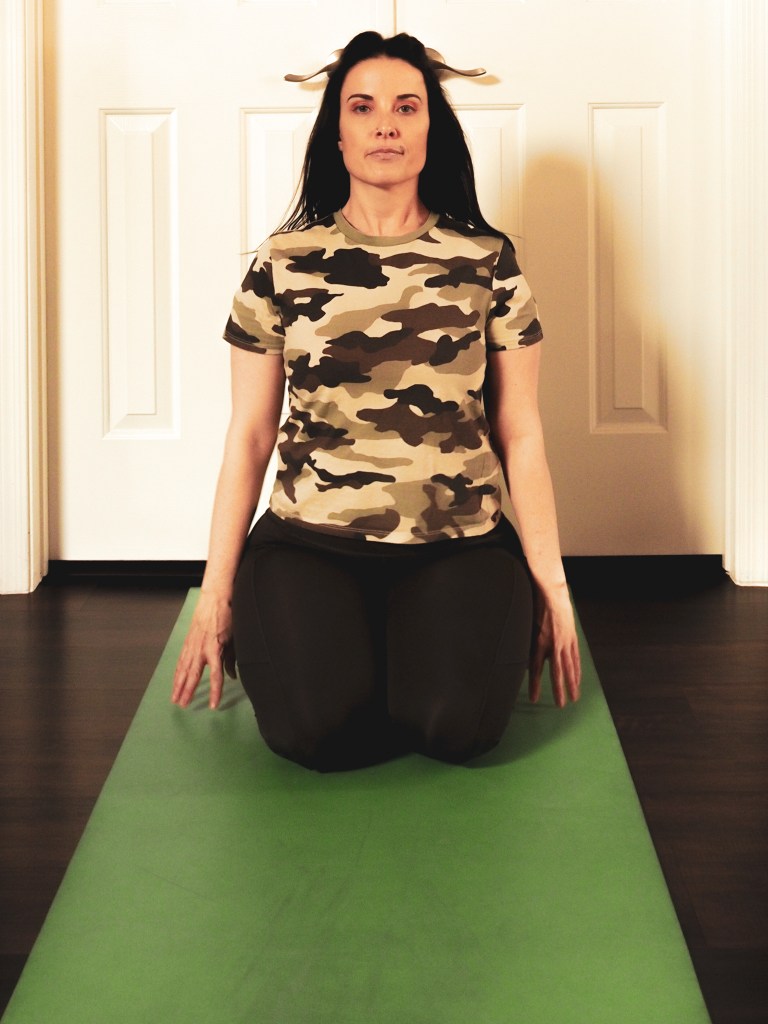
Hero Pose (Virasana) is great pose for meditation that also offers the benefit of stretching the feet, ankles, quads and hips. This may not be comfortable for people with knee or ankle injuries and should be approached with caution.

Thunderbolt (Vajrasana) is a variation of Hero Pose where you sit back on your heels instead of between them. You can play around with both poses and see which one feels best for you.

  • Start by kneeling with the toes untucked and the hips over the knees (Image 4).
  • Keep the knees together and take the feet just wider than hip distance apart (Image 5).
  • Lower the seat down, sitting back on the mat with the feet along side by your hips (Image 7).
  • If your seat doesn’t comfortably reach the mat, place a block or rolled blanket between your feet before you lower down (Image 6).
  • If you experience any pain in the ankles, place a rolled blanket under them before lowering down.
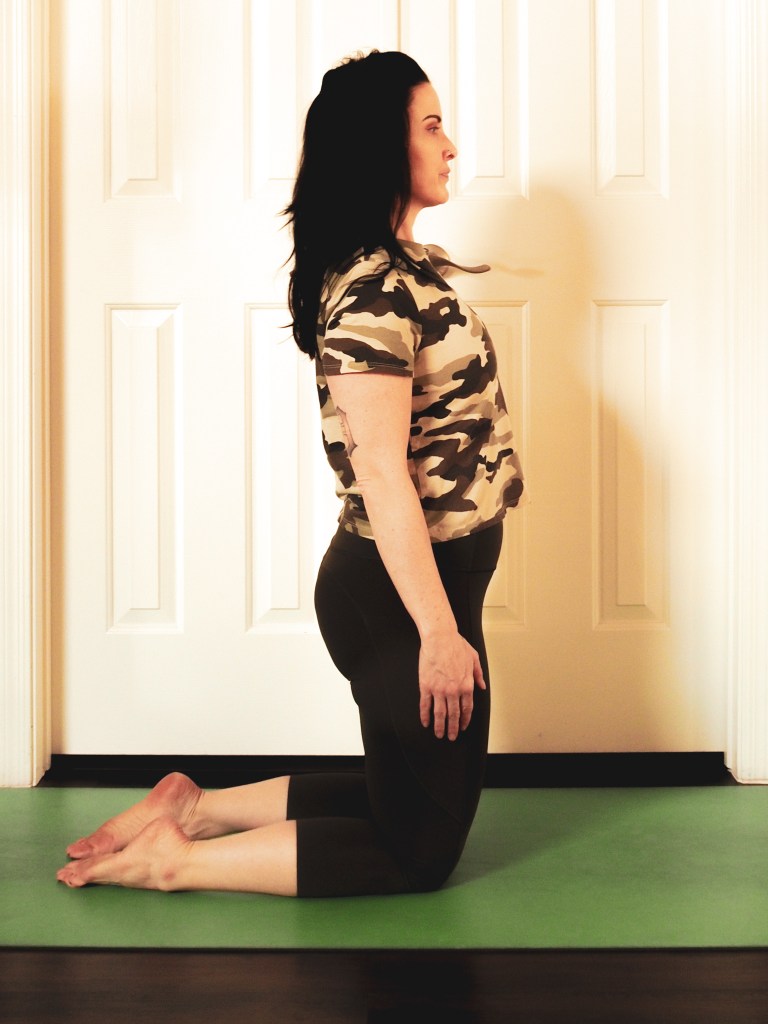
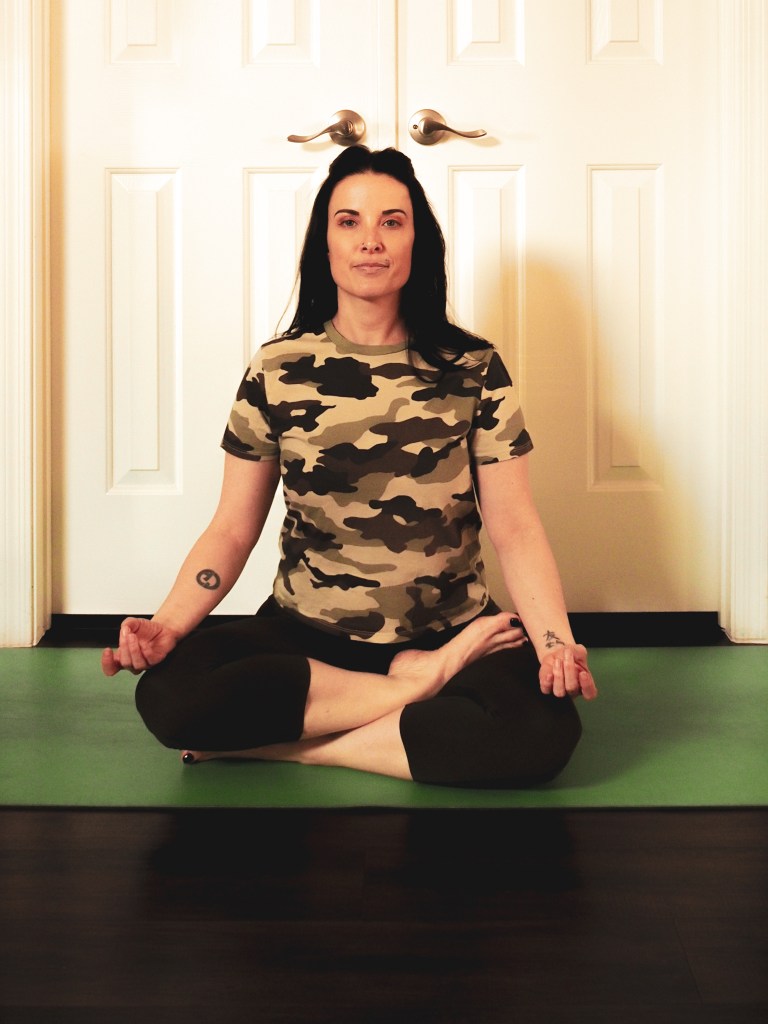
Half Lotus (Ardha Padmasana) is a more advanced yoga pose that should only be practiced by those with some yoga experience. Even if you are not ready for this pose, it is a great goal to work toward.

  • Sit on the ground with the legs extended out in front of you in Staff Pose (Dandasana).
  • Sit up nice and tall, letting the crown of the head press up toward the ceiling.
  • Arms at your sides, shoulders relaxed and away from the ears (Image 8).
  • Bend the right leg, placing the right ankle on your left thigh, bringing it as close to the crease of your leg as comfortable (Image 9).
  • Bend the left leg and tuck the left foot under your right knee (Image 10).
  • After staying in this pose for 5 to 10 breaths, slowly extend the right leg out in front of you followed by the left leg.
  • Switch sides so that your left leg is on top of your right thigh and stay here for 5 to 10 breaths.
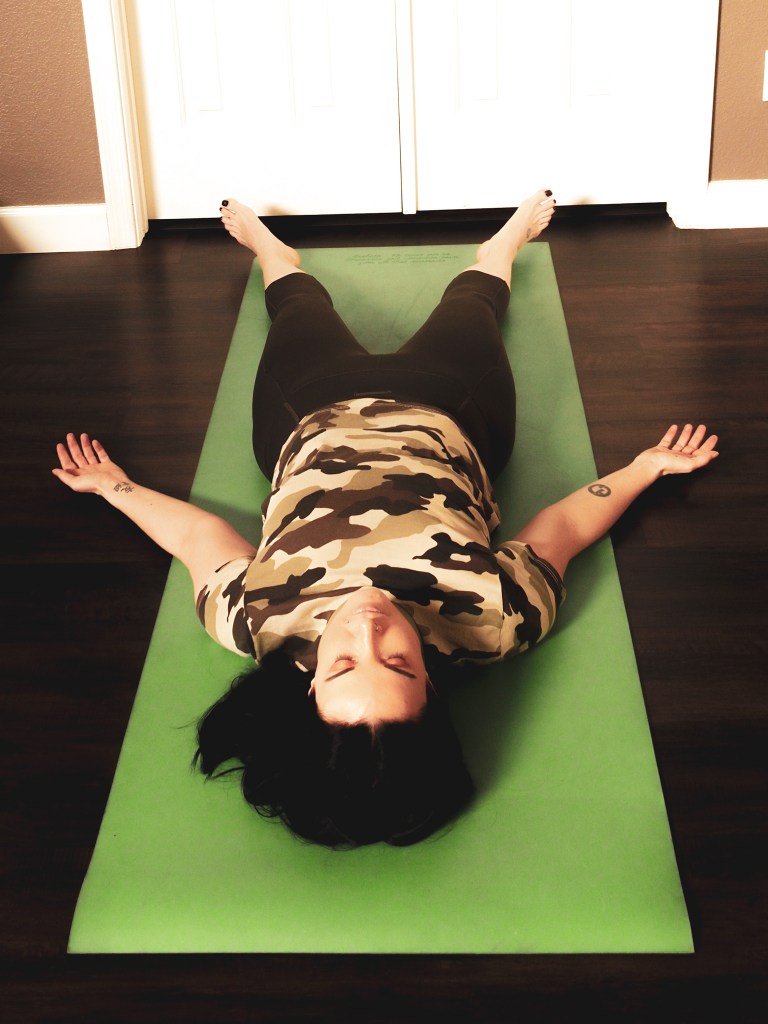
Corpse Pose (Savasana) – I’m not going to lie, when I meditate my favorite pose is savasana. I find that my mind wanders less if I’m not focusing on my back pain, feet falling asleep or butt cheeks tingling.

For additional cues for getting into Corpse Pose (Savasana) click here to see my blog about keeping calm.

Corpse Pose is said to be one of the most difficult postures to master. It is far more than just a chance to relax after a rigorous class; it is a chance for us to practice a type of conscious dying, a letting go of the things that no longer serve us. Savasana symbolizes not only the death of our physical practice, but the release of the tension in our bodies and the clutter in our mind which cause us anxiety and stress. As we allow our bodies and minds to relinquish any attachment that we may have to our problems, our self-doubt, our worldly possessions, we go through a process very similar to the one that we will all face when we die. This letting go in savasana allows us to release our preconceived notions of who we think we are or should be and enables us to focus on our core selves, our soul, which will live on long after our physical bodies are gone. In corpse pose we surrender, not only to death but to the unknown and to the changes we need to make in our lives. It allows us to release and prepare for our rebirth.
After emerging from savasana, it is common to roll onto our right side coming into the fetal position. Much like corpse pose signifies death, the fetal position takes us back to our bodies at the time of our birth symbolizing our resurgence. The fetal position is our reminder that each day is a blank page where we are free to start living the life we’ve always wanted. The past no longer exists and the future is never promised. The only thing that is real is this moment right here, right now. I challenge you to make this day count. Make today the best day it can be filled with new beginnings and happy endings.

Pranayama

This one is not necessarily a type of breath, but rather a little trick that I learned from the meditation book I mentioned above. For me, keeping my monkey mind from wandering is hard work. Once you are settled into the meditation pose that works best for you, you will close your eyes and start to focus on the breath. Start with one deep inhale through the nose, open up the mouth and sigh out the breath completely. Imagine you are on a swing. As you inhale, the swing is swinging forward. You are extending your legs out in front of you, leaning back and smiling big. As you exhale, envision the swing swinging back. You are bending your knees, pressing your chest toward the sky. Continue to imagine this image along with your breath for the duration of your meditation. If your mind starts to wander, acknowledge the thought and bring your focus back on the breath and back to your swing.

Meditation

If your are still finding it difficult to meditate, try a guided meditation. You can look for guided meditations offered in your area, many of them will be at yoga studios or a meditation center (yes, this is a real thing). You can also find audio recordings on your computer or phone so you can meditate in the comfort of your own home, favorite park or special place. Lizzo recorded a mass guided meditation that she shared on Instagram to help people calm down during the Coronavirus. Click here to listen to her beautiful gift to the world.

Click here for some guided meditations offered around Las Vegas (scroll down to All Results not the Sponsored Results).
Keep Calm and Come for the Savasana

With so much craziness surrounding us right now, I wanted to share these next two posts with everyone in hopes that it can give you some peace. We can all use a good calming ritual in our life, not just for times of excess stress, but as a daily practice. Whether we are preventing anxiety and stress or trying to relieve the overwhelming feelings we are currently having, these are habits we can always turn to. I’m a Virgo that tends to stress out and overthink everything, I can even manage to overthink my overthinking. Here are a few tried and true tools that I use to calm down. I hope you find them helpful!

Pranayama

Alternate Nostril Breathing or Nadi Shodhana can take some getting used to, but once you do it is a great calming breathing exercise. I always recommend blowing your nose before you get started because this one tends to get your sinuses activated.

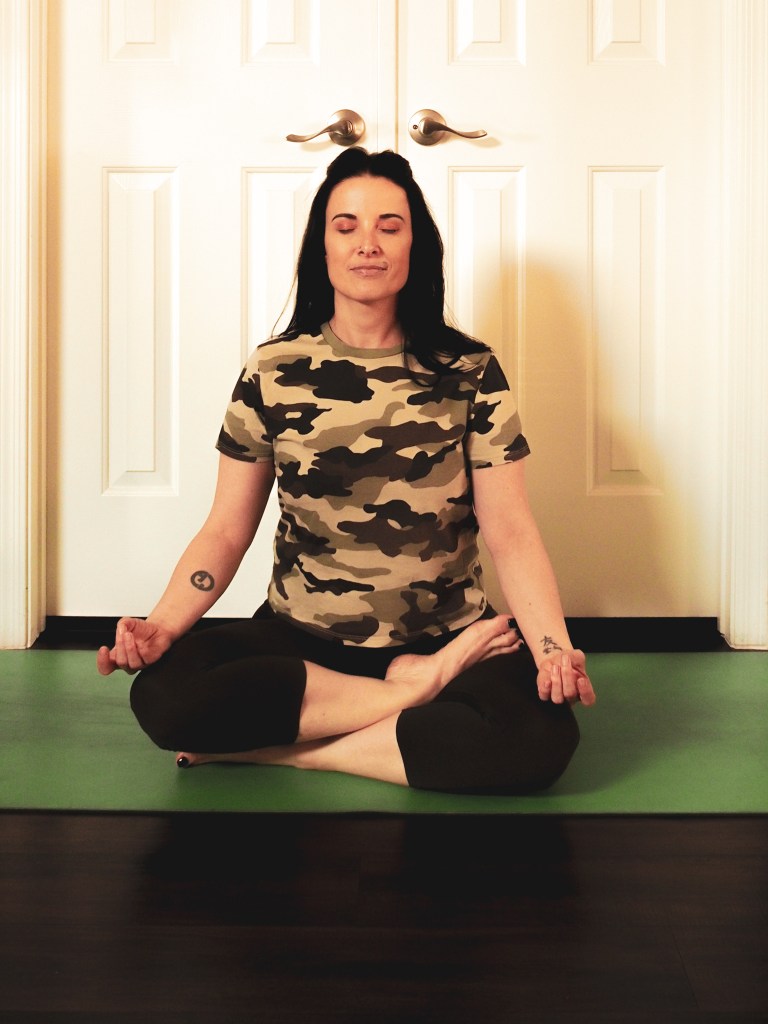
  • Come into an easy seated pose either in a chair or cross-legged on the floor.
  • Relax the shoulders and sit up nice and tall with the crown of the head pressing up toward the ceiling.

Right-Handed People:

  • Rest your left hand on top of the left thigh if you are sitting in a chair or on the left knee if you are sitting cross-legged, with the palm face up.
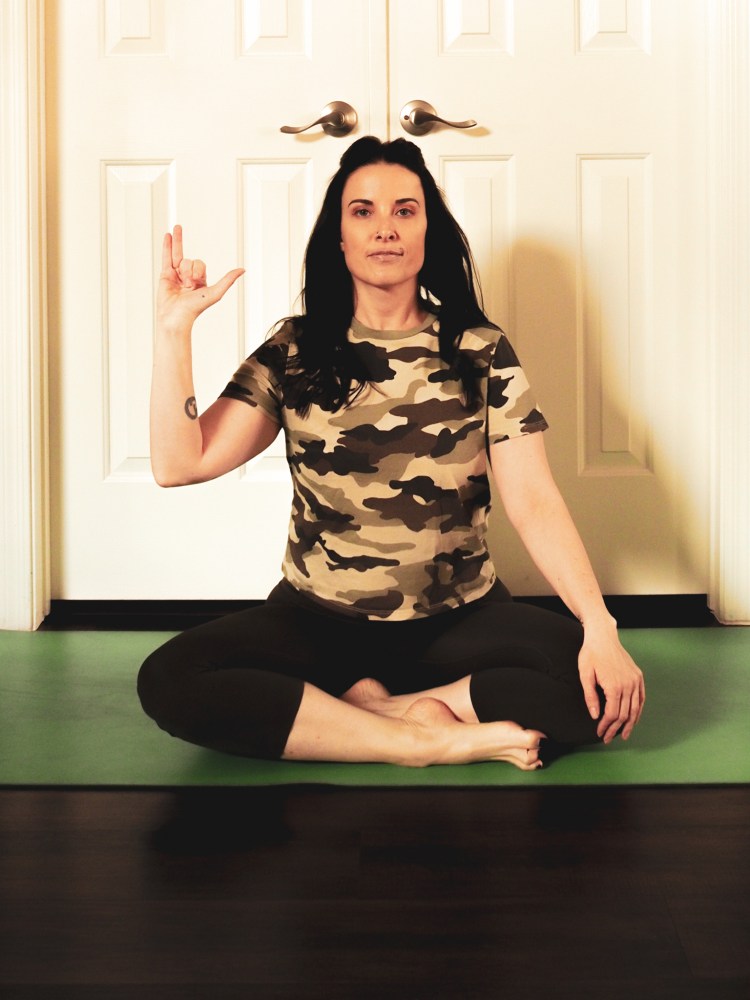
  • Bring your right hand up and fold down the index and middle finger (Image 1).
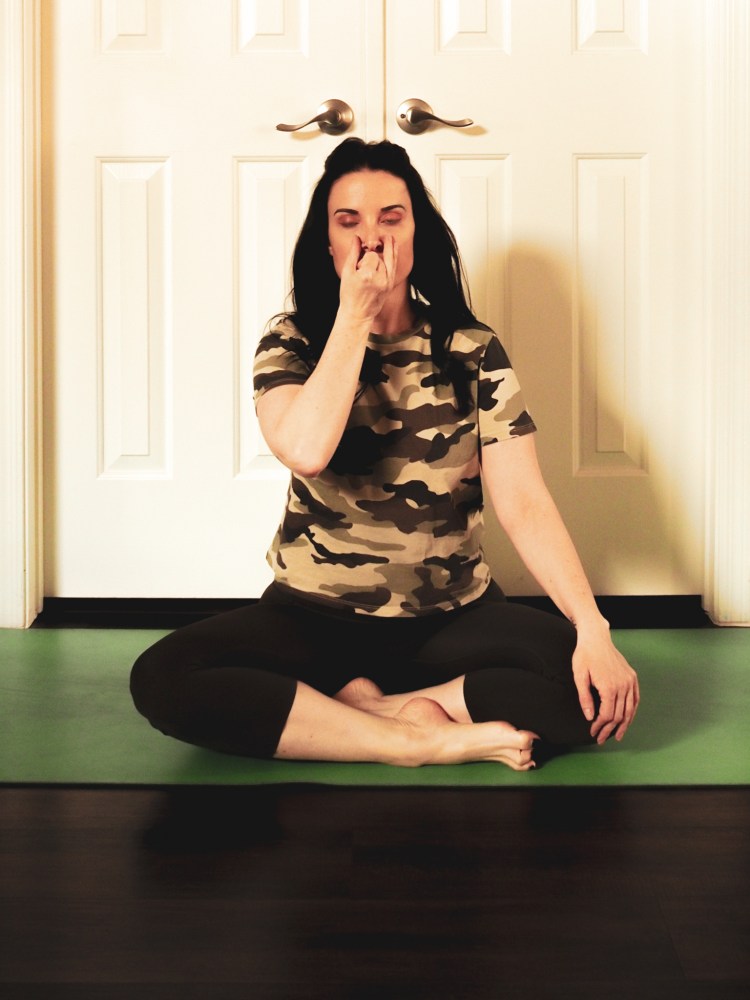
  • Rest your thumb on the right nostril and the ring and pinky fingers on the left nostril (Image 2).
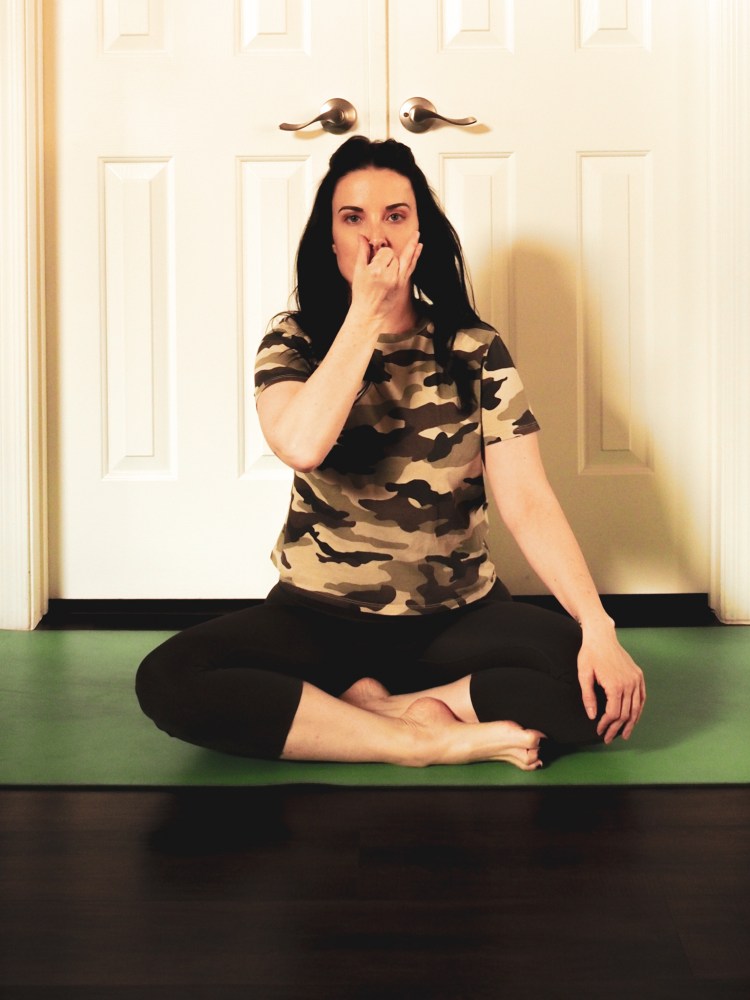
  • Gently close off the right nostril with your thumb (Image 3).
  • Inhale through the left nostril.
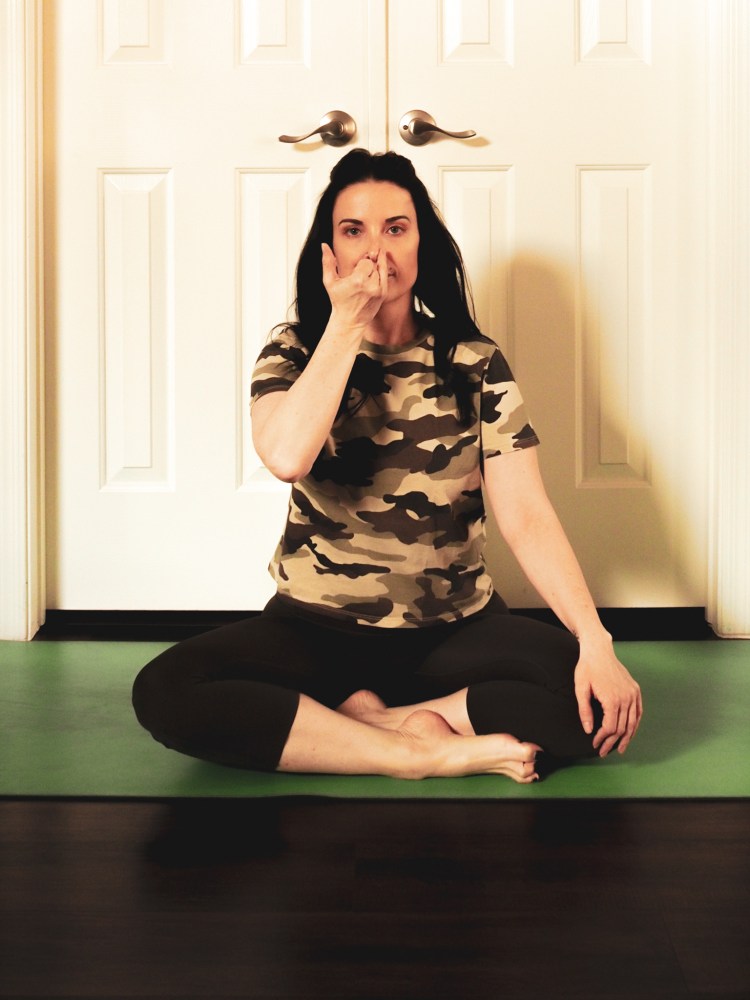
  • Gently block off the left nostril with the ring and pinky fingers (Image 4).
  • Exhale through the right nostril.
  • Inhale through the right nostril.
  • Gently block off the right nostril with the thumb.
  • Exhale through the left nostril.
  • Inhale through the left nostril.
  • Gently block off the left nostril with the ring and pinky fingers.
  • Exhale through the right nostril.
  • Inhale through the right nostril.
  • Gently block off the right nostril with the thumb.
  • Exhale through the left nostril.
  • You may continue to breath like this for five more rounds, but you will end the breathing exercise on the exhale through the left nostril.

Left-Handed People:

  • Rest your right hand on top of the right thigh if you are sitting in a chair or on the right knee if you are sitting cross-legged, with the palm face up.
  • Bring your left hand up and fold down the index and middle finger.
  • Rest your thumb on the left nostril and the ring and pinky fingers on the right nostril.
  • Gently close off the right nostril with your ring and pinky fingers.
  • Inhale through the left nostril.
  • Gently block off the left nostril with the thumb.
  • Exhale through the right nostril.
  • Inhale through the right nostril.
  • Gently block off the right nostril with the ring and pinky finger.
  • Exhale through the left nostril.
  • Inhale through the left nostril.
  • Gently block off the left nostril with the thumb.
  • Exhale through the right nostril.
  • Inhale through the right nostril.
  • Gently block off the right nostril with the ring and pinky fingers.
  • Exhale through the left nostril.
  • You may continue to breath like this for five more rounds, but you will end the breathing exercise on the exhale through the left nostril.

For more information on the background and benefits of Nadi Shodhana, click here.

Yoga

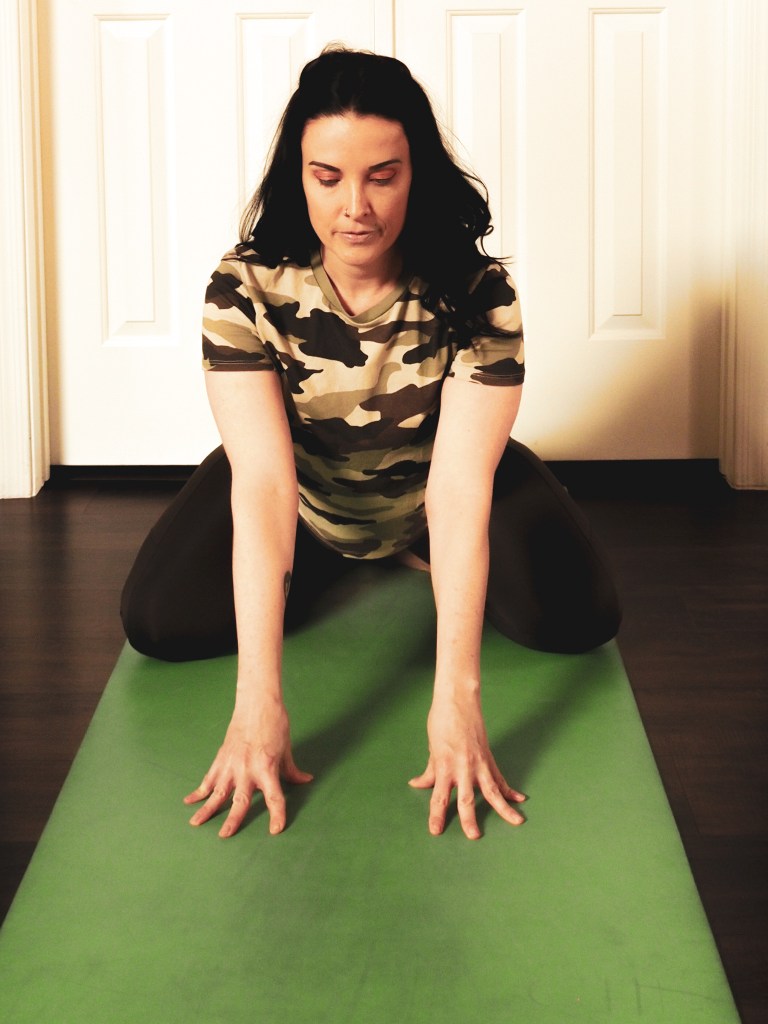
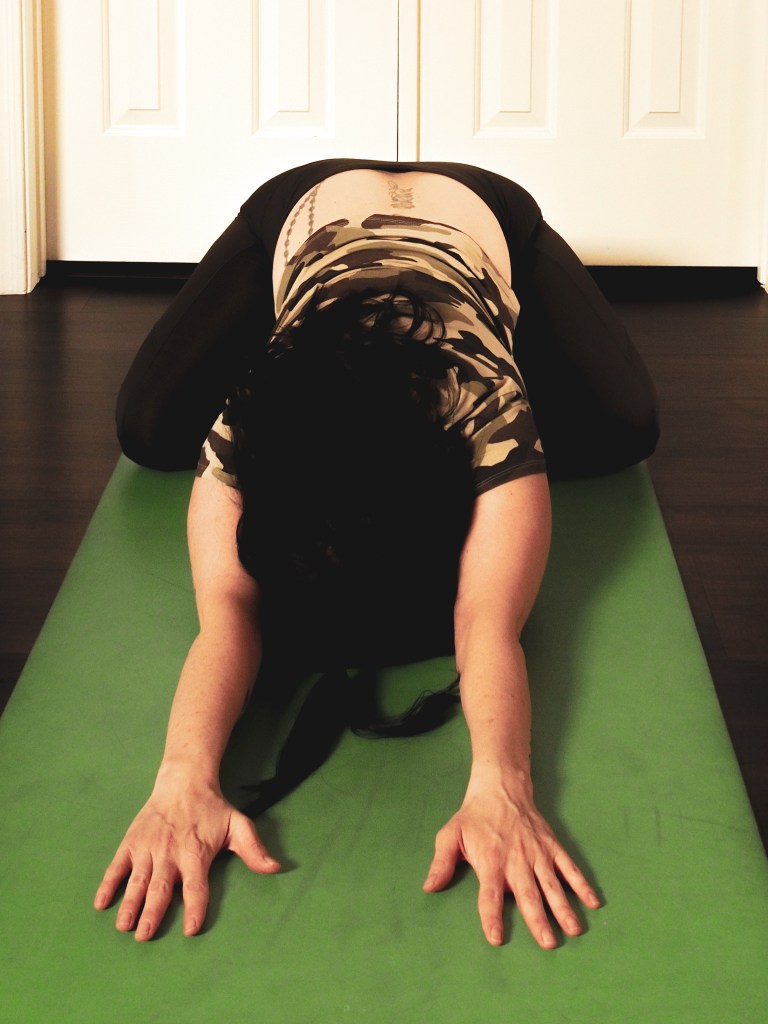
Child’s Pose (Balasana) is great for calming as well as digestion. Closed-legged child’s pose keeps the spine convex or rounded over the legs, giving the back a nice lengthening and stretch.  If you feel any back pain, come out of it slowly and either modify or abandon it altogether.

*Do not do this version if you are pregnant. Avoid child’s pose if you have any knee injuries. 

  • Start out kneeling on the mat and sitting back on the heels (Image 5).
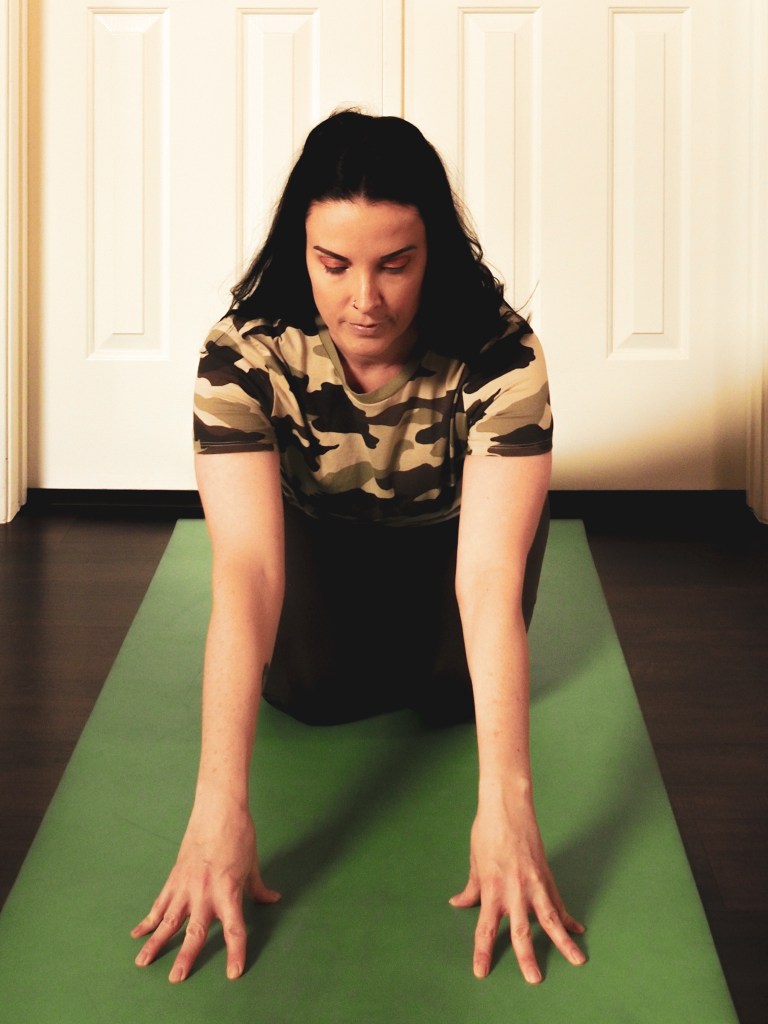
  • Bring the hands down onto the mat in front of you (Image 6).
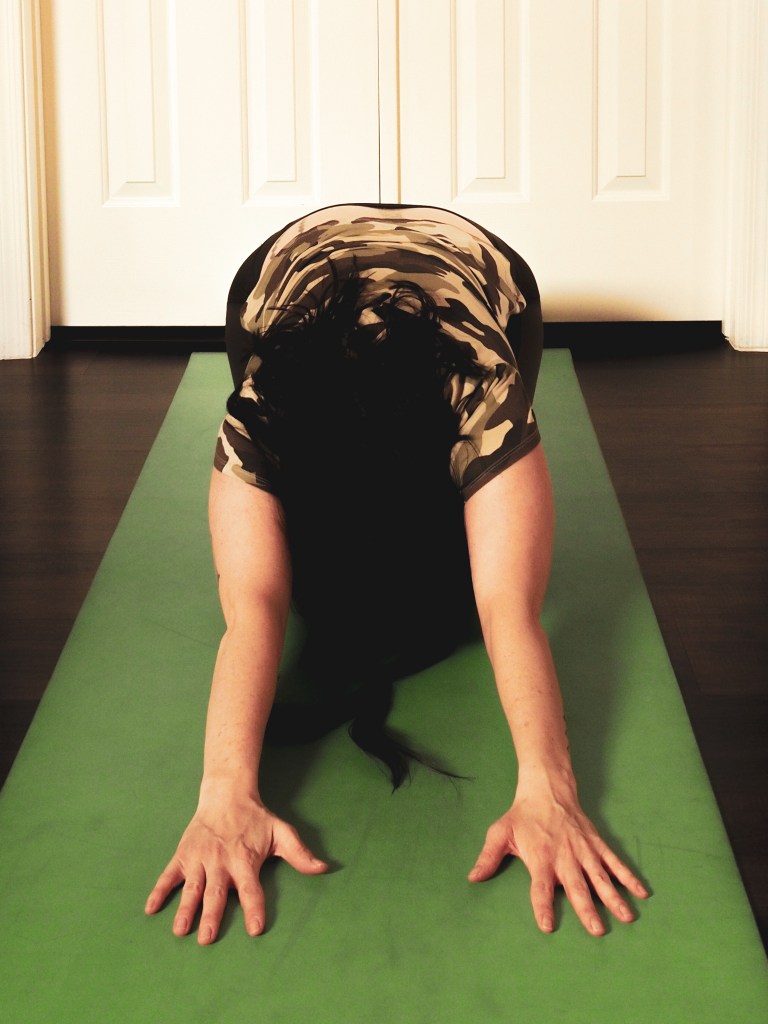
  • Start to walk the hands forward, folding over the thighs and bringing the forehead down onto the mat (Image 7).
  • If your forehead does not touch the mat, place a block, rolled blanket or stack both fists and rest the forehead here.
  • If you have any pain or tightness in the knees or your seat doesn’t reach your heels, roll a blanket and place it behind the knees.
  • Extend the arms out in front of you or rest them along the sides of the body.  
  • Take five to ten deep relaxing breaths here.
  • Slowly walk the hands back toward you and press yourself back up into Hero Pose.

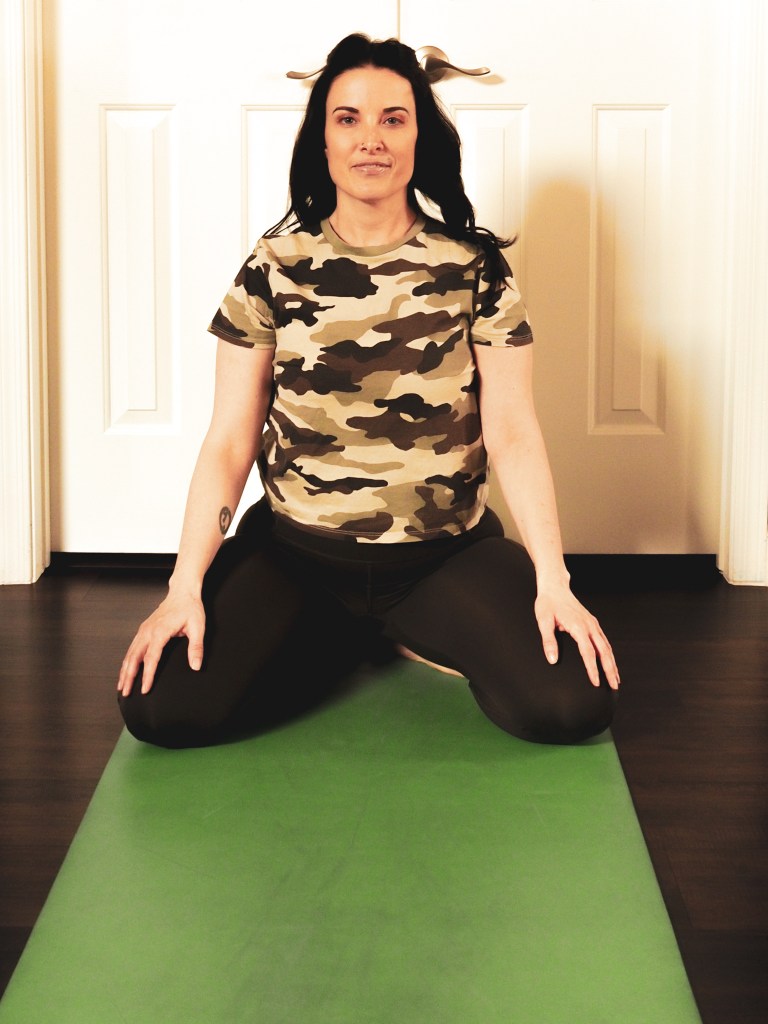
Wide-Knee Child’s Pose is a variation of Childs Pose that gives the spine a concave stretch, arching slightly. Here you will feel the stretch in the hips and shoulders. Again, if you feel any back pain, come out of it slowly and either modify or abort mission.

  • Start out in Hero Pose (Virasana) kneeling on the mat and take the knees to the outsides of the mat, toes stay together.
  • Sit back on the heels (Image 8).
  • Bring the hands down onto the mat in front of you (Image 9).
  • Start to walk the hands forward, bringing the chest and forehead down onto the mat (Image 10).
  • Extend the arms out in front of you, keeping the arms engaged and elbows lifted off the mat.
  • Take five to ten deep relaxing breaths here.
  • Slowly walk the hands back toward you and press yourself up.
  • Draw the knees together and sit back on the heels.

Both variations of Child’s Pose are great to take during yoga classes when you feel like your body needs a break or you need to regroup before getting back into the asana.

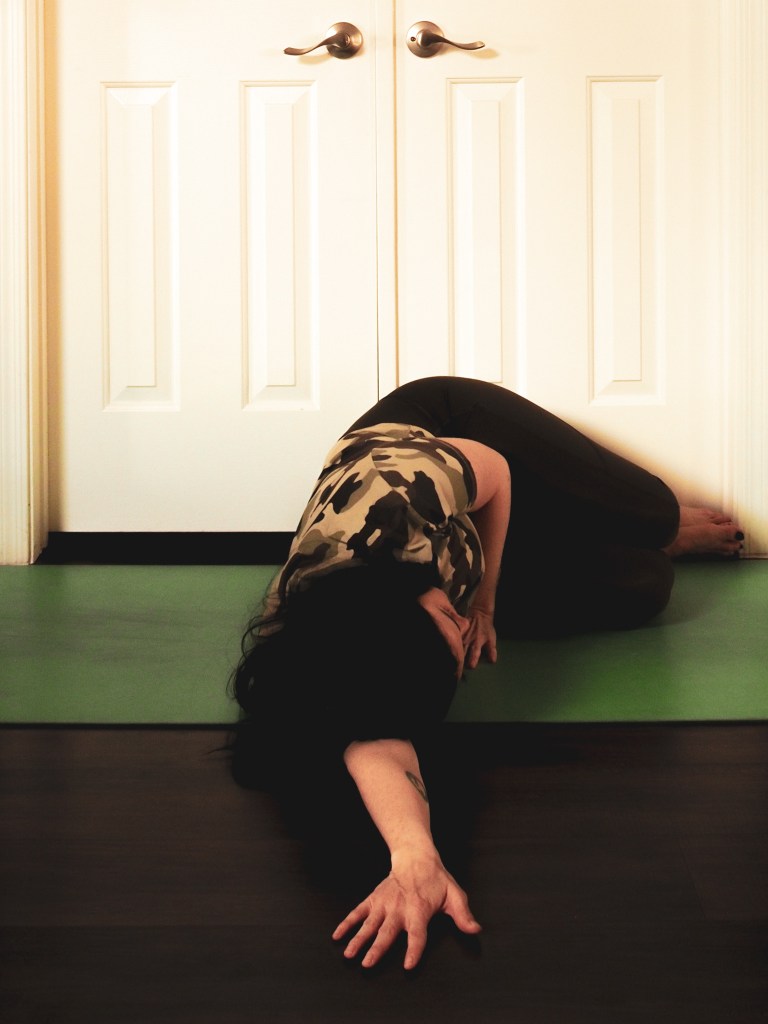
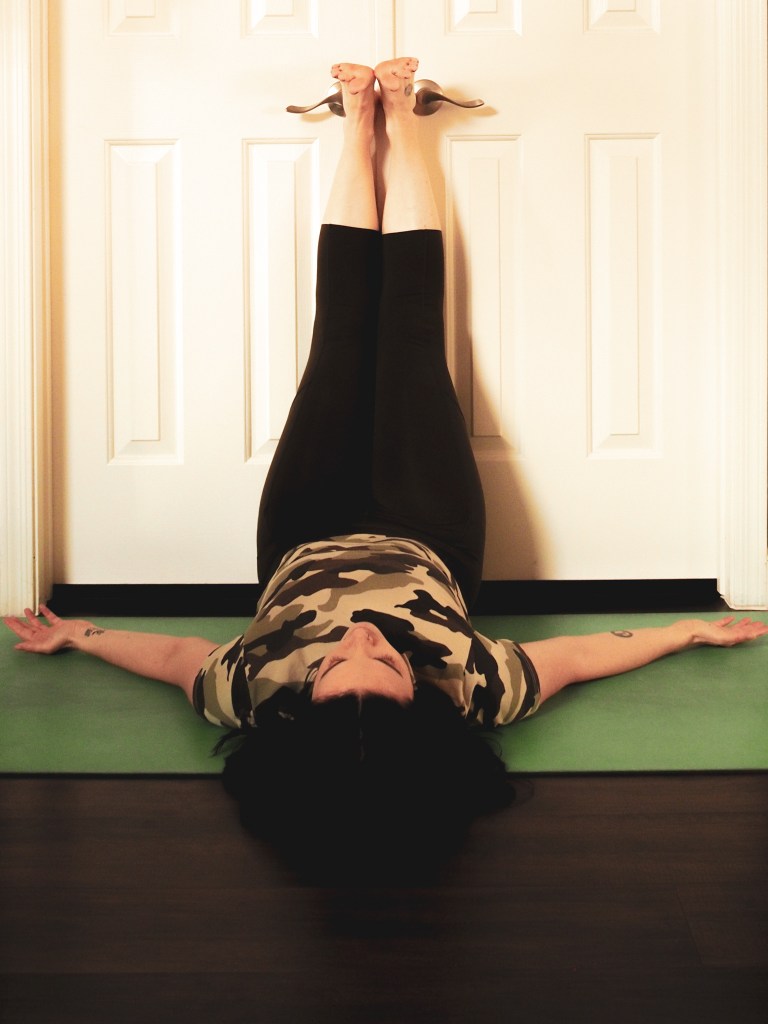
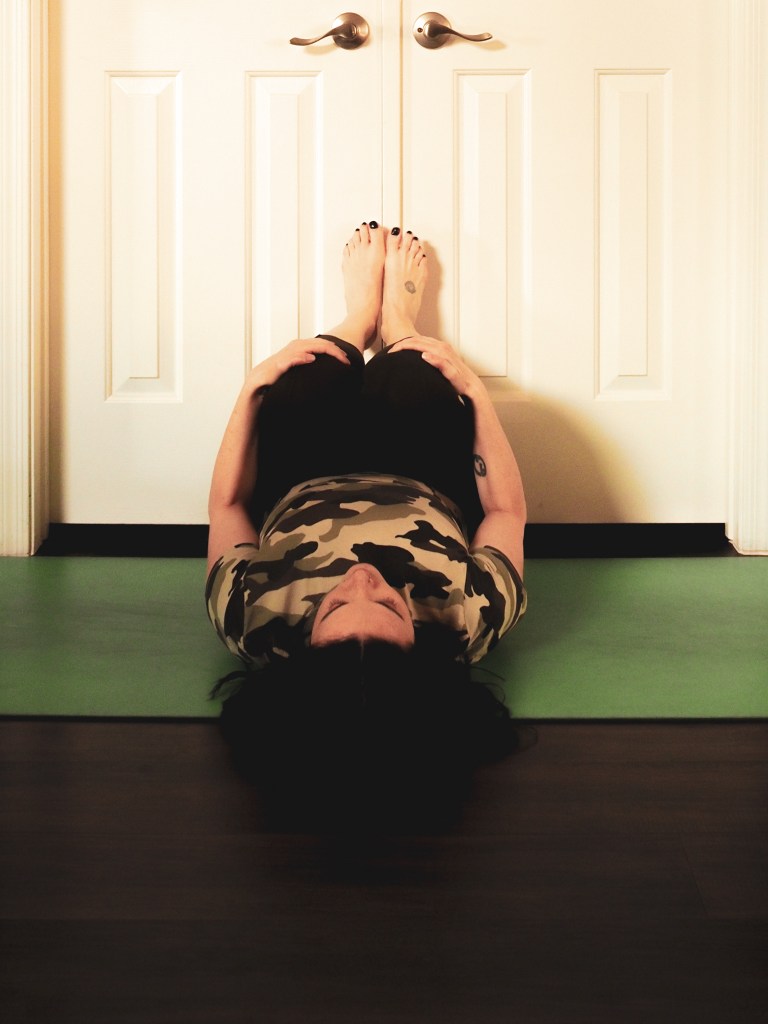
Legs-Up-The-Wall (Viparita Karani) – This pose is great if you’re having trouble sleeping. Doing this for 5 to 10 minutes before can help with insomnia. The benefits of Legs-Up-The-Wall seem unending, but a few of my favorites include alleviating migraines and headaches, lessens anxiety, aids with digestion, alleviates mild depression, calms the mind, refreshes the blood to legs and reproductive organs, helps with menstrual cramps and relieves lower back pain. Who doesn’t love one good pose that can do so many different things?

  • Come to the wall.
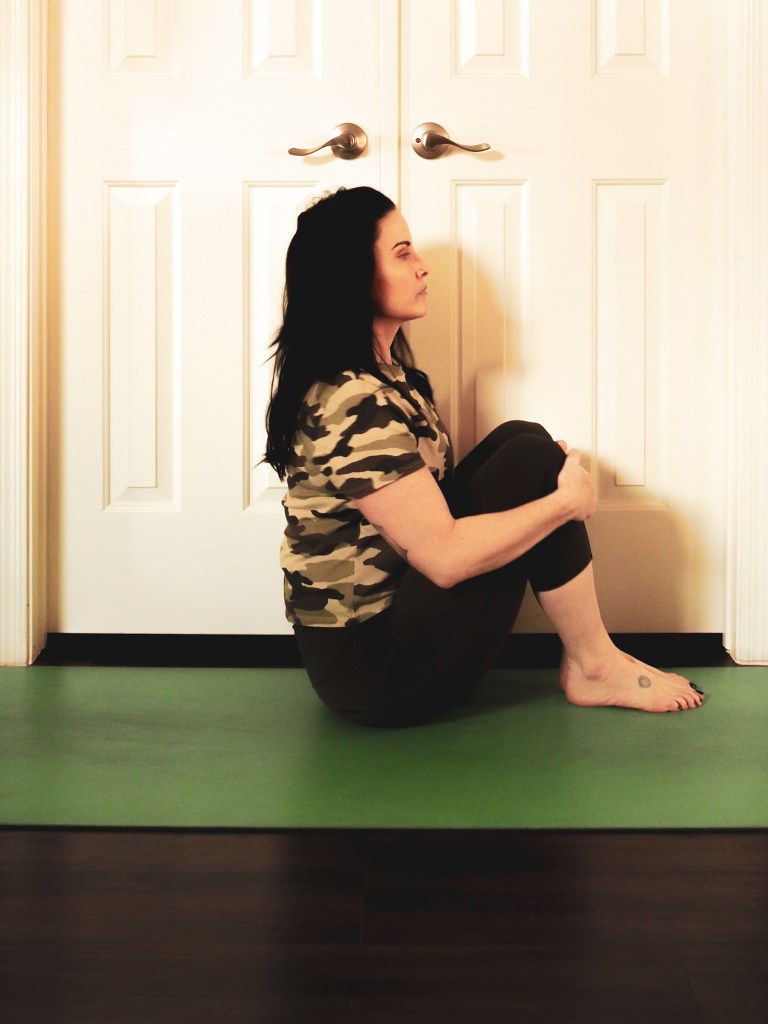
  • Sit down with your left side pressed up against the wall and the knees bent, souls of the feet on the ground (Image 11).
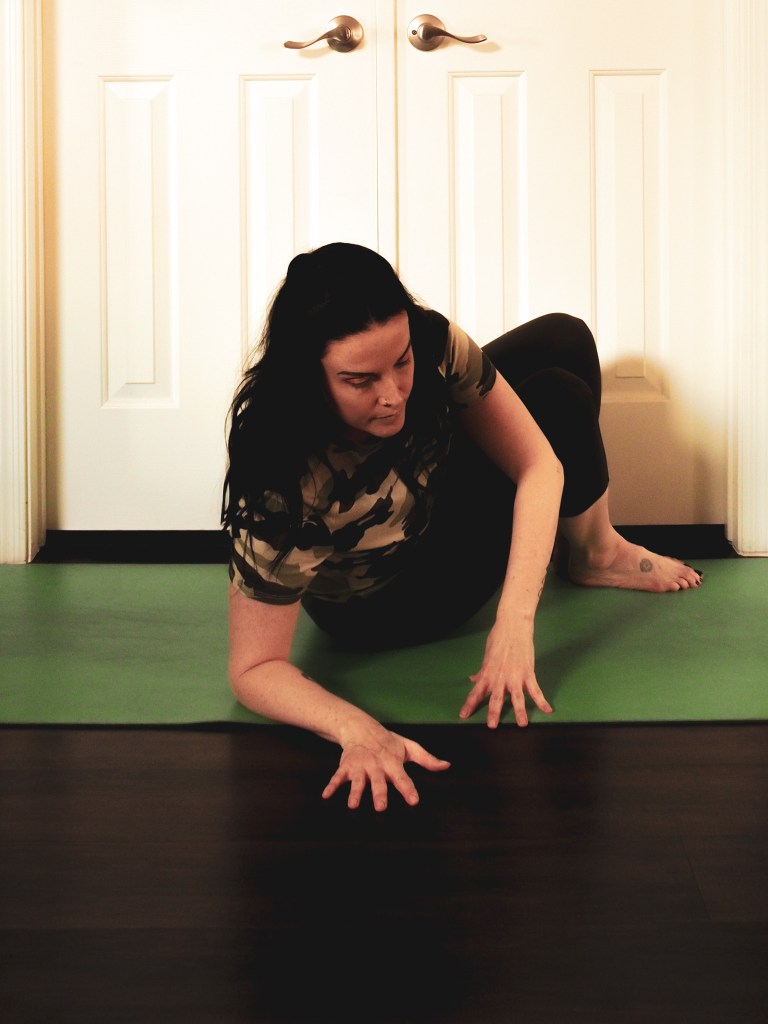
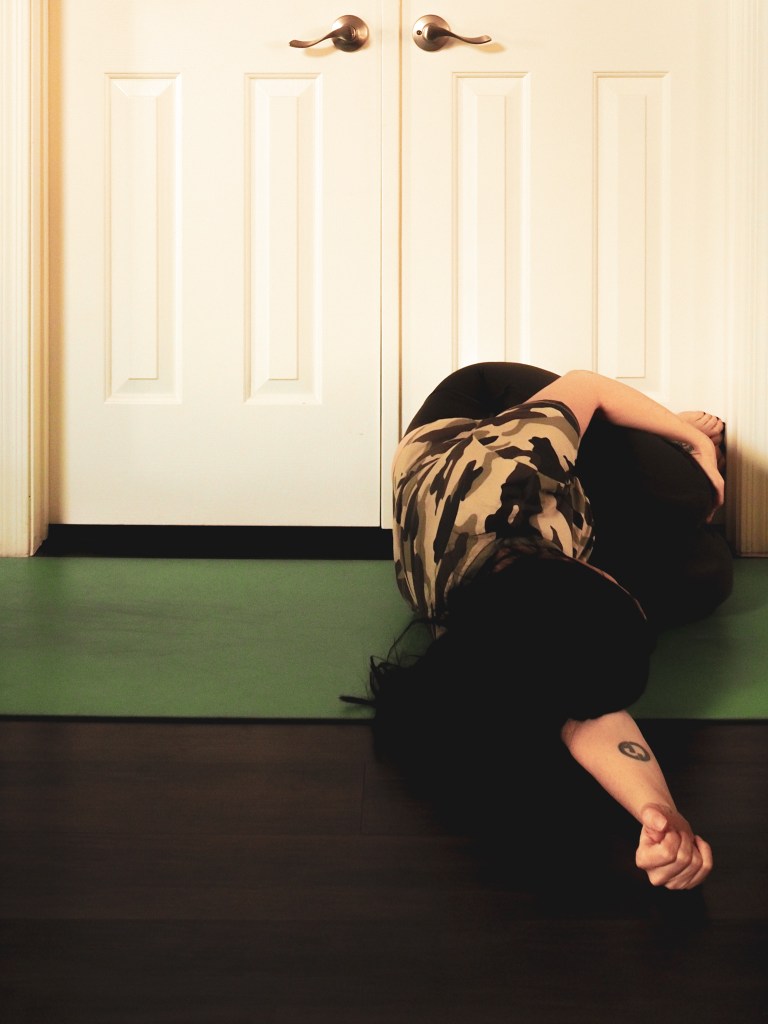
  • Use your right hand to guide yourself down onto your right side lying in the fetal position (Images 12 and 13).
  • Scoot your bottom until it touches the wall.
  • Roll onto your back and gently swing your legs up so that the backs of your legs are pressed against the wall.
  • Place the hands along side of you, on the heart or on the belly (Image 14).
  • You can close your eyes and just relax here.
  • When you are ready to come out of the pose, draw the knees in toward the chest (Image 15).
  • Roll back onto your right side, coming into the fetal position (Image 16).
  • Use your left hand to press yourself up.

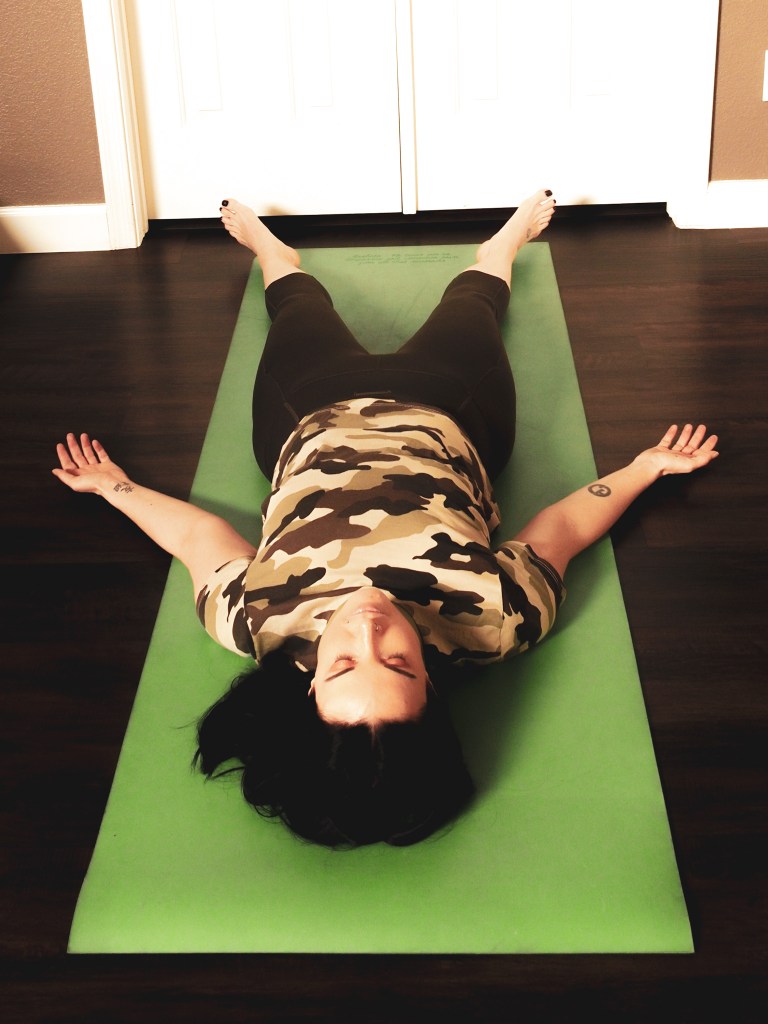
Corpse Pose (Savasana) or your final resting post after a yoga class. I’m sure you’ve seen the shirts that say, “I’m Just Here for the Savasana”. During a long, difficult yoga class, savasana is that light at the end of the tunnel. Students wait in anticipation for the teachers to cue them down onto the mat and onto their backs. This pose may be the most relaxing pose in yoga.

  • Lay back on your mat, belly facing up toward the ceiling.
  • Draw the shoulder blades down the back.
  • Arms are along the sides with the palms facing up.
  • Step the feet out to the edges of the mat and let the feet fall open like the pages of a book.
  • Close the eyes.
  • Let the mind be still and focus on the breath. Stay here as long as you would like.
Savasana

To come out of your savasana:

  • Stretch the arms overhead, stretching out the entire body from fingers down to the tips of your toes.
  • Draw the knees in toward the chest.
  • Gently, roll onto your right hand side coming into a fetal position, using your left arm as a pillow (Image 13).**
  • Stay here for a couple breaths.
  • When you are ready, press into your right hand and press yourself up to seated.

**If you are pregnant you will roll onto your left hand side instead to prevent the lying on the vena cava.

Self-Care

  • Essential Oils – You can diffuse the oils into the air, smell them from the bottle, or use them topically. If you use them topically, make sure they are safe to apply to the skin and you use a carrier oil to dilute them as recommended. I use Doterra because they are therapeutic grade. I know that Young Living is as well. Some great places to apply essential oils are the insides of your wrists, your heart area, but my absolute favorite is the bottoms of the feet. It may sound strange, but our largest pores are on the bottoms of our feet which means the oils are able to absorb quickly. Not to mention, our feet are a road map to the rest of our body. If you’ve ever seen a reflexology photo of the feet, you know that every area of your body can be reached through your feet. Pretty amazing, huh? Here are my favorite essential oils for relaxation.
    • Lavender
    • Serenity (Doterra Blend)
    • Vetiver
    • Bergamot
    • Chamomile
    • Melissa
    • Rose
    • Melissa
    • Clary Sage

Playlist

Here is an hour long playlist with some of my favorite calming songs to relax me and put me in a good mood!

Chair of the Dog – Chair Yoga You Can Do Anywhere

For some people work, study and travel confine us to a chair for long periods of time.  Sometimes we may not get the break that our body needs or we might have to take it in a room (or plane) filled with people.  Not everyone is comfortable with the attention that taking a 15-minute yoga class with an audience would garner.  If you can relate, then this post is just what you’ve been looking for.  I will share with you some chair yoga that can be done from the comfort of…you guessed it, your chair!  Whether you are sitting through a long lecture, stuck on a flight or glued to your desk for a project, you are sure to find some quick tips that will be helpful in giving your body the movement it needs.

YOGA

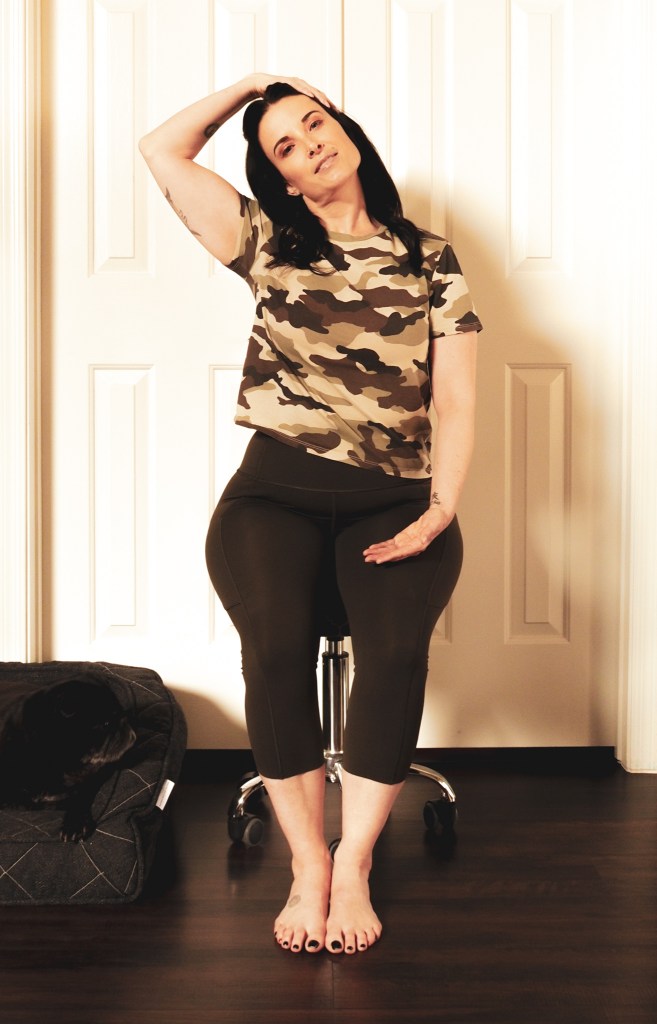
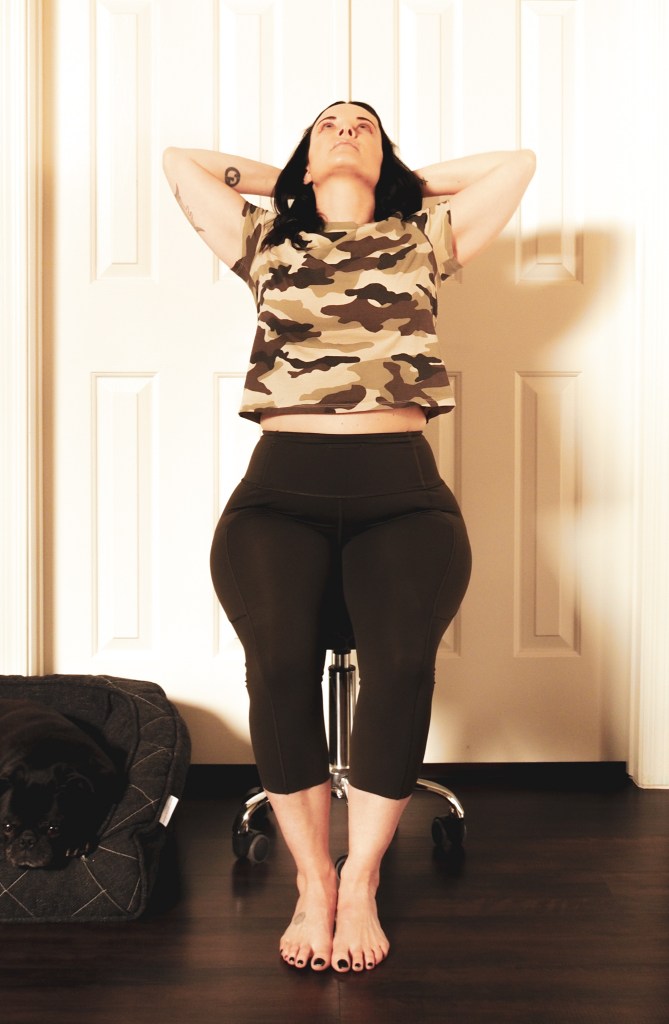
Neck stretches are great because you can do them almost anywhere, on a train, in a plane, in a house, even with a mouse! But all jokes aside, everyone can benefit from a good neck stretch.

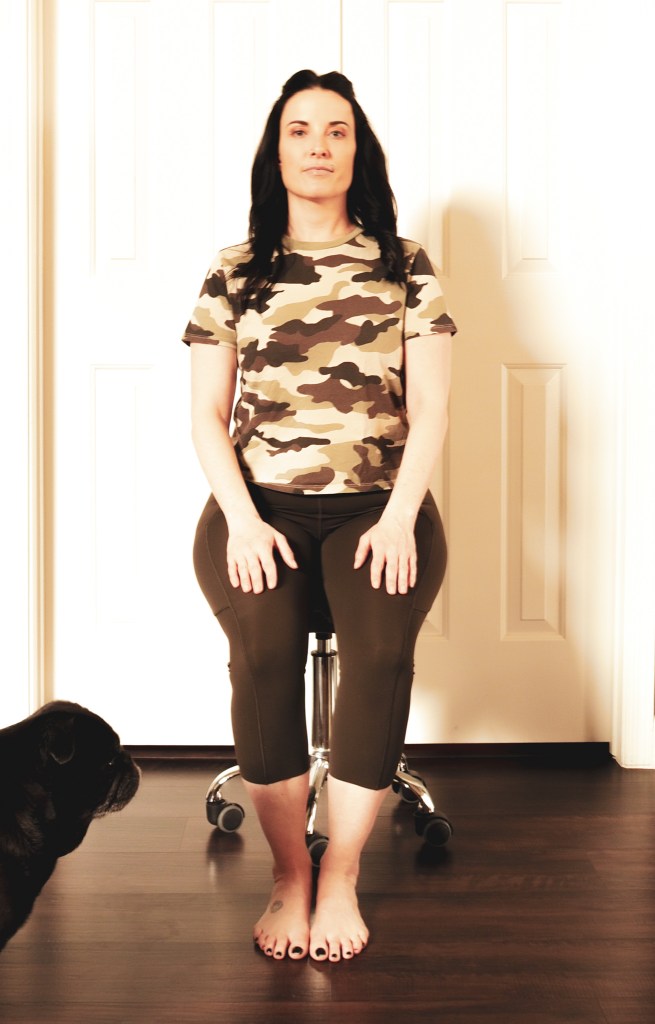
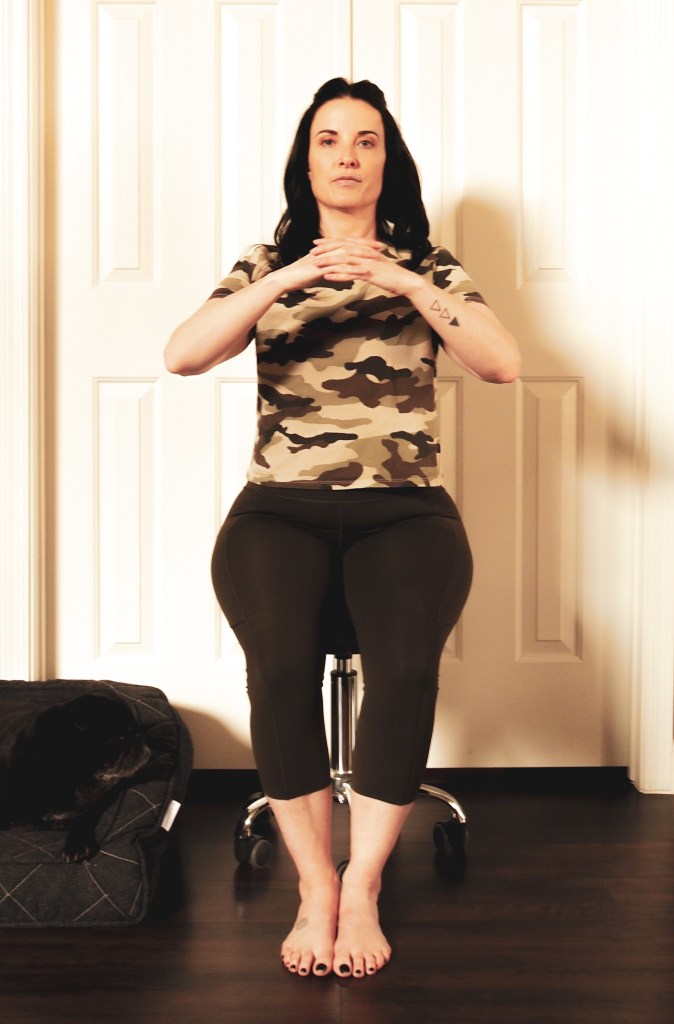
  • Place the feet firmly on the floor.  Take a moment to ground down into the earth and be aware of your connection through your feet.
  • Place your hands on your thighs with the palms facing down to ground you even further (Image 1).
  • Draw the shoulders down and away from the ears.
  • Take three deep breaths in through the nose and out through the nose.
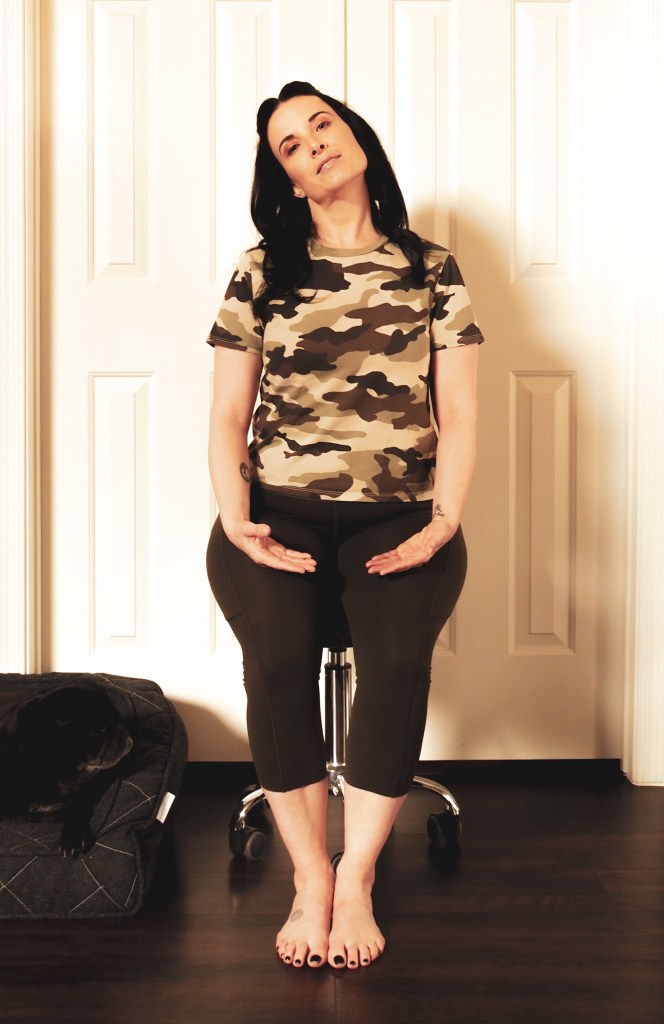
  • Inhale and as you exhale, bring the right ear toward the right shoulder (Image 2).
  • Actively draw the left shoulder away from the ear.
  • If you would like a little deeper of a stretch, gently place the right hand on the left side of the head.  Don’t pull down, but rather allow the weight of the hand to deepen the stretch (Image 3).
  • Take 5 deep breaths.
  • Release the right hand.
  • Slowly bring the head back to center.
  • Repeat on the left side, ending with the head back at center.
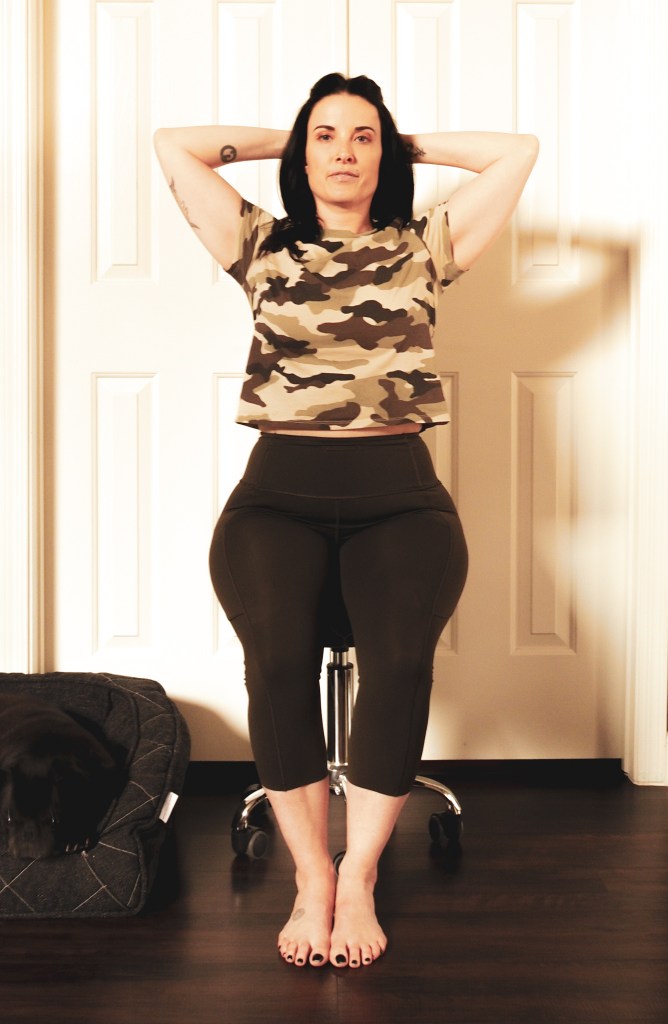
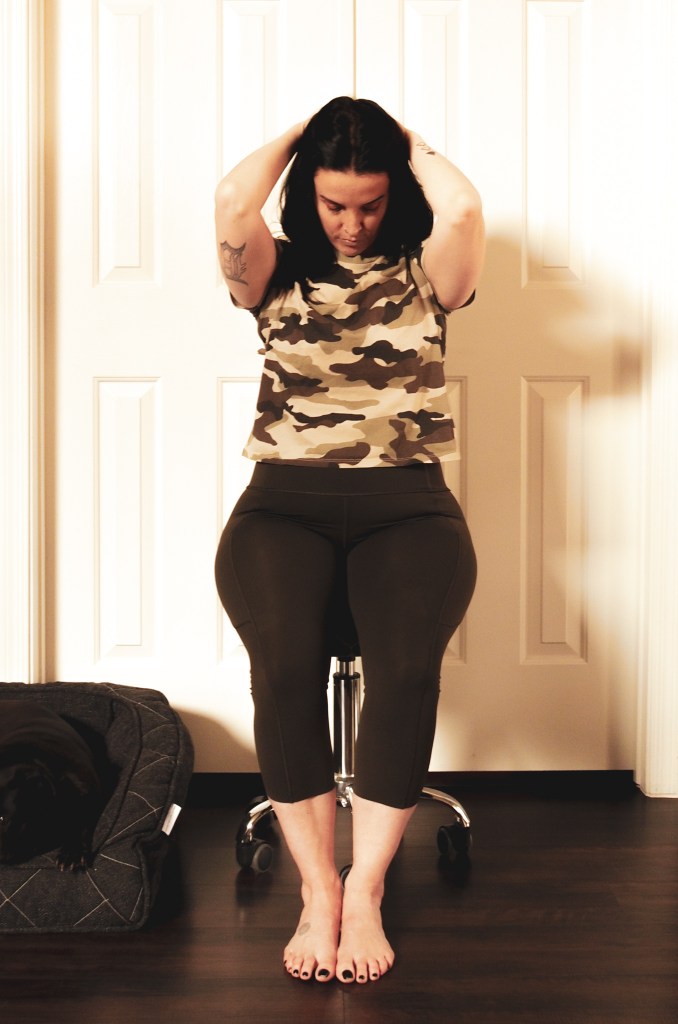
  • Interlace the fingers and place the palms of the hands on the back of the head (Images 4 and 5).
  • Gently draw the chin toward the chest and let the elbows fall toward one another (Image 6).
  • Take 5 deep breaths.
  • Slowly bring the head back to center and begin to look up and allow the elbows to open up (Image 7). Be mindful to stop if you feel any pain. Also you can skip this part if you are too close to other people.
  • Take 5 deep breaths.
  • Slowly bring the head back to center and release the hands down.

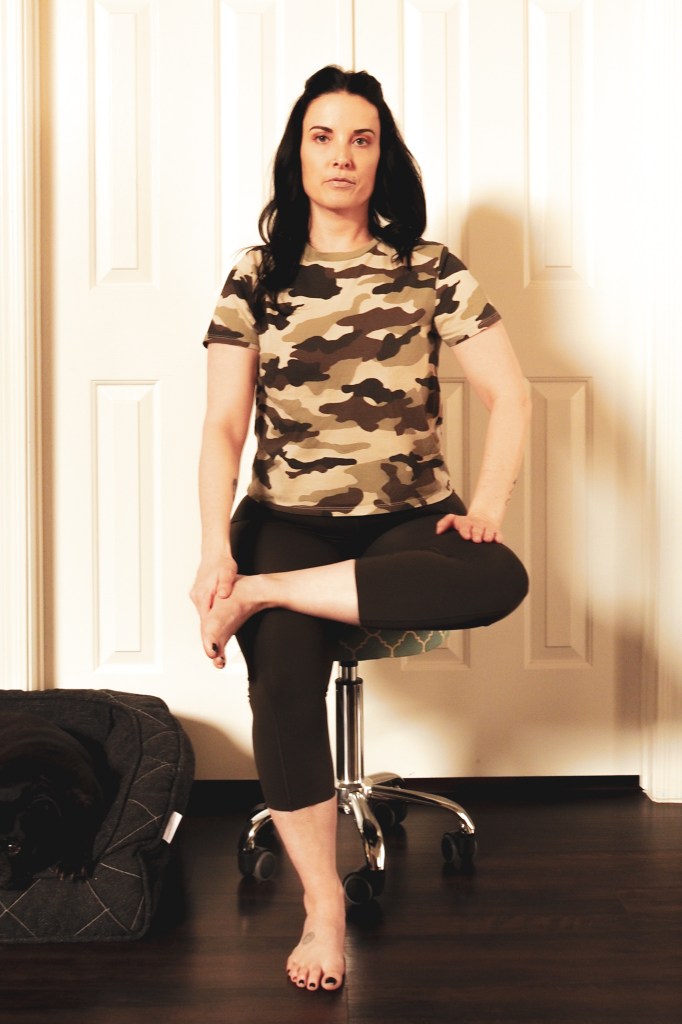
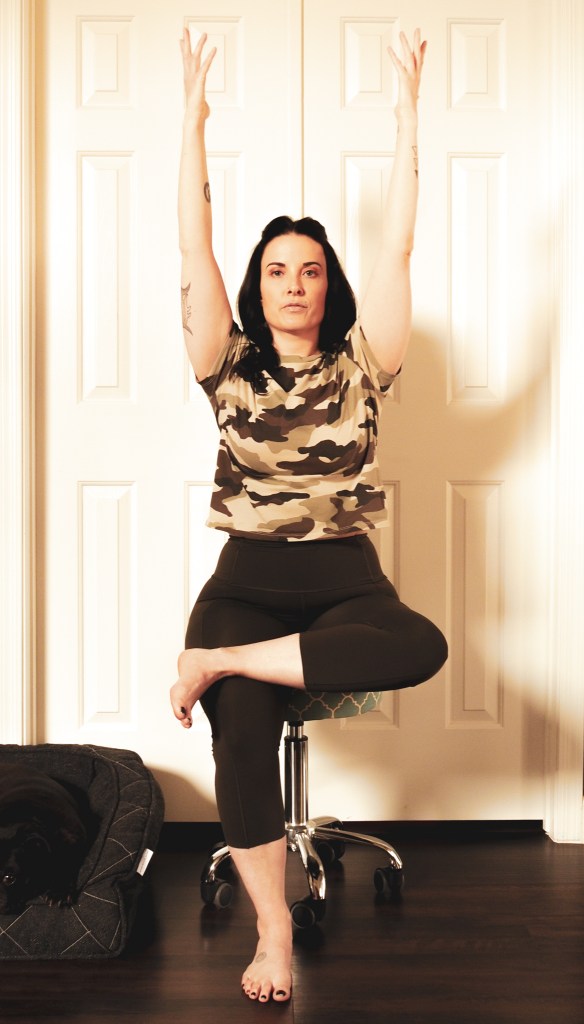
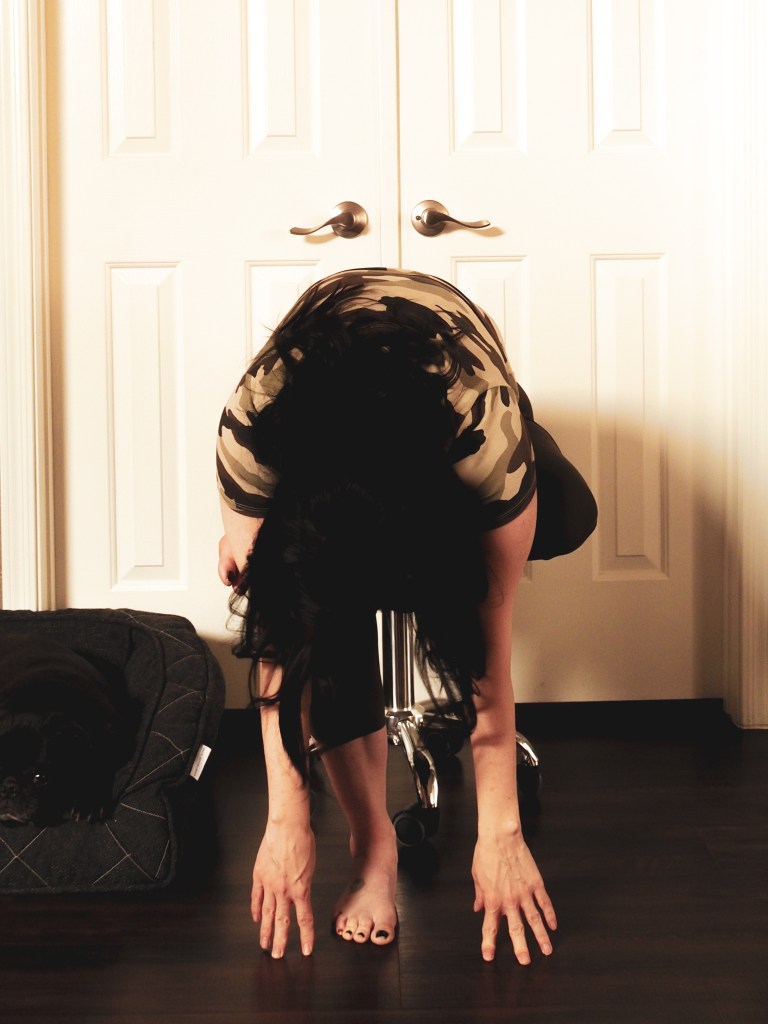
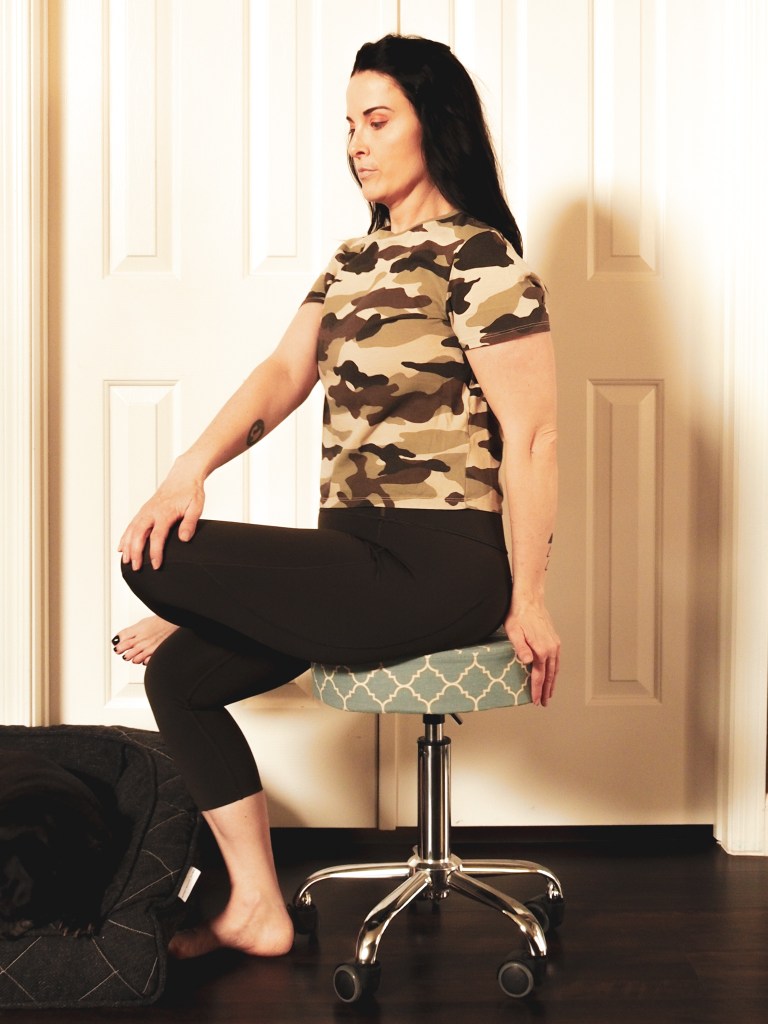
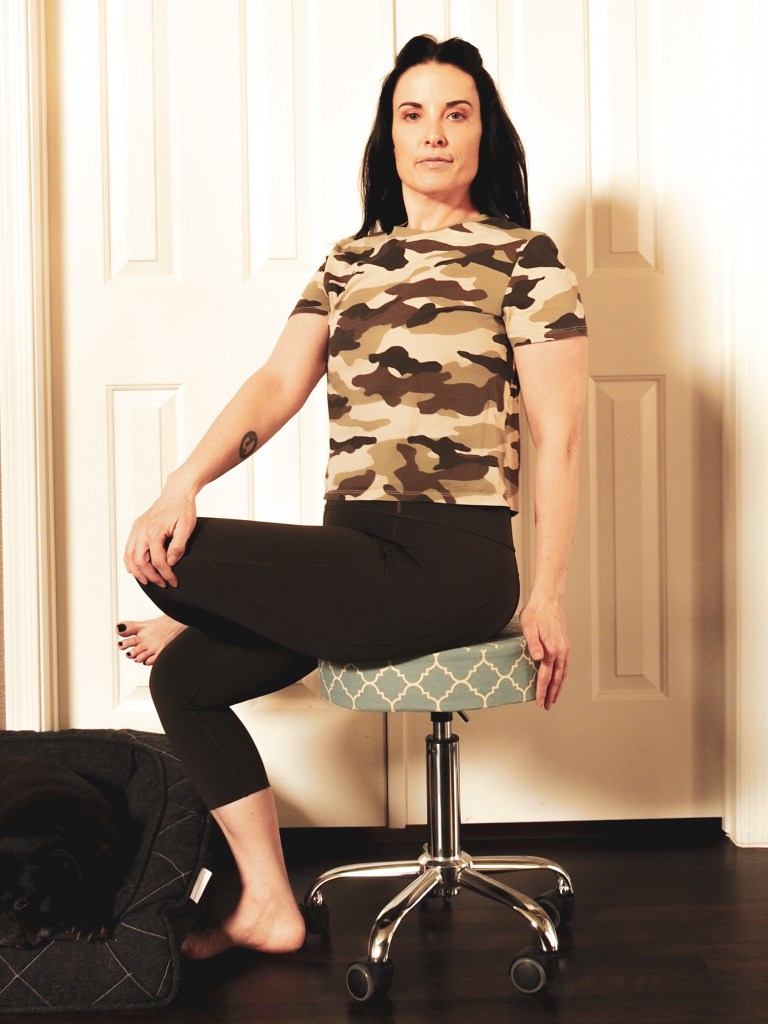
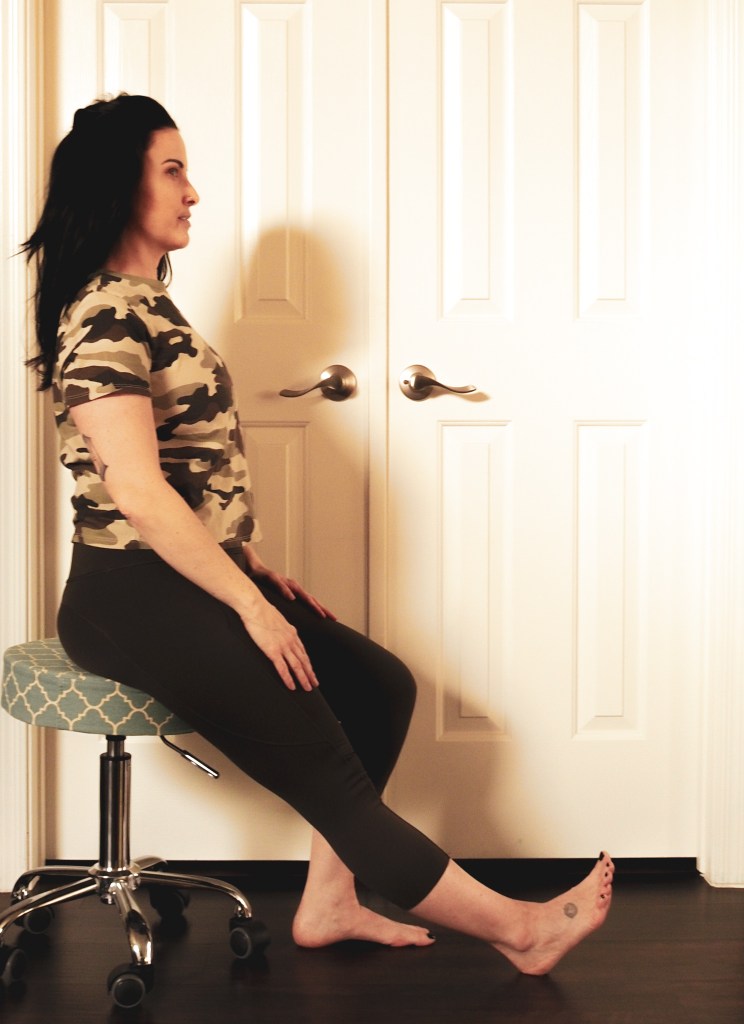
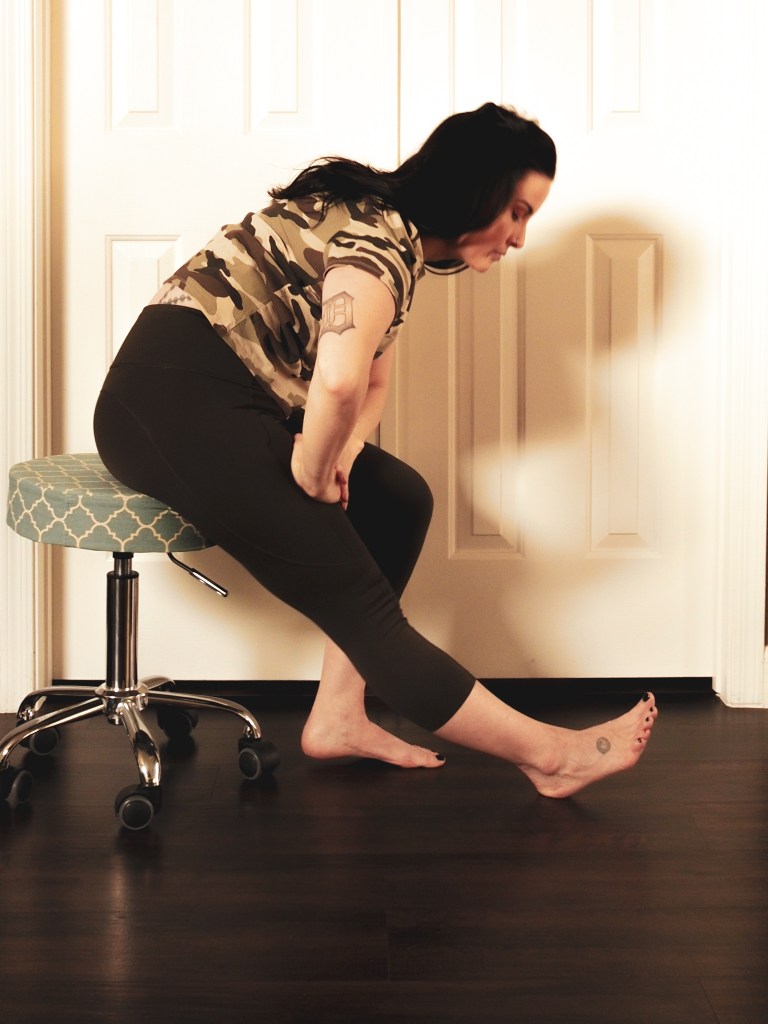
Seated Pigeon – This is a great hip opener that I like to do during long periods of sitting or before I get on a plane. We hold a lot of emotions in our hips, so don’t be surprised if this pose brings up some feelings for you.

  • Move to the front of your chair.
  • Place the right ankle over the left knee.
  • Flex the toes on the right foot so they are pointing toward the right knee. This will help to protect your knee from strain.
  • You may already feel quite an intense stretch in the hip, if so you will sit up nice and tall.
  • If you would like a deeper stretch and the right knee is lifted up into the air, sit up nice and tall.
    • Place the hands on the right thigh just above the knee and gently press down until you feel a stretch in the hip (Image 8).
    • Hold where you feel the stretch.
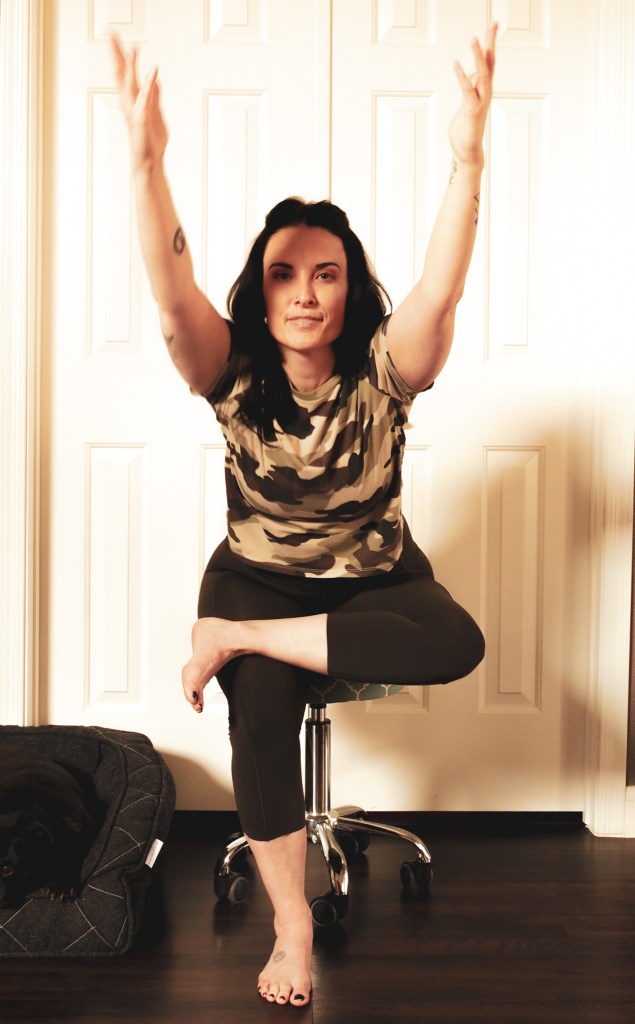
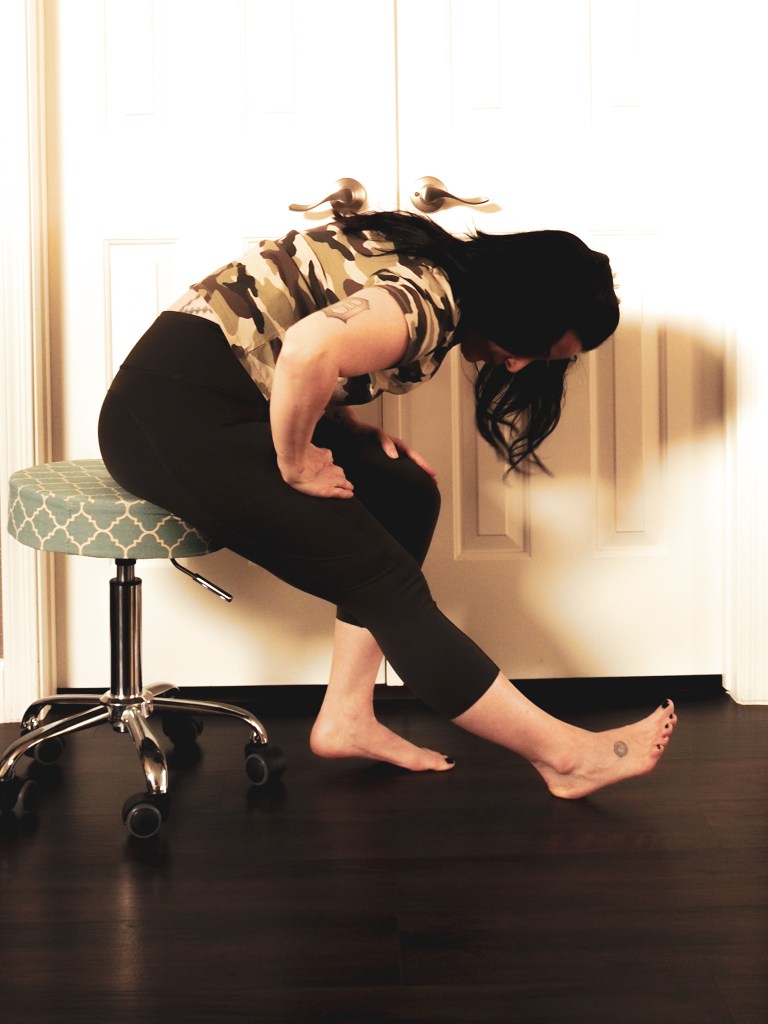
  • If you would like a deeper stretch and your right knee is parallel to the right ankle, sit up nice and tall.
    • Inhale stretching the arms overhead (Image 9).
    • Hinging from the hips, begin to fold forward until you feel a stretch (Images 10 and 11).
    • If there is a desk in front of you, you can grab the edge of the desk and let the head relax and fall heavy. Here you will feel a stretch in the right hip as well as the shoulders.
  • Take 5 to 10 breaths in which ever pose you have chosen.
  • Inhale and release the right leg if you are gently pressing down or inhale and slowly begin to rise up.
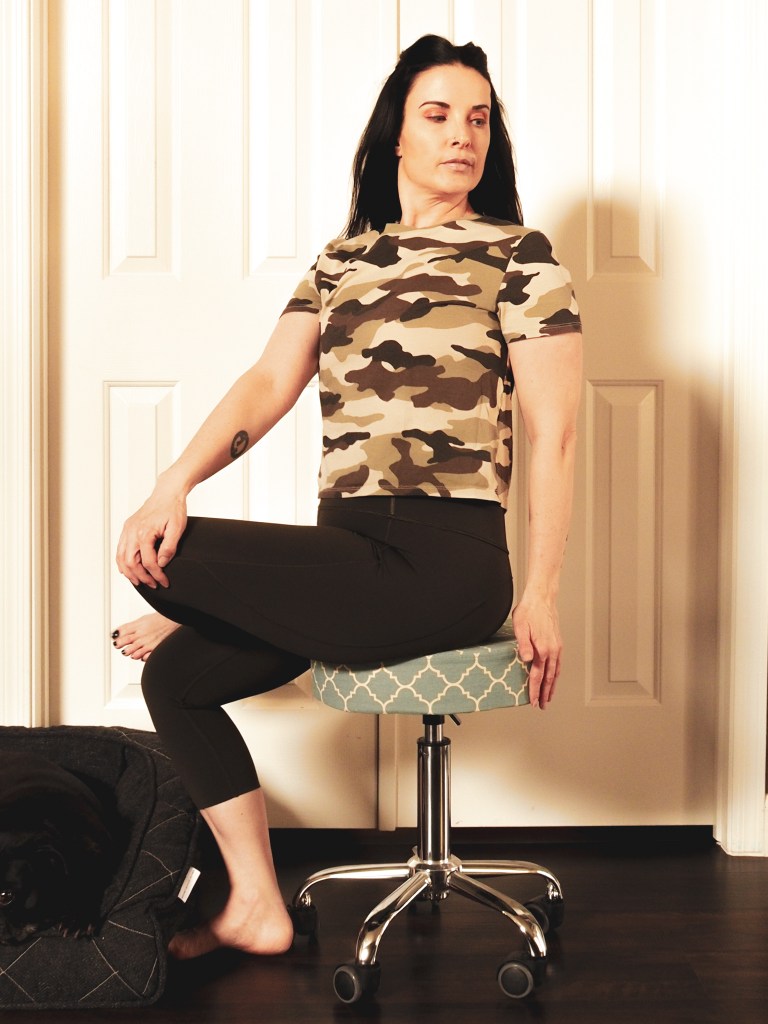
  • Take the left hand and bring it onto the right knee (Image 12).
  • Take a deep inhale and as you exhale, begin to twist gently to the right pressing into the right knee and taking the right hand and grabbing onto the back of the chair or the right armrest, whichever is comfortable and accessible (Image 13).
  • Inhale lengthen the spine.
  • Exhale twist to the right.
  • If it is comfortable, gently look over your right shoulder (Image 14).
  • Take 3 more deep breaths here.
  • As you take your last exhale, shift the gaze back to center and release the twist.
  • Release the hands.
  • Repeat on the left side.

Please note if you are on a plane this may still be accessible to you.  Be mindful of your neighbor.  If you can get your ankle comfortable onto the opposite knee without kicking the person next to you, follow one of the first steps above.  If you want a deeper stretch, place the palms of the hands on the seat in front of you and fold forward just slightly.  Try not to press into the seat in front of you with too much force, oh and make sure your tray table is in the upright position before you start!

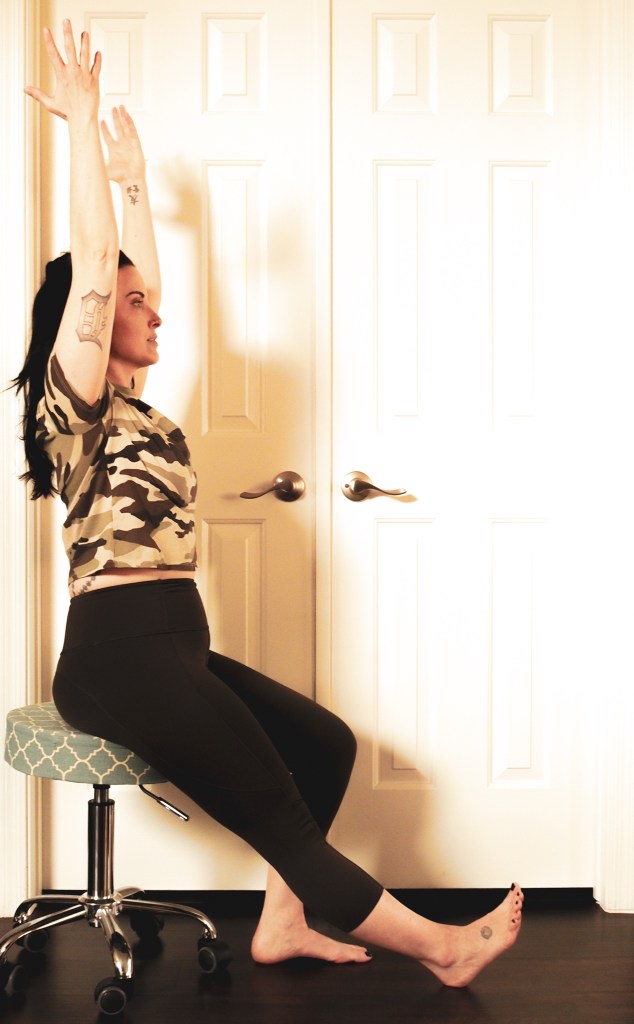
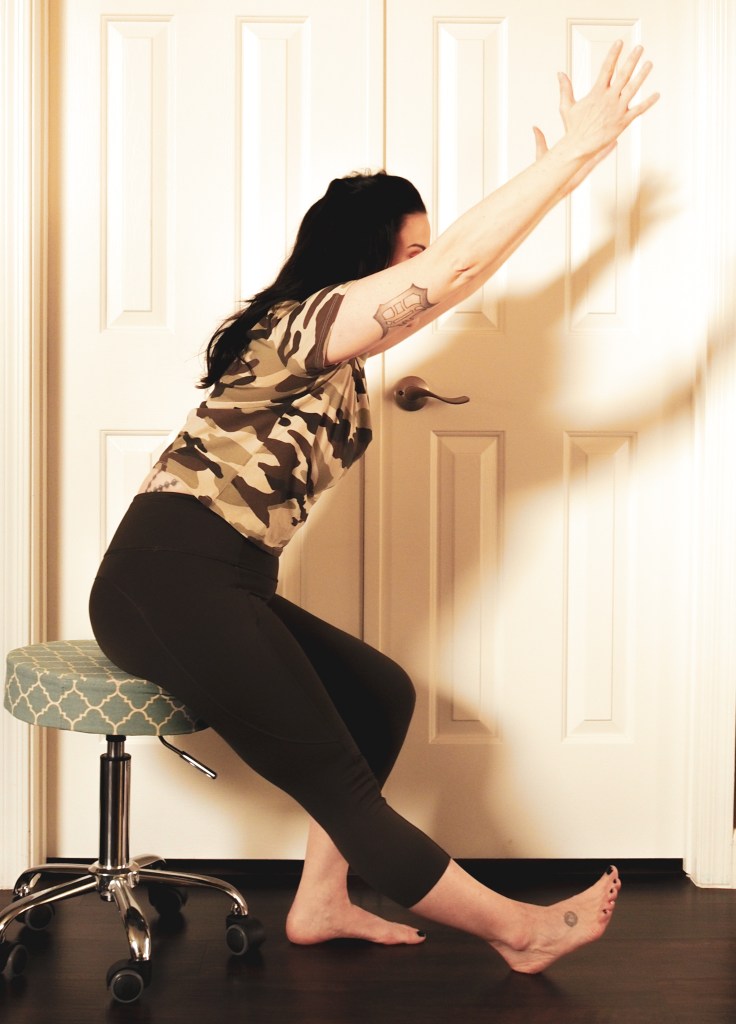
Hamstring Stretch – Oh the beloved hamstrings! If you are a runner, play tennis, soccer or basketball, than this is a must do stretch for you. Many of us have tight hamstrings and this can lead to strains.

  • Move to the front of your chair.
  • Extend the right leg out in front of you and bring the right heel down onto the ground (Image 15).
  • Flex the right foot so the toes are pointing back toward the right knee.
  • Keep the right leg straight without locking the knee.
  • Sit up nice and tall.
  • Inhale and stretch the arm overhead (Image 16).
  • Exhale and hinge from the hips, lead with the heart and fold over the right knee (Image 17).
  • Try to keep the back straight instead of rounding the spine.
  • If you need to rest the arms you can place the hands on the thigh, making sure you don’t place them on the knee (Images 18 and 19).
  • Take 5 deep breaths.
  • On and inhale, rise up nice and slow.
  • Repeat this on the left side.

Again, even on a plane you can get a small stretch if you have room under the seat in front of you.  If you are like me, you have crammed a backpack that is busting at the seams under there and with the headphones, blanket and water bottle stuffed into the side pockets, there is no chance of squeezing a foot under there.  But if you are a savvy traveler, just extent the leg under the seat in front of you and hinge from the hips, folding forward as much as you can without knocking yourself out on the seat back.

SELF-CARE

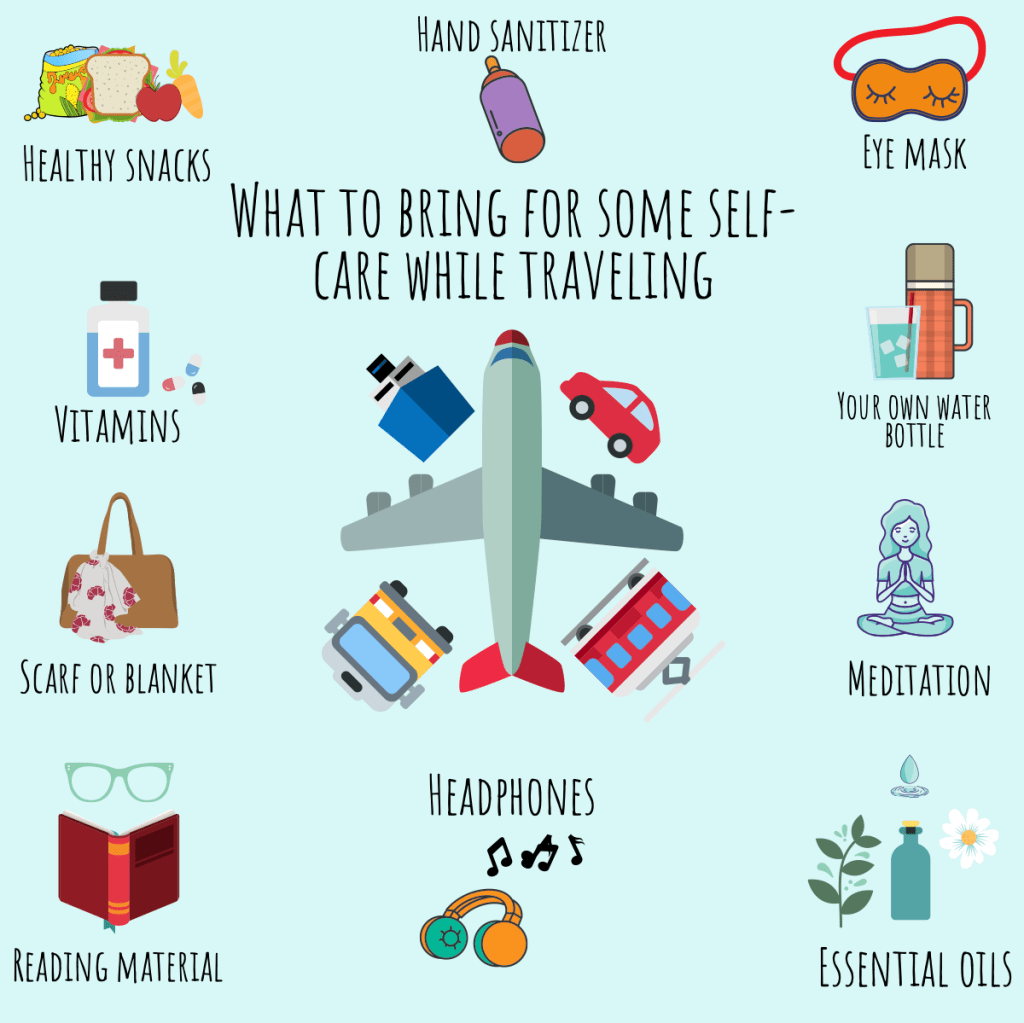
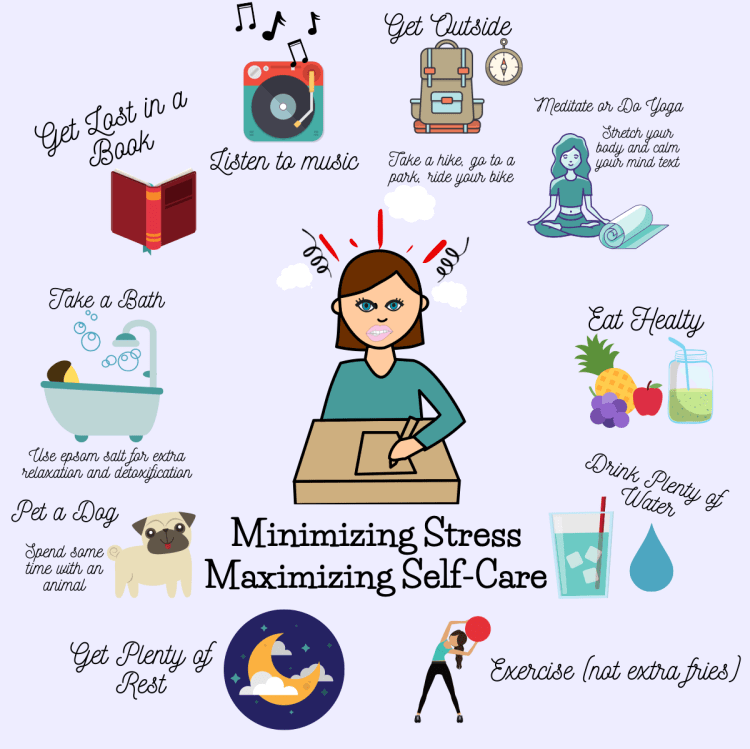
I love to travel and I use the yoga poses above to help me sit through long flights. The infographic below includes some self-care tools that I can not fly without. I thought I would share them with you!

Infographic Designed by Heather Wisniewski

This Vinyasa Scarf is my favorite because it’s perfect as a blanket, scarf or savasana wrap. And it’s super cute and goes with anything! And if you want to prevent yourself from getting sick, OnGuard is my go to whether I’m traveling, going to be around crowds or just dodging the seasonal colds in my office.

Playlist

Whether I’m on a plane, taking a break or doing yoga, one essential for me is music. Here is an hour long playlist that can get you through any of these situations.

How Your Short Breaks Can Have Long Term Effects

Do you spend long hours studying for exams, midterms and finals?  Do you work in front of a computer all day long?  If so, this blog post is for you!  I’m going to help you find short yoga poses, breathing exercises and self-care techniques that will make you want to remember to take your much-needed breaks throughout your work day or study sessions. To learn more about recommended break times for students press here and for information on work breaks press here.

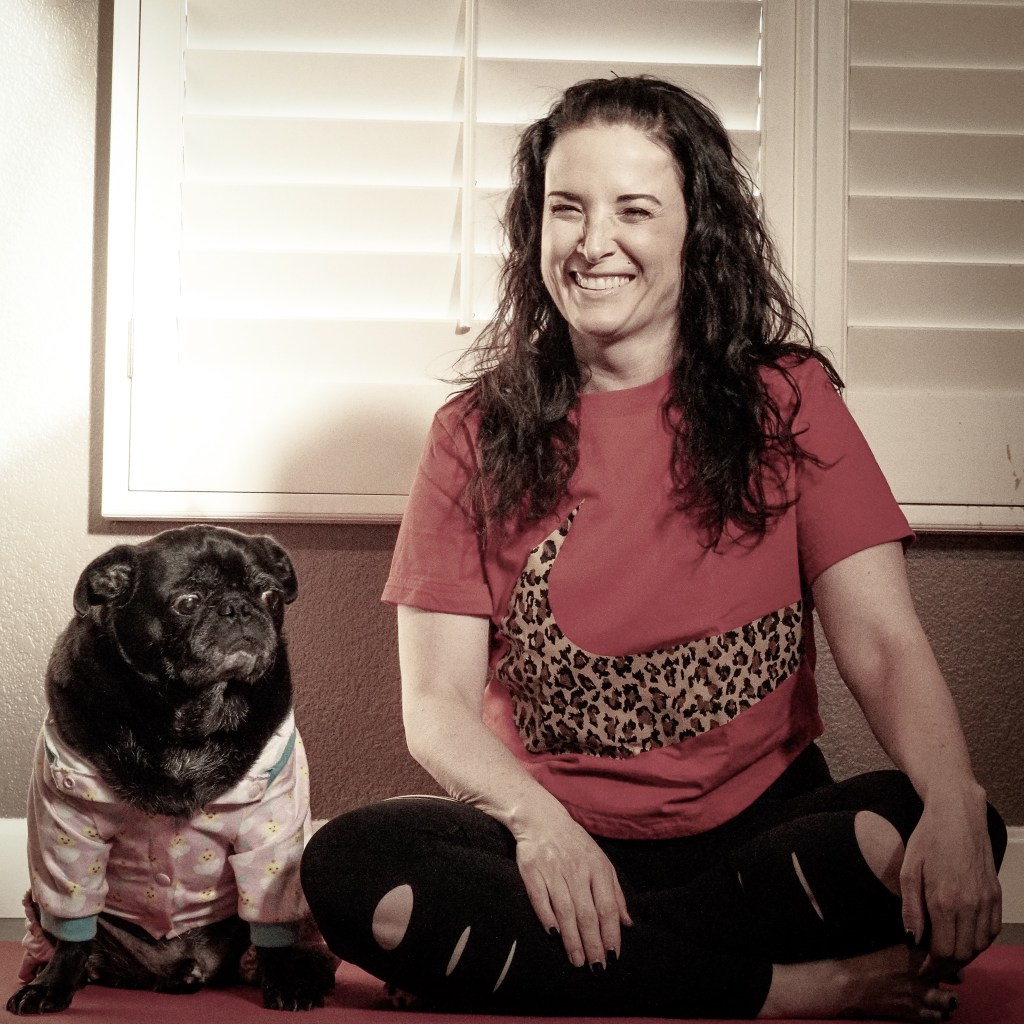
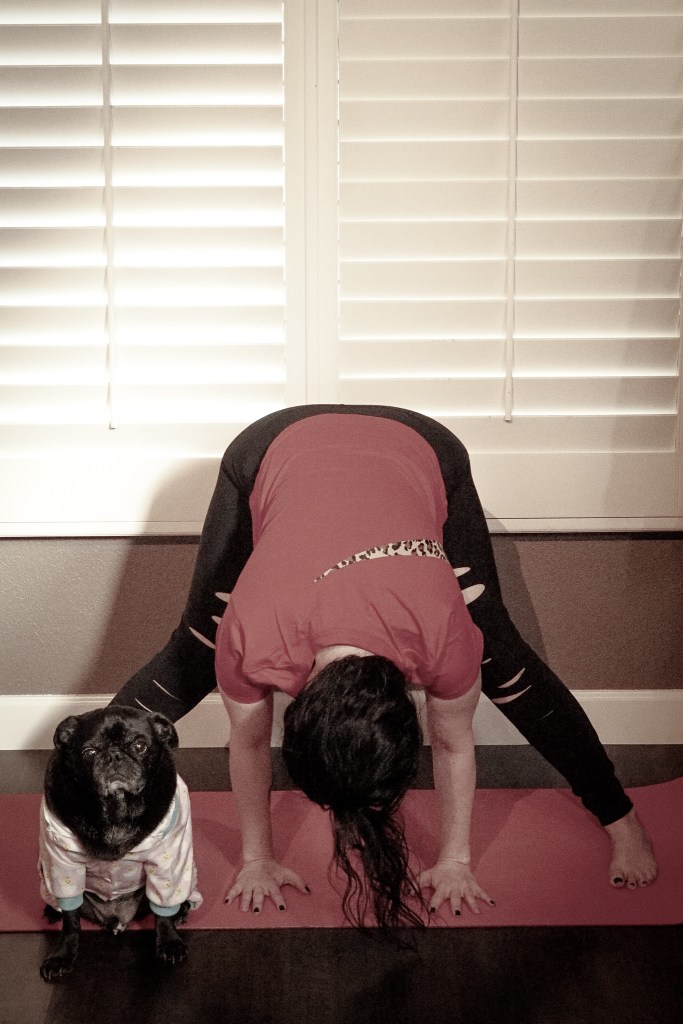
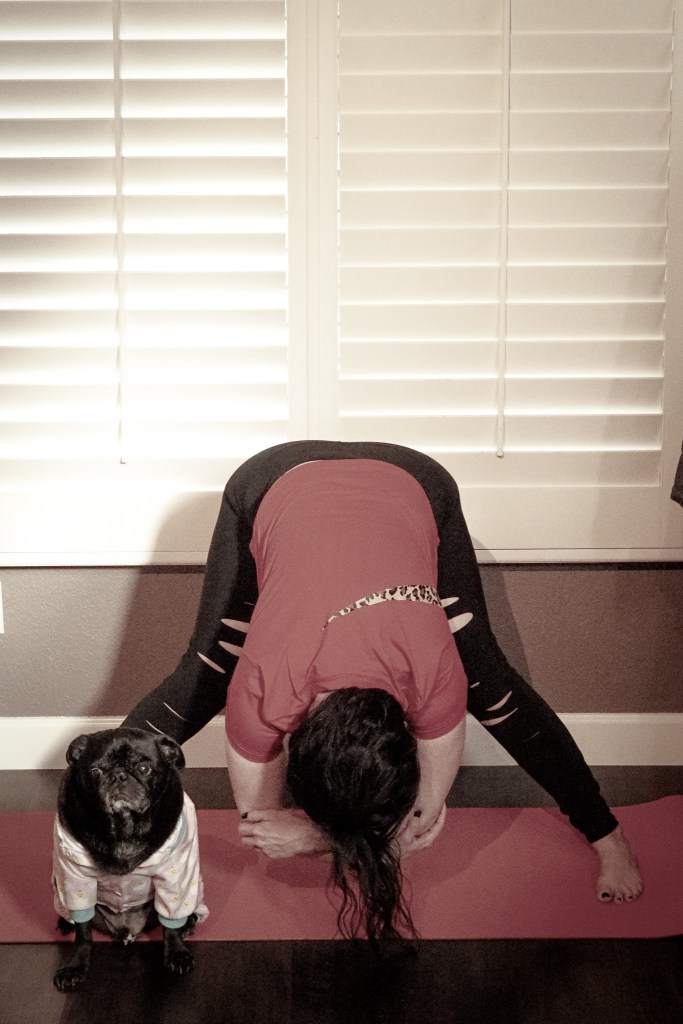
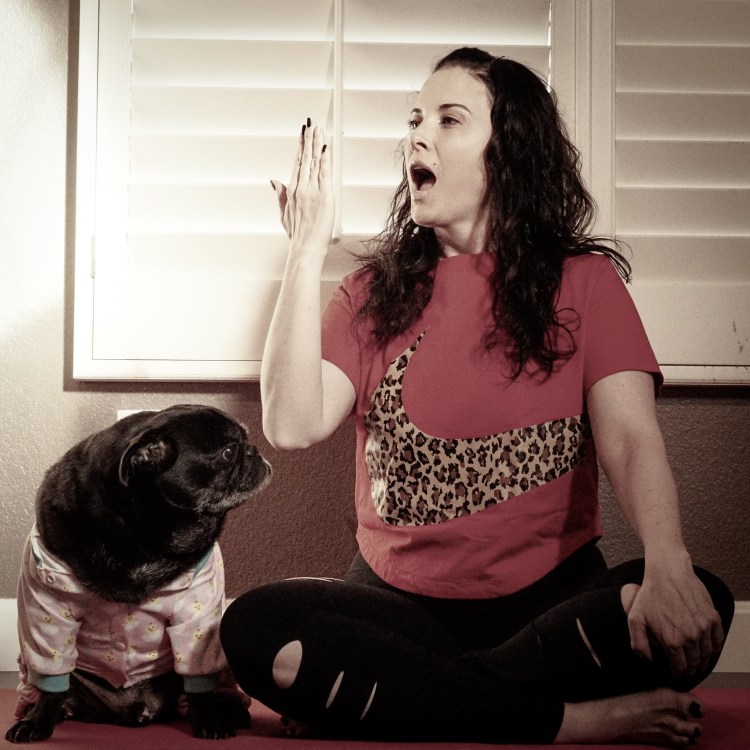
I tried to be professional, but Rupert decided that he needed some stress relief too. Please enjoy the pug in Easter pajamas!

YOGA

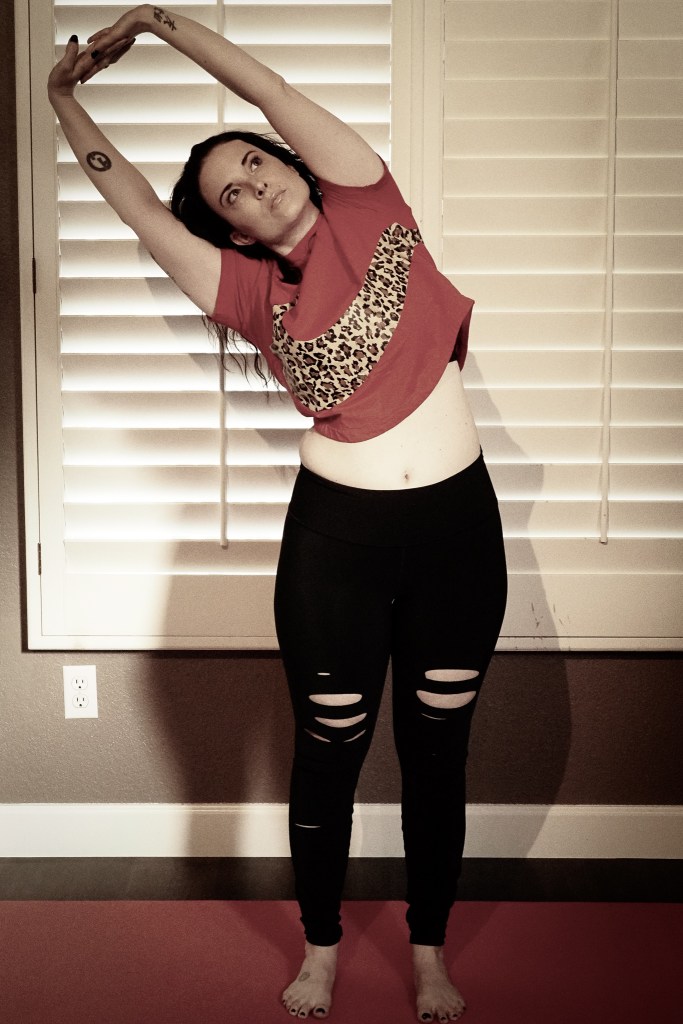
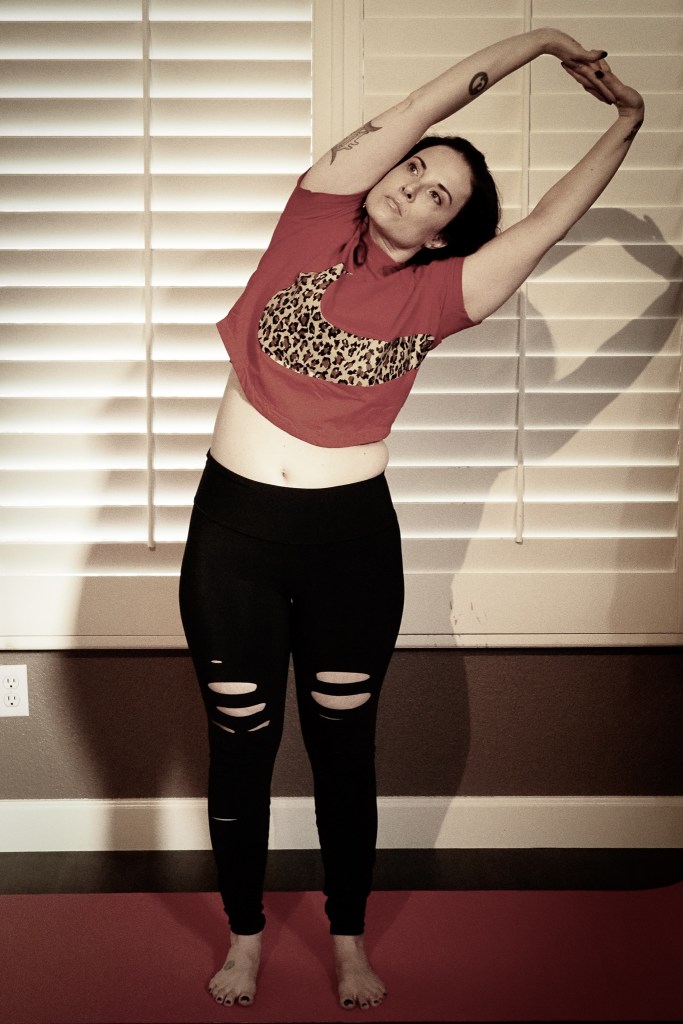
After bending over books, computers or notes for long periods of time, you will want to counteract that posture.  Simple backbends or heart openers will do the trick.  The following is a great one because it can be done standing or while sitting in your chair.

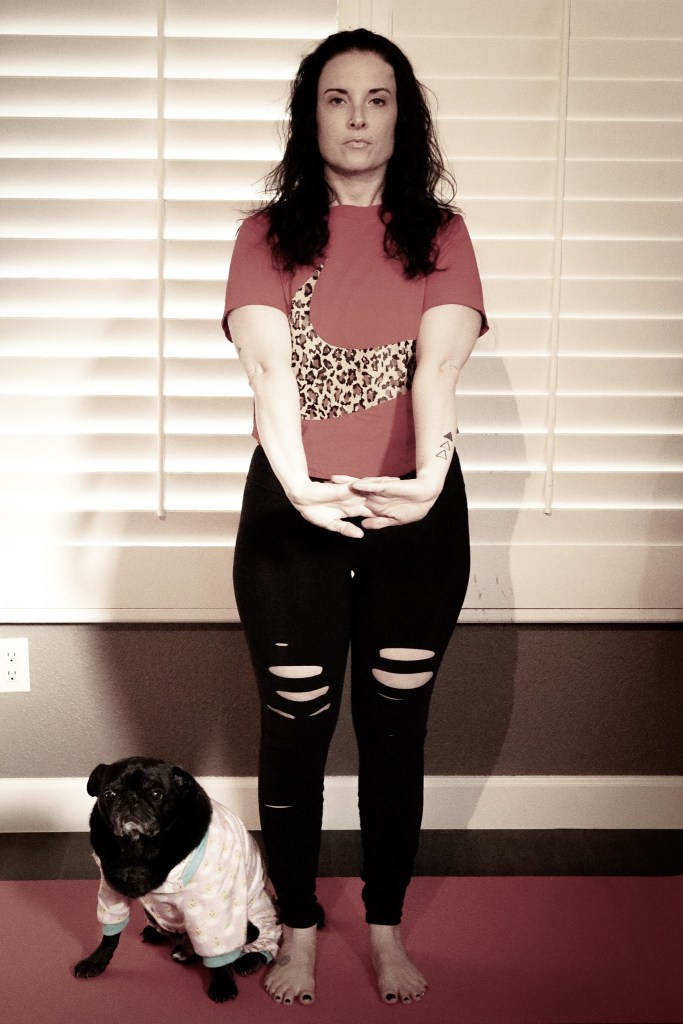
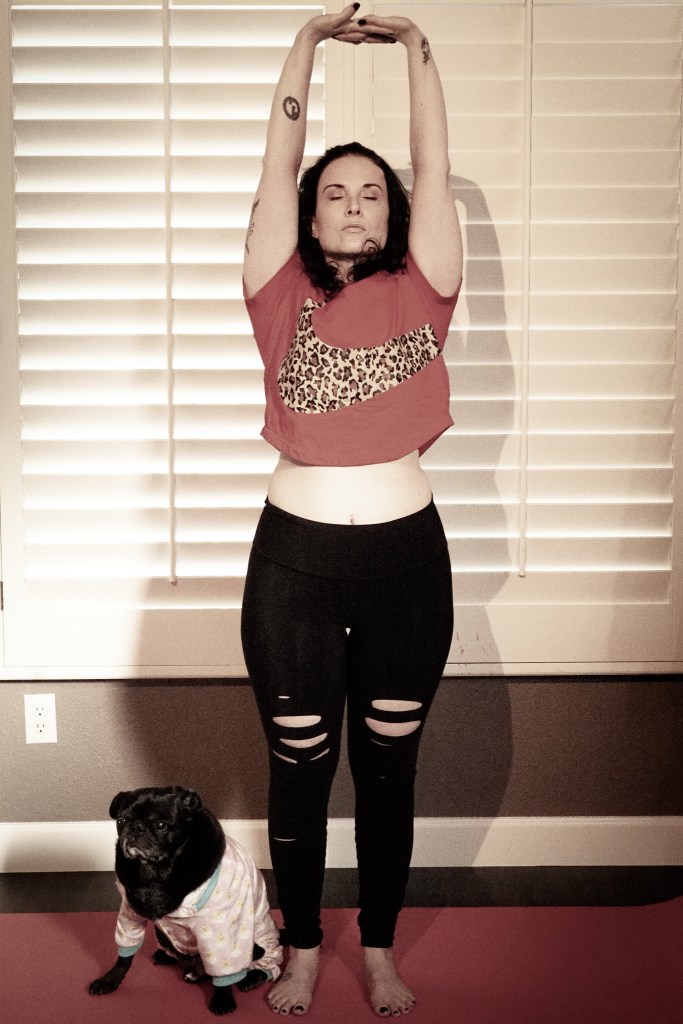
  • Interlace your fingers and press the palms of the hands outward.
  • As you inhale, lift the hands overhead, stretching upward.
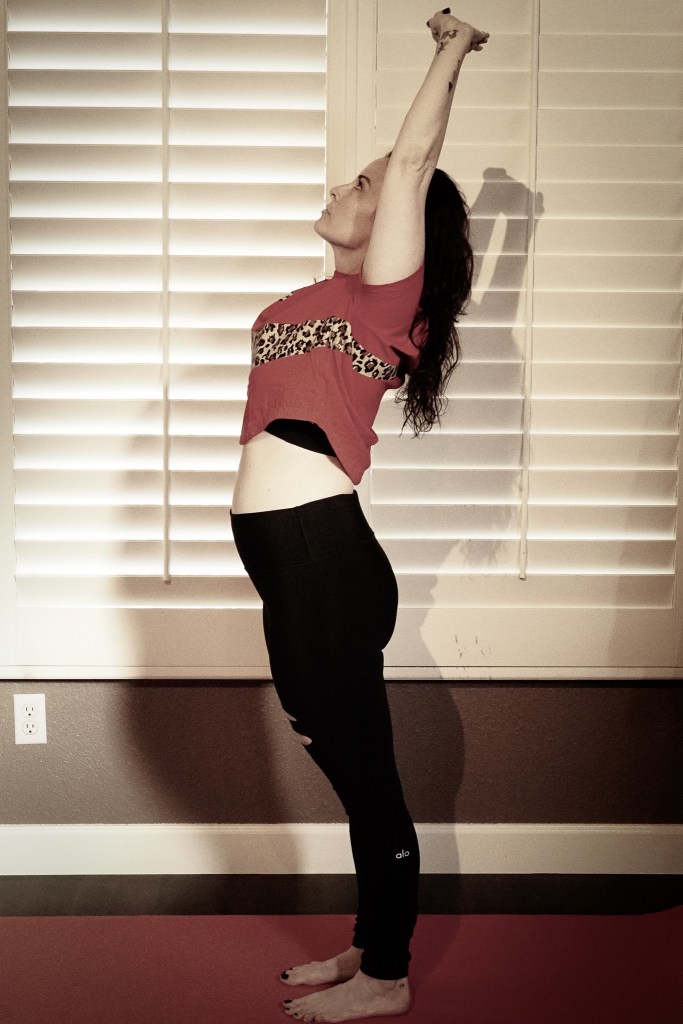
  • As you exhale, press your hands toward the back of the room taking a slight bend in the thoracic spine or center of your back, not the lower spine.
  • On an inhale, bring the hands back over the head and the spine back to neutral.
  • On an exhale, stretch to the right side, bending from the waist.
  • Inhale and bring the torso back to center.
  • Exhale and stretch to the left side, bending from the waist.
  • Inhale bringing the torso back to center and exhale to release.
  • You can repeat these two more times.

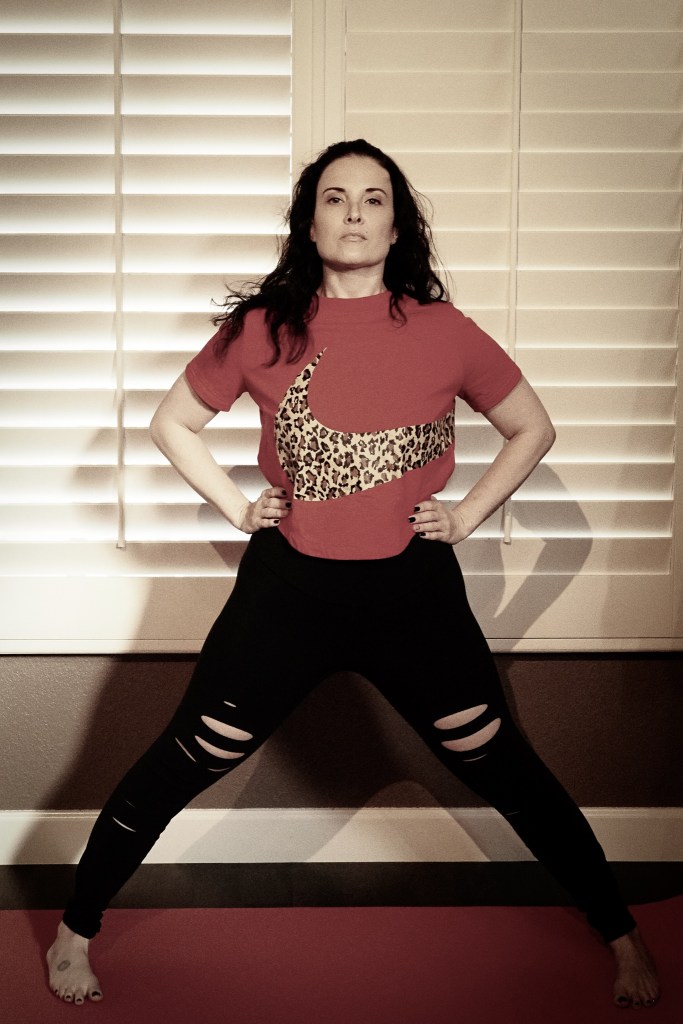
If you need to stand up and move your legs after sitting for too long, try Wide-Legged Forward Fold (prasarita padottanasana).

  • From a standing position, step the feet out to the sides about 3 to 4 feet apart.
  • Place your hands on your hips.
  • Point toes slightly in toward one another.
  • Engage the legs, lifting the kneecaps upward.
  • Take a deep inhale.
  • As you exhale, keep the back straight and hinge from the hips folding forward.
  • Keep the legs straight, but don’t lock the knees.
  • Relax the head letting it fall heavy.
  • Place the palms of the hands onto the mat, if the hands don’t touch the ground grab opposite elbows (left hand grabs right elbow, right hand grabs left elbow).
  • Take three deep breaths.
  • Bring the hands back onto the hips.
  • Put a slight bend in the knees.
  • Inhale and roll up to standing slowly, stacking vertebra on top of vertebra.
  • Step the feet back together.

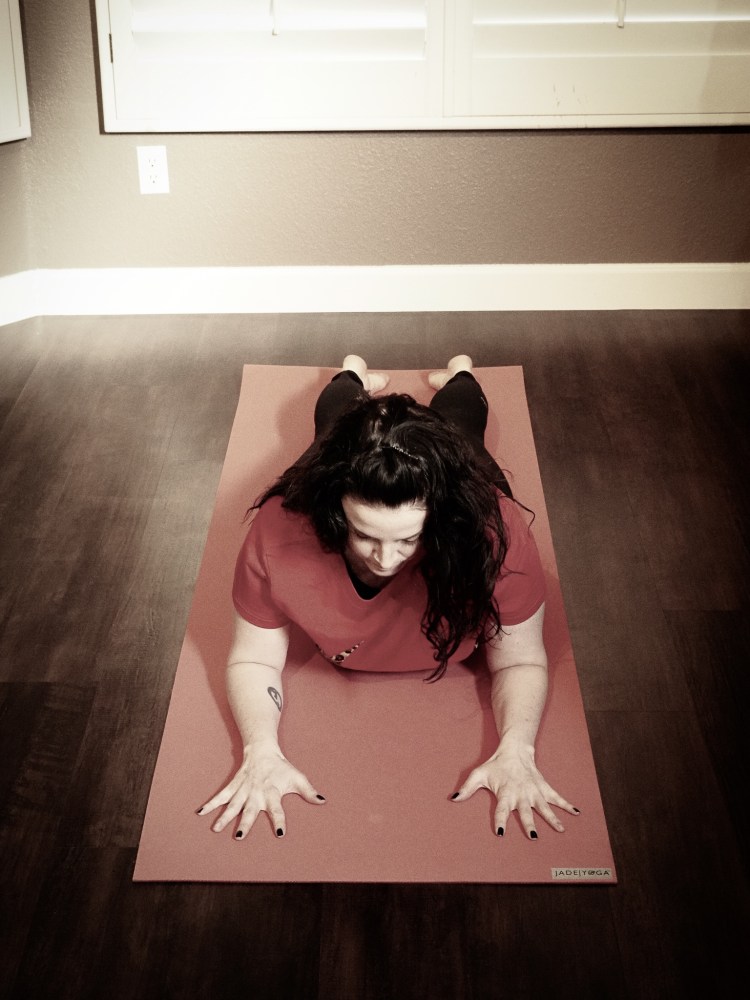
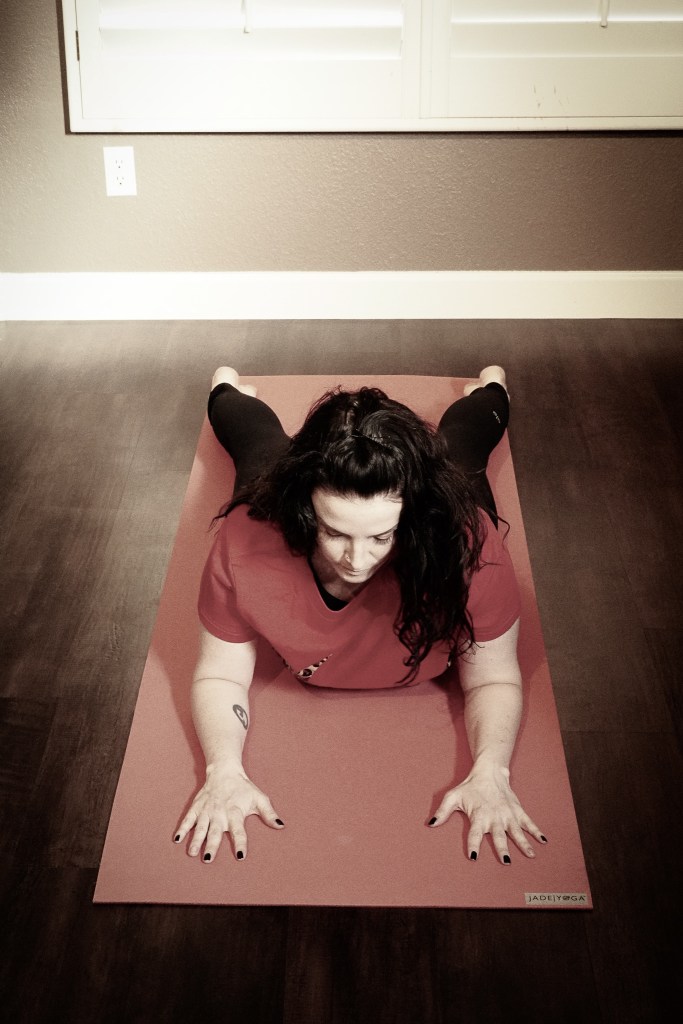
If you have the ability to lie down on the floor, Sphinx Pose (salamba bhujangasana) is a great heart opener.

  • Laying face down on the belly with the feet hip distance apart and arms along your side.
  • If you have lower back pain you can walk your feet out to the edges of the mat or just past shoulder width apart.
  • Bring your chin onto the mat and press the tops of the feet into the mat making sure your toes are untucked.
  • Bring your hands up toward your face with your elbows bent and tucked in along your side.
  • Finger tips spread wide and pointing to the front of the room.
  • Take a deep inhale and as you exhale engage the legs, begin to lift your chest off the mat and rest onto your forearms.
  • Make sure your shoulders are stacked over the elbows and you are pressing into the tops of the feet.
  • Your neck is in line with the spine or if it is more comfortable, you can shift your gaze down at the mat.
  • Take 10 deep breaths here.
  • On your last exhale slowly lower down and bring your right ear onto the mat, relax the arms along your side.
  • Take 5 to 10 breaths here.
  • Repeat two more times alternating ears while you rest.

PRANAYAMA

After sitting at a desk staring at a computer screen or book, our bodies can use some additional oxygen in our bloodstream.  This can lead to a reduction in stress and tension, better sleep, and increased energy.  A great breathing technique is Ujjayi breath or breath of fire.  The Chopra Center discusses many of the great benefits of Ujjayi including how it helps to naturally reignite your internal fire and rejuvenate the body.  Pranayama or breathing exercises can take a while to get comfortable with.  If at anytime you start to feel dizzy or light-headed, stop the breathwork and continue with your natural flow of breathing.

  • Come to an easy seated pose either in a chair or sitting cross-legged on the floor.
  • Relax the shoulders and sit up nice and tall with the crown of the head pressing up toward the ceiling.
  • Hands resting on the tops of the thighs if you are sitting in a chair or on the knees if you are sitting cross-legged, with the palms facing up.
  • Bring a hand up to your mouth and pretend it is a mirror.
  • Open your mouth and try to fog up the “mirror” with your breath as you exhale.
  • Once you get the feel for how your throat restricts as you do this, you are going to close your mouth and place your hand back down on the thigh or knee.
  • Continue to breath like you are fogging the mirror keeping your mouth closed.
  • Once you get comfortable you can practice keeping the back of the throat restricted on the inhales as well as the exhales.
  • This is often called audible breath because you will be making an ocean sound.
  • Breath like this for 10 full breaths, closing your eyes if this feels good.

SELF-CARE

  • Step outside and breathe in the fresh air.
  • Take a quick walk outside.
  • When you get home reward yourself for all you hard work.  Choose one of the other activities below or spend sometime doing something that makes you happy and recharges your battery.
Infographic designed by Heather Wisniewski
Design a site like this with WordPress.com
Get started