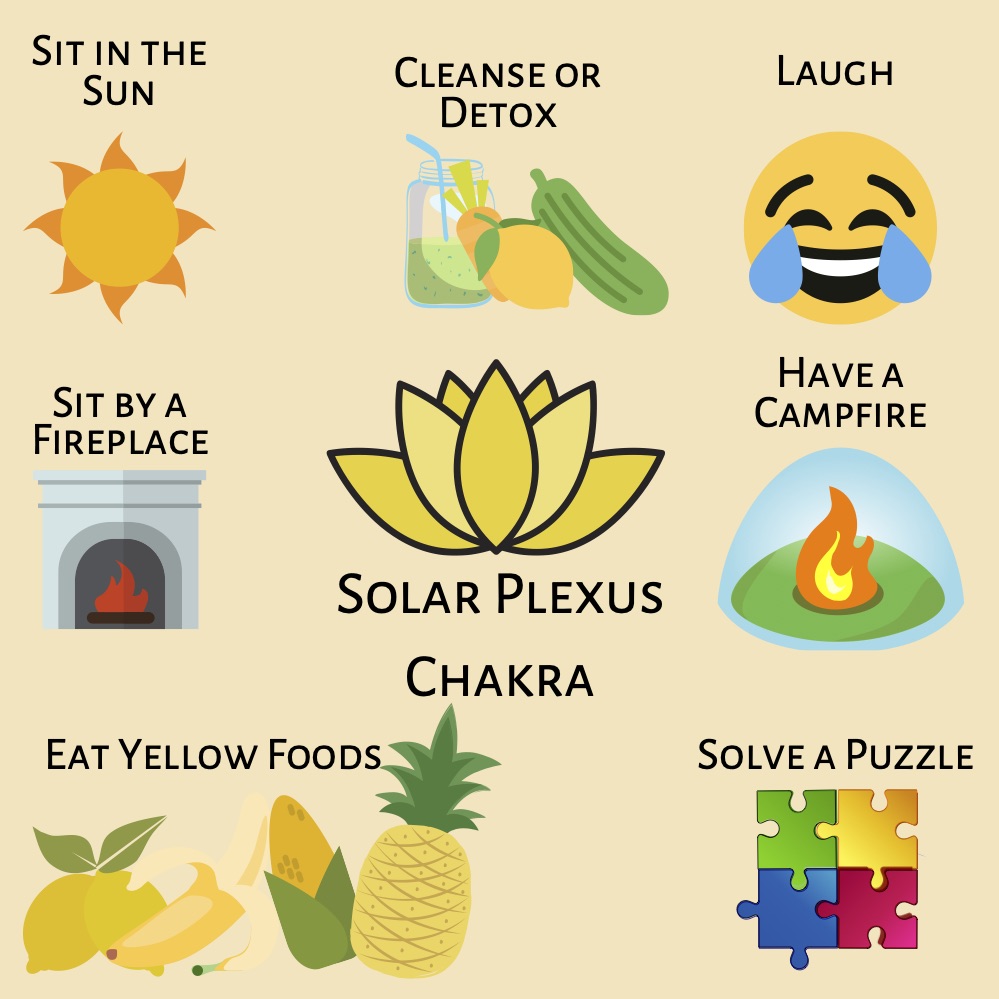
If yoga isn’t your thing, you can use laughter as the medicine of your solar plexus chakra. Go to a comedy show, see a funny movie or laugh with friends. You can also work your mind to balance your third chakra center. Try mind teaser puzzles, crosswords and other mentally challenging tasks. Wearing yellow and eating yellow foods like bananas, yellow squash or zucchini and lemons can help balance your chakra.
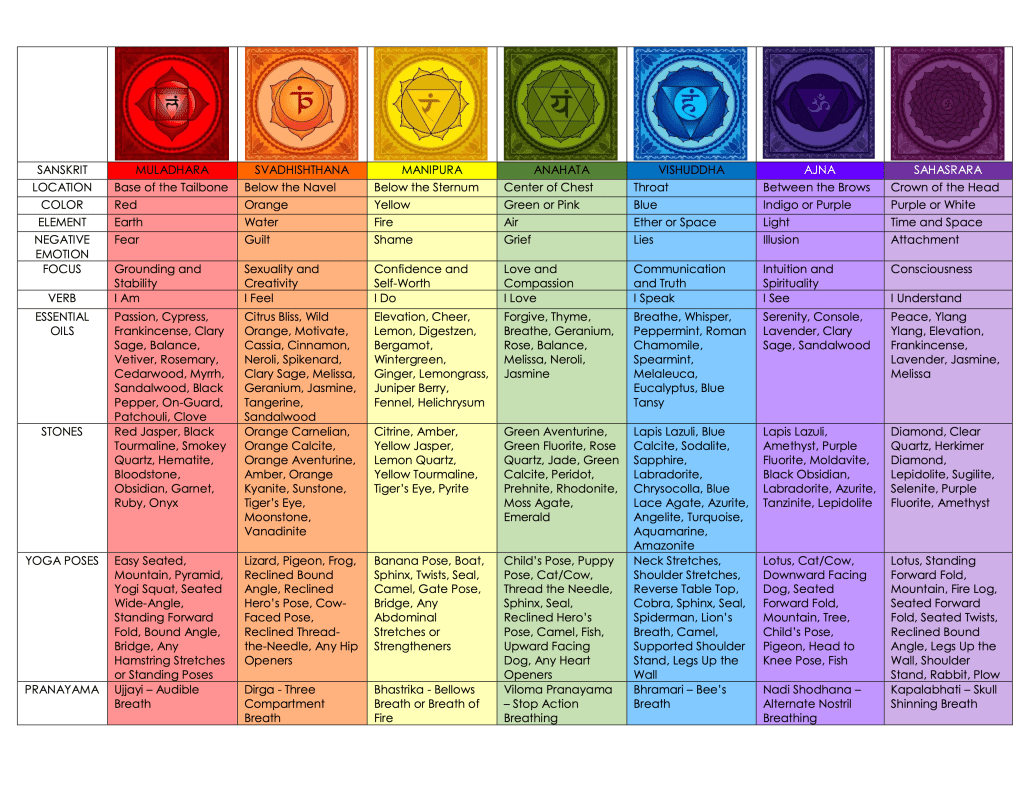
The Anahata or heart chakra is the is the center of your spirit as well as the center of the chakras. It is located at the center of your chest. The heart chakra, or fourth chakra center is associated with the colors green (lower) and pink (upper), the element of air and can be blocked by grief. It is symbolized by a gorgeous green and /or pink lotus flower with twelve petals and focuses on love and compassion. More specifically, the higher heart chakra rules unconditional love for all and the lower heart chakra rules human love. The heart chakra is the healing center and it moves love through your life. When your heart is open you are not only loving toward others, you are also loving toward yourself. To be open to love is to reach to the deepest places and connect with our true essence, our spirit and our soul.
Signs that your heart chakra is imbalanced can be asthma, heart disease, high blood pressure, lack of self-worth, issues with forgiveness, anger, social anxiety and jealousy. If you are struggling with an overwhelming sense of grief or you struggle with trusting others and letting them in, you may have an imbalance in your heart chakra.
Pranayama
Viloma Pranayama or Stop Action Breathing (Inhale, Exhale a third, pause, exhale a third, pause, exhale fully, repeat)
Yoga
Yoga poses that balance the Anahata chakra tend to open the heart and chest, such as back bends, making room to allow more love into your life. The heart chakra is linked to the heart, ribs, lungs, shoulders and upper thoracic spine. Poses that focus on these areas help to balance the fourth chakra center.
The Manipura or solar plexus chakra is located above your navel and just below your sternum. Think of this chakra as your gut instinct. When you have that feeling in your gut about something, it is coming from your solar plexus chakra. This chakra empowers you to follow your true path.
The solar plexus chakra, or third chakra center is associated with the color yellow, the element of fire and can be blocked by shame. It is symbolized by a bright yellow lotus flower with ten petals and focuses on confidence and self-worth. The key to a healthy and opened third chakra center is being assertive without being unfair or overbearing; being respected without having to demand it; and not being crushed by failures or mistakes, but rather recognizing your positive attributes.
Signs that your solar plexus chakra needs to be balanced can be trouble with the pancreases and liver, digestive issues, ulcers, diabetes, overeating, feeling weak, lack of confidence, low self-esteem, addiction and boundary issues. If you experience issues with eating disorders or struggle with feeling shame, you may have a deficient Manipura chakra.
Pranayama
Bhastrika or Bellows Breath or Breath of Fire
Yoga
Yoga poses that balance the Manipura chakra tend to awaken the core with strengthening, stretching and twisting. The solar plexus chakra is linked to the stomach, thoracic spine and abdomen. Poses that focus on these areas help to balance the third chakra center.
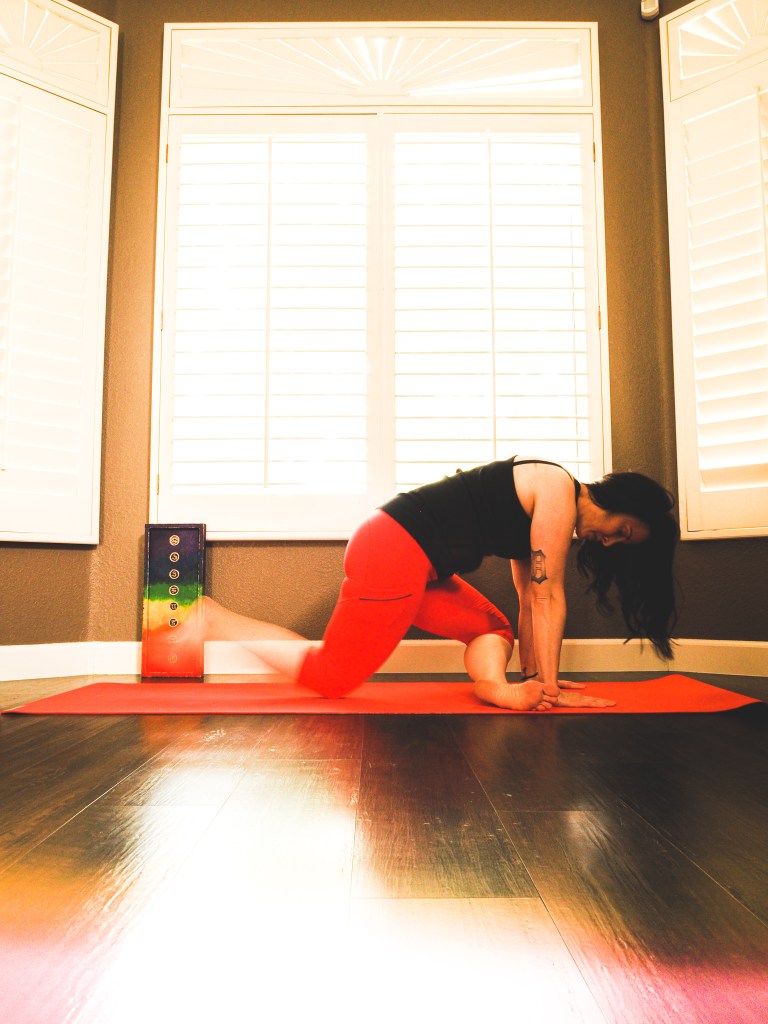
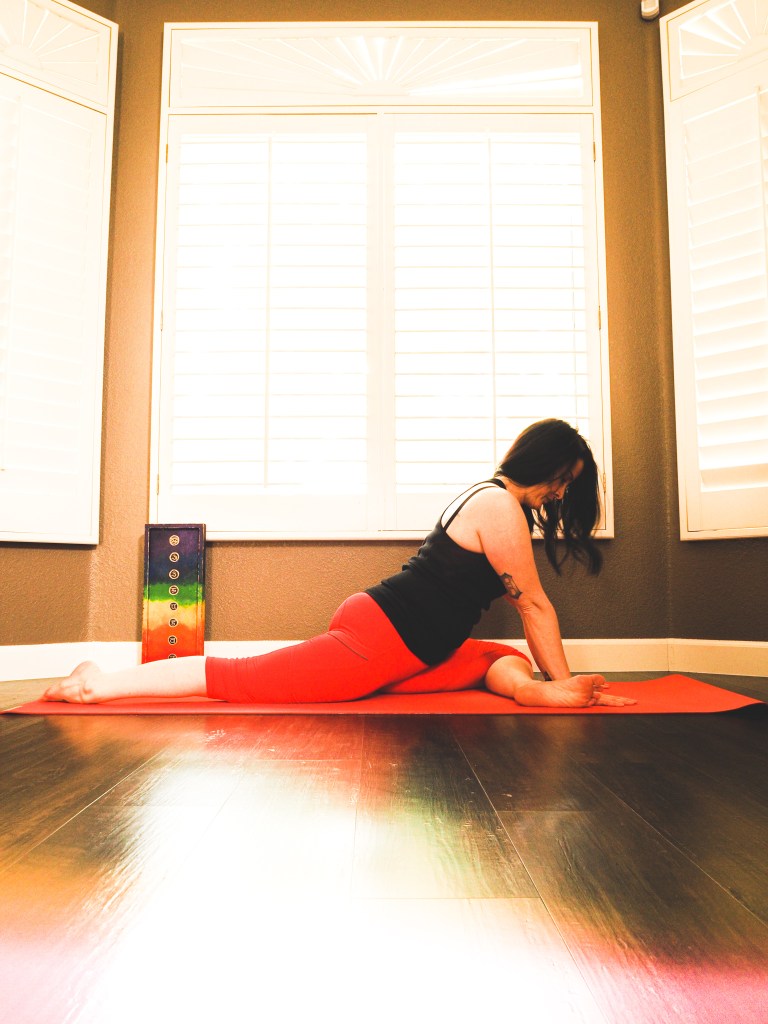
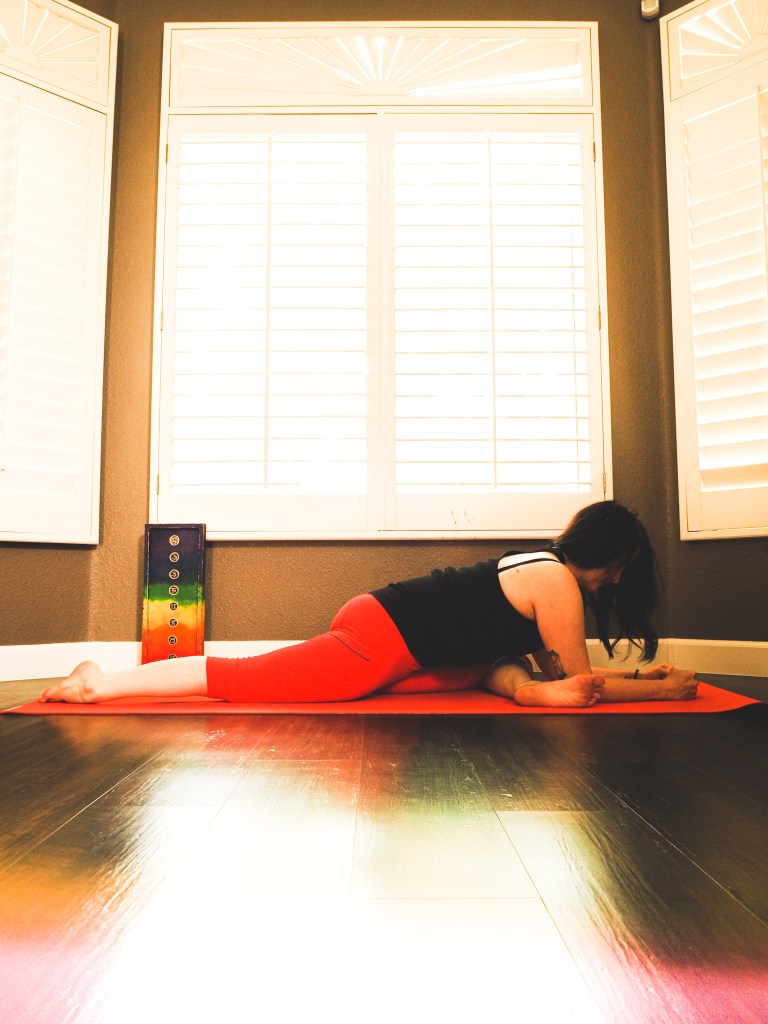
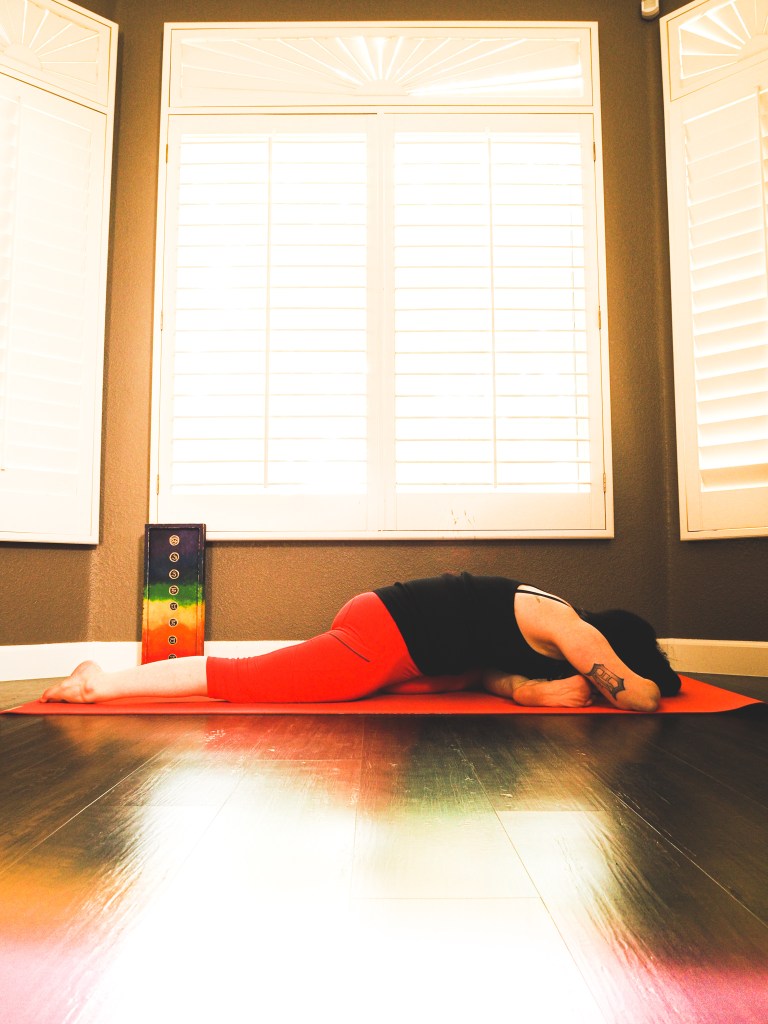
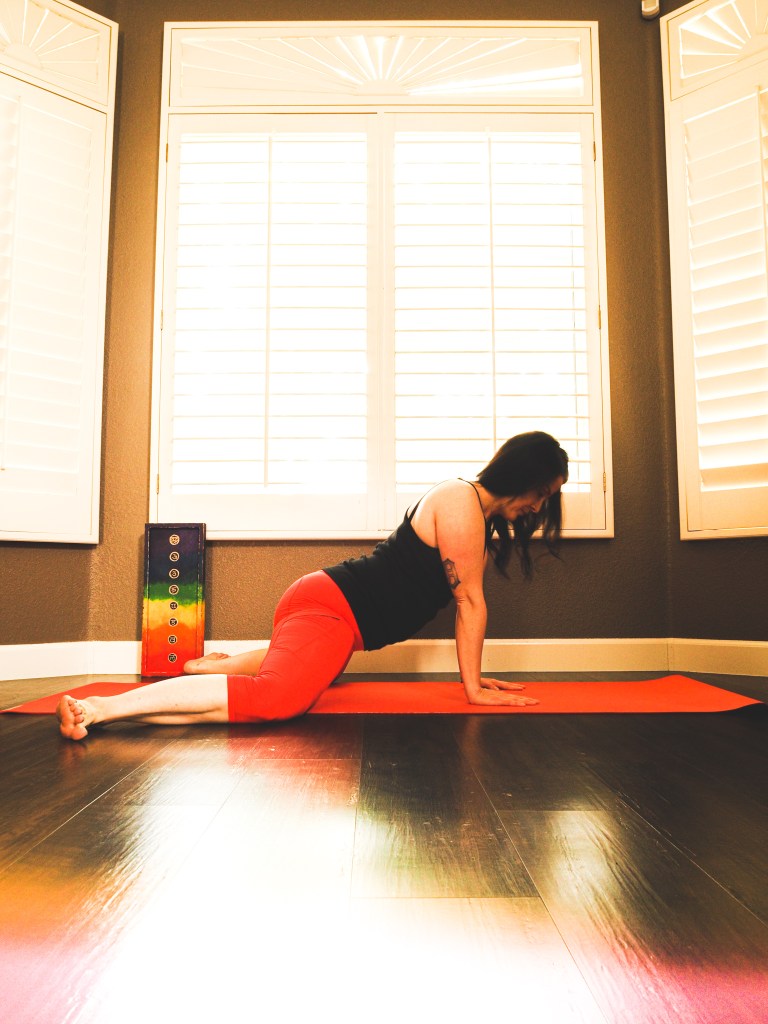
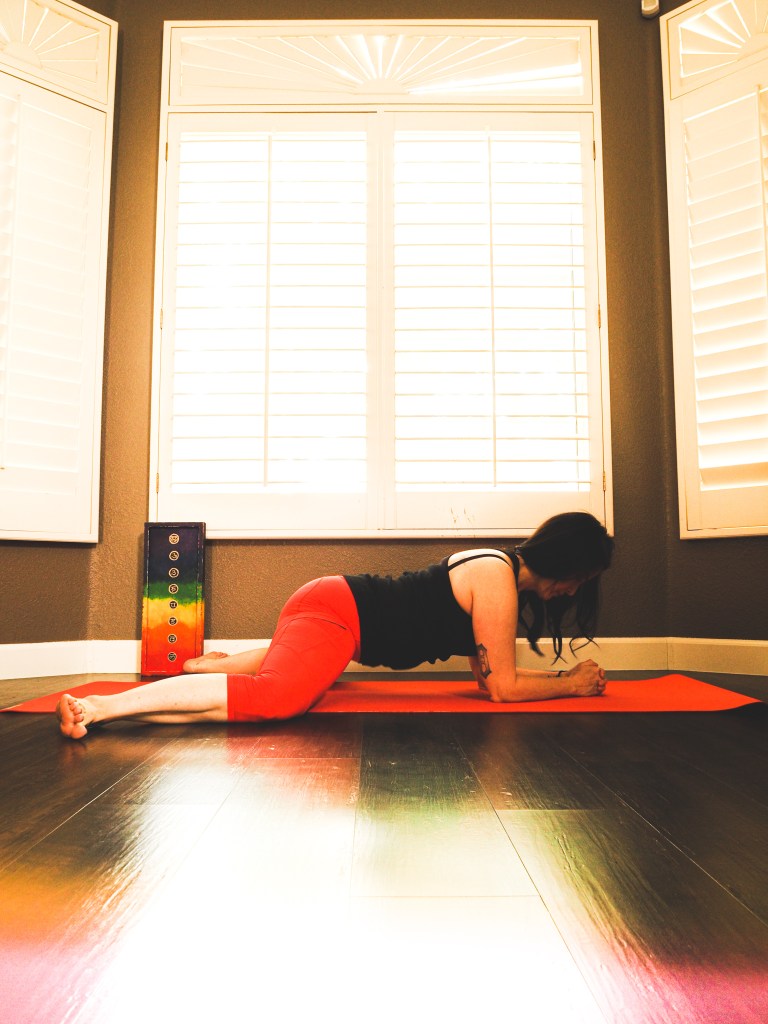
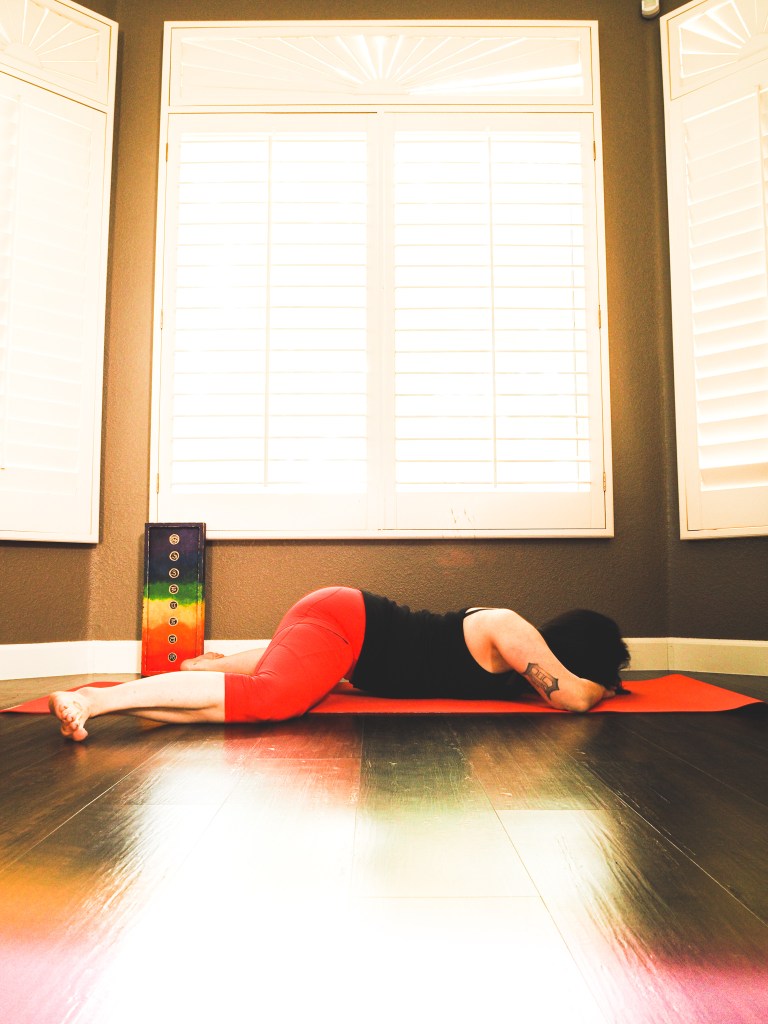
Reclined Hero Pose (Supta Virasana) One side at a time
Reclined Pigeon (Supta Kapatasana)
Reclined Cow Face Pose (Supta Gomukhasana)
Oils
Cinnamon*
Spikenard
Geranium
Jasmine
Melissa
* Any of these oils need to be mixed with a carrier oil and used with caution.
Crystals
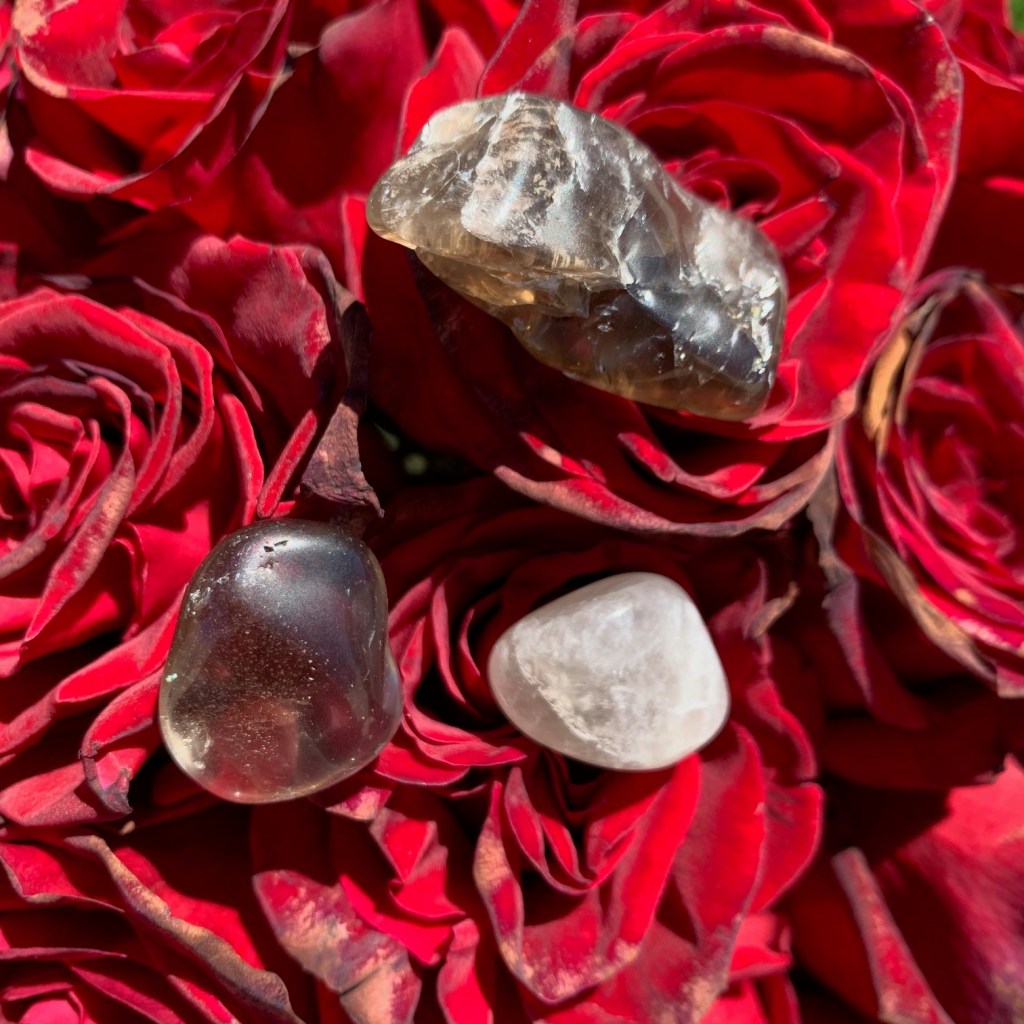
Tiger’s Eye
Moonstone
Vanadinite
Mudra
Dhyana Mudra – Starting in a seated pose, place the hands in your lap with the palms face up. The left hand will be on the bottom and you will place the right hand on top of it and let the thumbs come together to touch.
Meditation
Click here for the Sacral Chakra Meditation by Yoga2Peaces on Soundcloud.
As we continue moving through the sacral chakra, we will move into poses that focus on opening the hips. As humans we harbor a lot of emotion in our hips, so don’t be surprised if you feel some emotions (or even tears) arise while you are in these poses.
Yoga
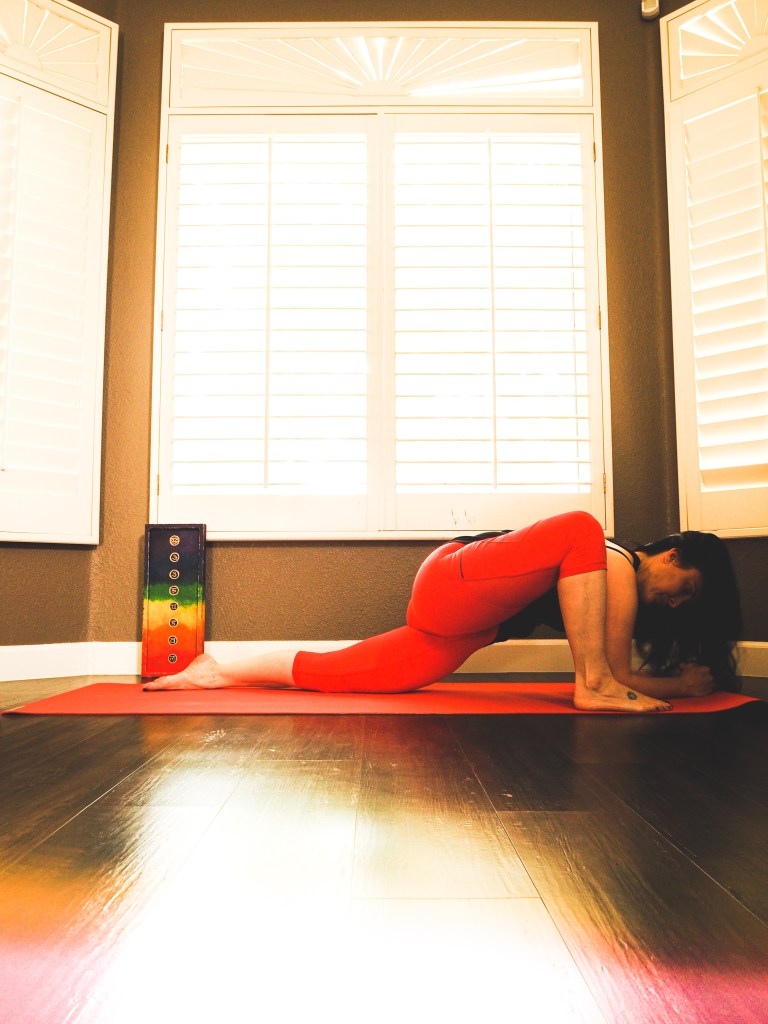
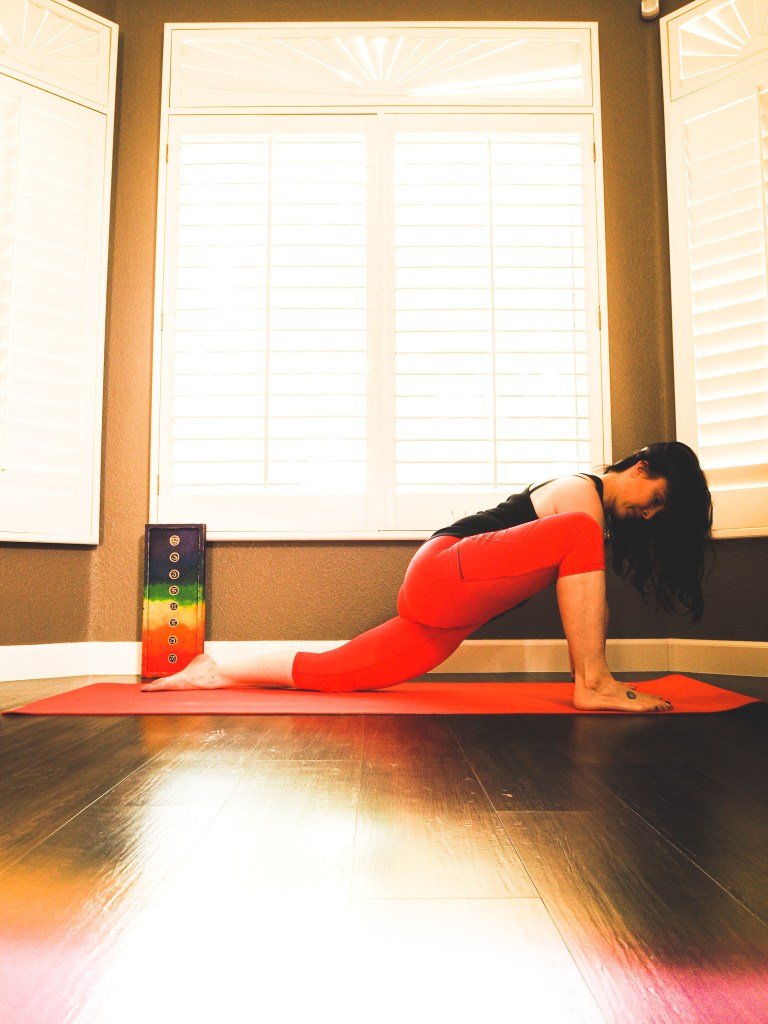
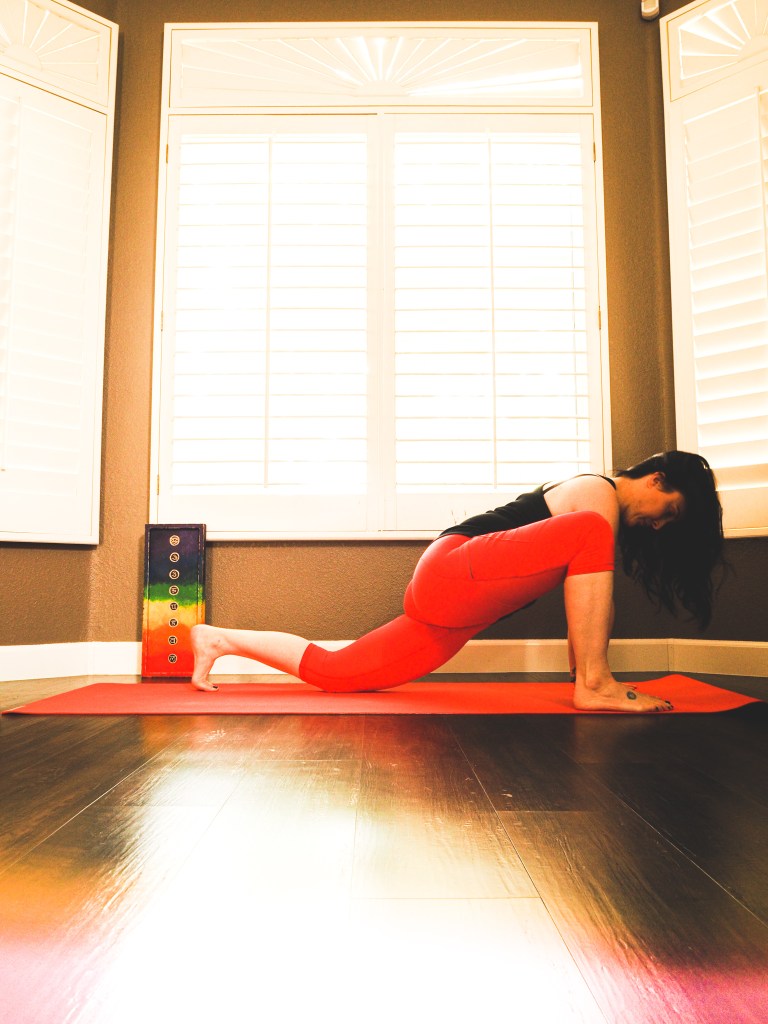
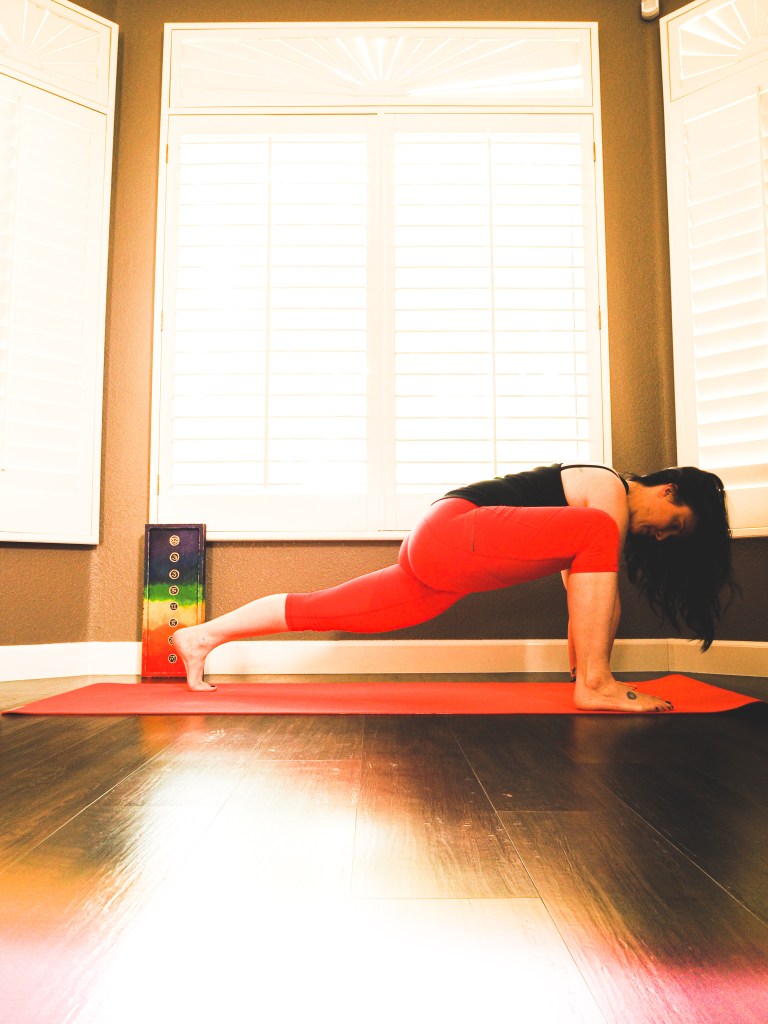
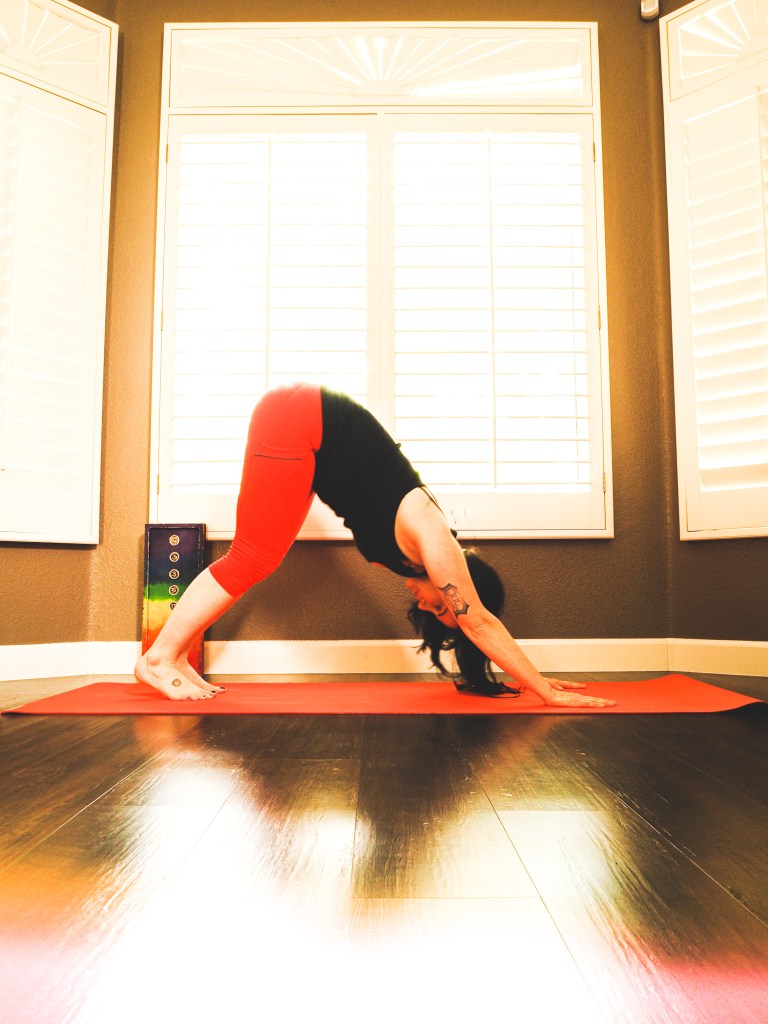
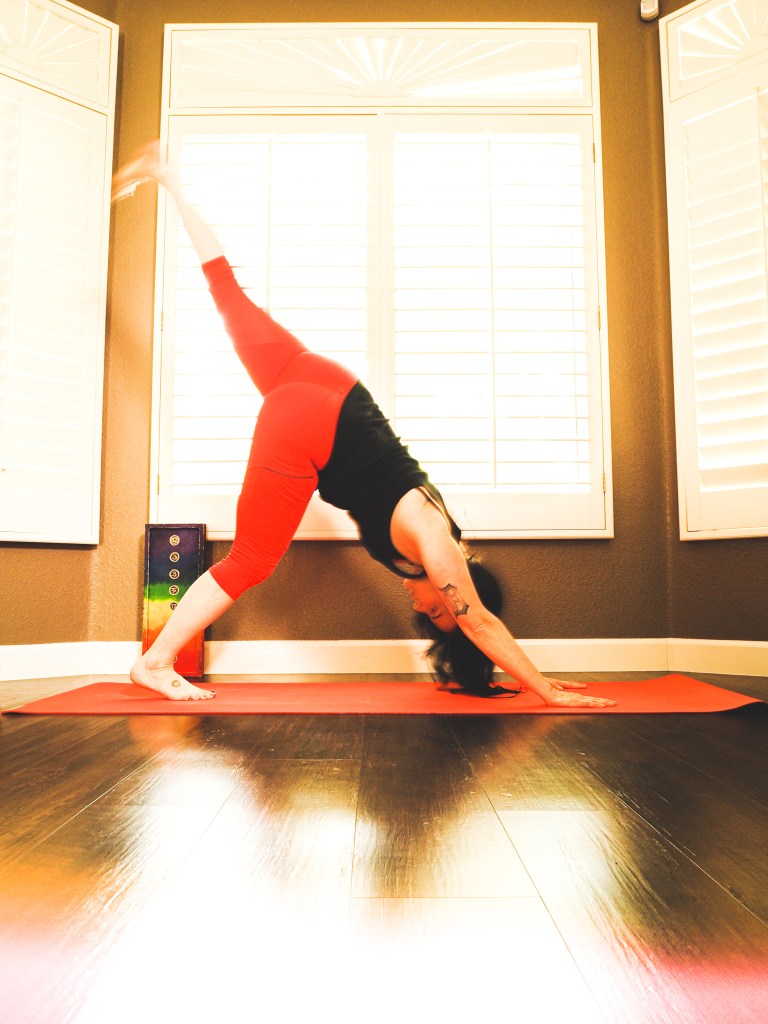
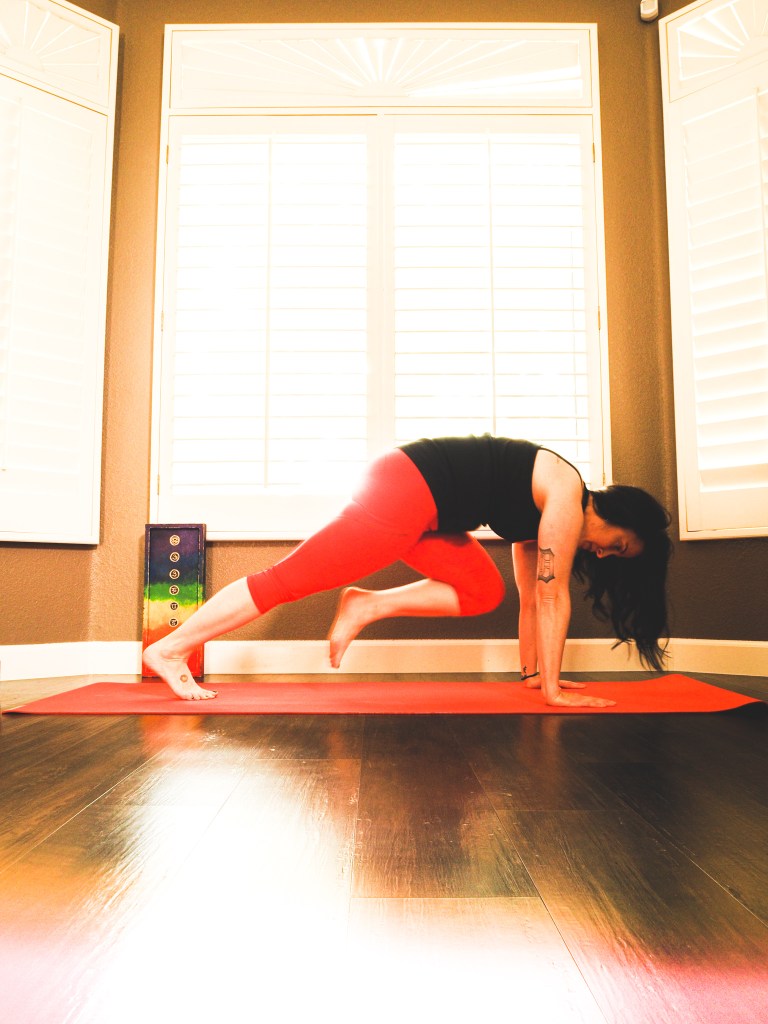
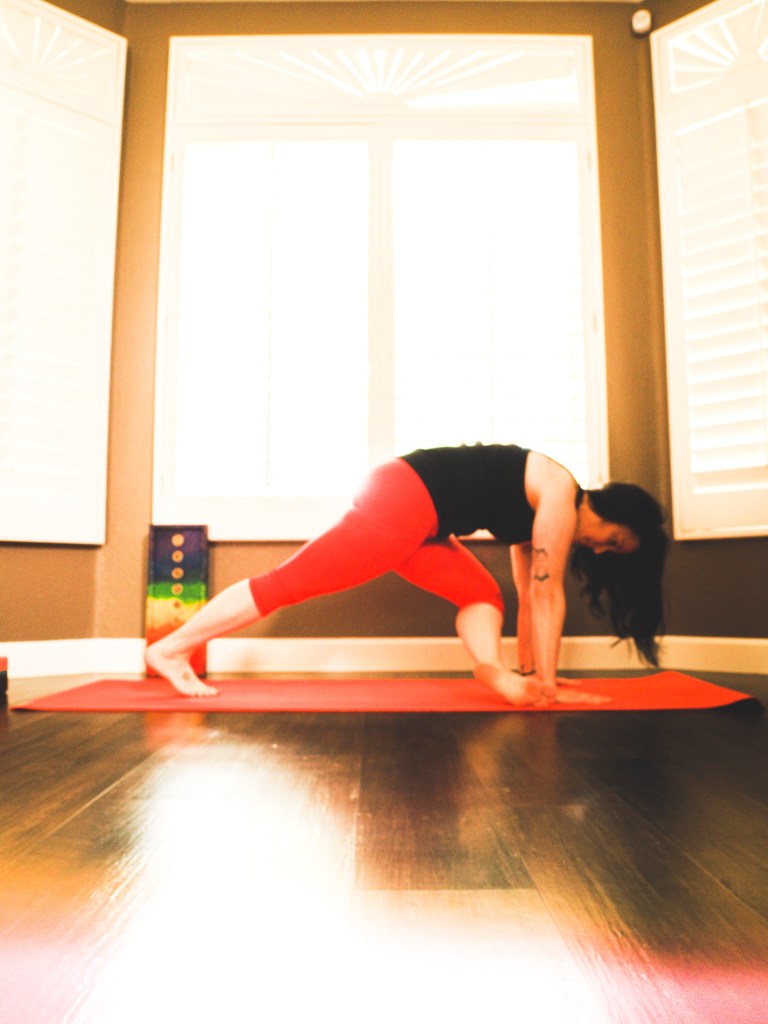
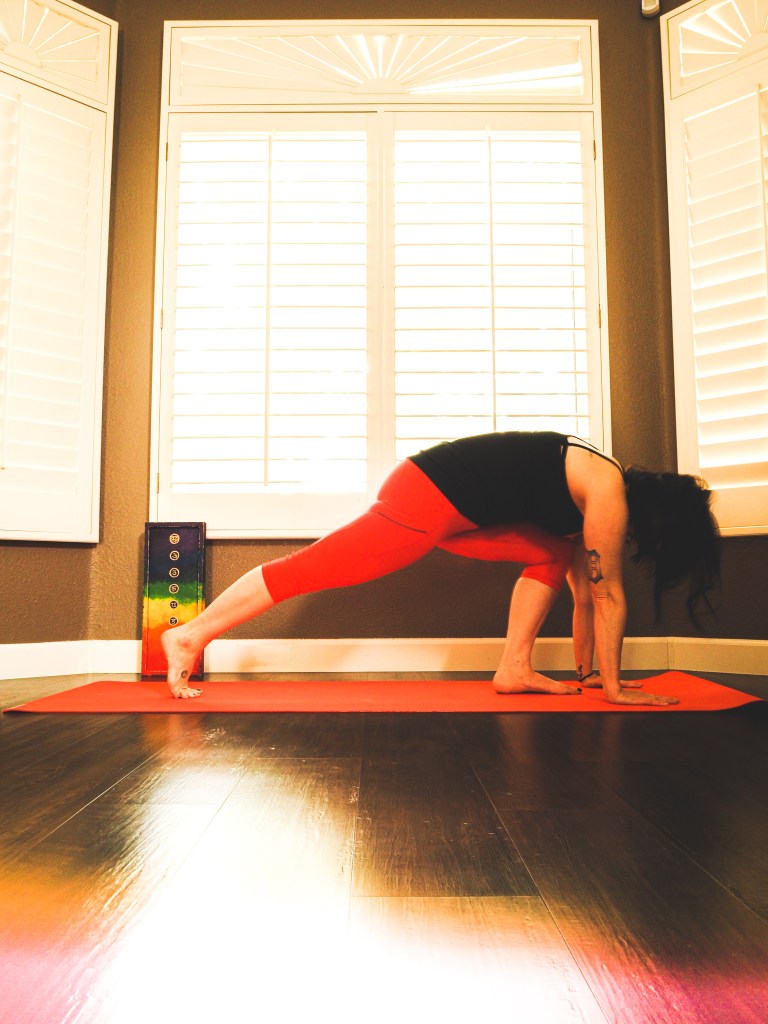
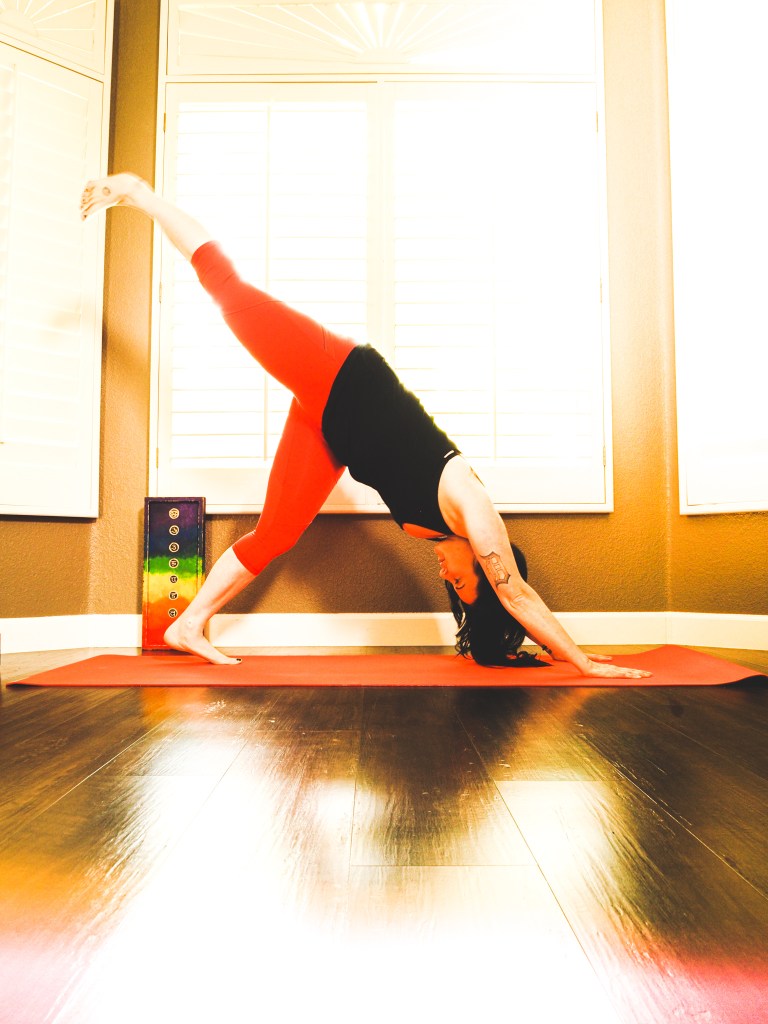
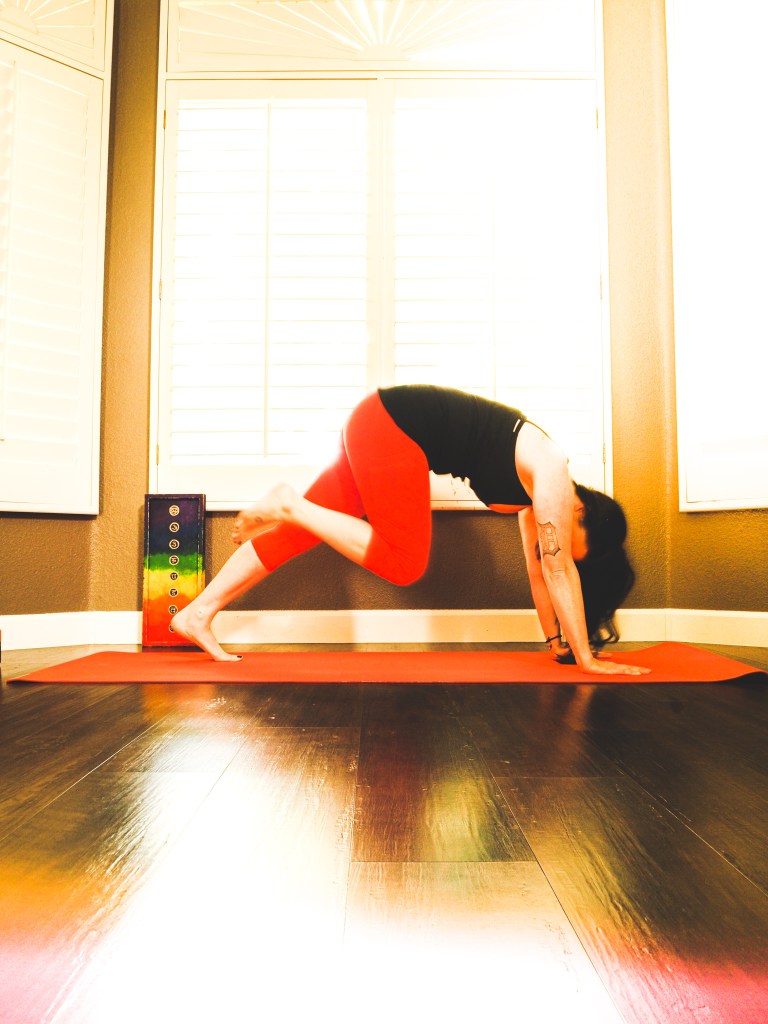
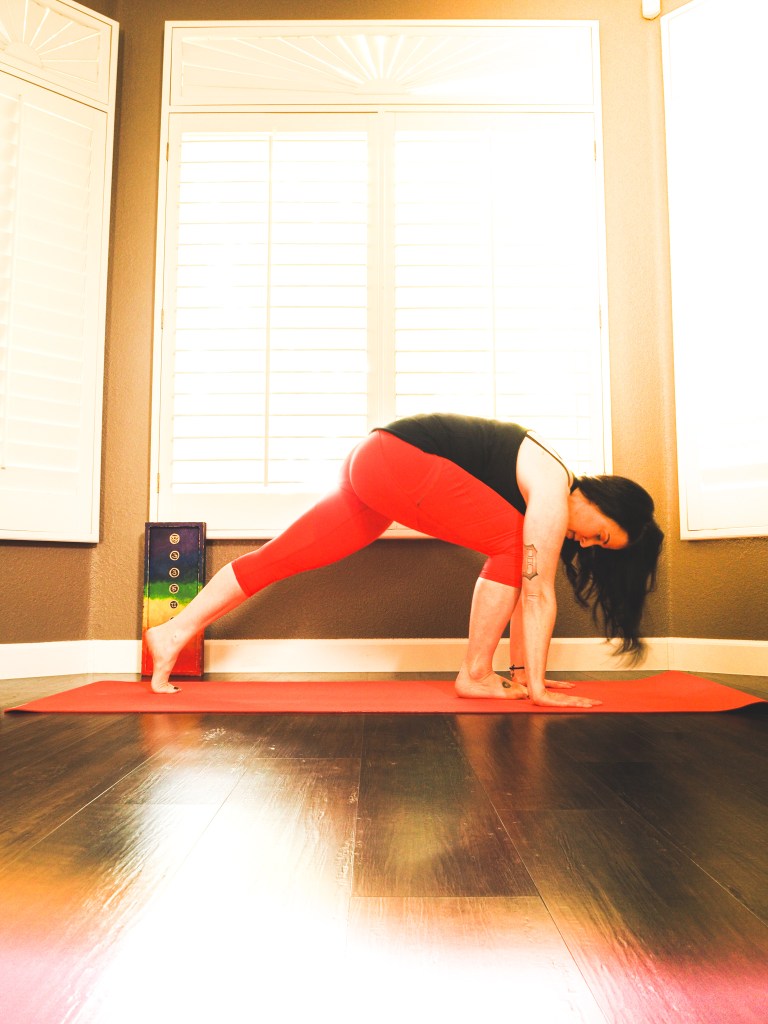
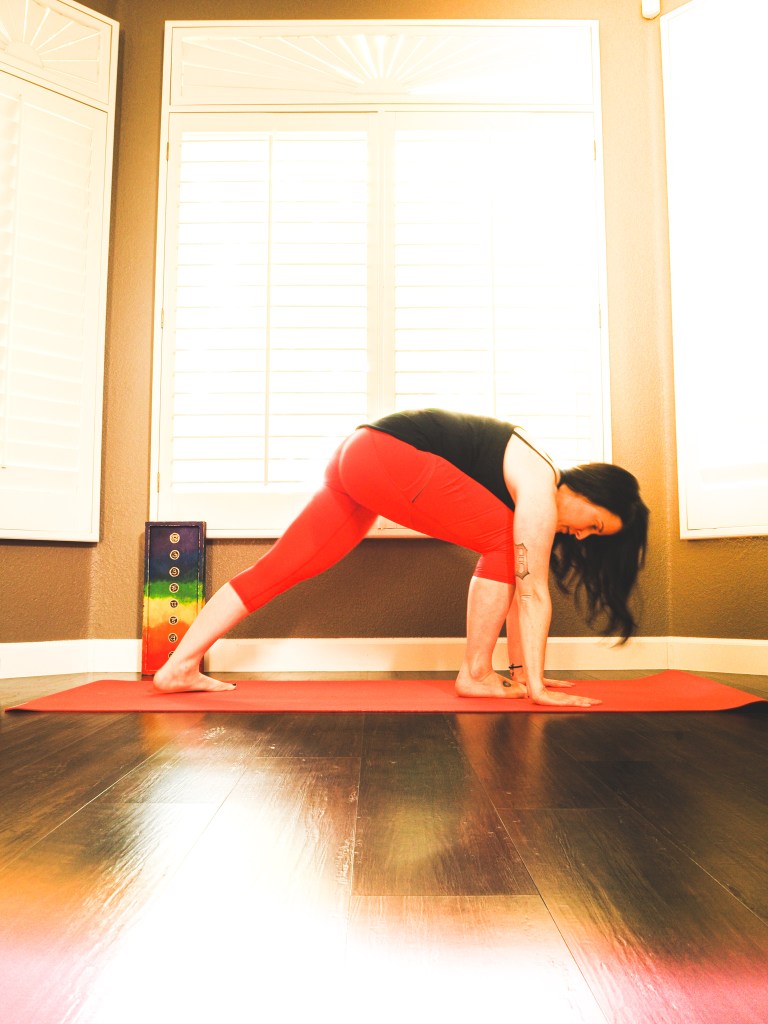
Lizard(Utthan Pristhasana) is a great hip opener that works not only the hips but the groin and hip flexors.
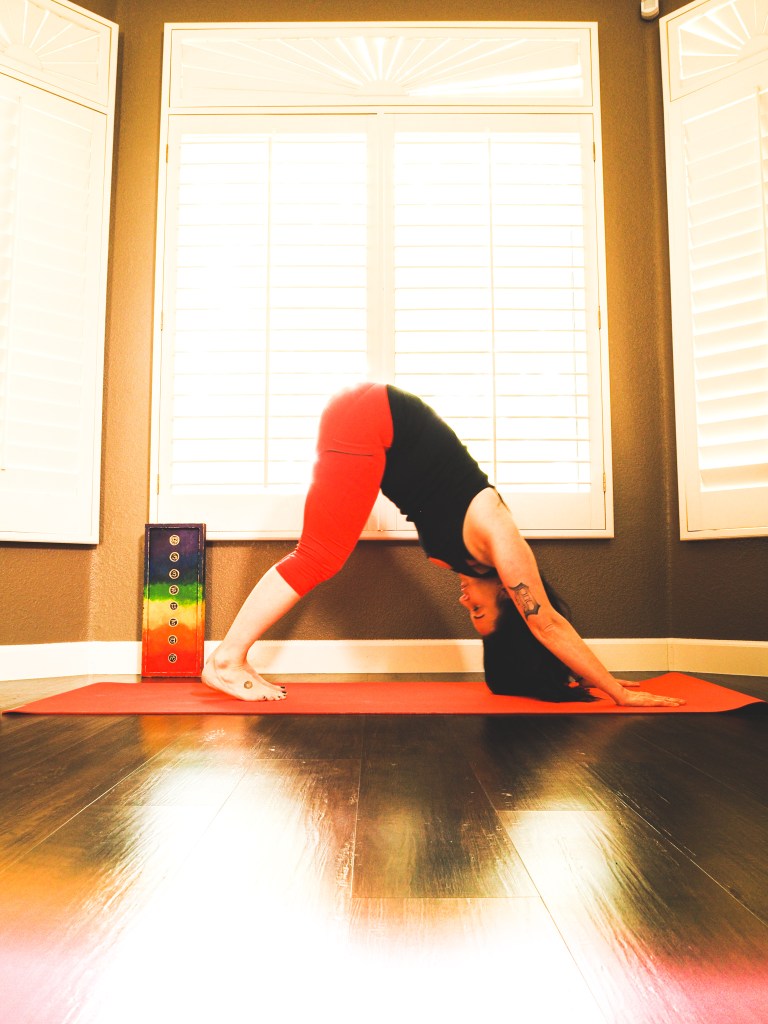
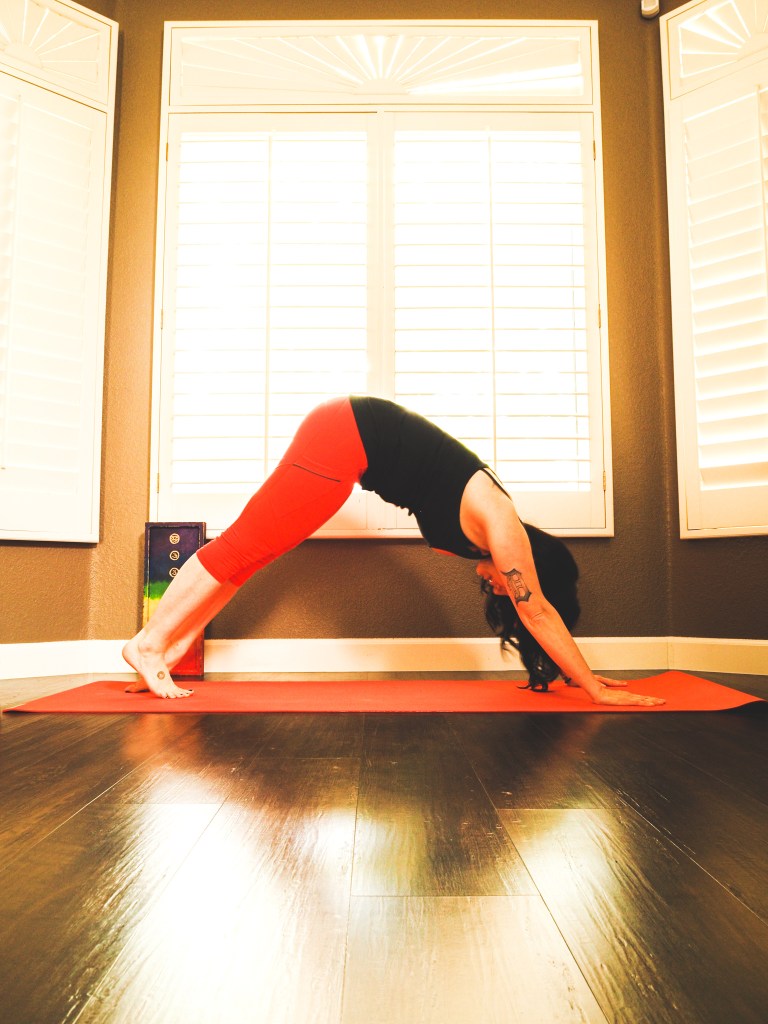
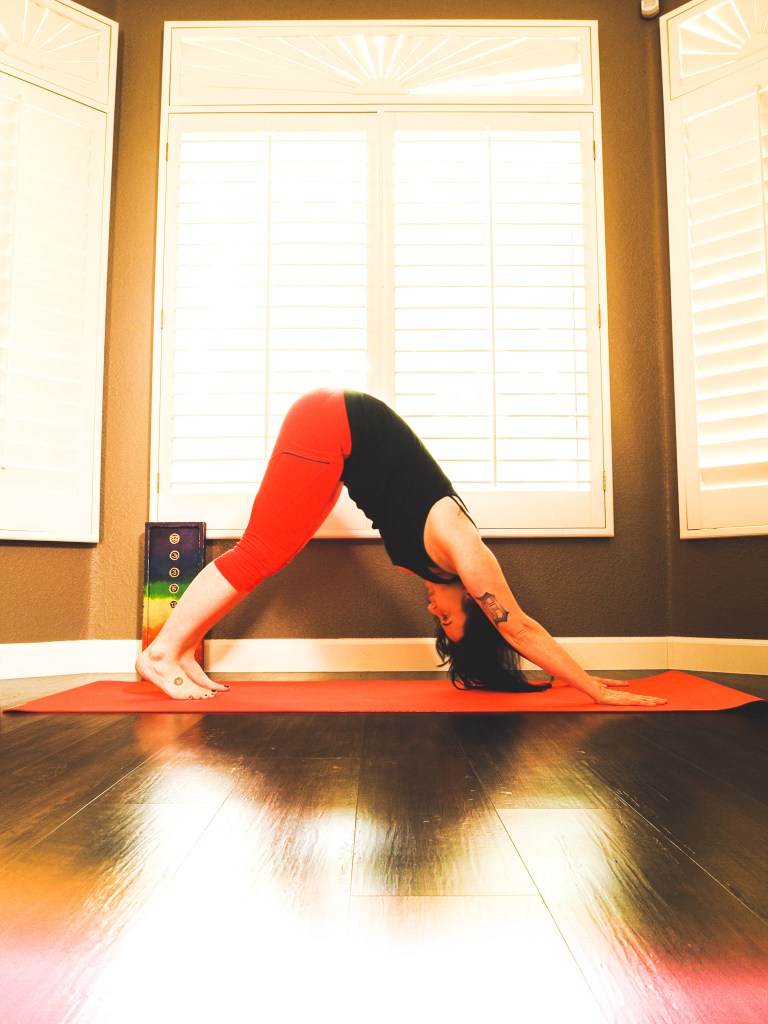
Start in Downward Facing Dog (Image 1).
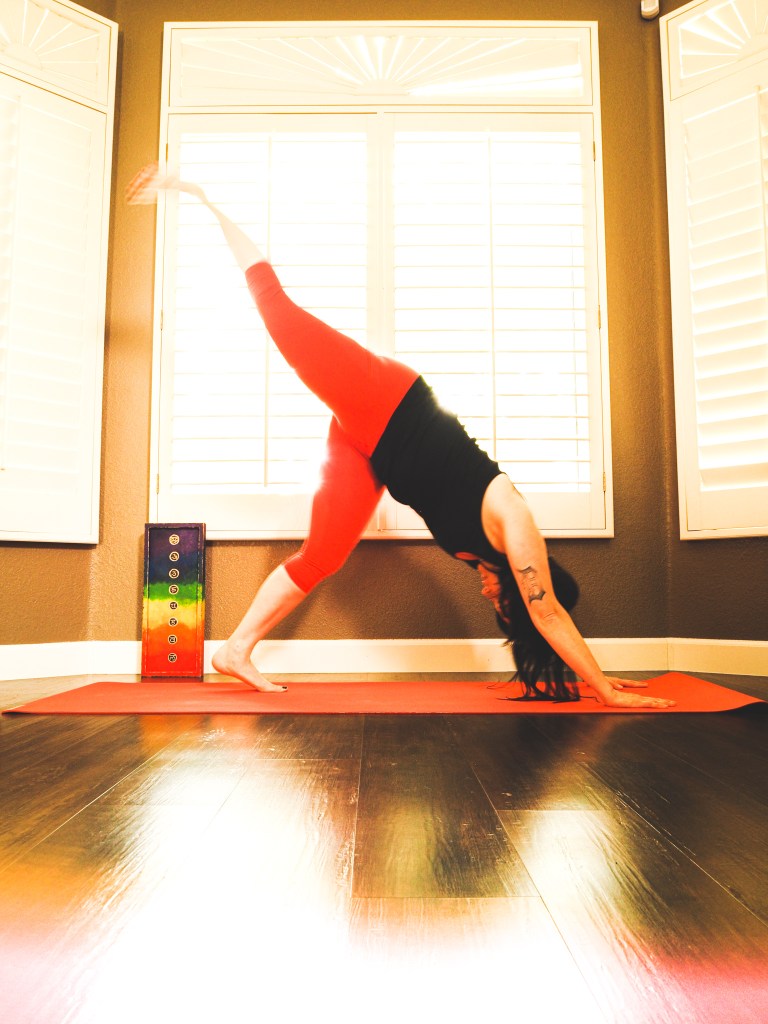
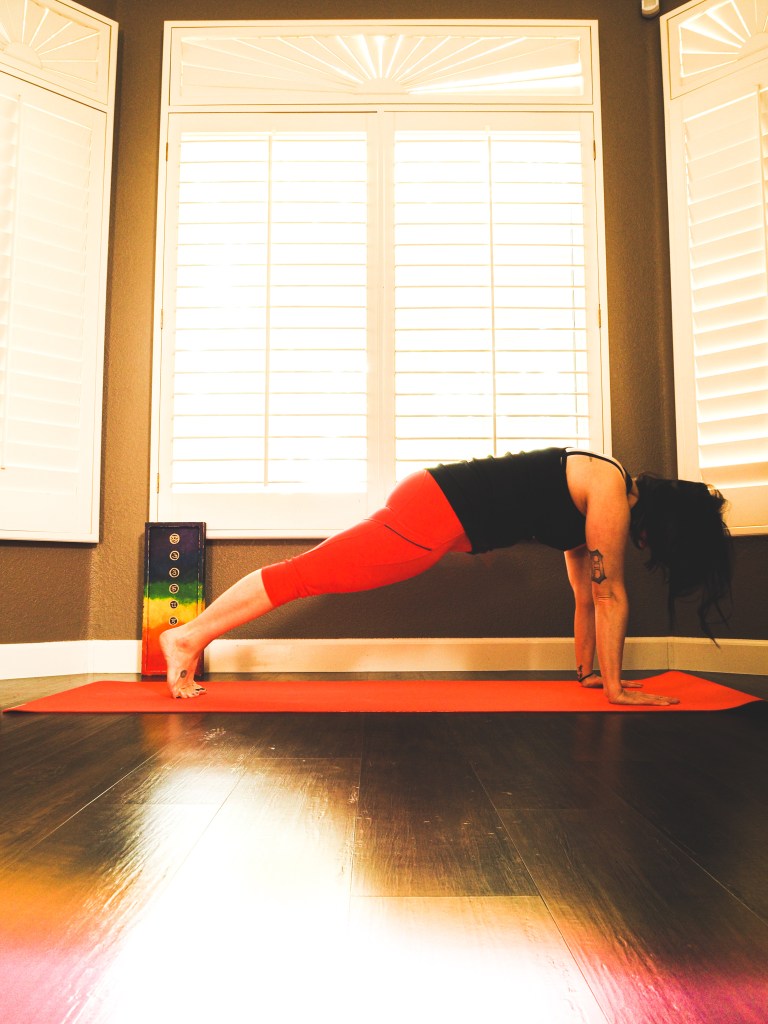
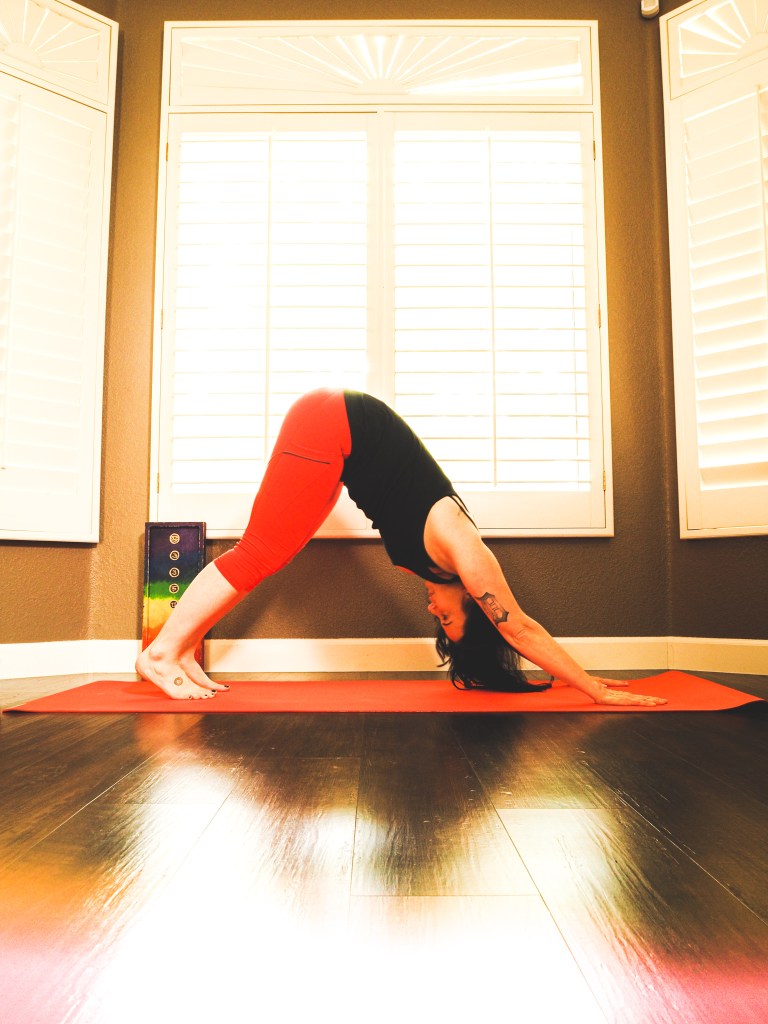
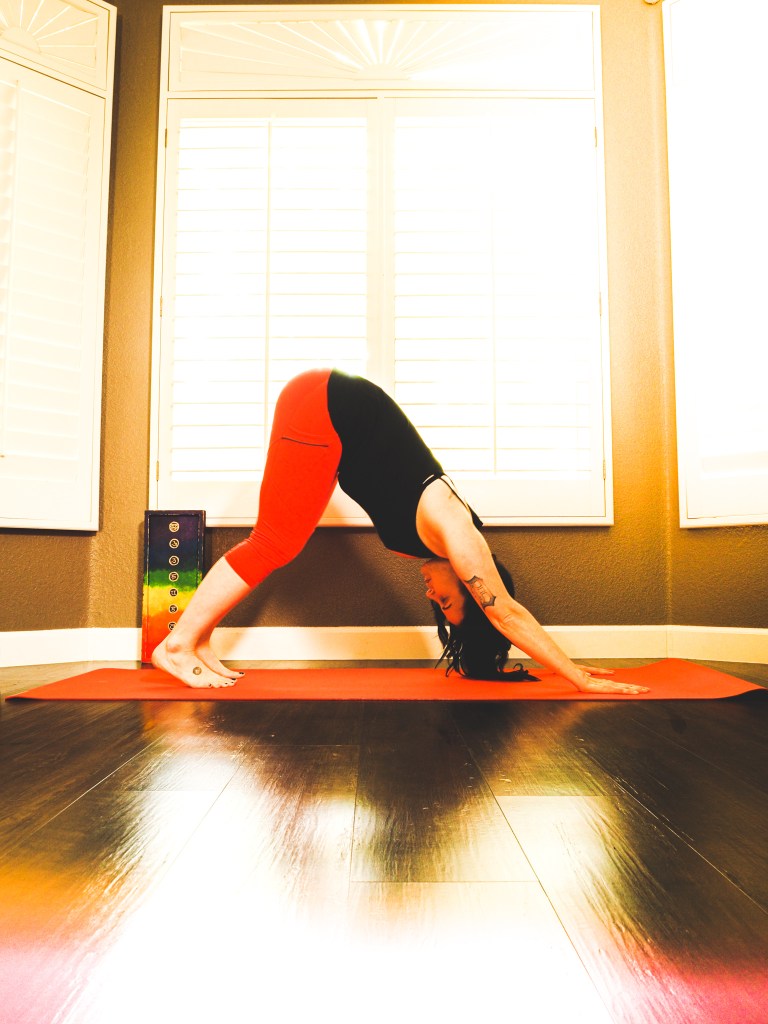
Inhale and extend the right leg back into Three Legged Dog (Image 2).
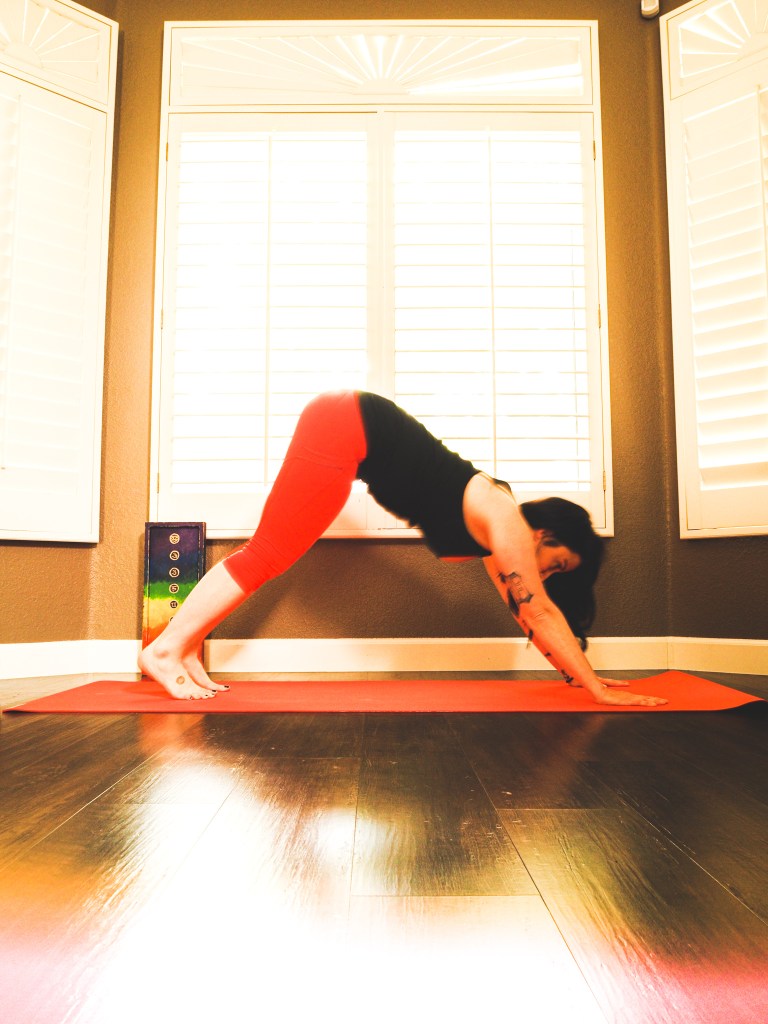
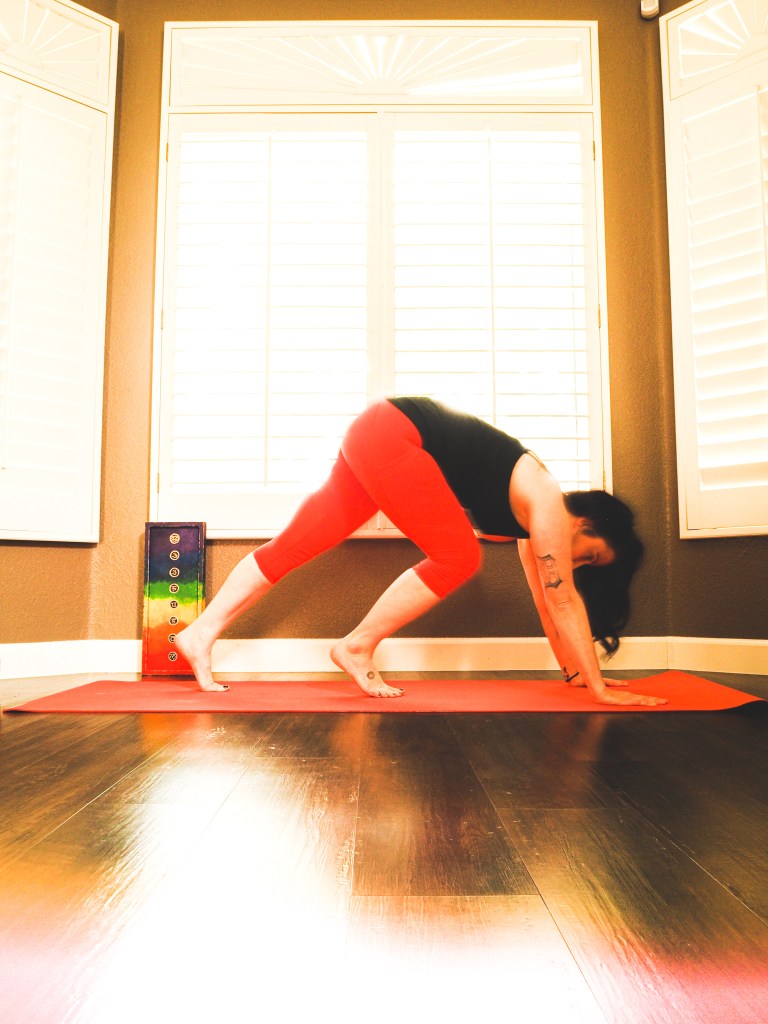
Exhale and draw the right knee into the chest and plant the right foot between the hands.
Lower down onto the left knee.
Bring the right hand to the inside of the right foot.
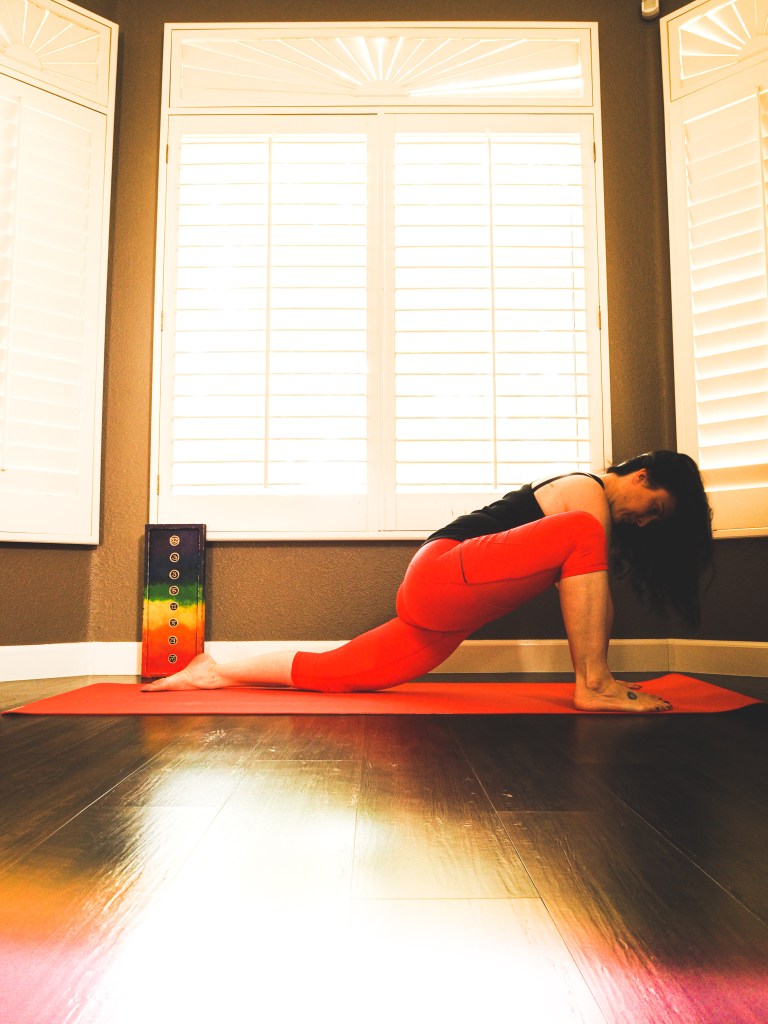
Heel toe the right foot out to the edge of the mat (Image 3).
Keep the right ankle over the right knee and be mindful not to roll the ankle.
You can stay here or for a deeper stretch begin to lower the forearms down onto blocks or onto the mat (Image 4).
Stay here for 15 long, deep breaths.
To come out of the pose, inhale and press back up onto the palms of hands (Image 5).
Tuck the toes on the left foot and and lift off the left knee (Image 6 and 7).
Heel toe the right foot back to the center of the mat and bring the right hand to the outside of the right foot.
Press the hips up to the ceiling coming into Downward Facing Dog (Image 8).
Repeat on the other side.
Image 1
Image 2
Image 3
Image 4
Image 5
Image 6
Image 7
Image 8
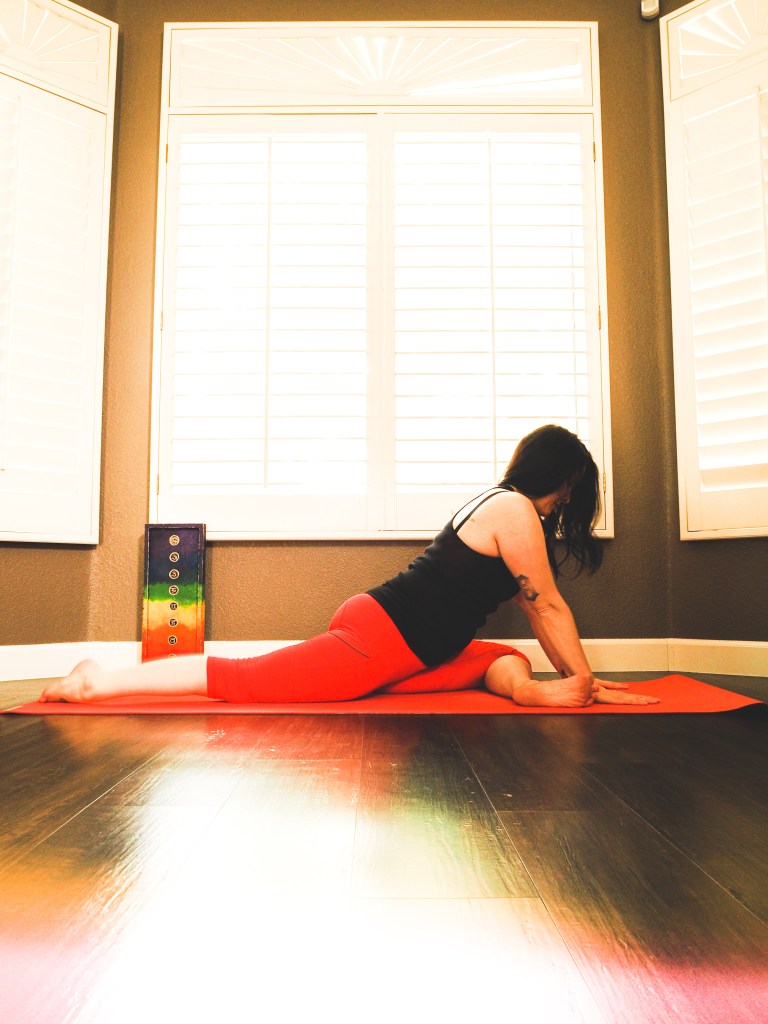
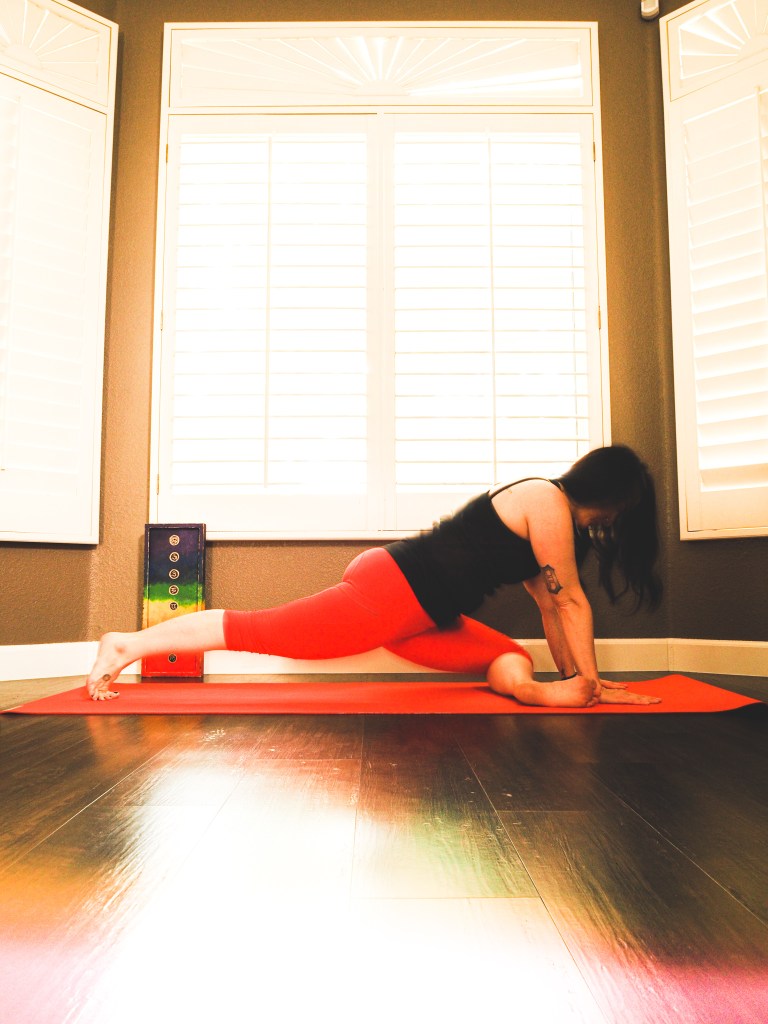
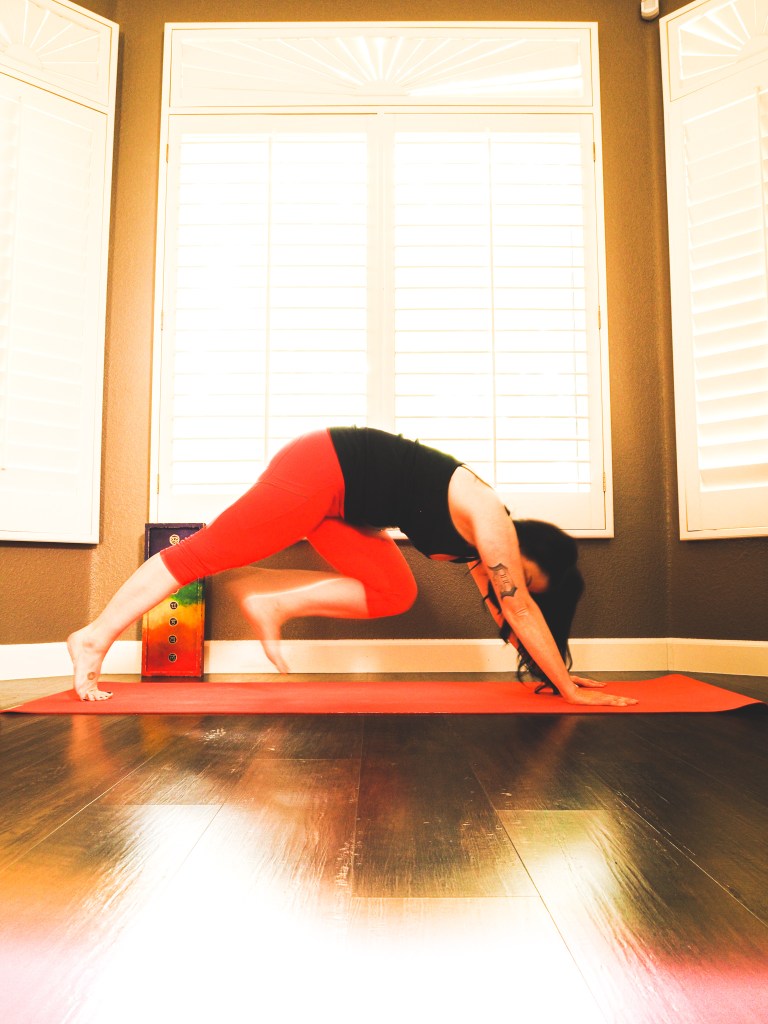
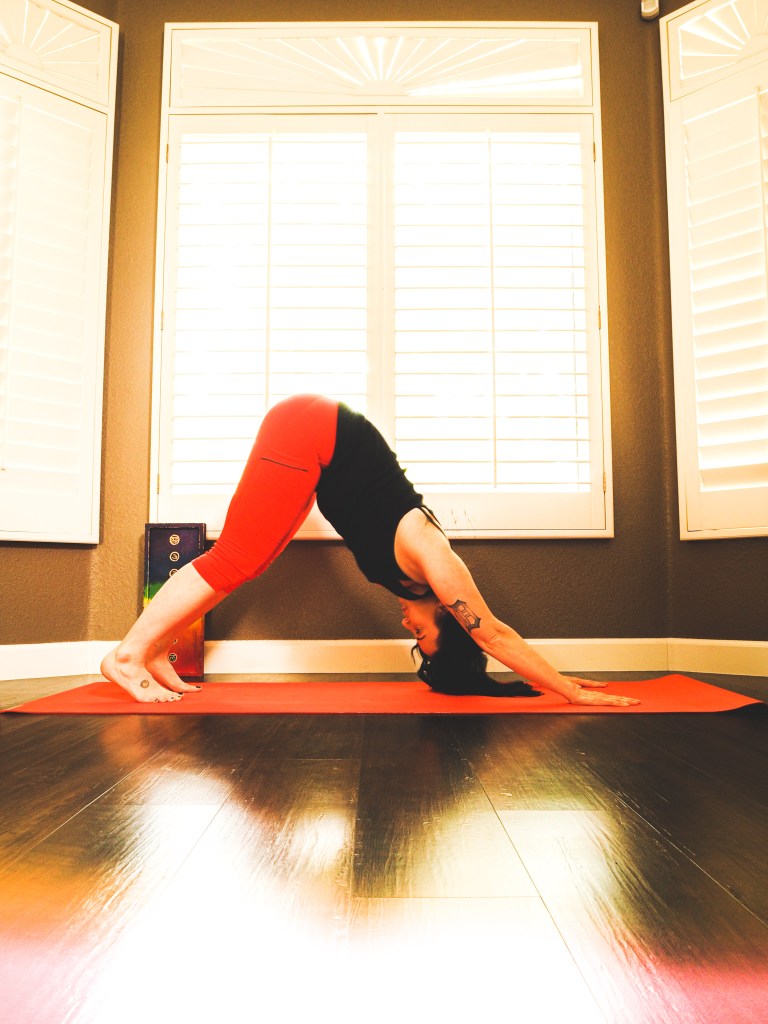
Pigeon (Kapotasana) is my absolute favorite hip opener! When I take a class and the teacher says “we are coming into pigeon”, I do an internal happy dance.
Start out in Downward Facing Dog (Image 9).
Inhale and extend the left leg back into Three Legged Dog (Image 10).
Exhale and draw the left knee to the left elbow, hovering here in a high plank (Image 11).
Take the left ankle to behind the right wrist (Image 12).
Start to lower the left knee down to the mat behind the left wrist and the left ankle down onto the mat behind the right wrist.
Lower down onto the right knee and extend the right leg back (Image 13).
Adjust the left foot either closer to the groin for a less intense stretch or closer to the right wrist bringing the left shin parallel to the front of the mat for a more intense stretch.
Engage the toes left foot, flexing the foot. This will help to protect the left knee.
The hands are down on the mat in front of you (Image 14).
For a deeper stretch begin to lower the forearms down onto blocks or onto the mat (Image 15).
To go even deeper, bring the forehead down onto the mat or stack the hands and place the forehead on top of the hands (Image 16).
To come out of the pose, inhale and press back up onto the palms of hands (Image 17).
Tuck the toes on the right foot and lift off the right knee (Image 18).
Press the hips up to the ceiling, stepping the left leg back (Image 19) and coming into Downward Facing Dog (Image 20).
Repeat on the other side.
If this is too intense, bend the left leg slightly and bring the right shin parallel to the front of the mat. From here see if you can lower down onto the forearms, a block or the mat.
Image 9
Image 10
Image 11
Image 12
Image 13
Image 14
Image 15
Image 16
Image 17
Image 18
Image 19
Image 20
Frog (Mandukasana) is a great hip stretch that also focuses on the inner thighs and groin.
Come into a wide-kneed childs pose.
Step the feet out to the sides so that the ankles are in line with the knees.
Flex the feet so that your toes point out to the side.
If you need to deepen the stretch, move the knees out a little farther to the side until you feel a good stretch in the groin.
Keep the hips in line with the knees (Image 22).
Start to walk the hands forward or place the forearms on a block or on the mat (Image 23).
Keep the belly lifted.
For a deeper stretch, bring the chest down onto the mat (Image 24).
Take five to ten deep breaths here.
To come out of the pose, press back up onto the palms of the hands.
Bring your toes to touch, sit back on the heels and draw the knees together.
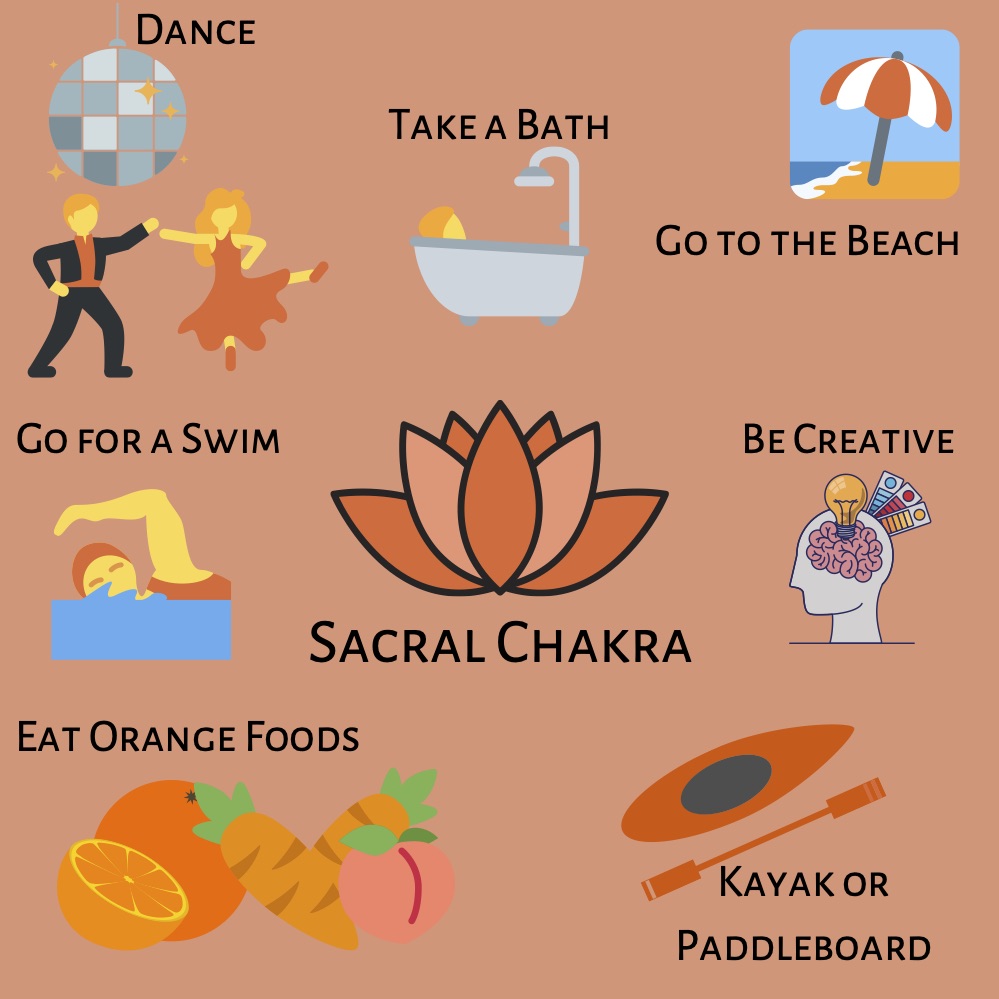
If yoga isn’t your thing you can dance, hoola hoop or do something creative to activate your svadhishthana chakra. It can be singing, dancing, drawing, photography or any other form of expression. You can also do something involving water like going to a beach, swimming, surfing, kayaking or paddle boarding. If you’re at home, take a bath or swim in a pool. Wearing orange, lighting an orange candle and eating orange foods like nectarines, oranges and carrots can help balance your sacral chakra.
The Svadhishthana or sacral chakra is located above the root chakra and below the navel. Consider this chakra your sexual center and where your sense of self is reflected. This can be your self-esteem, self-worth, or self-confidence.
The sacral chakra, or the second chakra center is associated with the color orange, the element of water and can be blocked by guilt. It’s symbolized by a beautiful orange lotus with six petals and focuses on sexuality and creativity. When the sacral chakra is balanced and harmonious, we feel comfortable in our own skin, comfortable with our sensuality and able to enjoy the pleasures of life in a healthy manner. One of the best ways to balance your sacral chakra is to do something creative that you love.
Signs that your sacral chakra is imbalanced can be low self-esteem, lack of confidence, addiction, trouble getting motivated, a lack of sex drive, infertility, issues with reproductive organs, impotence, kidney, bladder and bowel problems. If you experience issues with intimacy or an overwhelming sense of guilt your may have a deficient svadhishthana chakra.
Pranayama
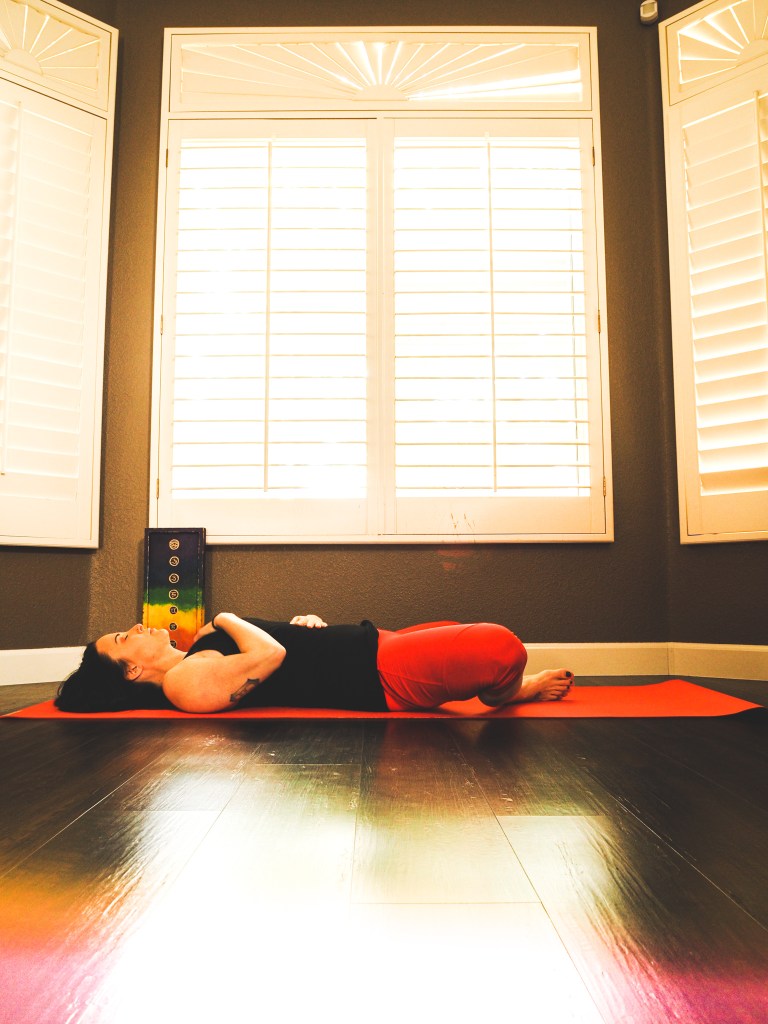
If you are looking for a breathing exercise to spark your sacral chakra, Dirga or Three Compartment Breath is a great one. You can further your balancing by performing it in Reclined Bound Angle Pose (Supta Baddha Konasana).
Begin seated on your mat and bring the souls of the feet together letting the knees fall open to the side. If this is too much of a stretch for your hips, you can place blocks, blankets or pillows under the knees and thighs to make this a more relaxing pose.
Place the hands behind you on the mat with the fingers pointing toward your seat.
Lower down onto your forearms.
Gently come down all the way onto the back.
Place your arms along side with the palms face up or you can place one hand on the heart and one hand on the sacral chakra, between the pelvis and the bellybutton.
For Dirga or Three Compartment Breath, you will begin by inhaling into the belly allowing your abdomen to press up toward the ceiling.
You will continue that inhale by now filling up the chest area.
And finally you will direct the last of your breath to fill the shoulders, throat and clavicle area.
As you exhale, you will begin by exhaling from your shoulders and throat first, then release the air from your chest and lungs and finally, let the air escape from the belly area.
Continue to breathe like this for five to ten more rounds.
Image 1
Yoga
Yoga poses that balance the svadhishthana chakra tend to flow easily like with sun salutations (surya namaskar). Vinyasa also promotes breath and awareness of breath and how it helps to move us along in these flow styled classes. The sacral chakra is linked to the sexual reproductive organs, hips and lower back. Poses that focus on these areas help to balance the second chakra center.
Modified Sun Salutations (Surya Namaskar A) If you have taken a yoga class, you have probably done a sun salutation of some sort. This flow is often used to warm the body up naturally to prepare for deeper stretches.
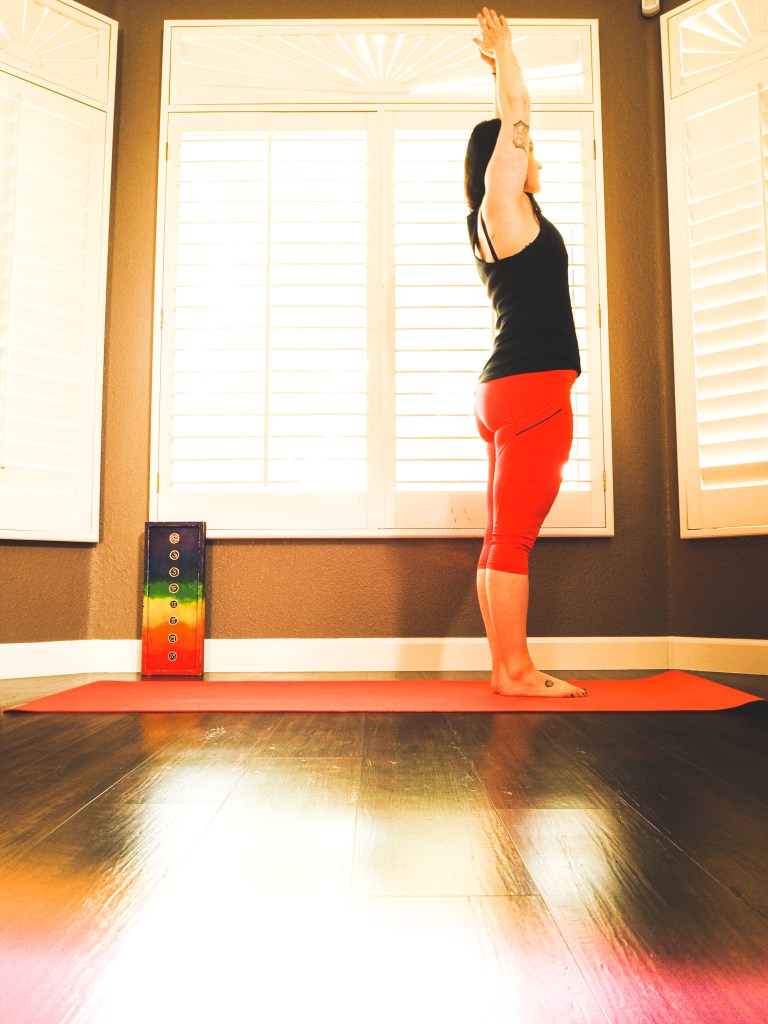
Start out in Mountain Pose (Tadasana)
Inhale and reach the arms up (Image 2).
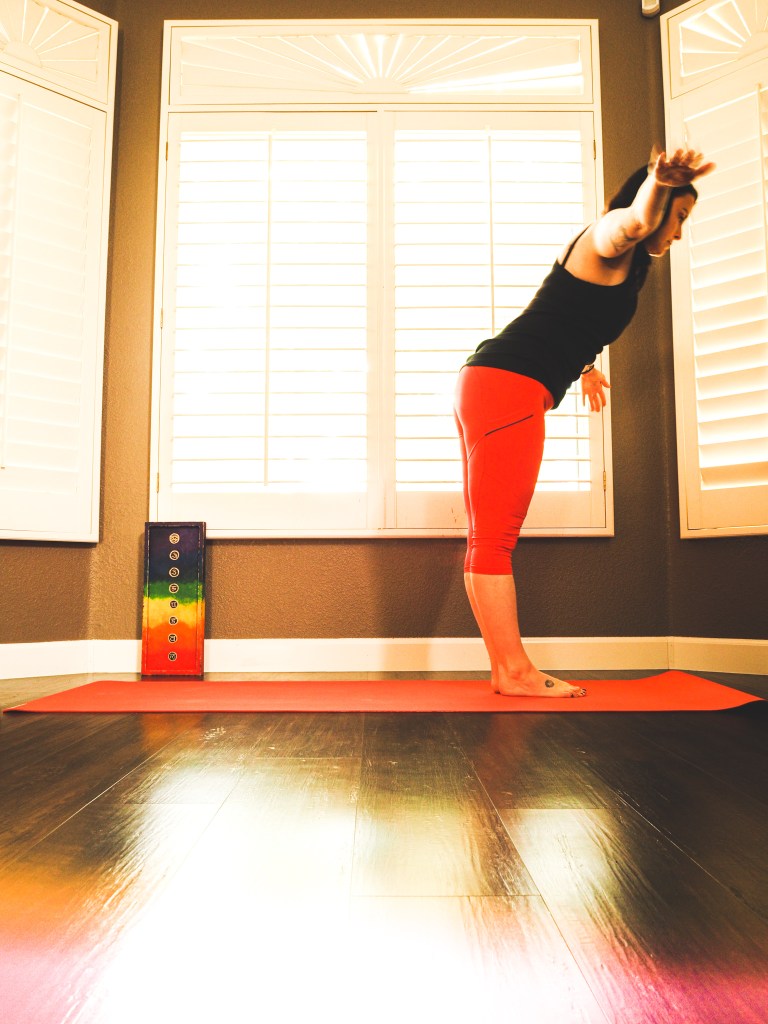
Exhale and swan dive forward (Image 3), coming into a forward fold (Uttanasana) (Image 4).
Inhale half lift
Keep the back flat and torso parallel to the mat
Keep the hands on the mat (Image 5) or bringing them to the shins (Image 6).
Extend the crown of the head toward the front of the room
Shoulders are drawn down the back
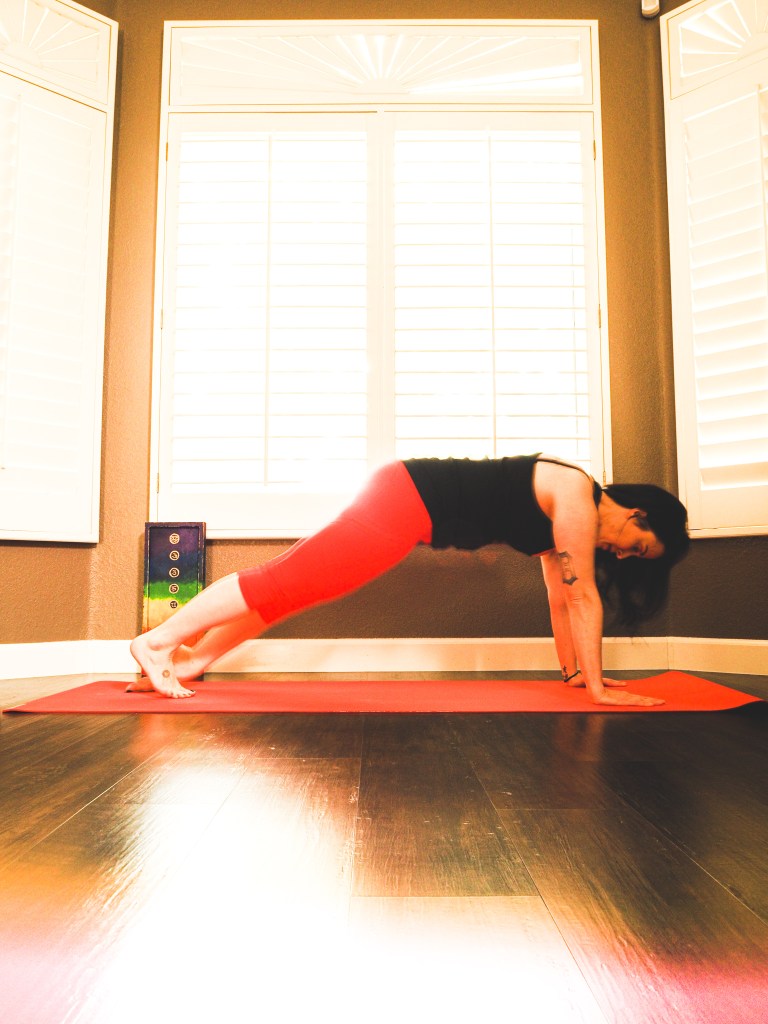
Exhale and plant the hands down on the mat (Image 7), step the right foot back (Image 8), step the left foot back, coming into a high plank (Image 9).
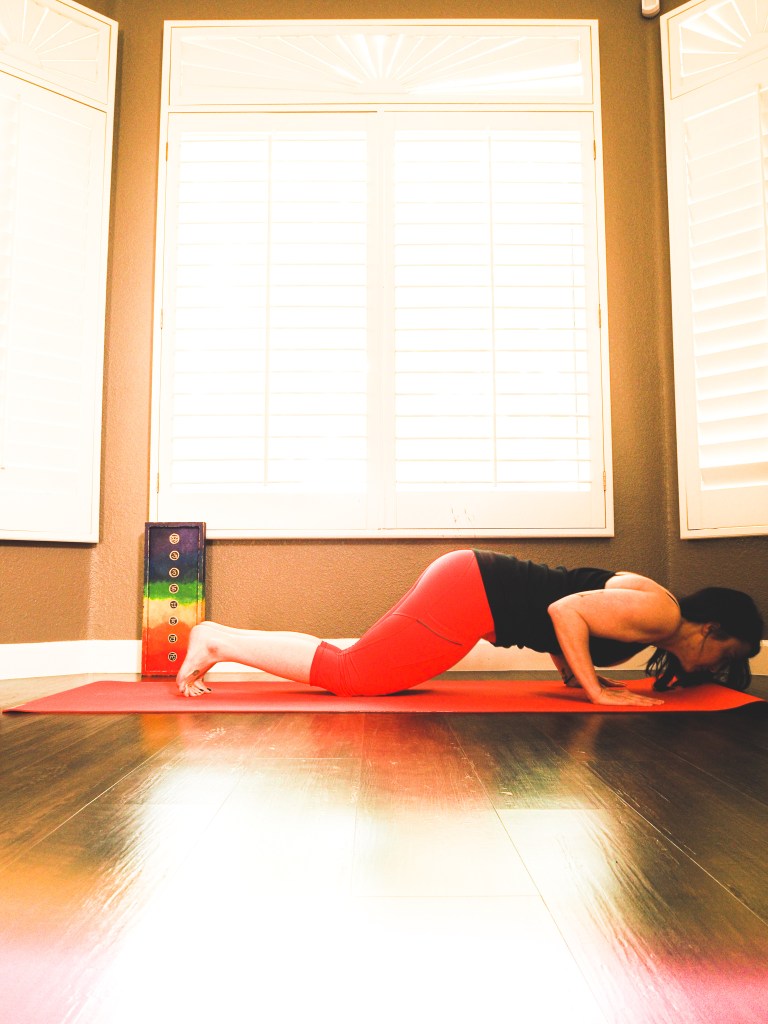
Lower down onto the knees (Image 10), pitch the shoulders forward so they come past the wrists (Image 11).
Exhale and tuck the elbows along your side, bringing the chest parallel to the mat with the arms bent at a 90 degree angle coming into a modified Chaturanga (Image 12).
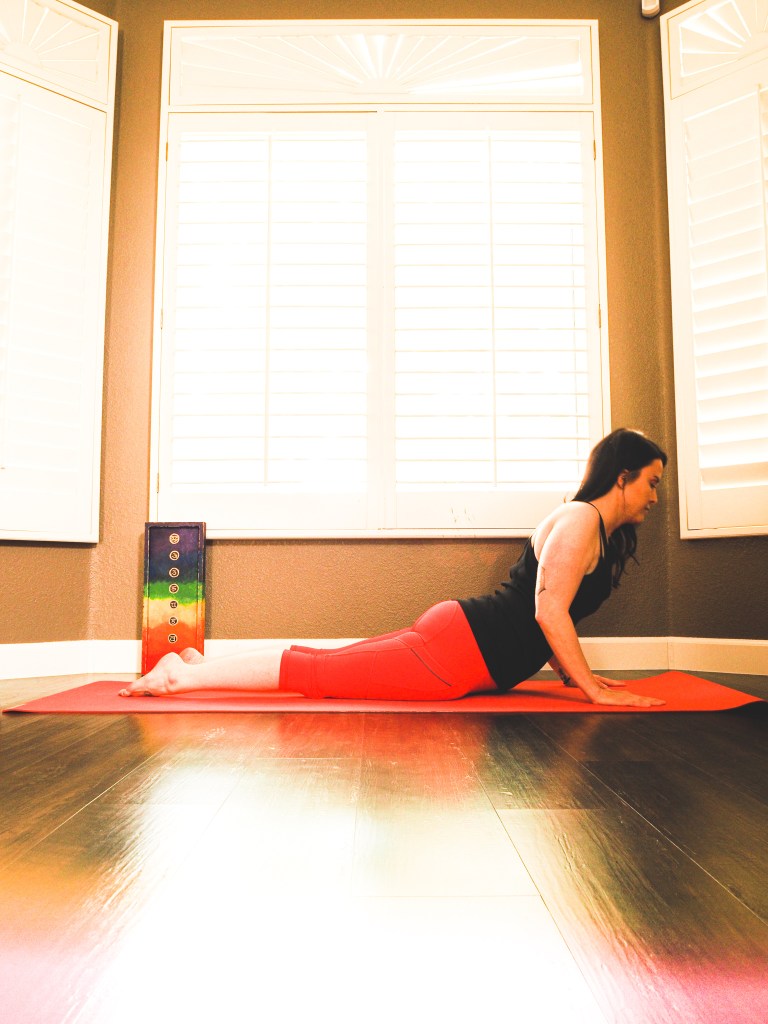
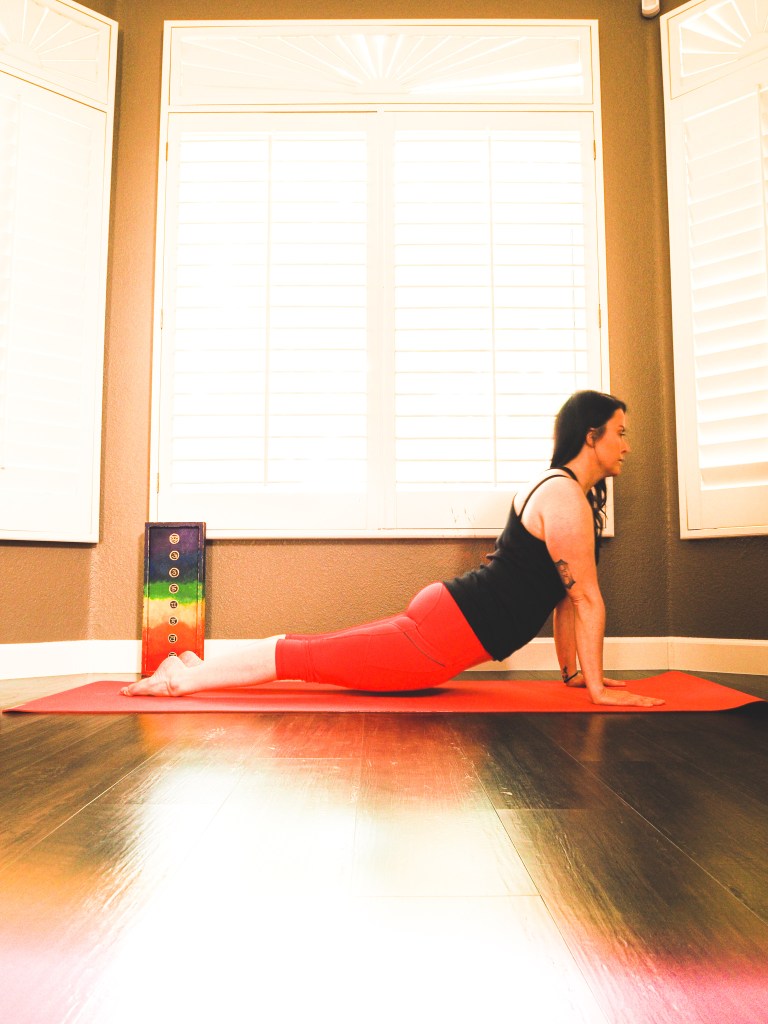
Inhale into Baby Cobra (Image 13) or Upward Facing Dog (Image 14). Baby Cobra is less pressure on the lower back and Upward Facing Dog is a more intense backbend.
Lower the hips down onto the mat.
Either keep the arms bent for Baby Cobra or straighten the arms for Upward Facing Dog.
Lift the chest.
Shoulders down and away from the ears.
Weight is on the tops of the feet.
If you come into Baby Cobra, the thighs are engaged but resting on the mat.
If you come into Upward Facing Dog, the thighs are lifted off the mat.
Keep the neck and head in line with the spine.
Exhale into Downward Facing Dog (Adho Mukha Svanasana) by pressing the hips up toward the ceiling and either flip one foot over at a time or roll over the toes (Image 15, 16 and 17).
Stay in Downward Facing Dog for 5 breaths.
Inhale and look up to the hands (Image 18).
Bend the knees and walk the feet up to the hands (Image 19 and 20).
Inhale and come into Half Lift (Image 21).
Exhale and fold forward.
Put a bend in the knees and inhale slowly rolling up to standing letting the head be the last thing to come up (Image 22, 23 and 24).
Exhale and bring your hands to heart center in Anjali Mudra (Image 25).
Click here for additional cues to execute this pose.
Today we are going to start with a little foot massage. Grab a tennis ball, massage ball, golf ball or any small ball you have around the house. The firmer the ball the deeper the massage will be, so to start out you may want something a little softer and less dense like a racquetball or tennis ball.
Start by standing up.
Place the ball of your choice under your right foot.
Put the amount of pressure down on the foot that feels comfortable for you.
Begin to roll the ball up and down the foot and from side to side.
Focus on the arches of the feet.
If you feel a tender spot, keep the ball there and breath into it, letting the ball release some of the tension.
Lift the foot off the ball and repeat on the left foot.
Yoga
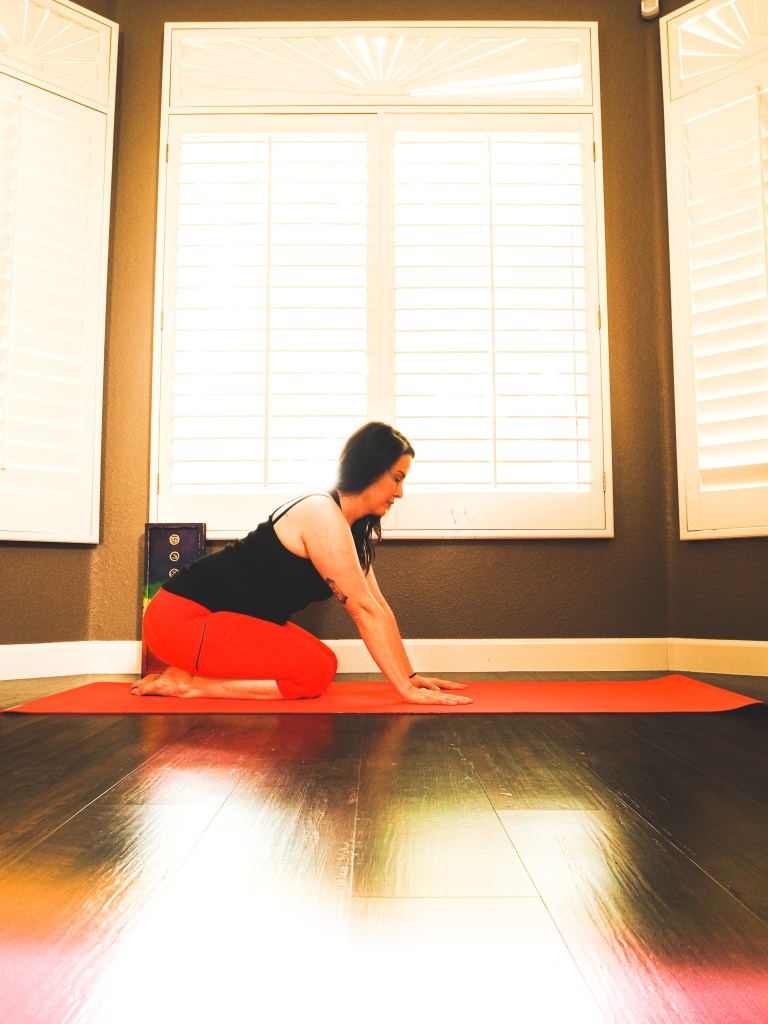
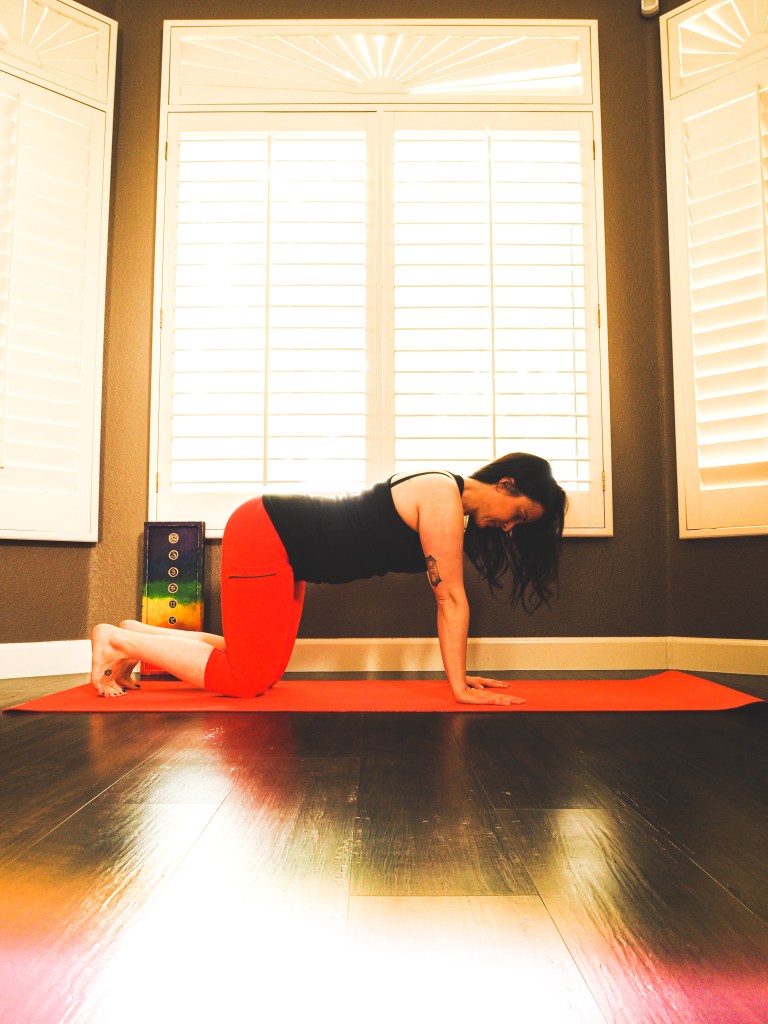
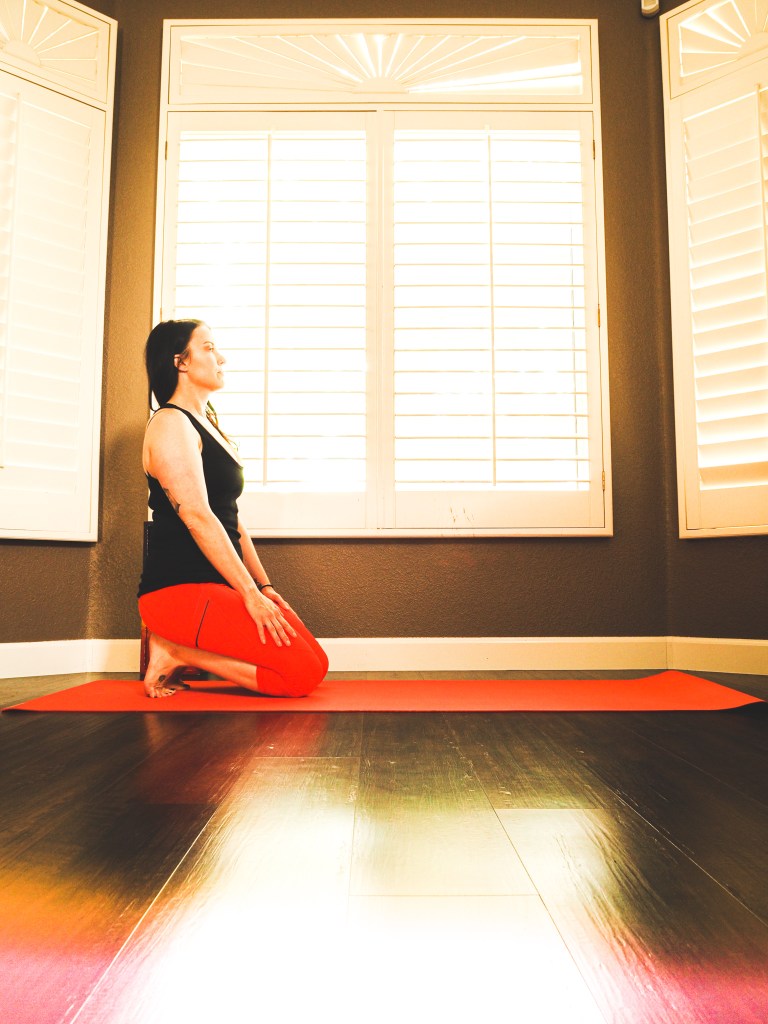
Foot Stretches in Thunderbolt Pose (Vajrasana) are a great way to stretch one of the most used areas of our body. We are typically on our feet for much of our day and we may not give any love to our feet, the foundation of our temple.
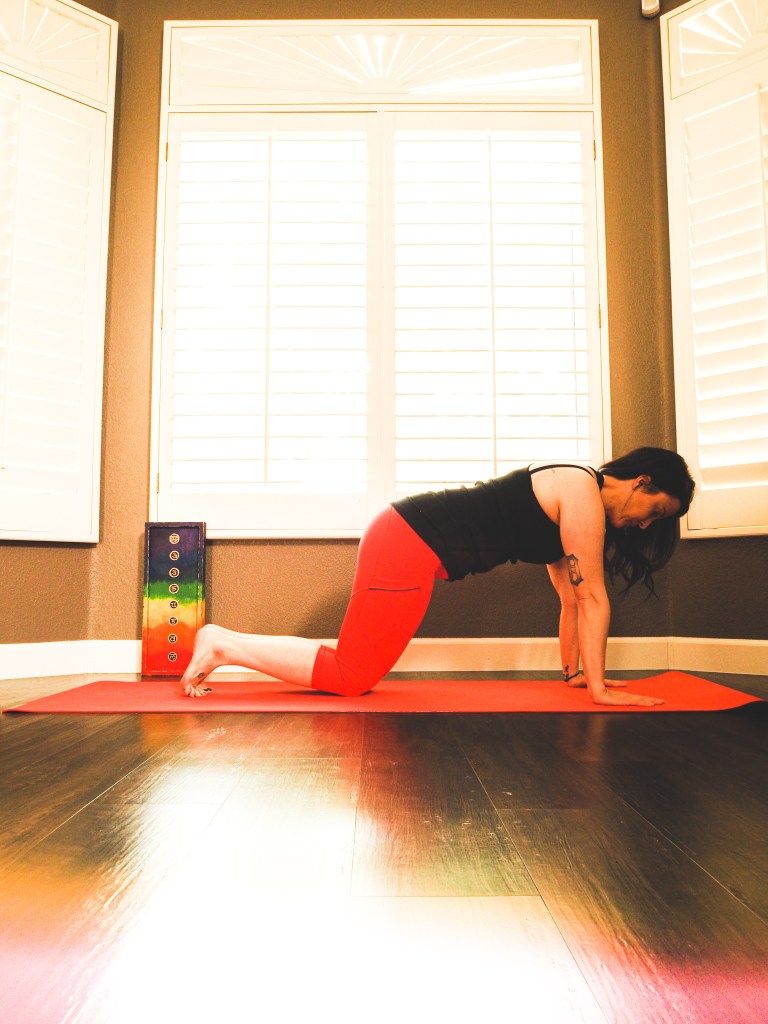
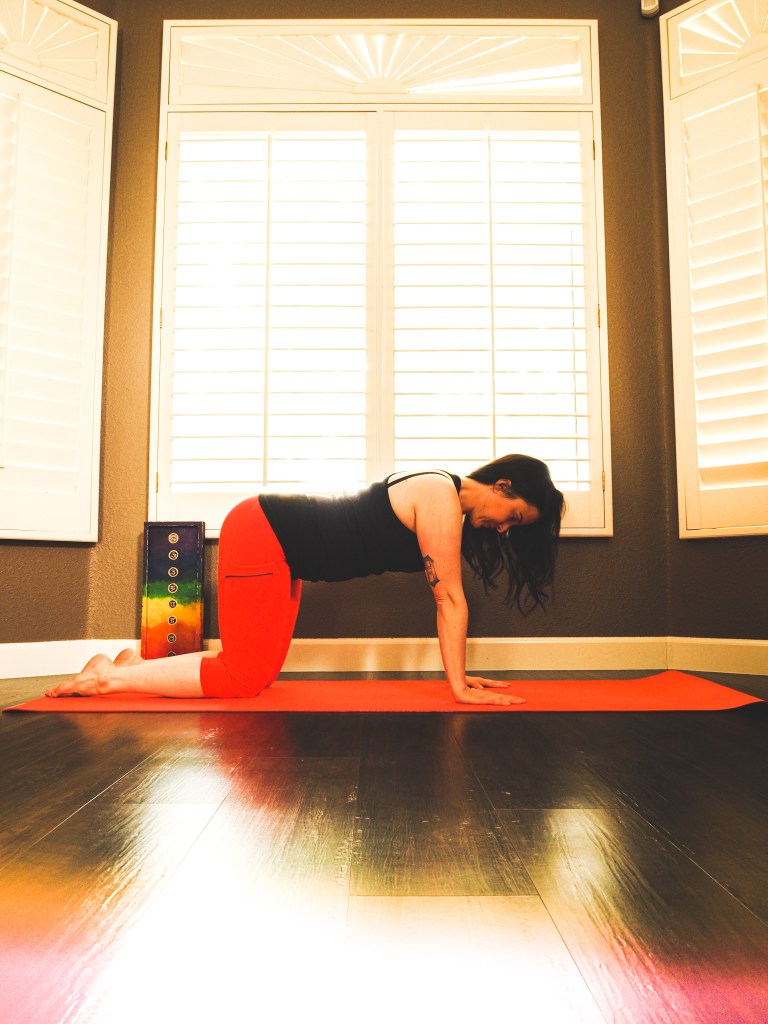
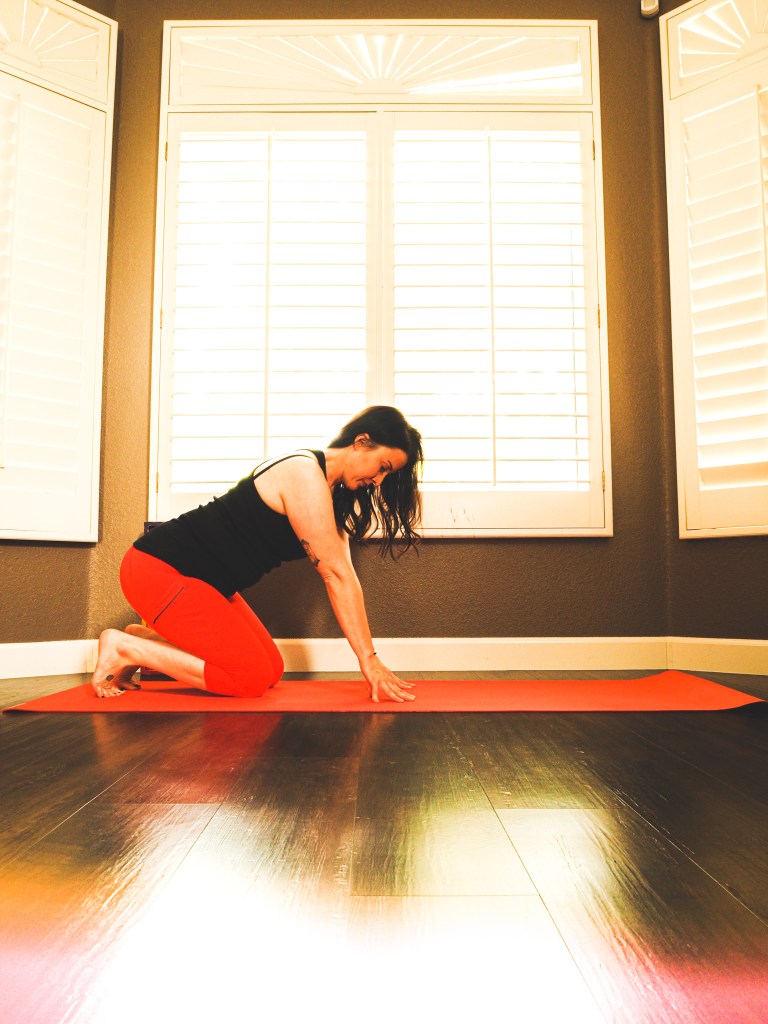
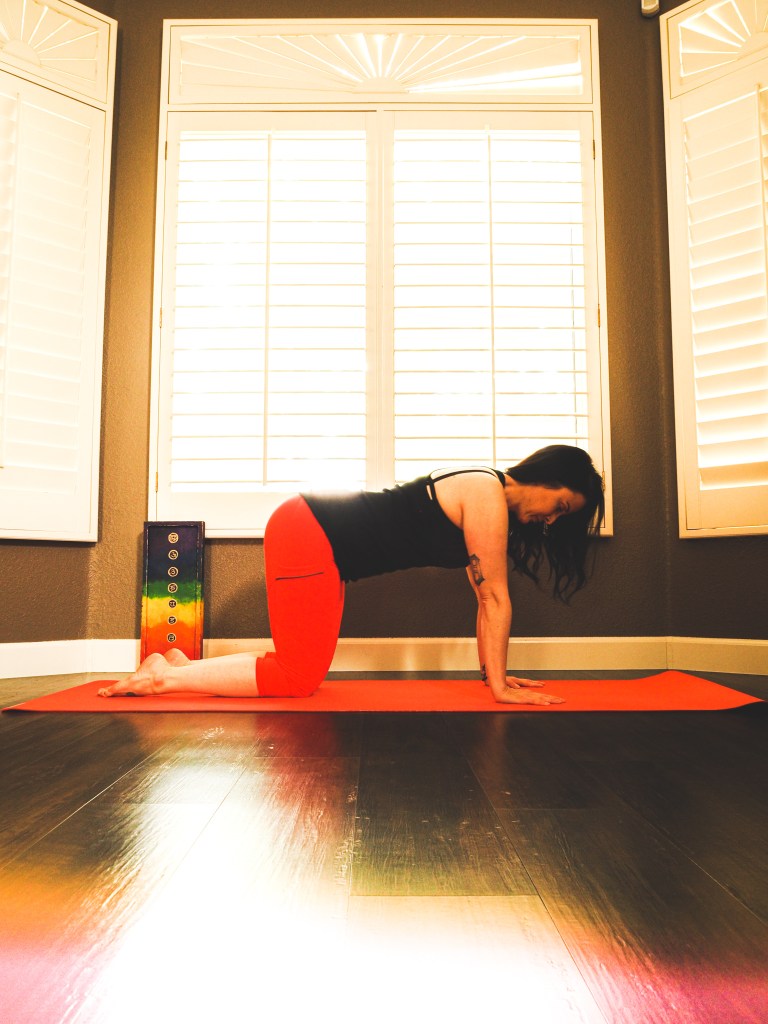
Start out in Table Top by kneeling with the hips over the knees (Image 1).
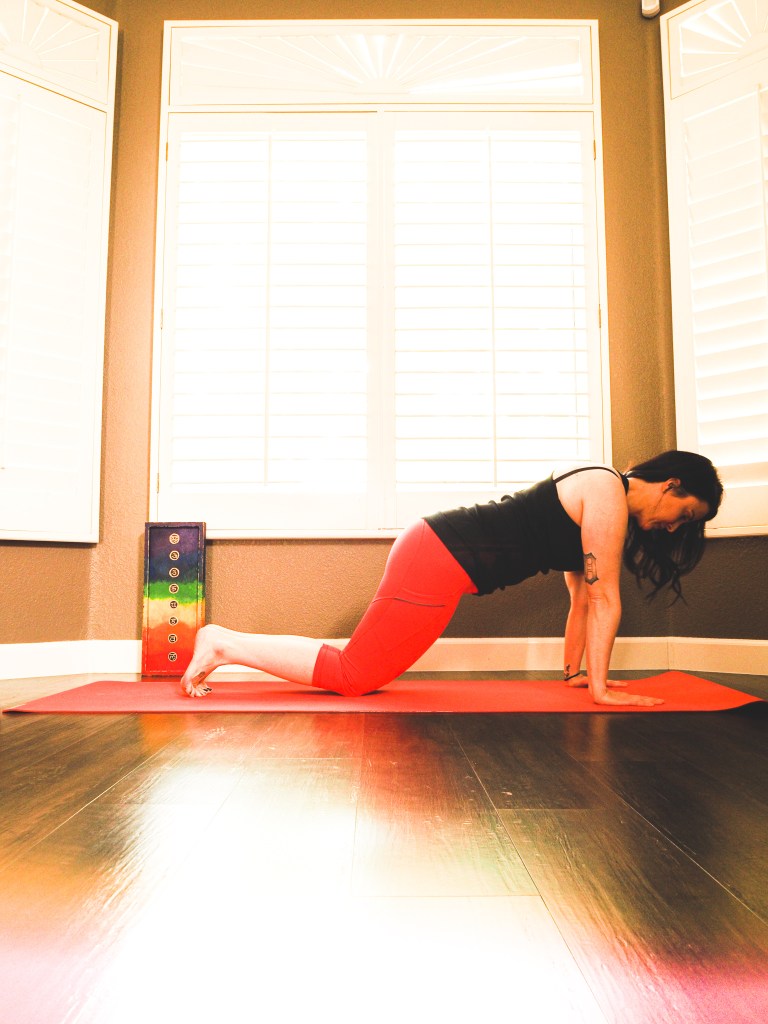
Tuck the toes (Image 2).
Lower the seat down, sitting back on the heels (Image 3 and 4).
Try to stay here for 5 to 10 breaths.
To come out of the pose, lift the seat off the heels coming back into kneeling position.
Bring the hands down onto the mat coming into Table Top (Image 5).
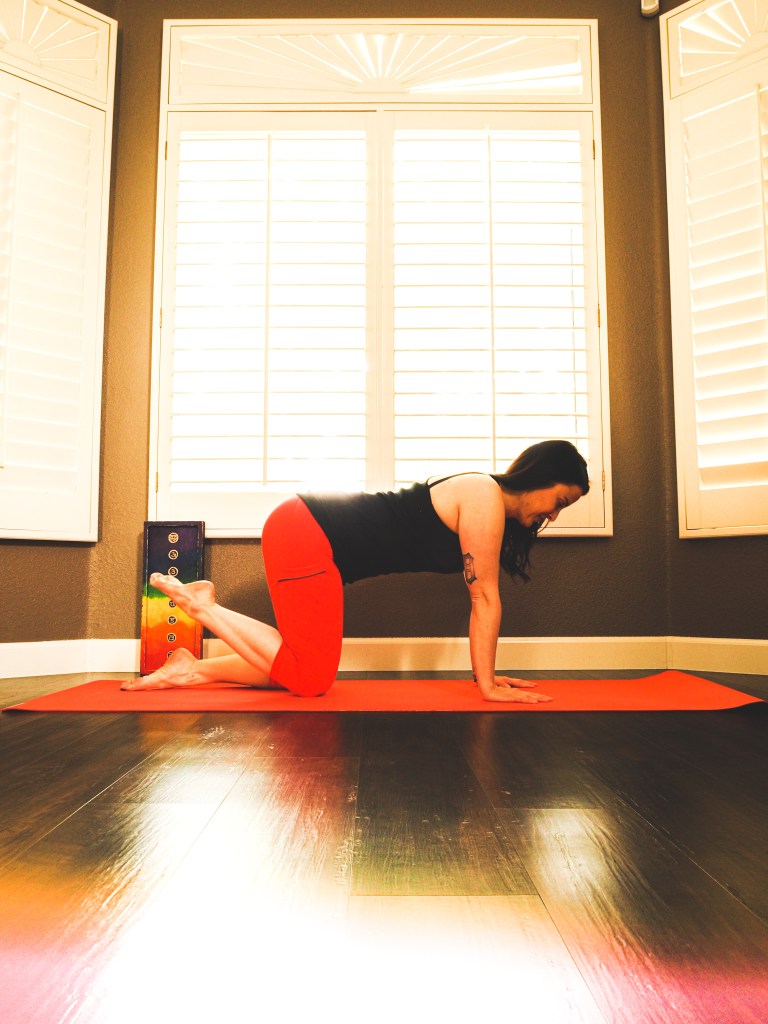
Untuck the toes and tap the tops of the feet on the ground several times to get the blood flowing (Image 6).
Image 1
Image 2
Image 3
Image 4
Image 5
Image 6
The next two yoga poses are seated forward folds. As you enter into these poses, focus on surrendering to the earth. With each exhale, allow your body to sink a little closer to the ground.
Seated Forward Fold (Pachimottanasana) is a great stretch for your hamstrings. If you walk a lot or run, chances are your hamstrings are tight and this is a great pose to help you.
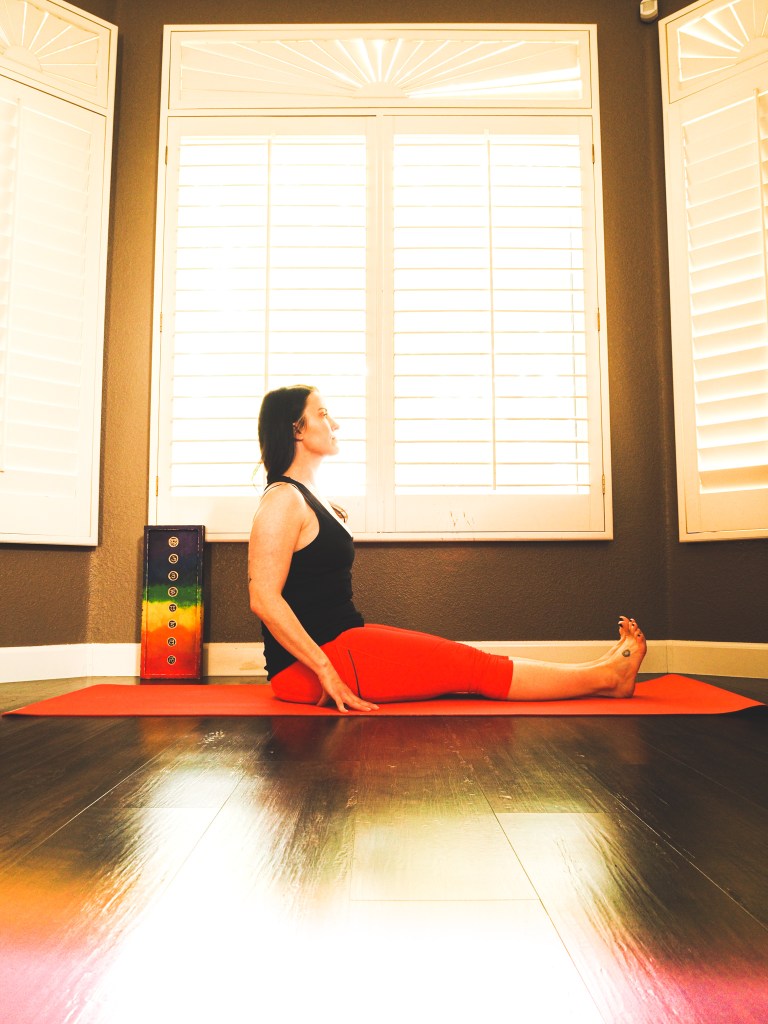
Start in Staff Pose (Dandasana) (Image 7) with the arms along your side, feet flexed with the toes pointed back toward your face.
If you have a little extra flesh on your bottom take your hand and move the junk in your trunk off to the side so that your sit bones can connect to the earth.
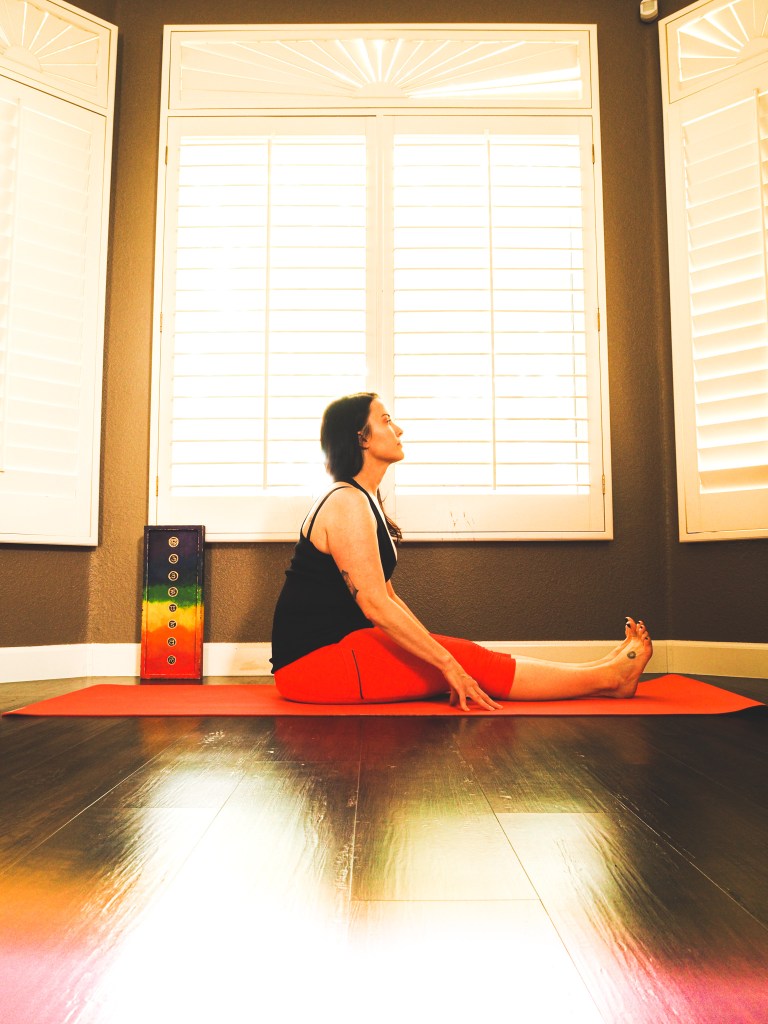
Sitting up nice and tall with the back straight, take a deep inhale.
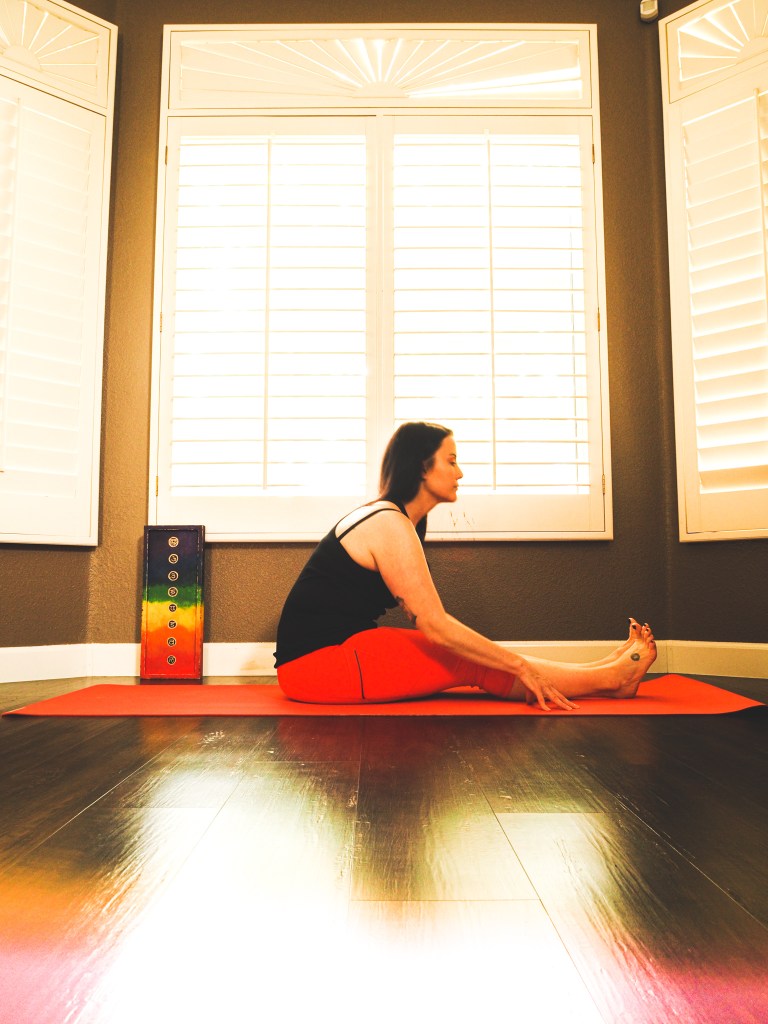
As you exhale, hinge from the hips and lead with the heart bringing the chest toward the thighs and walking the hands forward (Image 8).
Take it to your edge, that place where you feel a good stretch without any sharp pains (Image 9).
Try to keep the legs straight, but if this is not comfortable for you, put a slight bend in the knees.
Don’t round the spine, instead keep the back flat.
You should feel a stretch in the hamstrings.
Image 7
Image 8
Image 9
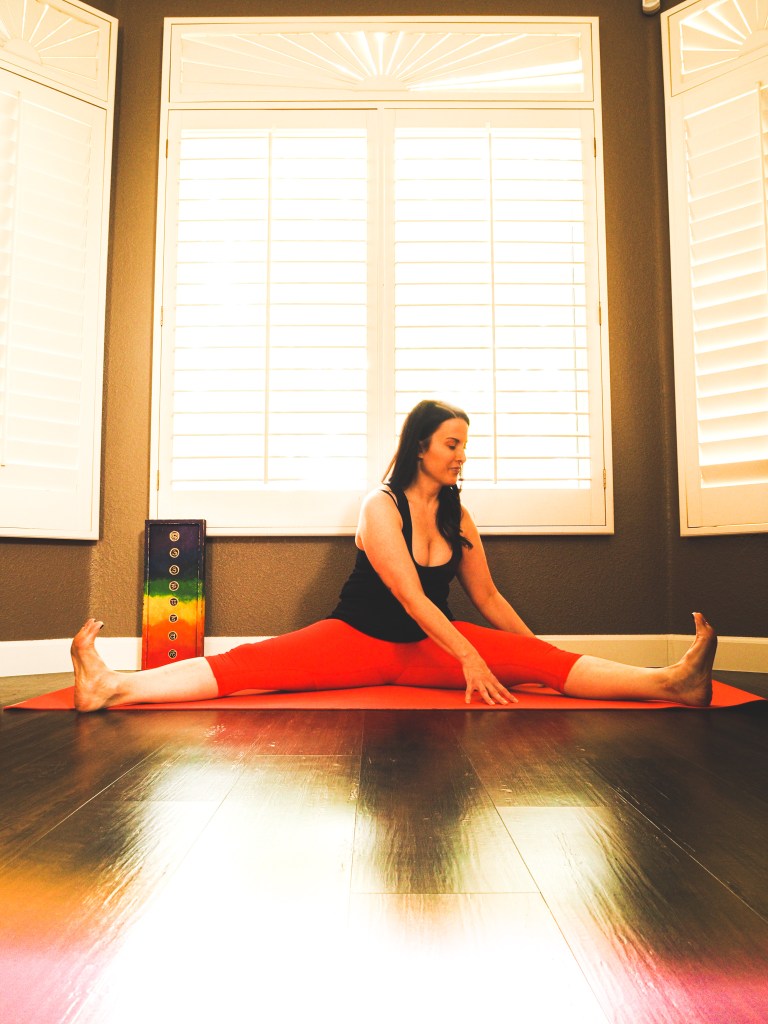
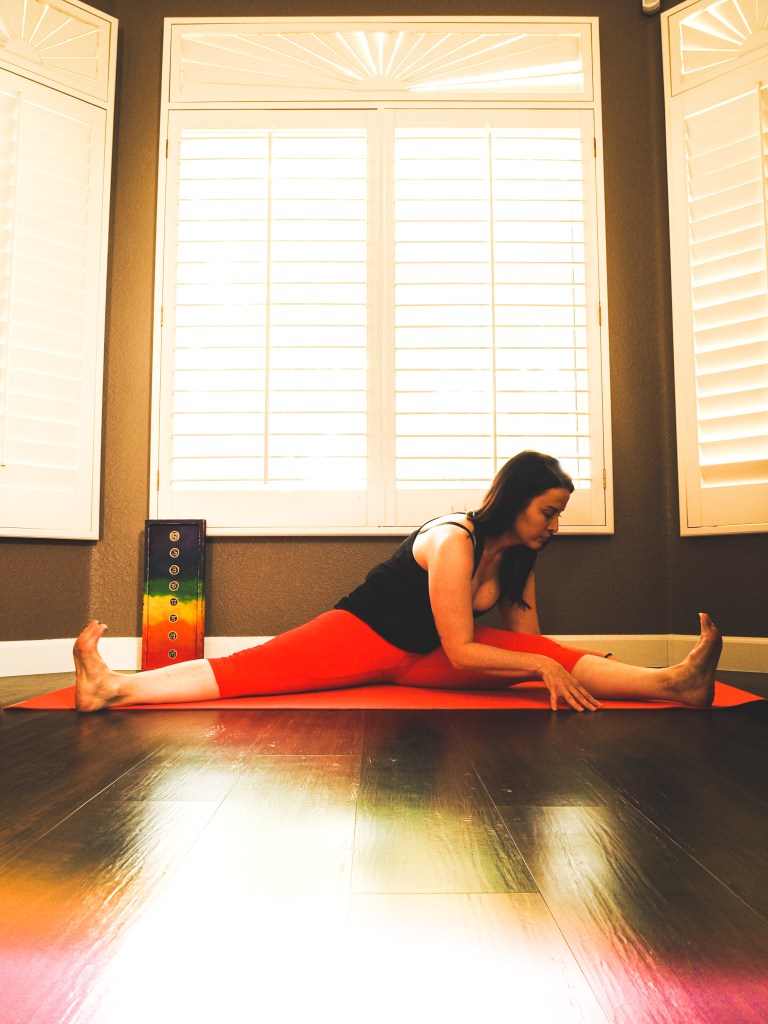
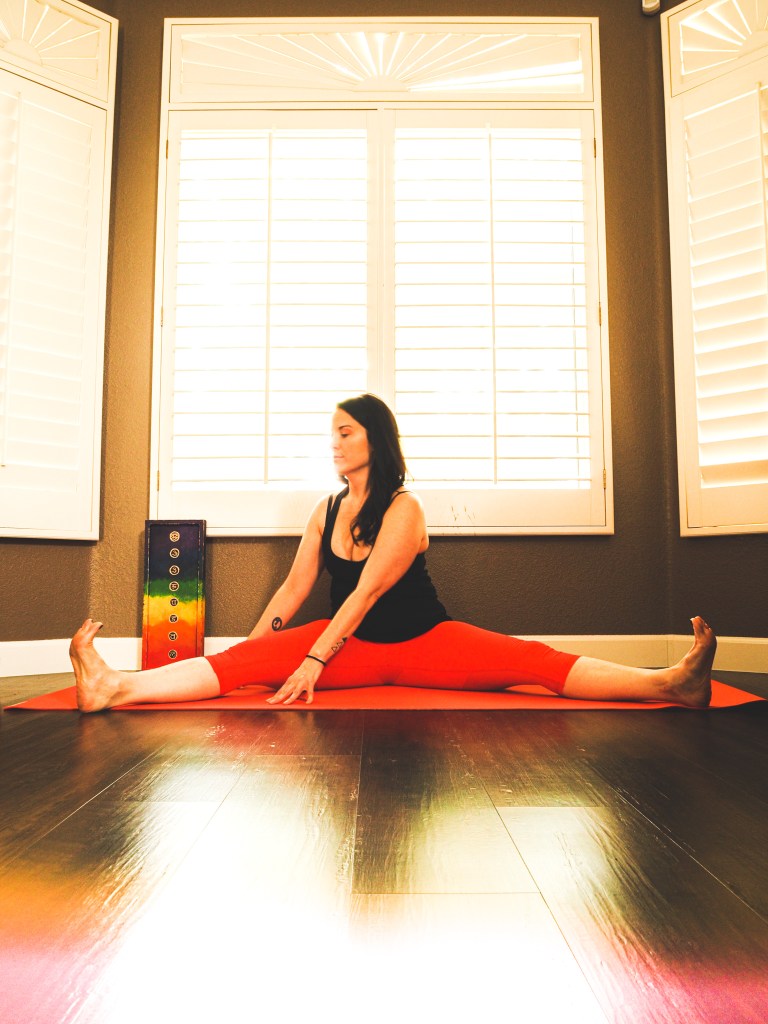
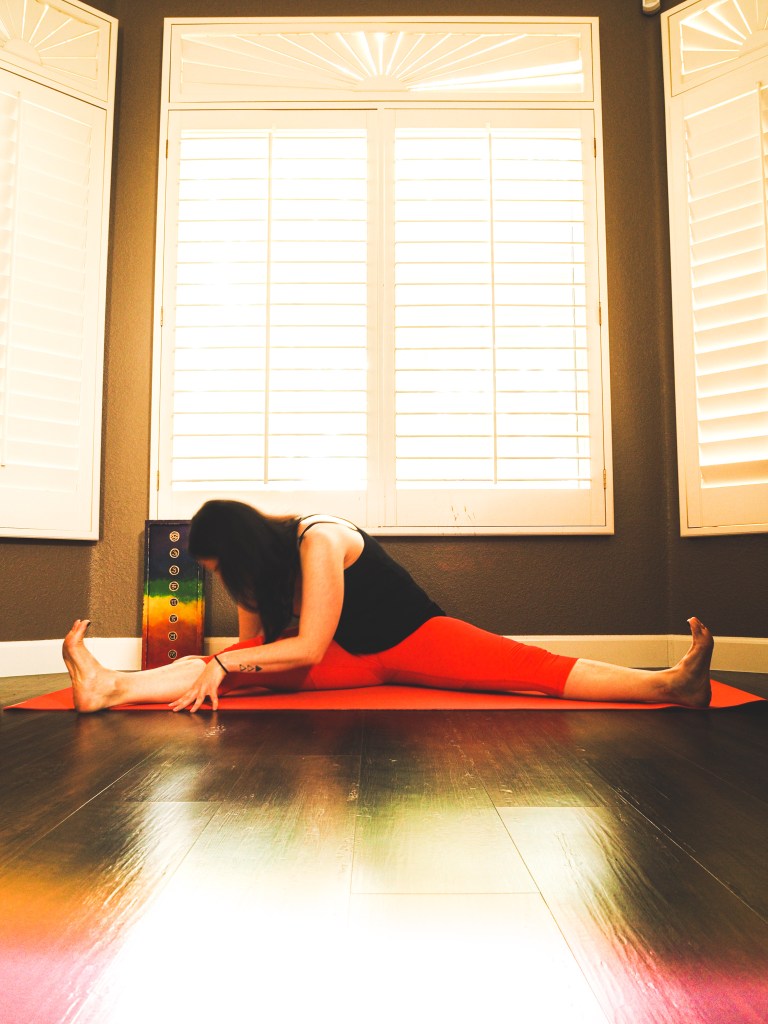
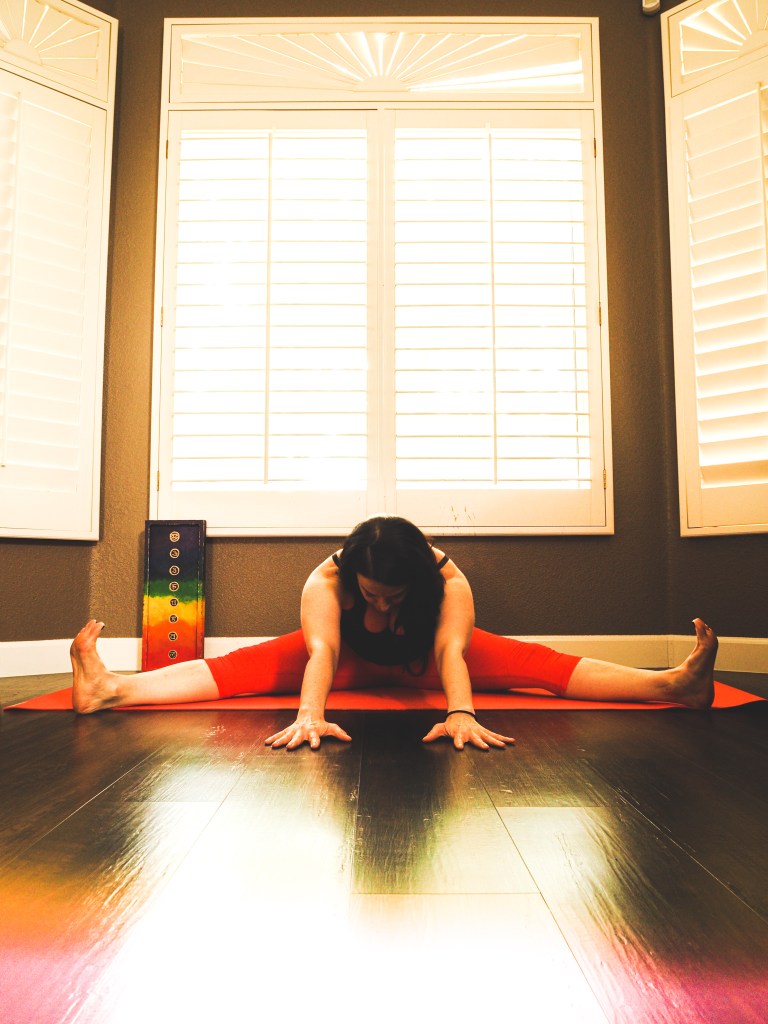
Seated Wide Angle (Upavistha Konasana) is another great hamstring stretch that also stretched the inner thighs, groin, spine and hips.
Start in Staff Pose (Dandasana)
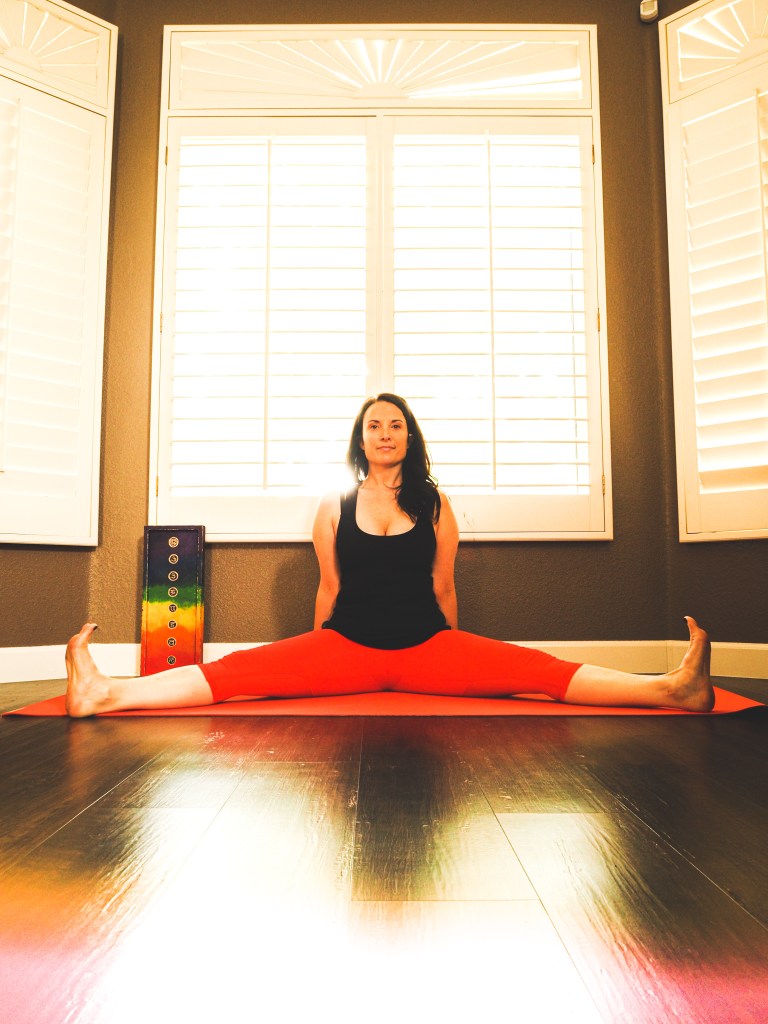
Step the feet out to the sides as far as you can, making a V with your legs (Image 10).
Flex the feet so the toes are pointing back toward the torso.
Slightly twist the torso to the right so that your nose is in line with the toes on your right foot (Image 11).
Frame the right leg with your hands.
Take a deep inhale.
As you exhale, lead wit the heart and hinge from the hips, keeping the back straight and bring your torso down toward your right leg (Image 12).
Take the stretch to your edge.
Stay here for 5 to 10 breaths.
On an inhale, lift the torso up and face forward.
Repeat on the other side (Image 13 and 14).
Facing forward, bring the hands down in front of you.
Leading with the heart and keeping the back straight, walk the hands out and start to fold forward taking it to your edge (Image 15).
Mudra’s are symbolic hand gestures that create energy in the body. Each chakra has a different mudra that helps to balance and ignite it. The mudra of the Root Chakra is Gyana Mudra. To perform this, simply touch the index finger to the thumb on both hands, straighten the middle, ring and pinky fingers. Place the hands on top of the thighs with the palms face down to ground.
Meditation
Click here for the Root Chakra Meditation by Yoga2Peaces on Soundcloud.
Welcome back to our second segment of the root chakra. I’m hoping that you are enjoying diving into something new. Each of the three segments will introduce you to different techniques to help you balance your chakras. As always, take what resonates with you and feel free to leave the rest.
Yoga
We will continue with some additional yoga poses that help to connect you to the earth and ground you. As you do these poses, I welcome you to image that there are roots extending from your feet, reaching down through the floor and into the earth, down to it’s core, connecting you to our Mother Earth.
Downward Facing Dog (Adho Mukha Svanasana)
Come into Table Top with the knees stacked under the hips, wrists stacked under the shoulders.
Finger tips are spread wide with the middle fingers pointing toward the front of the room.
Tuck the toes and press the hips up toward the ceiling, making an upside down V with your body (Image 1).
Feet should be hip distance apart.
Try to draw the heels down toward the earth, but be aware that they may not reach the ground and that’s perfectly okay.
Keep the legs straight if you can comfortably, otherwise keep a slight bend in the knees.
Press the belly toward the thighs.
Image 1
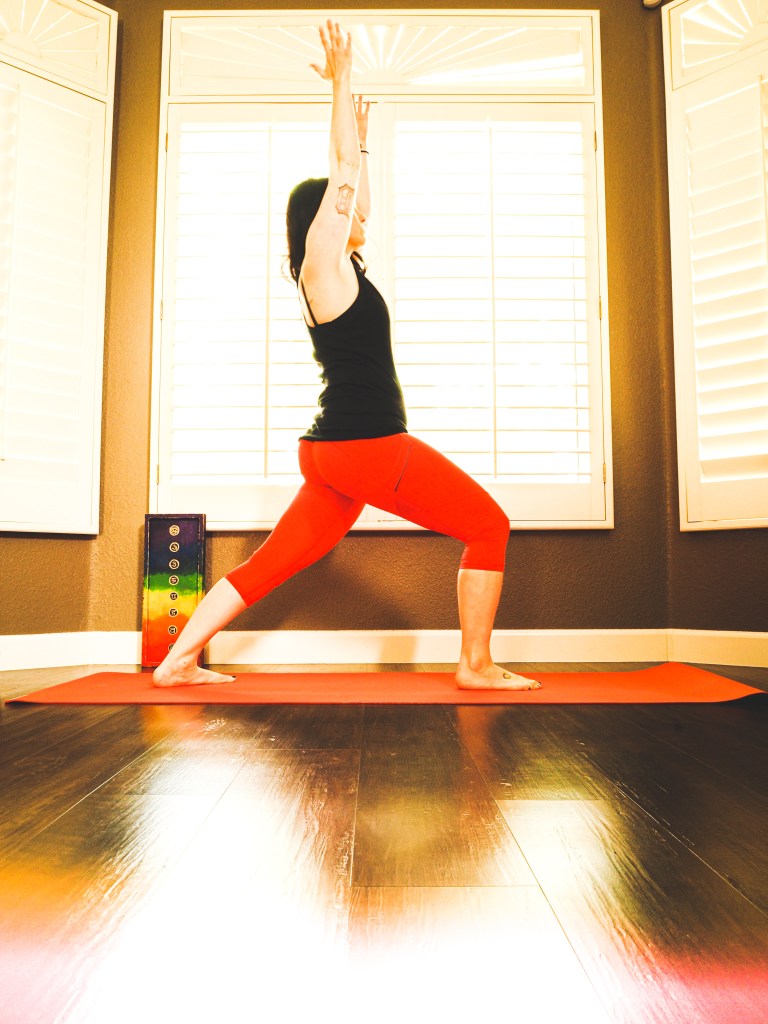
Warrior 1 (Virabhadrasana)
From Downward Facing Dog (Image 2), inhale and extend the right leg back coming into Three Legged Dog (Image 3).
Exhale and draw the right knee in toward the chest (Image 4) and plant the right foot in between your hands (Image 5).
Drop the heel of your left foot down onto the mat and adjust the toes so they point up toward the upper left hand corner of your mat (Image 6).
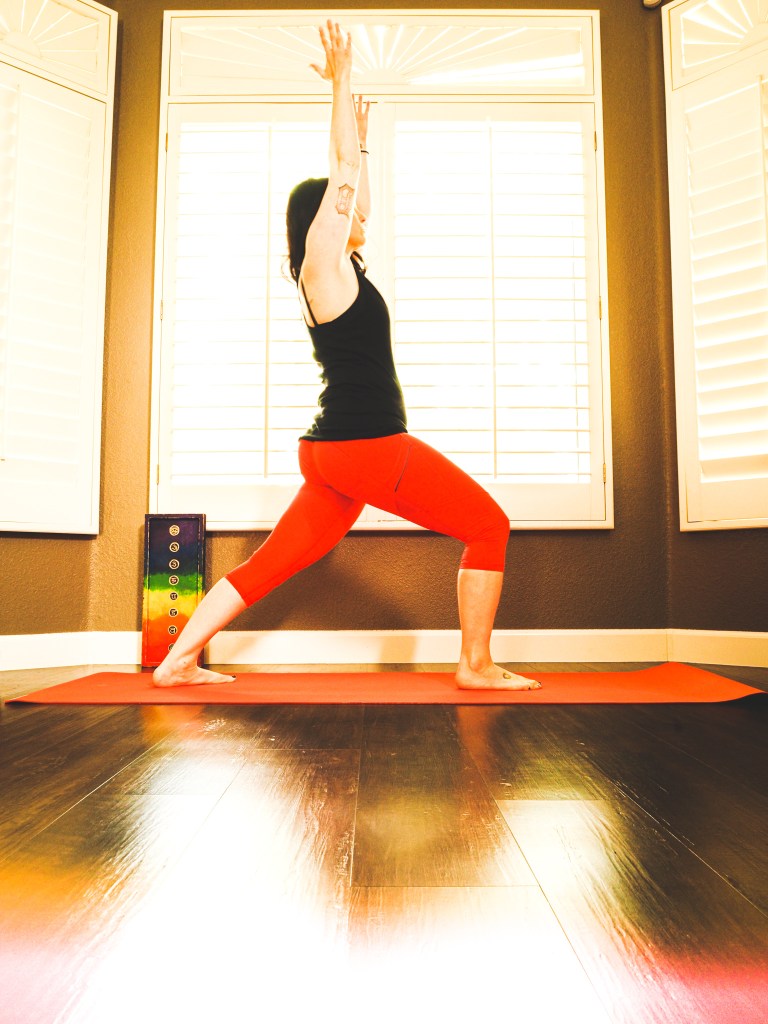
Inhale, bringing the torso up, raising the arms overhead and keeping a bend in the right knee (Image 7).
Finger tips are spread wide and palms face one another.
Check to make sure the right knee is stacked on top of the right ankle.
The heel of your right foot should be in line with the heel on your left foot.
Externally rotate the right leg so that it presses open slightly to the right.
The left leg is straight and engaged.
Both hips are squared and pointing to the front of the room.
Relax the shoulders.
Take a deep inhale, as you exhale plant the hands down on the mat to frame the right foot.
Step the right foot back and press the hips up toward the ceiling, coming into Downward Facing Dog.
Repeat on the other side.
Image 2
Image 3
Image 4
Image 5
Image 6
Image 7
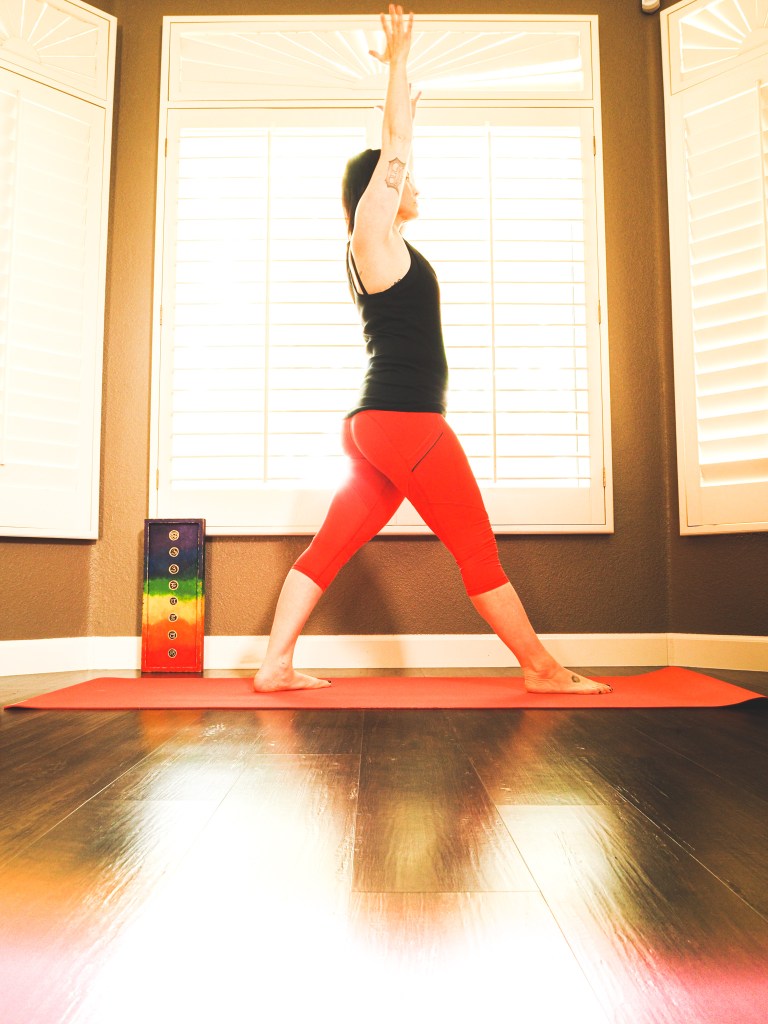
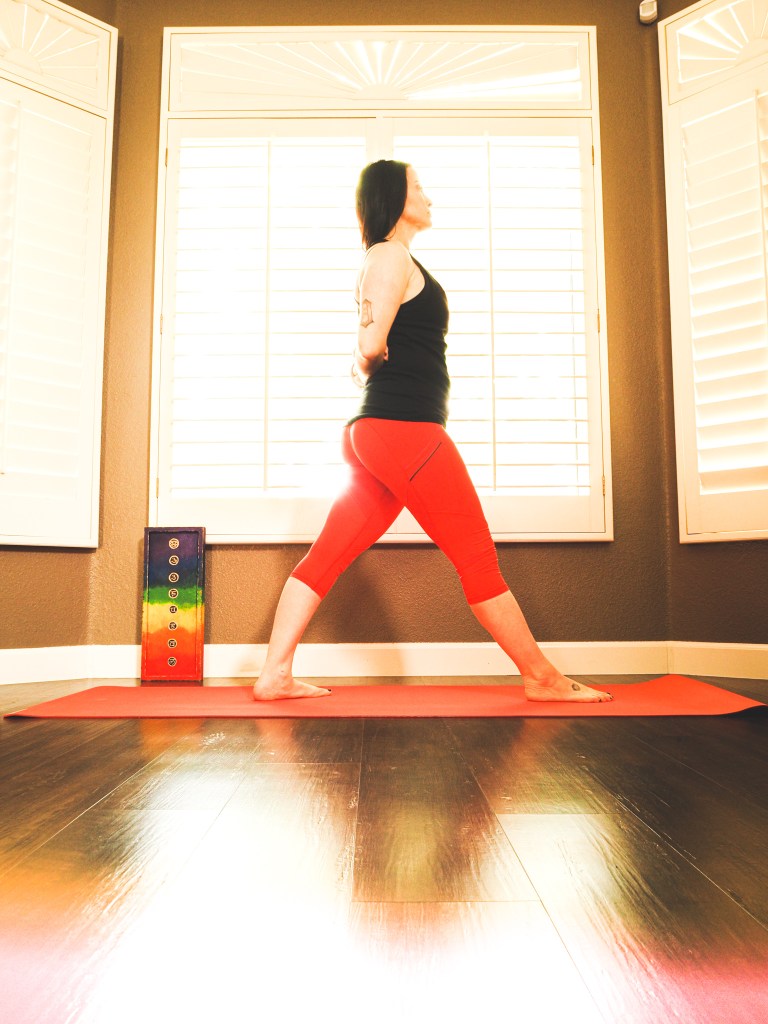
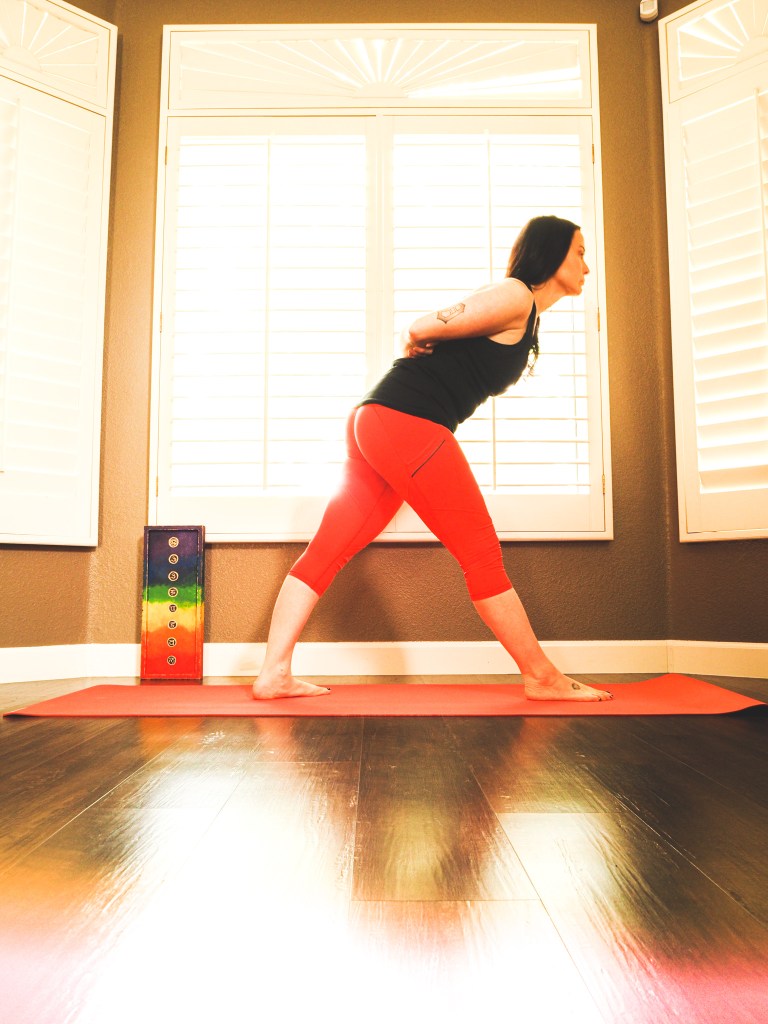
Pyramid (Parsvottanasana)
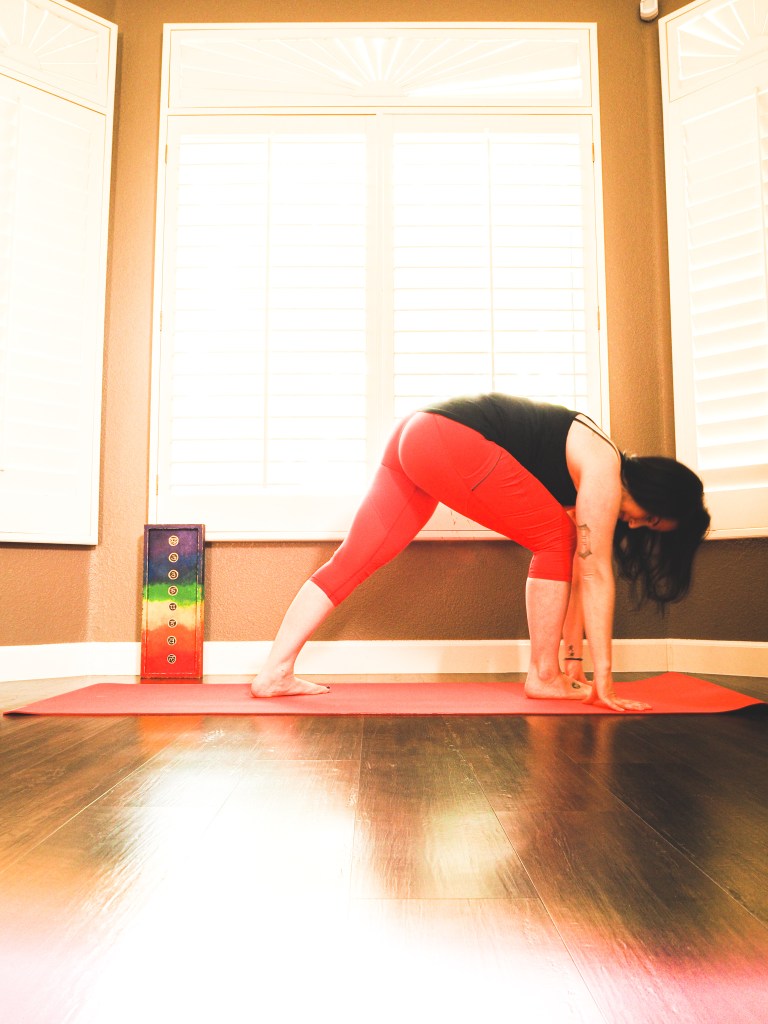
From Warrior 1 (Image 8), inhale and straighten the front leg without locking the knee (Image 9).
Step the back foot up about six inches toward the front of the mat while keeping the toes pointed toward the upper left hand corner of the mat.
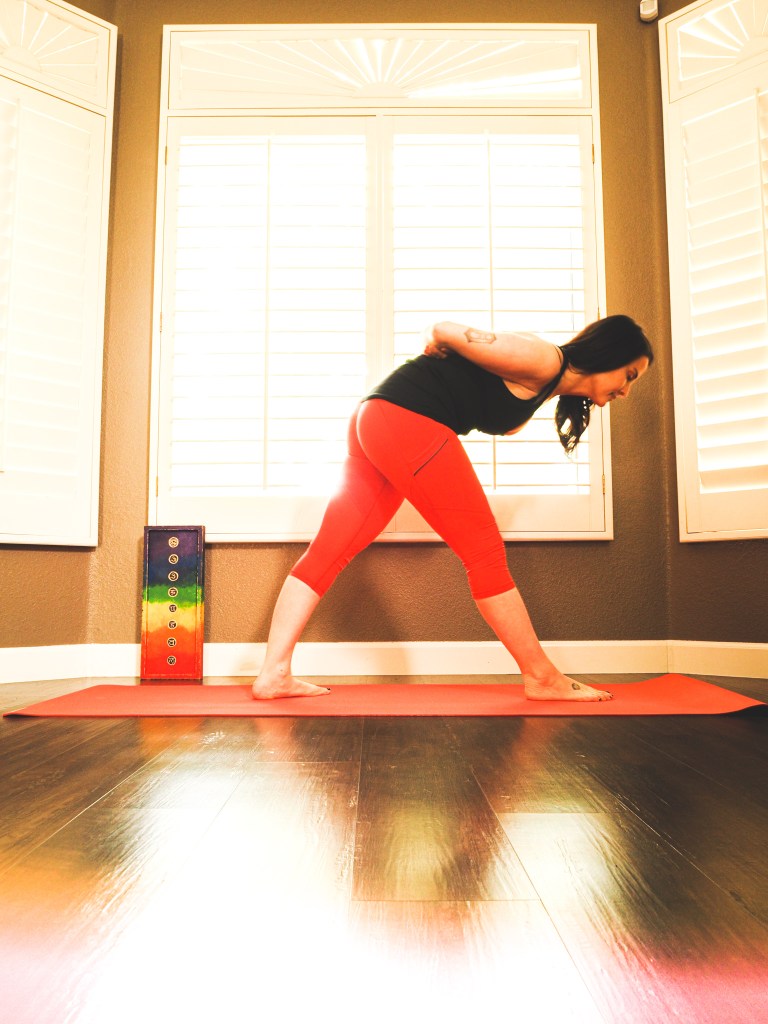
Bring the arms behind the back grabbing opposite elbows (right hand grabs left elbow, left hand grabs right elbow) (Image 10).
Take a deep inhale pressing the chest forward.
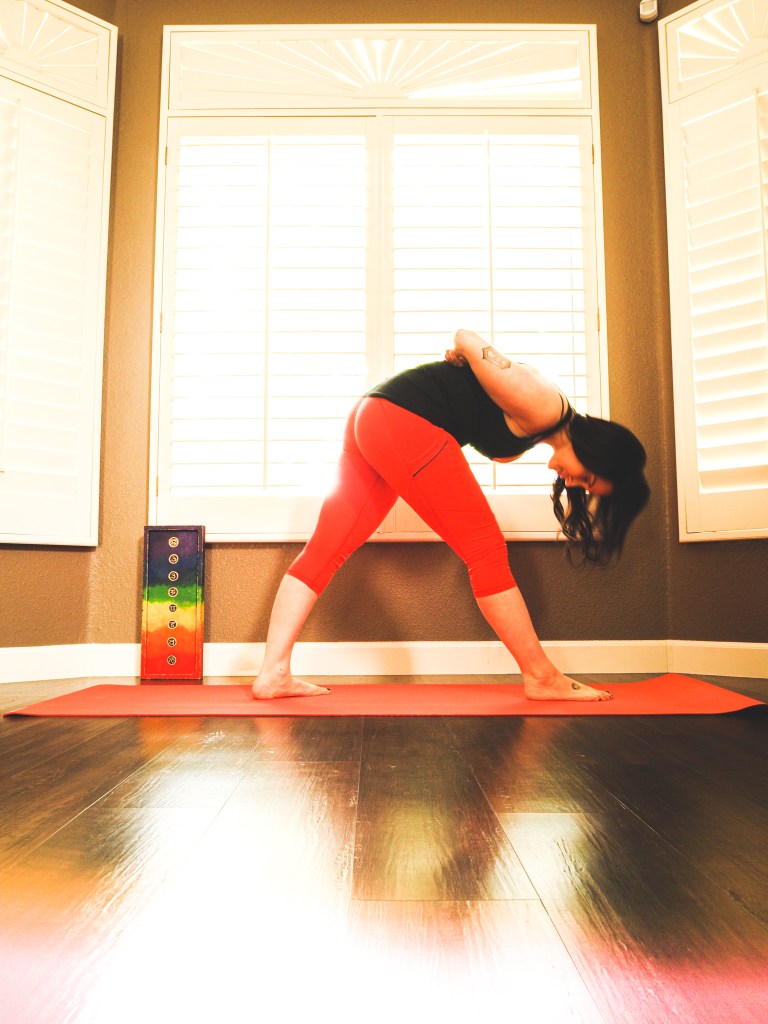
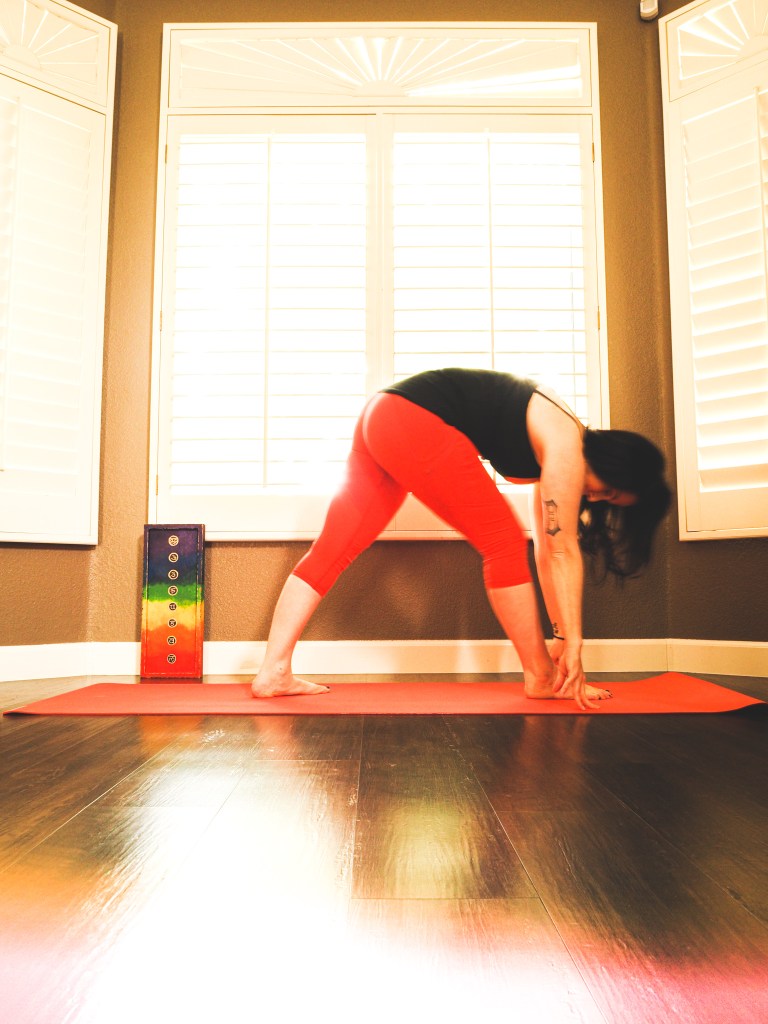
Exhale, hinging from the hips, leading with the heart, keep the back flat and fold over the front leg (Image 11, 12 and 13).
Actively draw the hip of your back leg forward and draw the hip of the front leg back, working to square the hips. You may not feel a great deal of movement with this.
Check in to make sure the front leg is straight and the knee is not locked.
Stay here for 5 to 10 breaths.
Release the hands and plant them down onto the mat (Image 14).
On an inhale, put a slight bend in the front knee (Image 15) and slowly bring the torso back up with the arms overhead, coming back into Warrior 1 (Image 16).
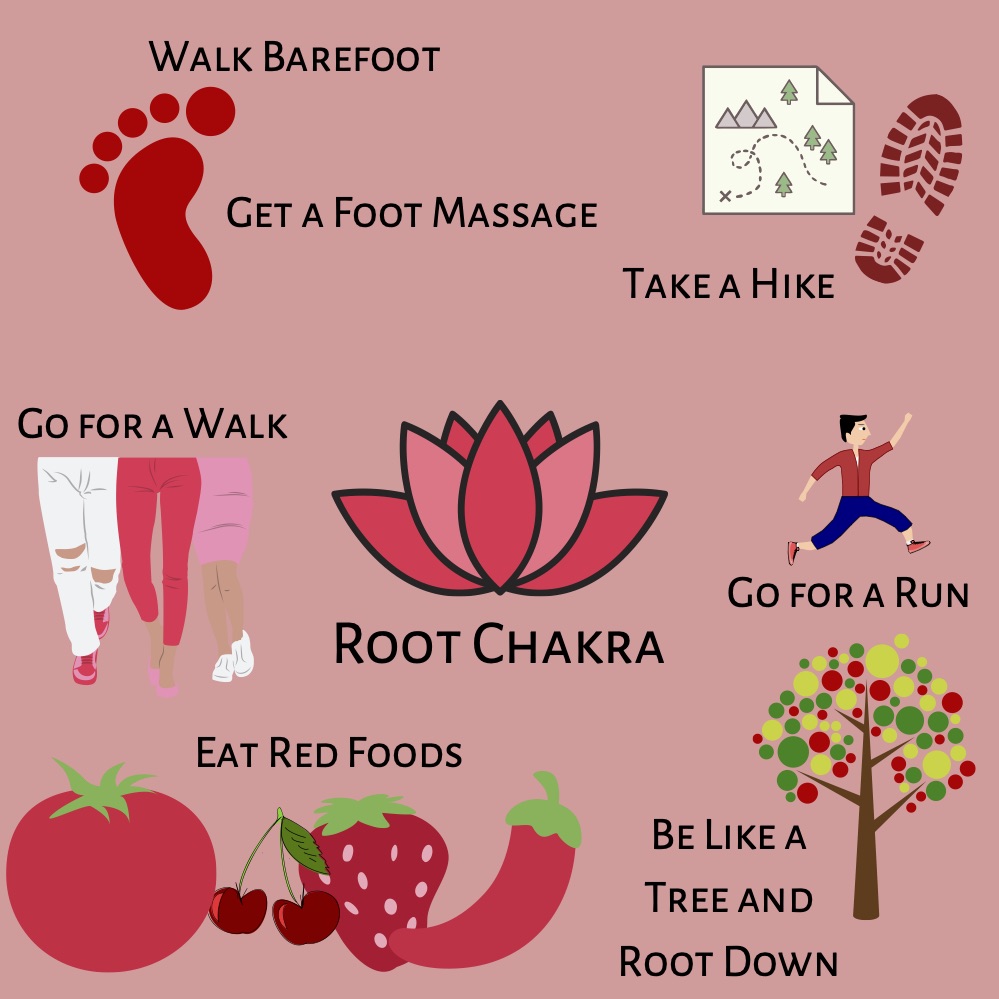
If yoga is not your thing, you can try hiking, working out, walking barefoot, jogging or foot massages to stimulate your muladhara chakra. Also wearing the color red, lighting a red candle, and eating red foods like strawberries, beets and cherries can help to balance your chakra.
With COVID-19 taking over the world, many of us have more free time than ever before. Some people are taking this opportunity to work on themselves and improve their physical and mental health. I figured what better time than now to share some chakra work that we can do together to help us feel better and live happier.
When you do chakra work, typically you will start at the root chakra because much like building a house, if you do not have a strong foundation you can’t build a solid home. You want to be grounded and stable first and then you can work your way up. This blog will dedicate three posts for each of the main seven chakras, but if you feel you need more time to spend on a certain chakra, please take all the time you need. Once you feel stable and balanced, move on at your own pace.
The Muladhara or root chakra is located at the base of the spine near the tailbone or coccyx area (three lower vertebrae). Think of this chakra as the cellar where you harbor your survival instinct, your desire for safety and security, and your basic needs such as food and shelter. It drives your desire to create a safe, comfortable home environment; be financially secure; and have loving relationships.
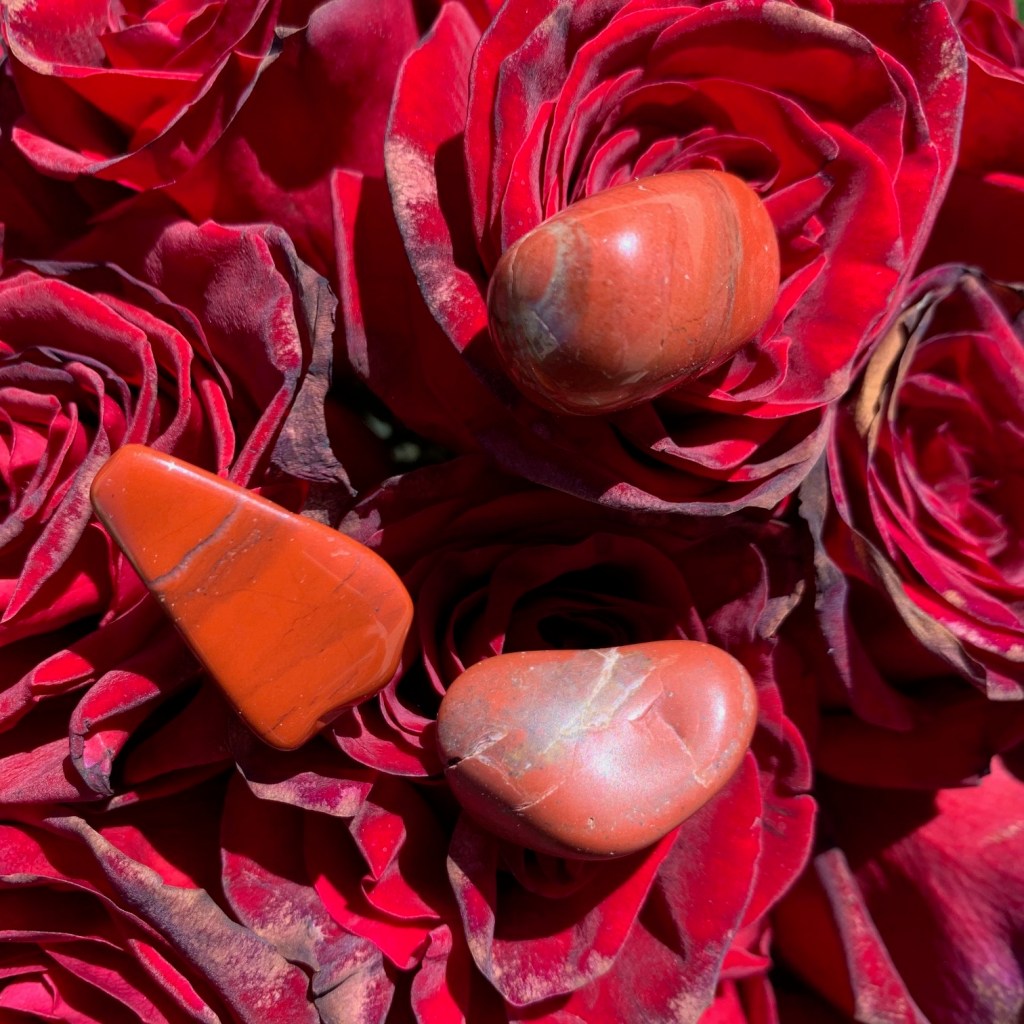
The muladhara chakra is associated with the color red, the element of earth and can be blocked by fear. The root chakra is symbolized by a deep red lotus flower with four petals and focuses on grounding and stability. A balanced root chakra results in a strong, rooted and secure individual.
Some health conditions that may indicate an unbalanced root chakra are eating disorders, anxiety, depression, issues withe the colon, bladder, kidneys, bowel movements, legs, feet, lower back and prostate. If you tend to be very fearful or lack a feeling of belonging, you may be experiencing a deficiency in your root chakra.
Pranayama
A great breathing exercise to ignite your muladhara chakra is Ujjayi breathing. Try performing this pranayama while seated in Sukhasana. For additional cues on how to get into this easy seated pose, check out my previous post here and for instructions on how to perform Ujjayi breath, click here.
Yoga
Yoga poses that balance the muladhara chakra promote grounding either physically through the feet, legs and sit bones, or through a sense of moving into stillness with seated forward bends that allow you to surrender to the earth. As you move through these poses, imagine your body energetically connecting with the earth and becoming one.
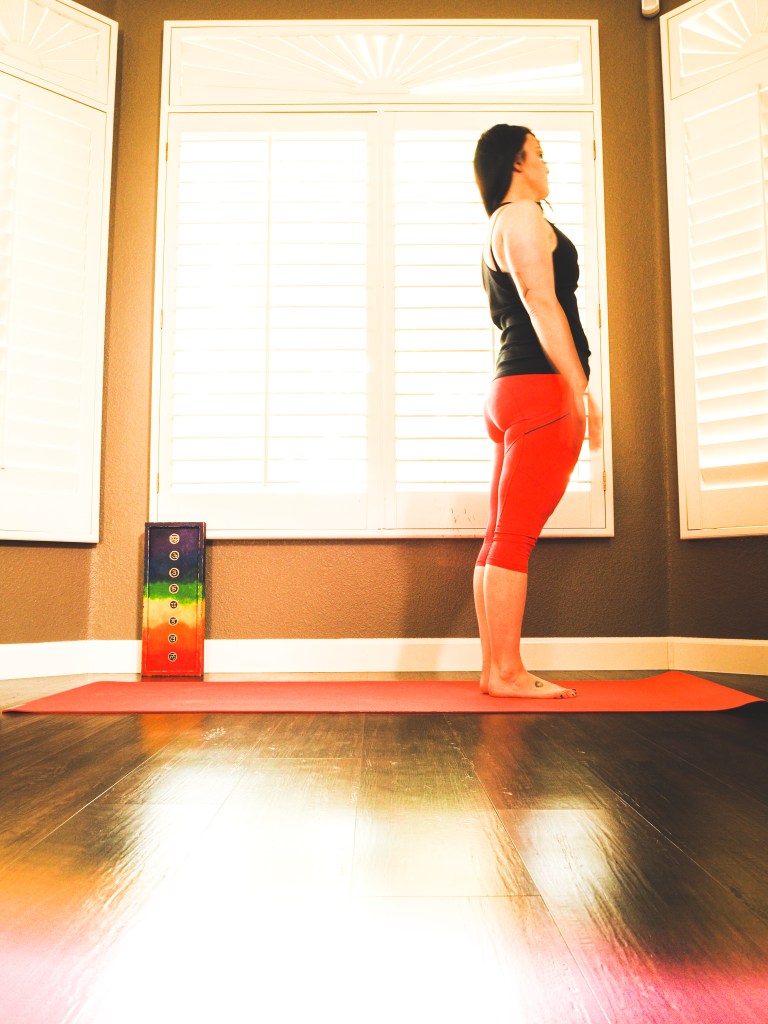
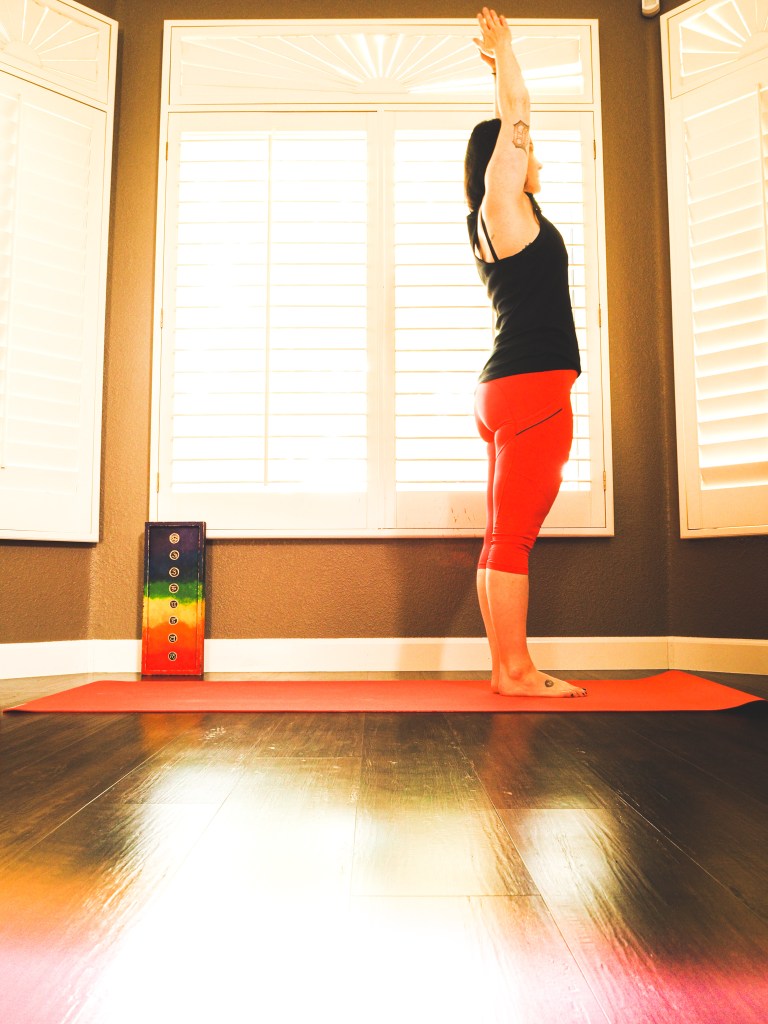
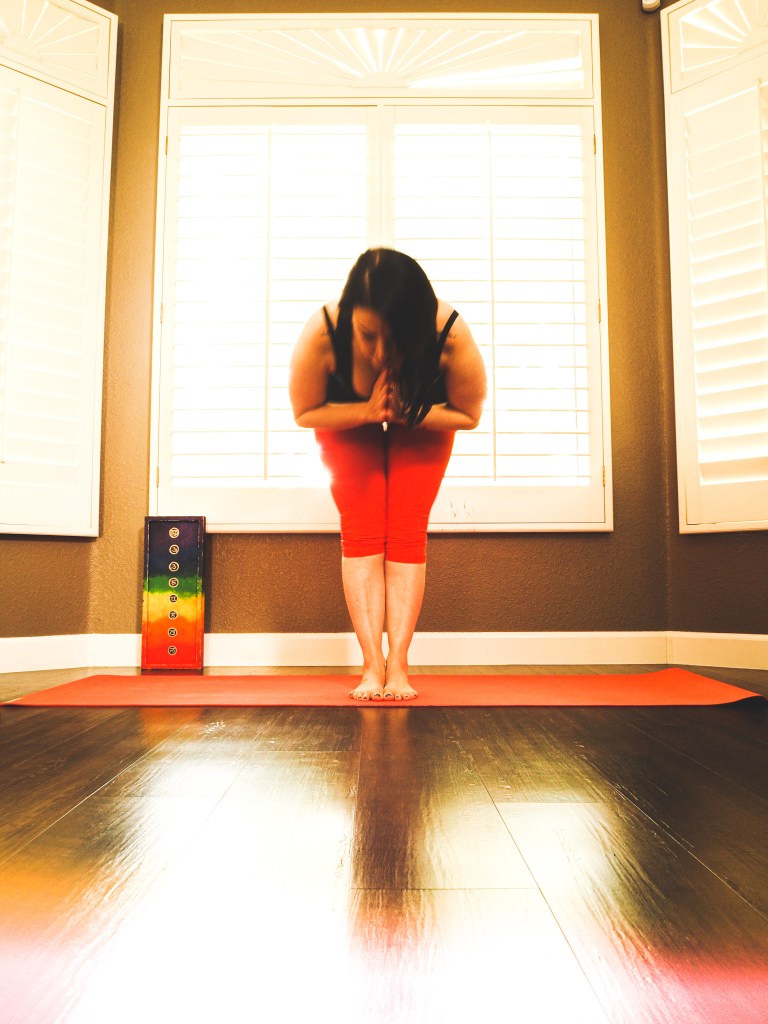
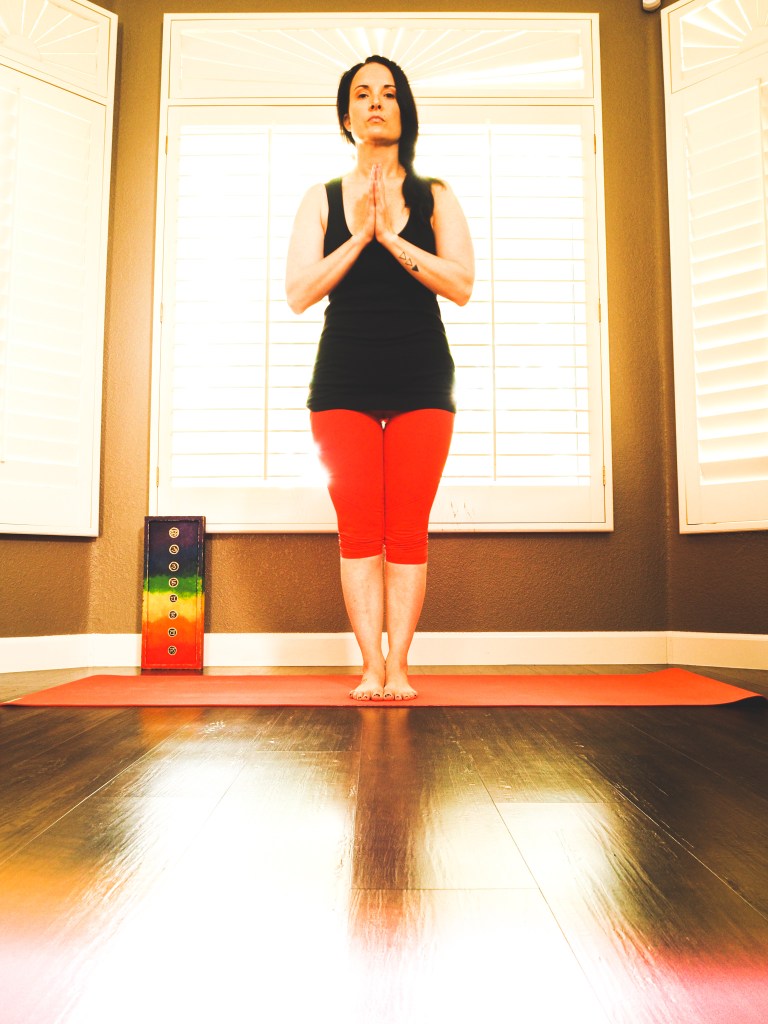
Mountain Pose (Tadasana or Samastitihi) is the foundation for all standing yoga poses. It looks simple, but when done correctly it is great for grounding, balance and posture.
Stand nice and tall at the front of your mat with your big toes touching and the heels slightly apart.
Lift all ten of your toes off the mat.
Starting with the pinky toes, slowly place them back down onto the mat moving inward until you plant the big toes back down onto the ground. Notice how the arches of the feet remain lifted. This engages your Pada Bandha and helps with balance.
If you have difficulty balancing in Mountain Pose, try standing with the feet hip distance apart.
Lift the knee caps by engaging the quads.
Slightly tuck the tailbone.
Engage your core by pressing your belly button back toward your spine.
Relax the shoulders and draw the shoulder blades down the back.
Place the arms are along your side, finger tips spread wide, palms facing the front of the room.
Lengthen the neck so that the crown of the head presses up toward the sky.
Really focus on the feeling of the feet connecting to the earth.
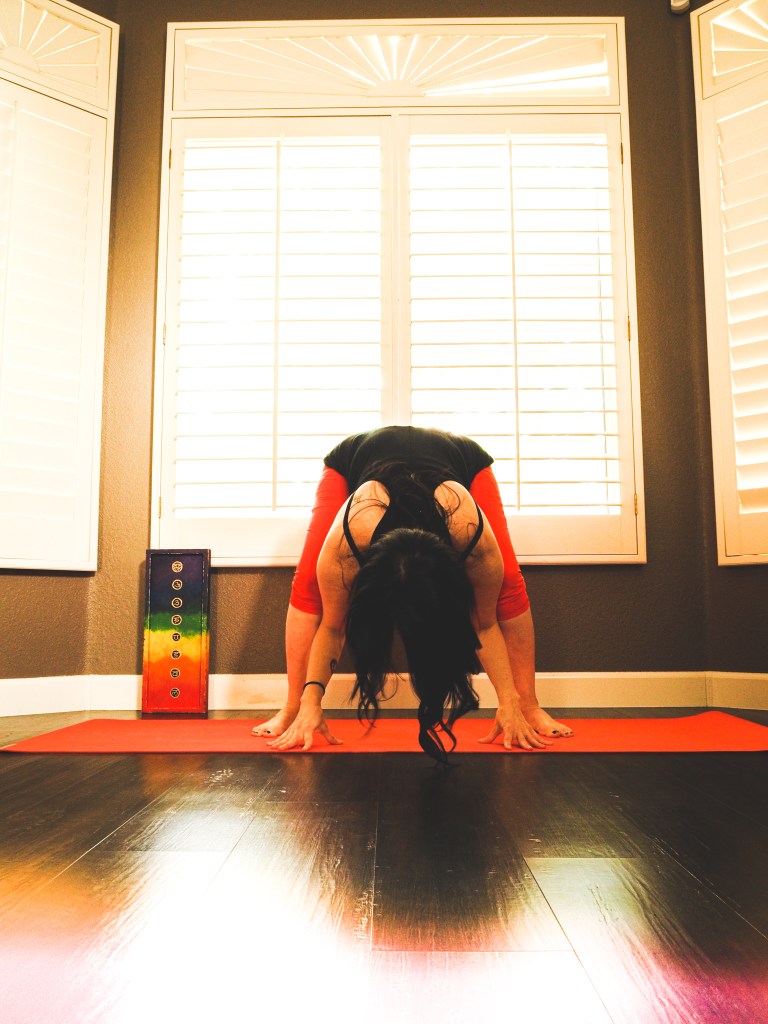
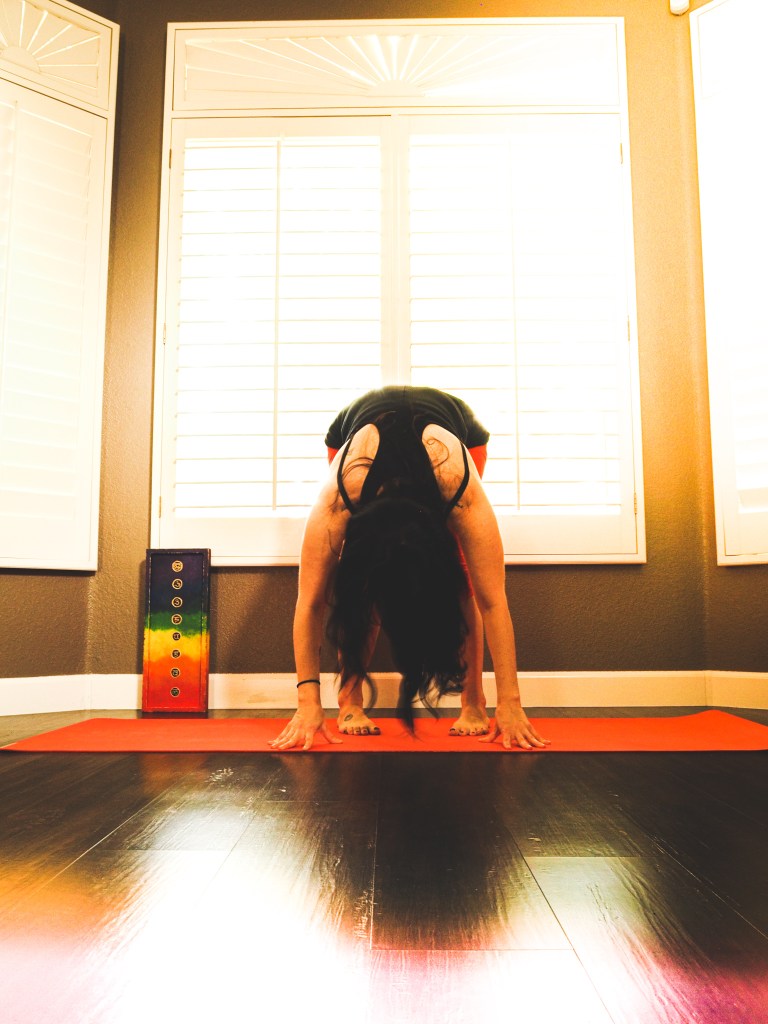
Forward Fold (Uttanasana)
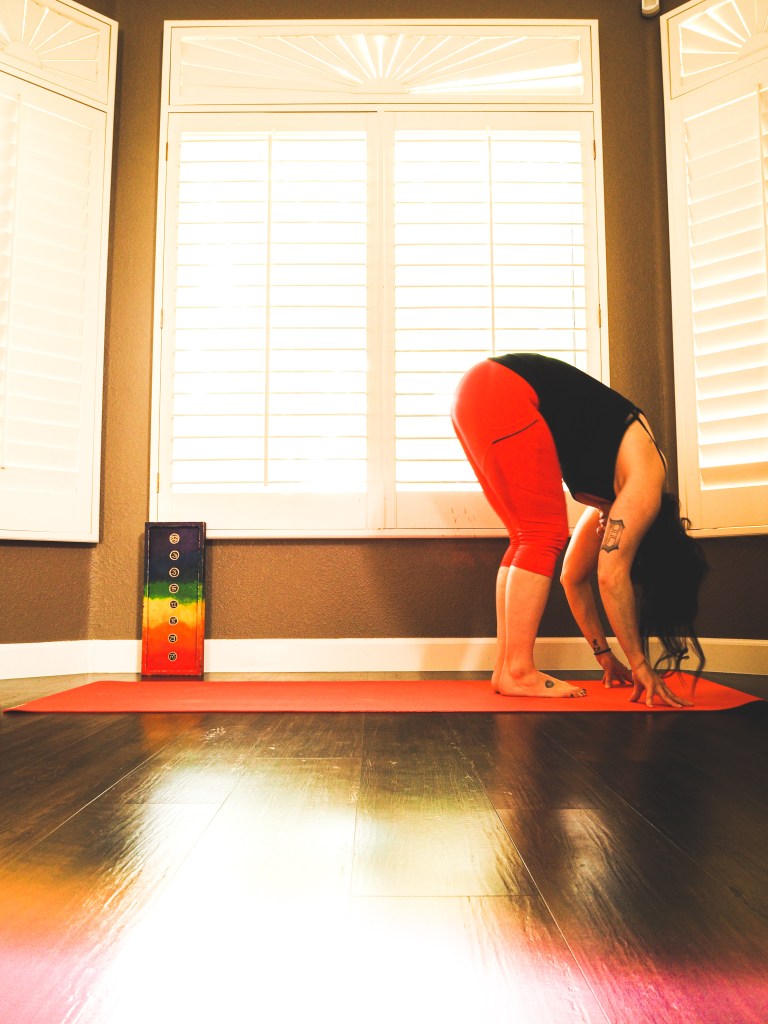
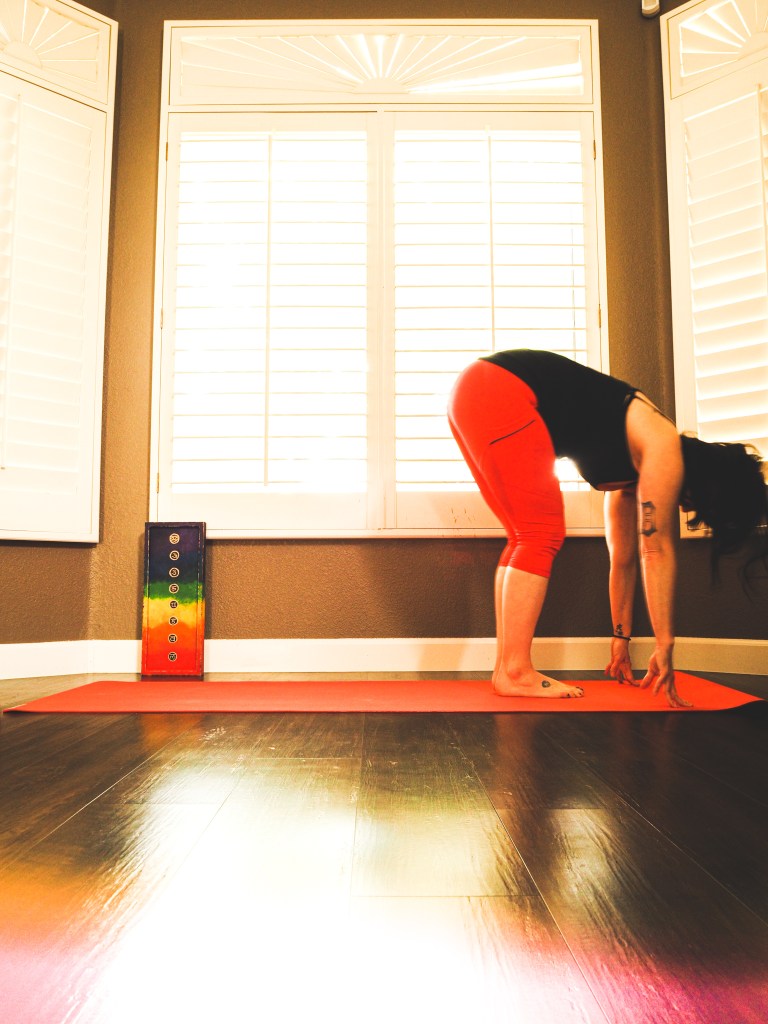
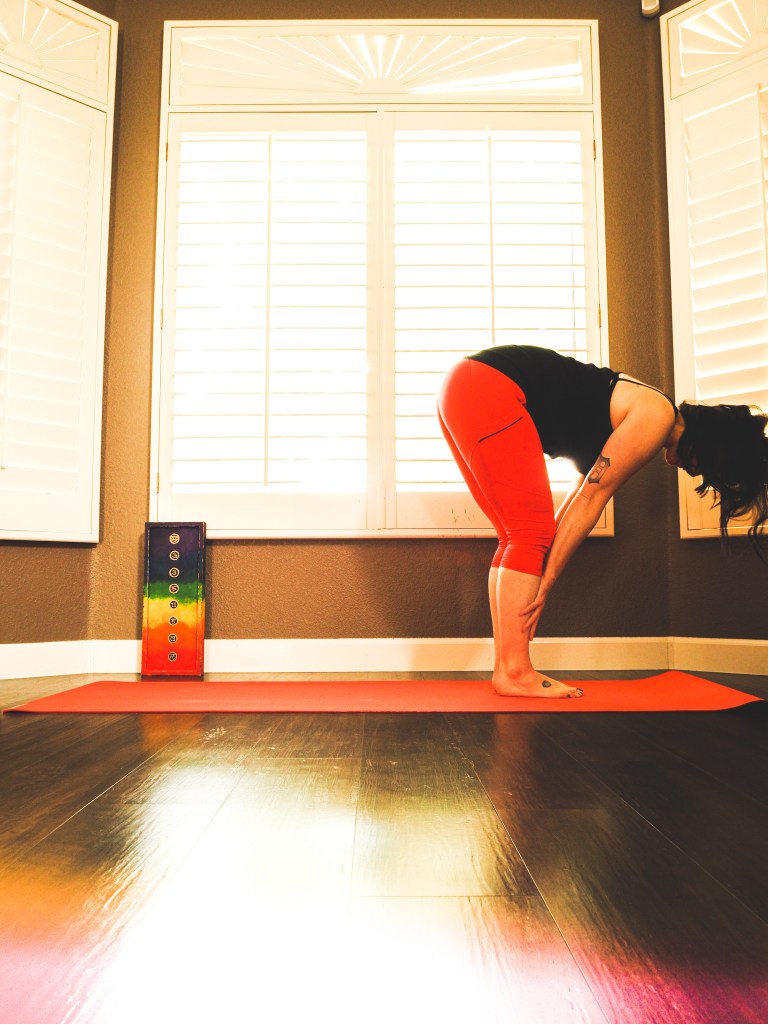
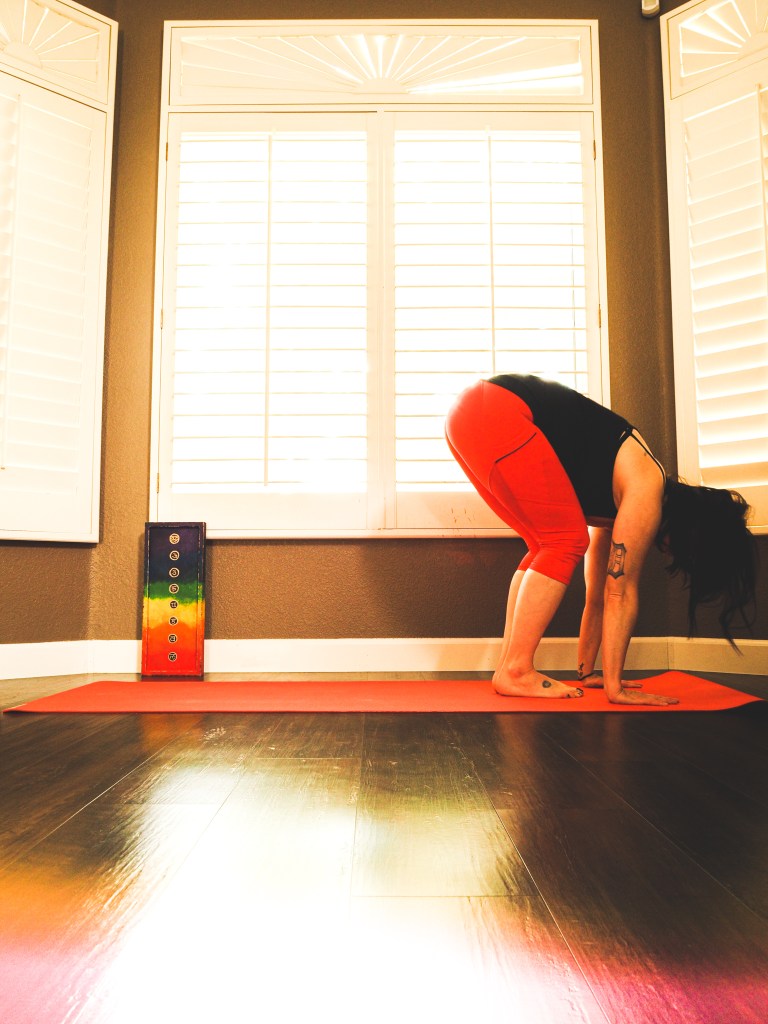
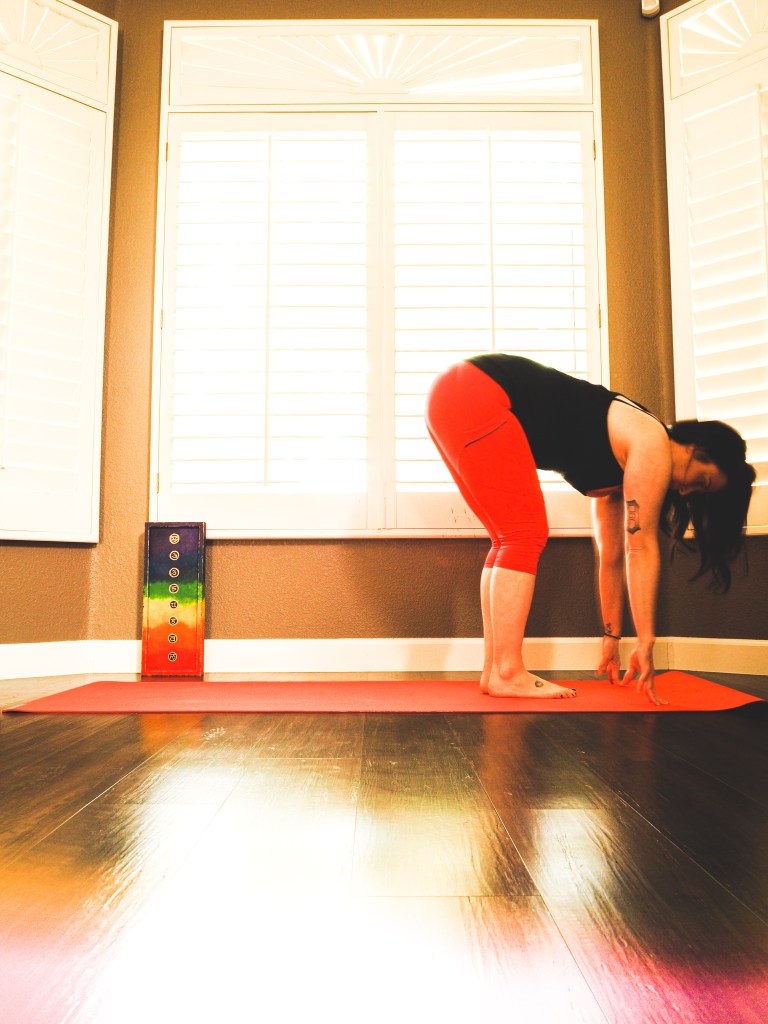
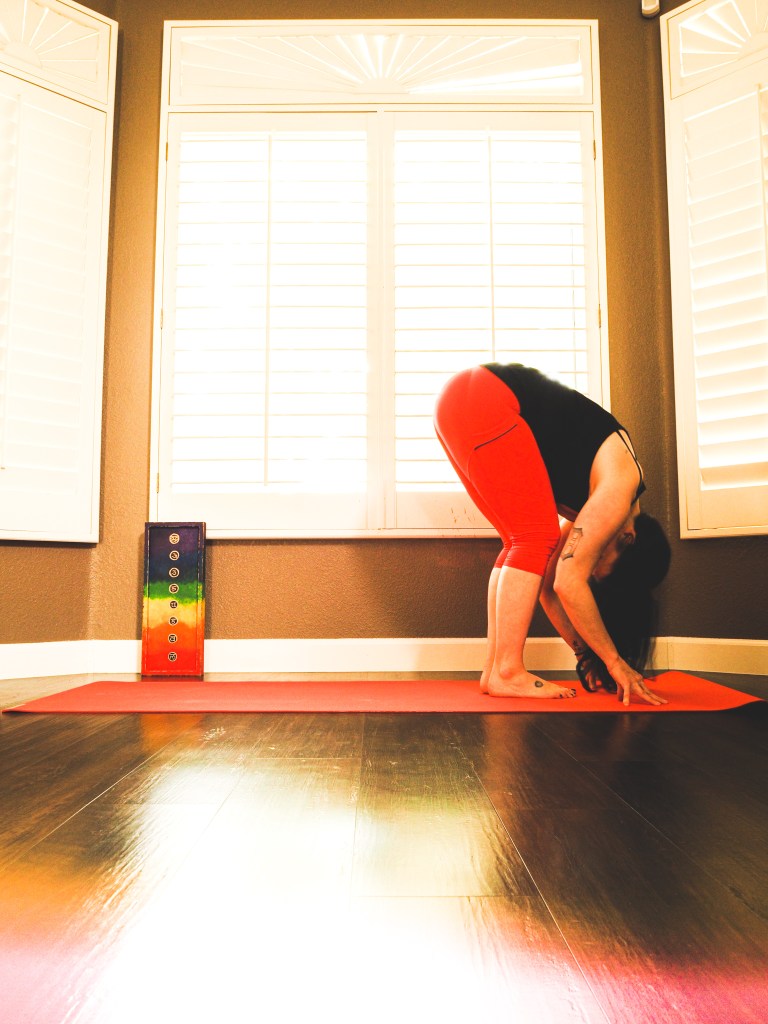
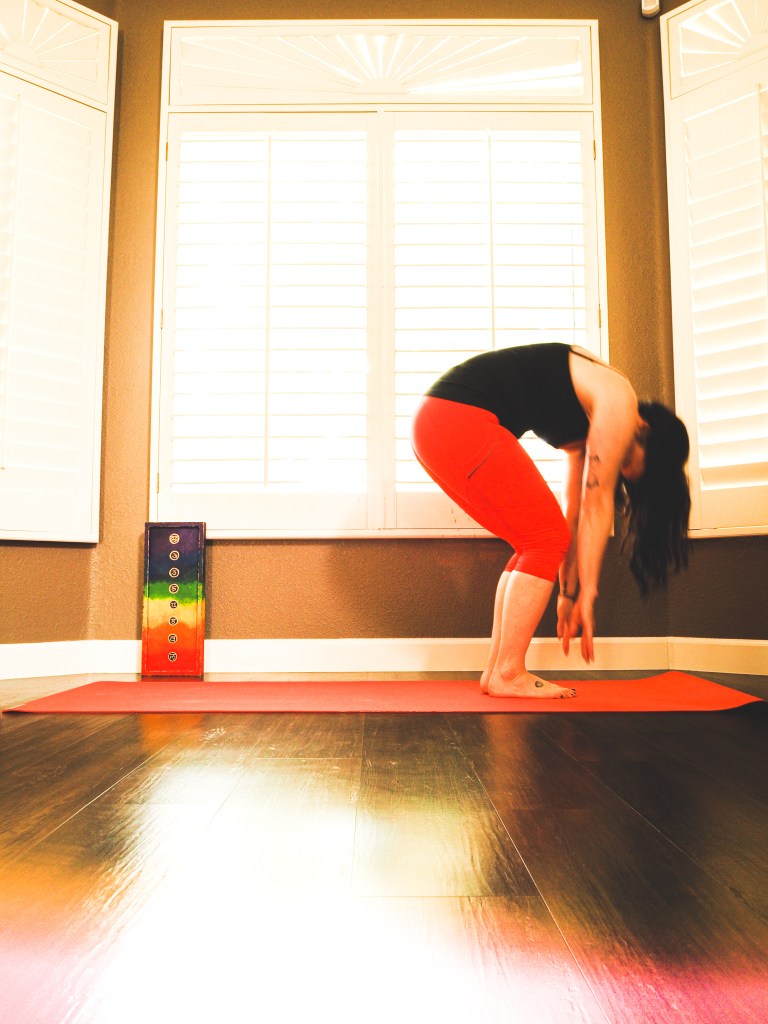
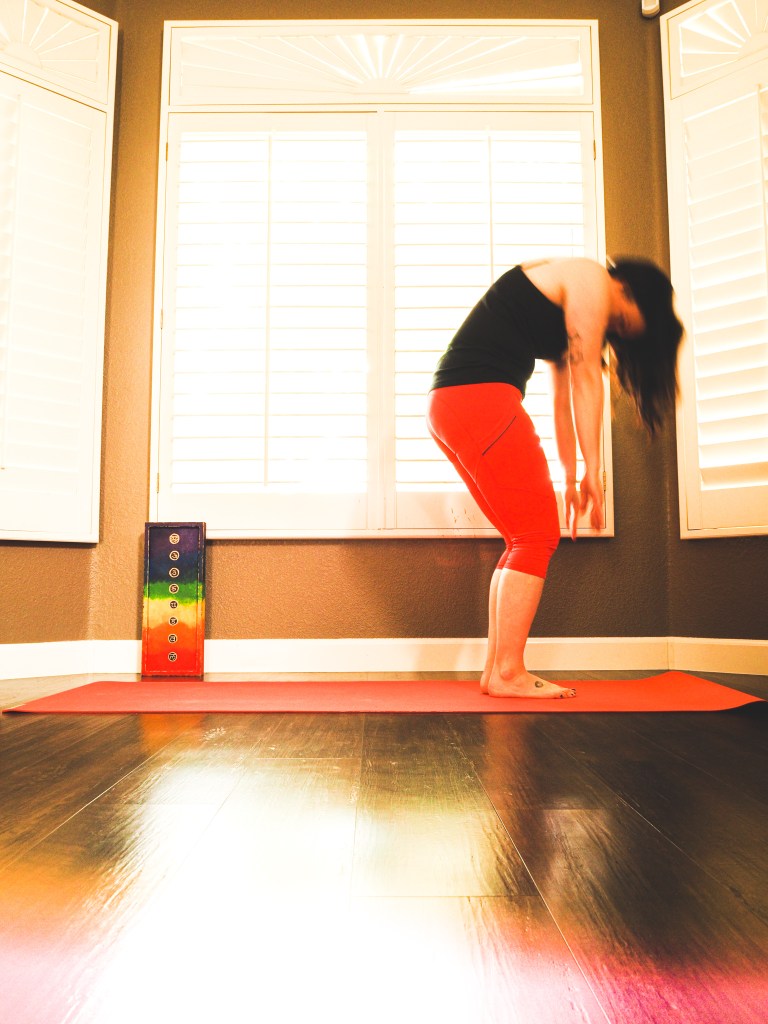
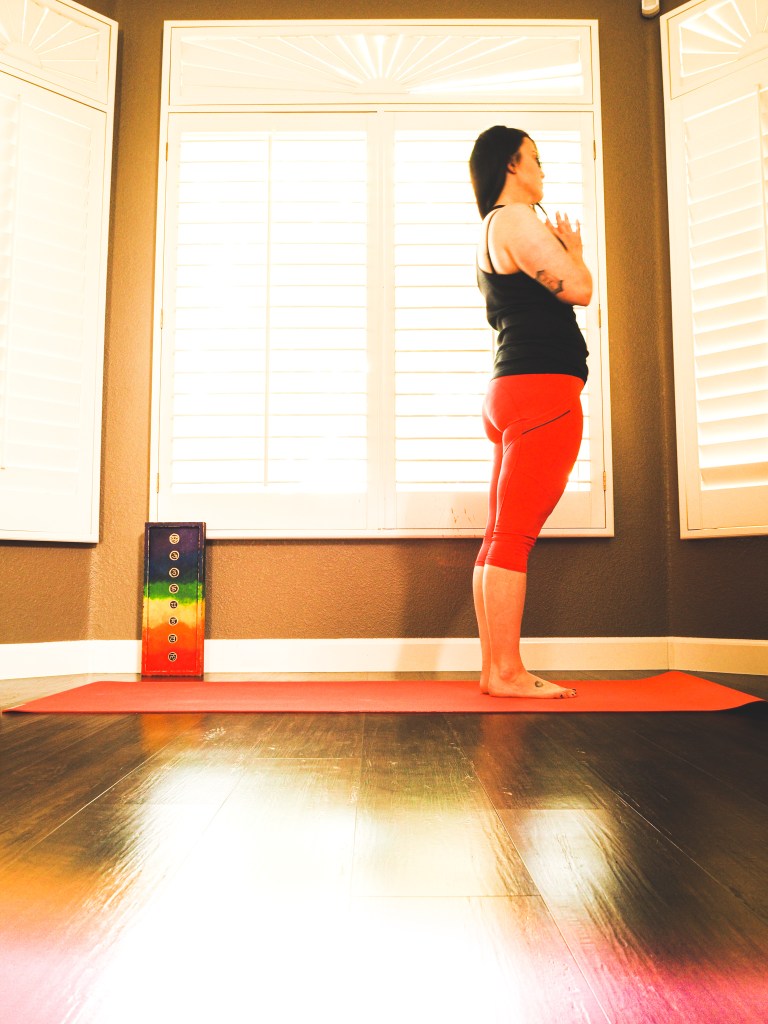
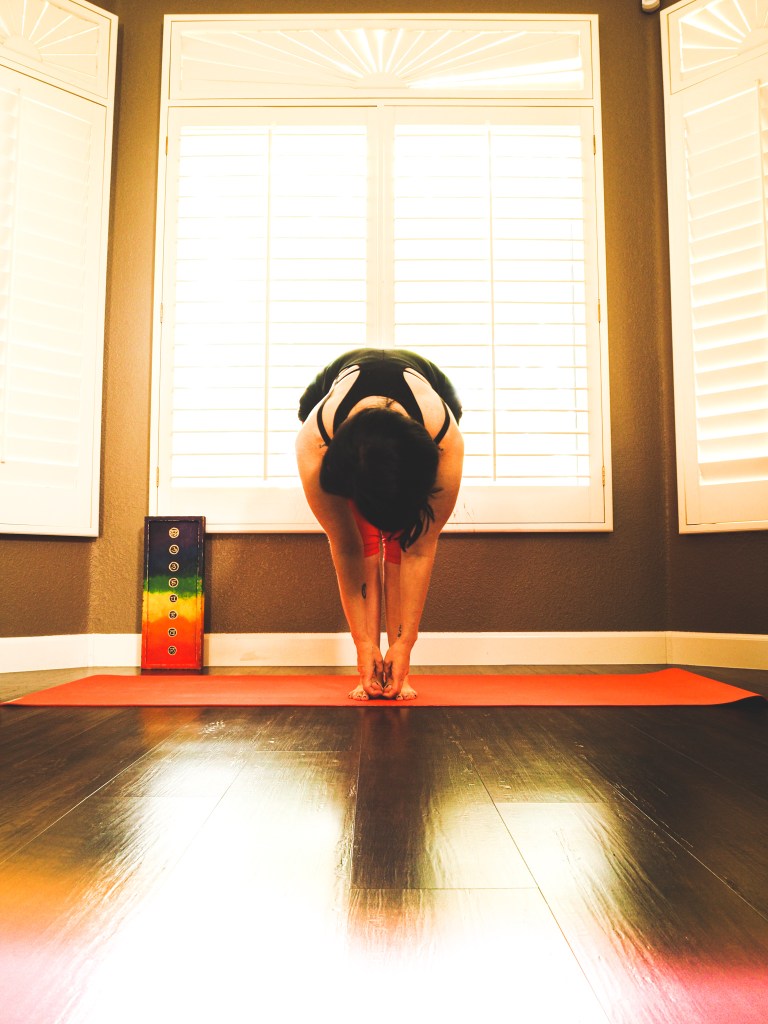
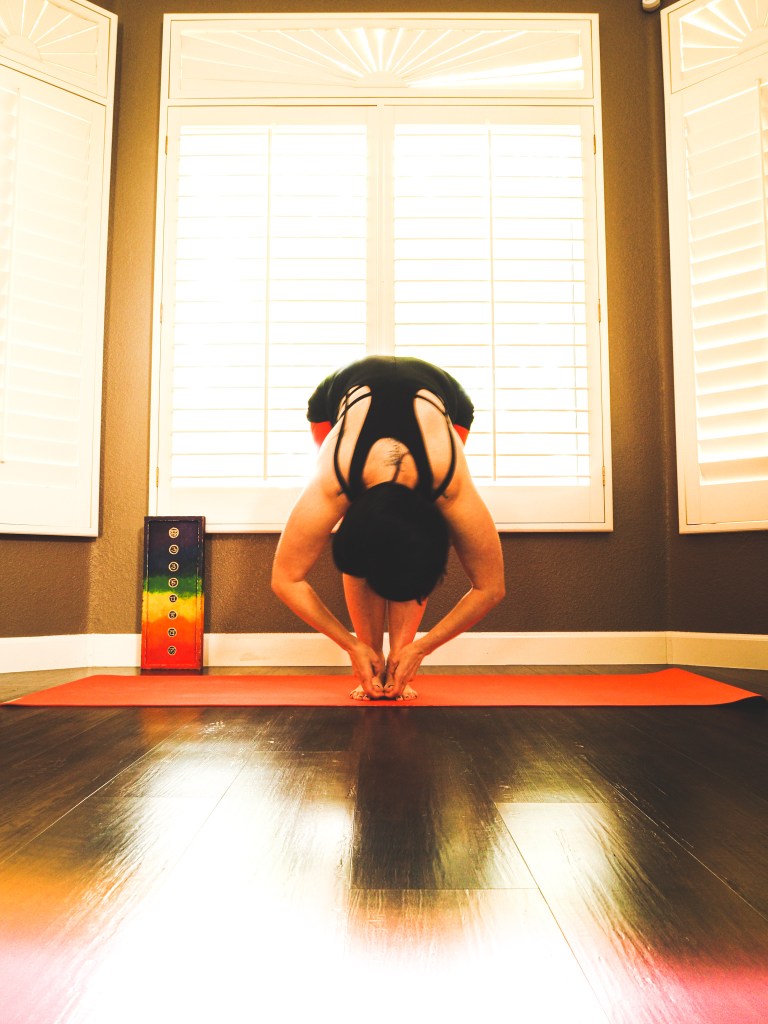
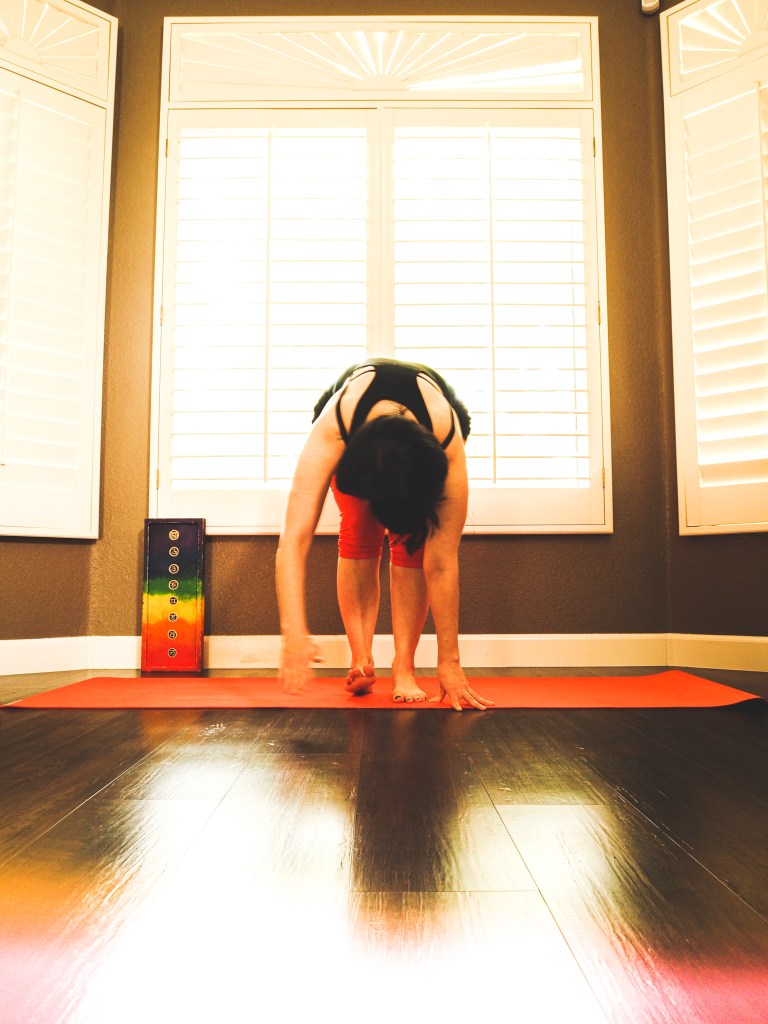
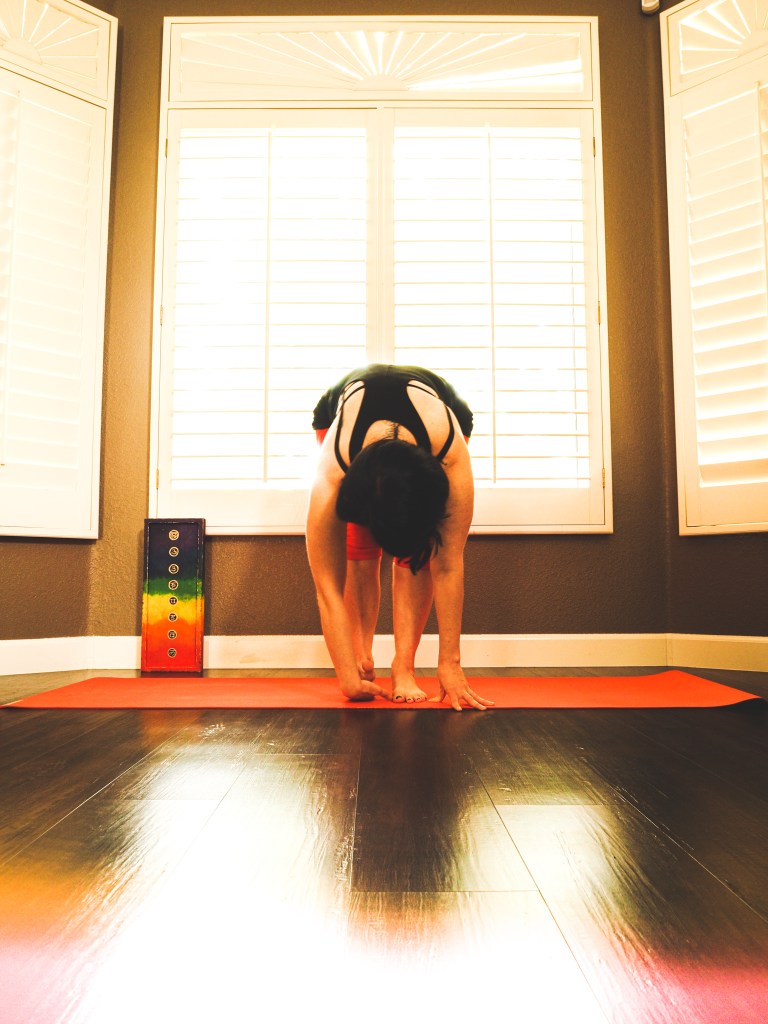
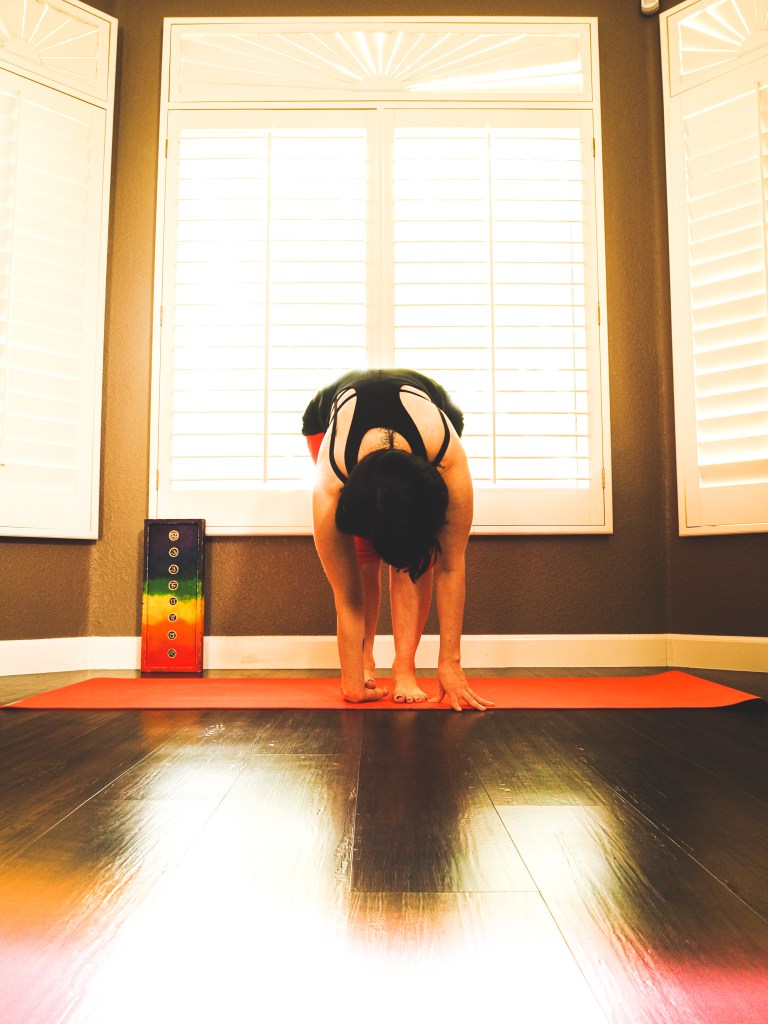
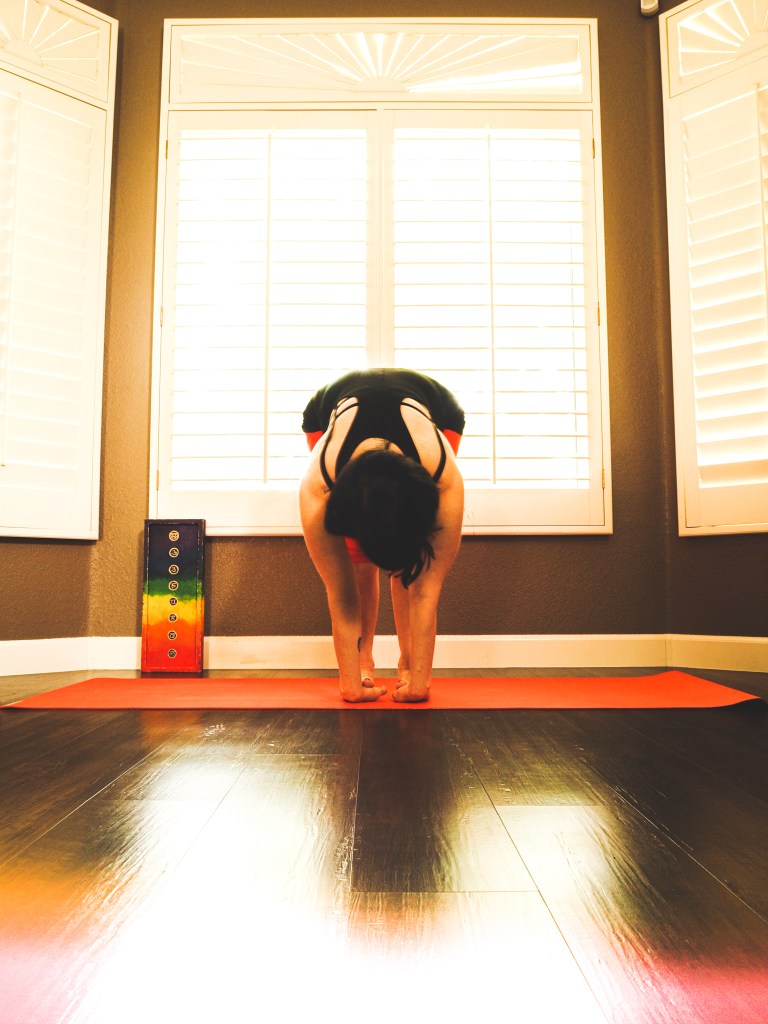
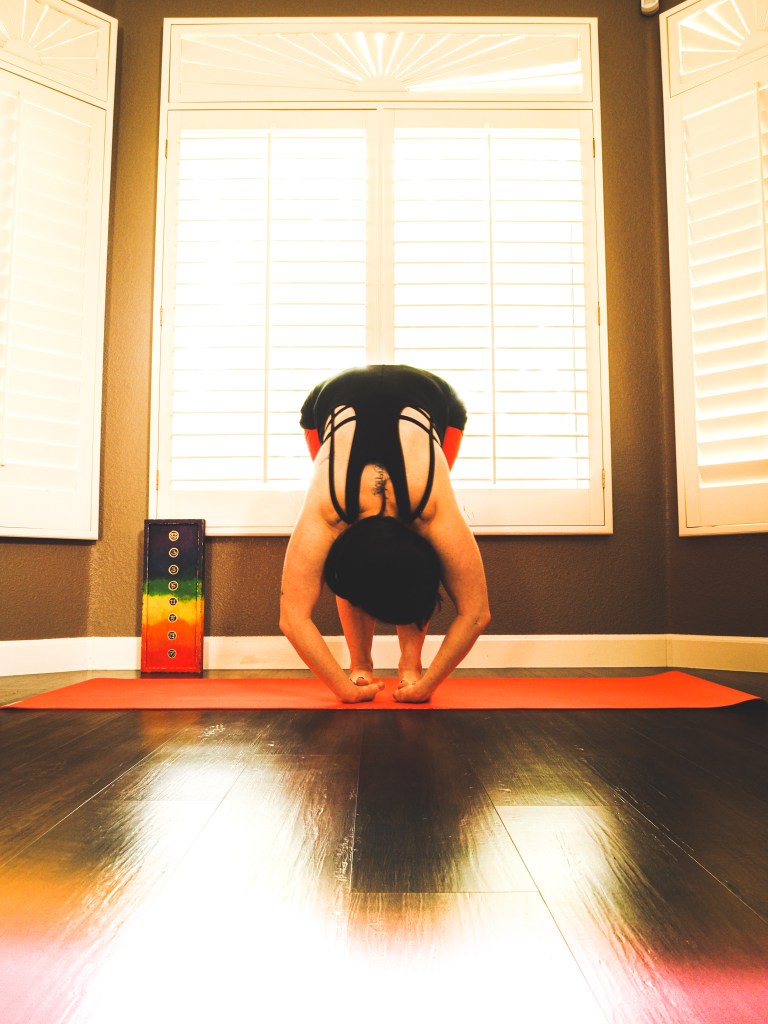
From Mountain Pose, inhale reaching the hands over head (Image 1 and 4).
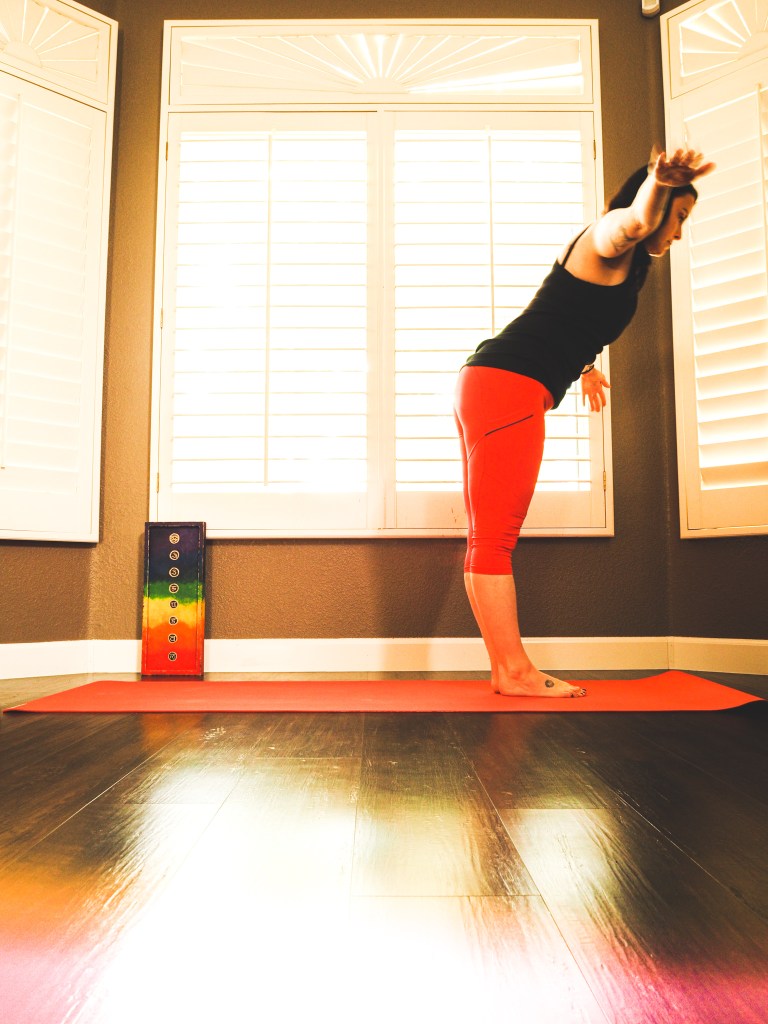
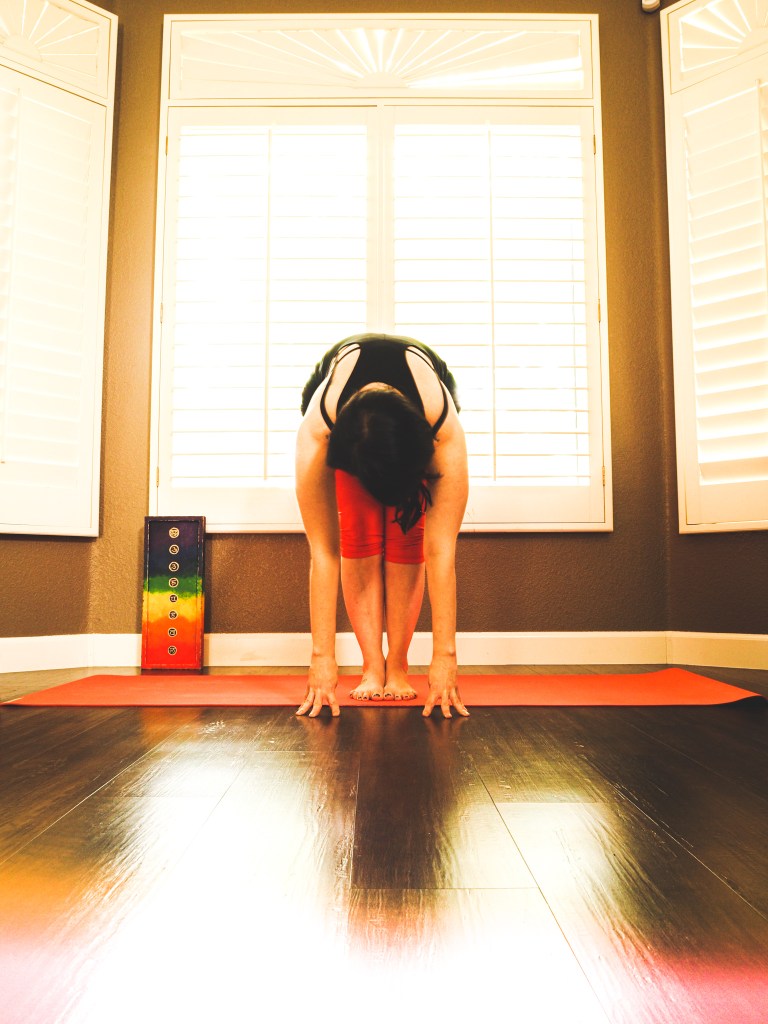
Exhale and hinge from the hips (not the waist), keeping the back flat and fold forward (Image 2 and 5).
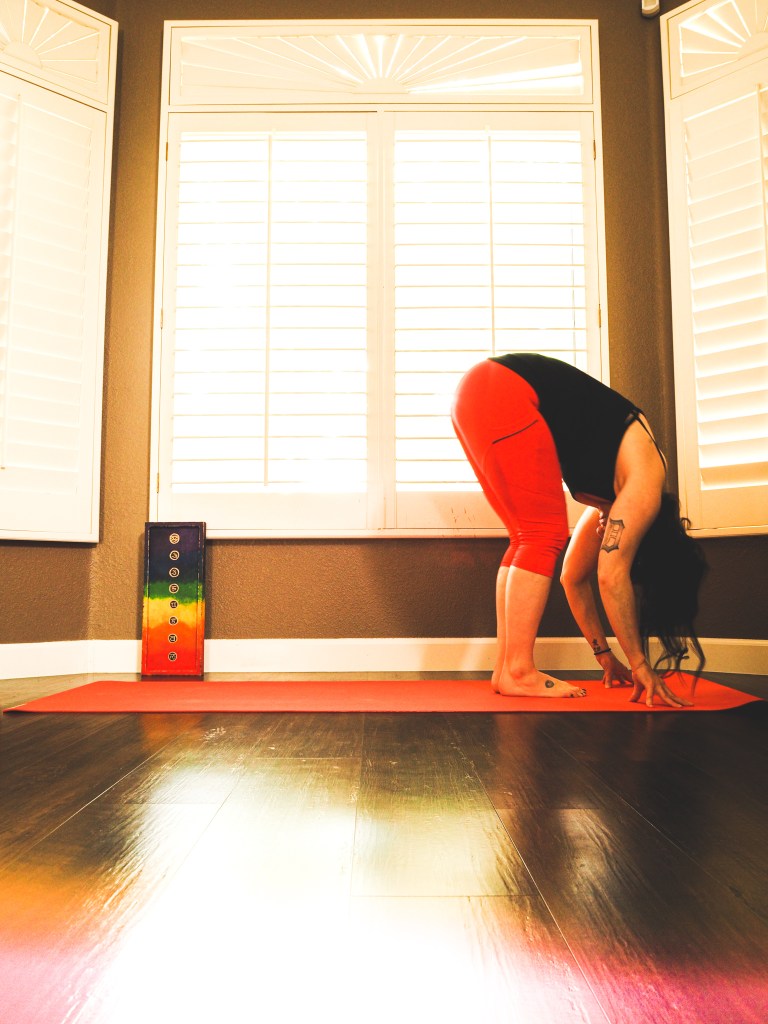
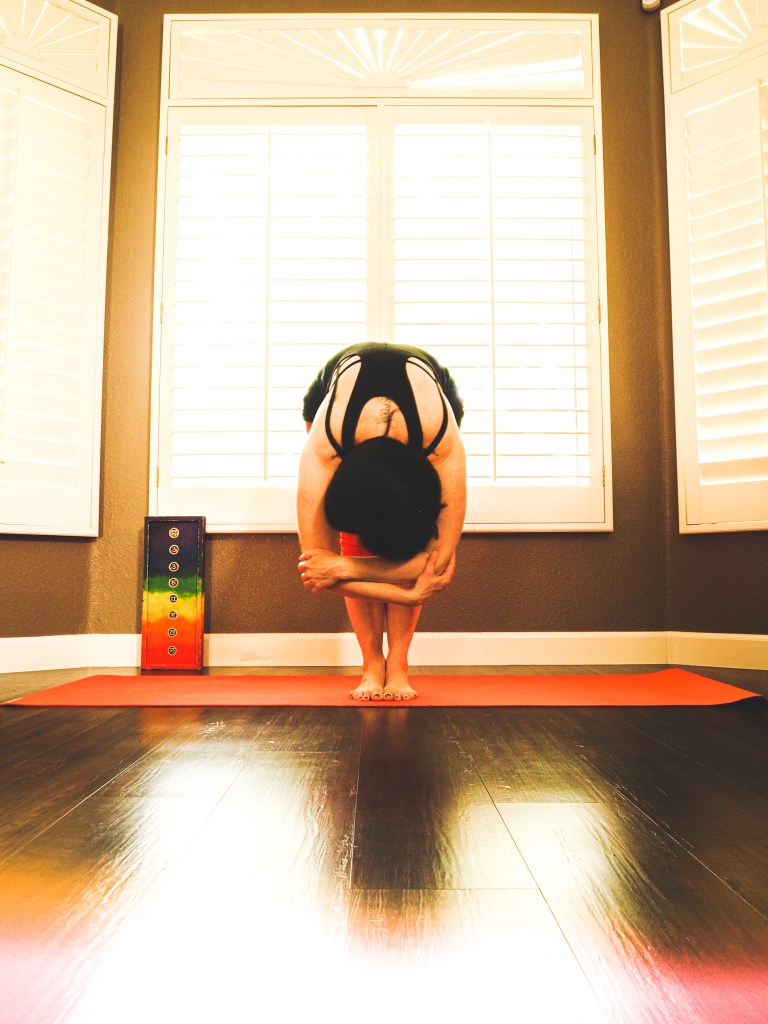
Relax the neck and let the head fall heavy (Image 3 and 6).
Try to keep your knees straight, but not locked. If this is uncomfortable, put a slight bend in the knees.
Bring the hands down onto the mat. If they do not touch the ground comfortably, put a slight bend in the knees to bring the ground to you.
Image 1
Image 2
Image 3
Image 4
Image 5
Image 6
Variation 1: Grab opposite elbows
Right hand grabs left elbow, left hand grabs right elbow (Image 7).
Let the torso gently rock side to side.
Image 7
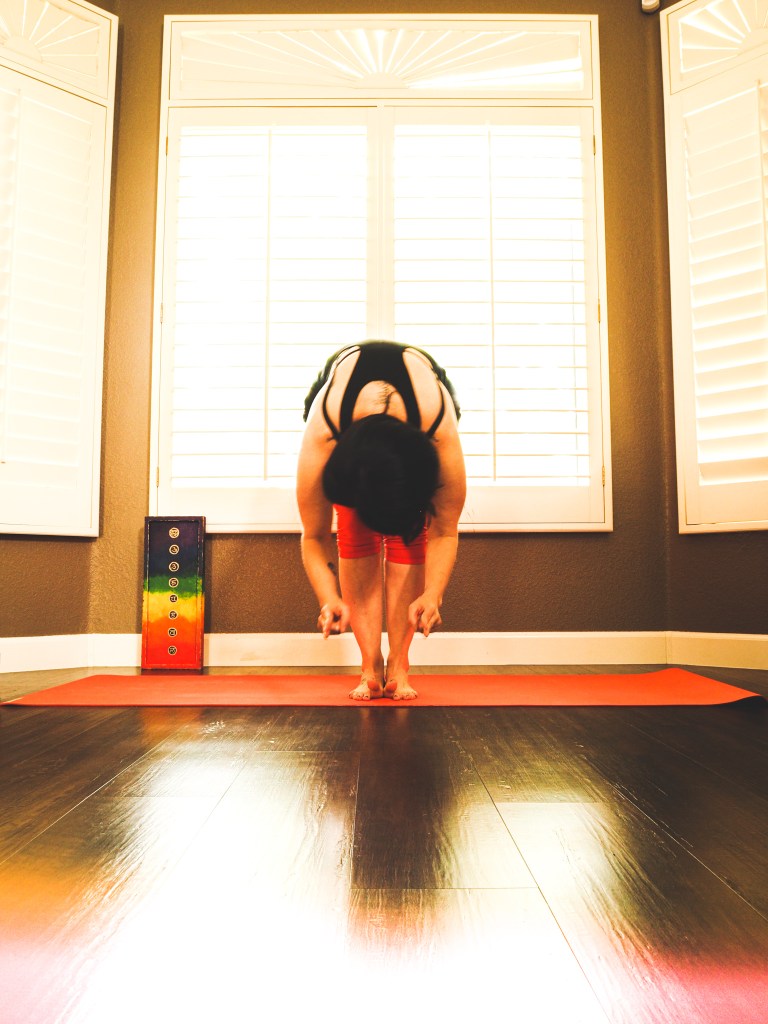
Variation 2: Big Toe Pose (Padangusthasana)
Bring the feet hip distance apart if you need a little more balance.
Take your pointer and middle finger of both hands and loop them around the big toe, right fingers to right big toe and left fingers around left big toe (Image 8).
Take a deep inhale, lengthening the spine and straightening the arms (Image 9).
Exhale and gently pull on the big toes, letting the elbows bend out to the sides and draw the torso closer to the tops of the thighs (Image 10).
Keeping the legs straight will produce a deeper hamstring stretch, but you can always put a slight bend in the knees.
Keep the back flat, avoiding rounding the spine.
Image 8
Image 9
Image 10
Variation 3: Gorilla Pose (Padahastasana)
Bring the feet hip distance apart.
Actively press the hips up toward the ceiling.
Lift the front of the right foot keeping the heel on the mat (Image 11).
Slide the right hand with the palm face up, under the right foot until the toes touch the wrist crease (Image 12).
Plant the right foot back down on the hand (Image 13).
Do the same with the left foot and hand.
Take a deep inhale, lengthening the spine and straightening the arms (Image 14).
As you exhale, bend the elbows and draw the torso toward the thighs (Image 15).
Image 11
Image 12
Image 13
Image 14
Image 15
Be sure you are keeping the neck relaxed and head heavy regardless of which variation you are in.
To come out of the poses, either release the elbows, unhook the toes or lift one foot at a time to release one hand at a time and plant the hands firmly down on the mat.
Put a slight bend in the knees.
Slowly roll up to standing as you stack vertebrae on top of vertebrae.
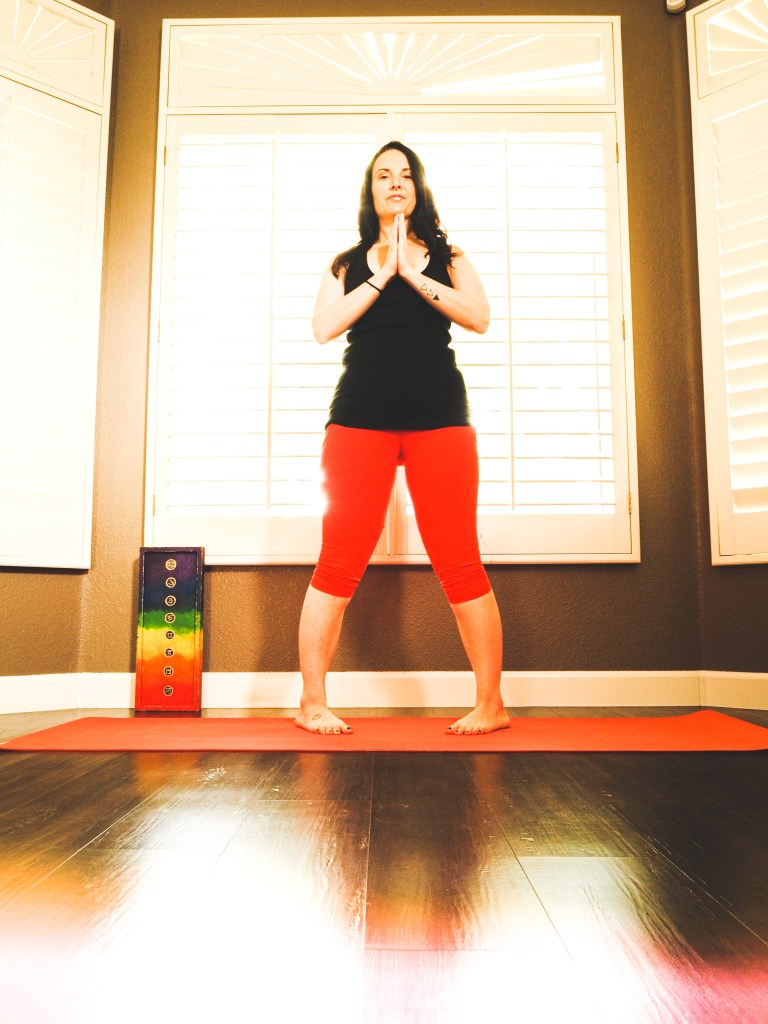
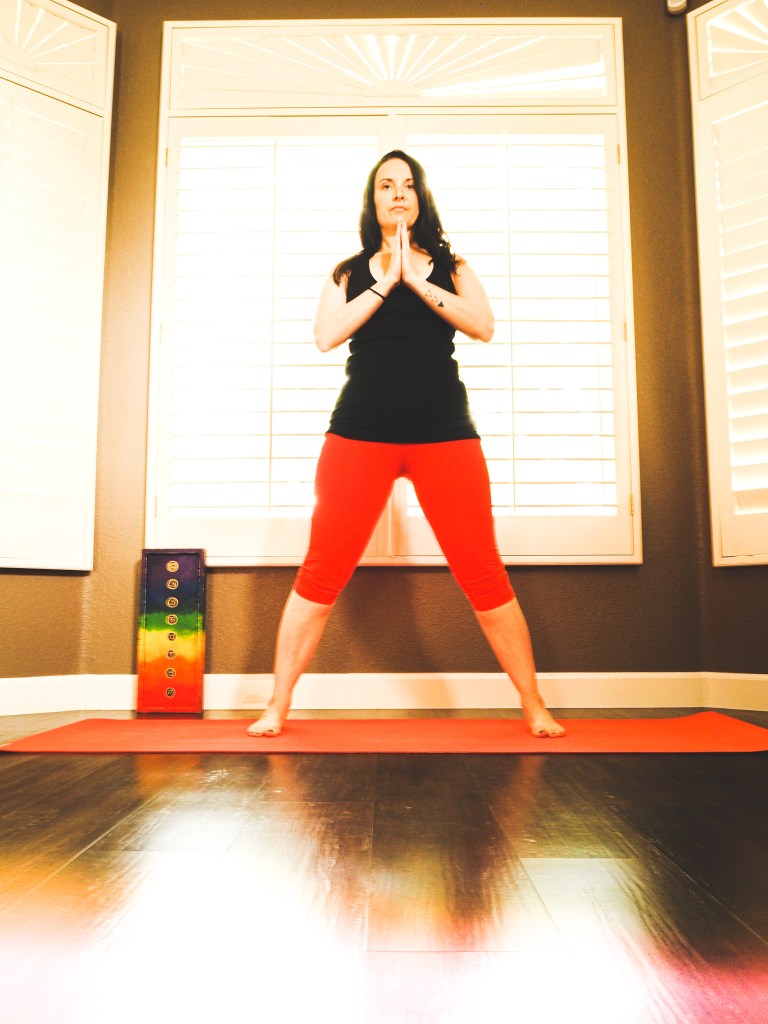
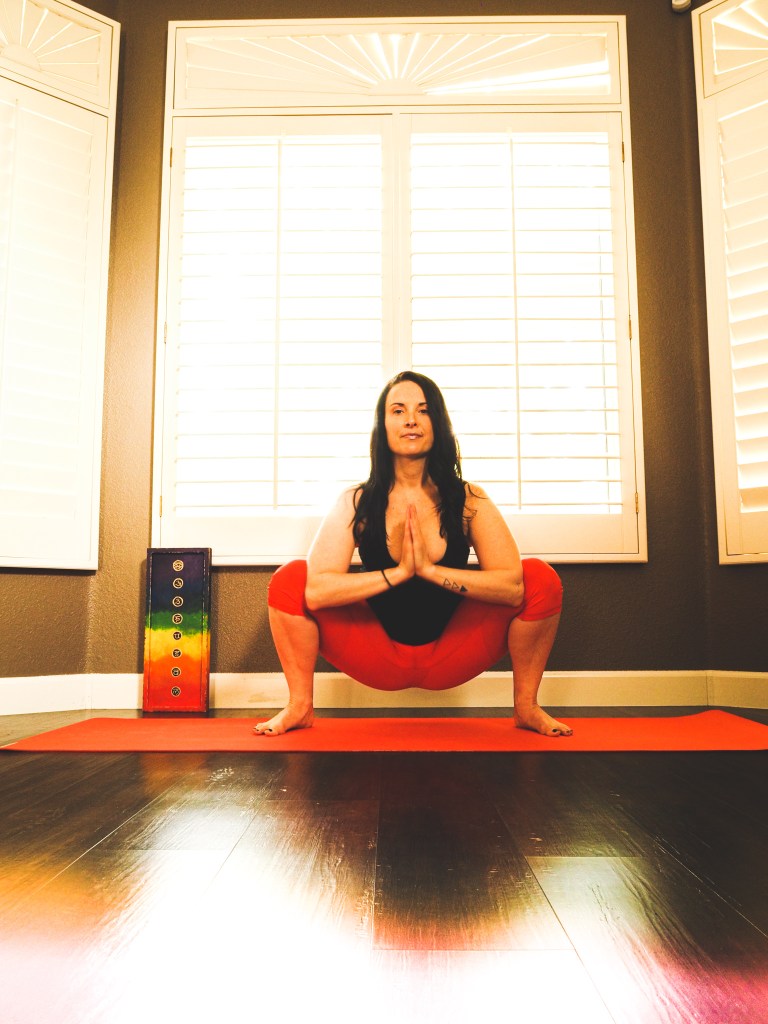
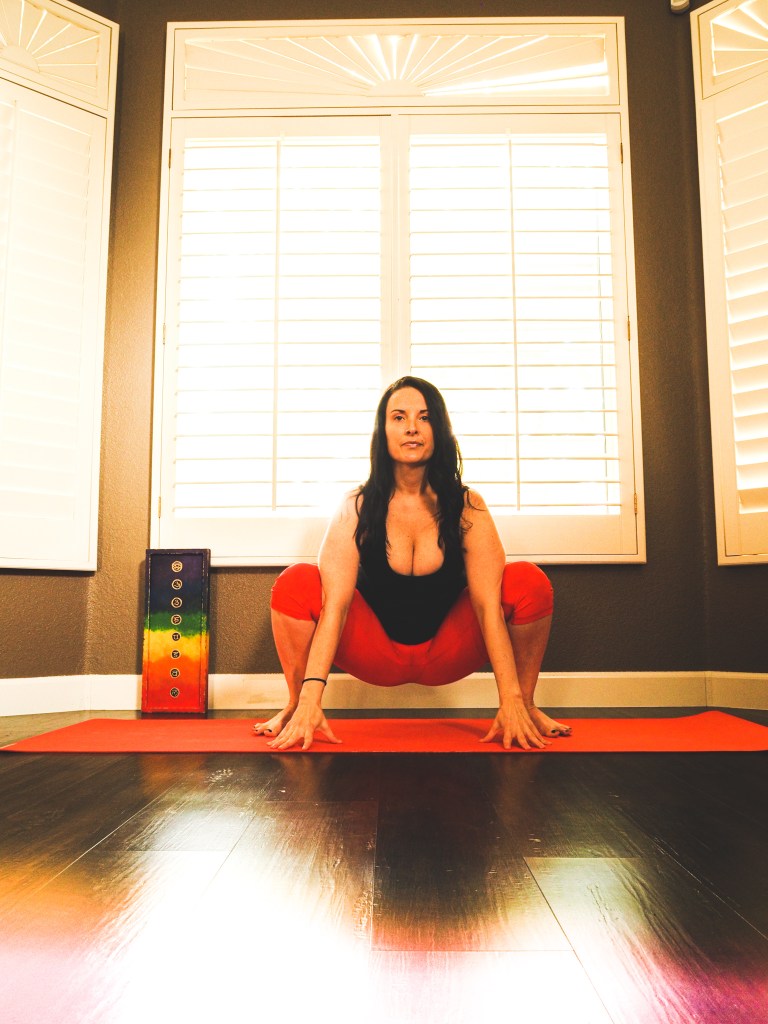
Yogi Squat (Malasana)
From Mountain Pose (Image 16), heel toe your feet out to the edges of the mat (Image 17 and 18).
Bring the hands to heart center in Anjali Mudra or prayer hands.
Try to keep the toes pointed to the front of your mat.
Keeping the back nice and tall, begin to bend the knees and lower the seat down toward the earth (Image 19).
Use your elbows to press the knees open and stretch the hips open a little farther.
Stay here for three to five long, deep breaths.
Place the hands firmly down onto the mat (Image 20).
Begin to straighten the legs and press the hips back up toward the ceiling (Image 21).
Heel toe the feet back to hip distance (Image 22 and 23).
Place a slight bend in the knees and roll up to standing nice and slow, stacking vertebrae on top of vertebrae.
Don’t be scared! If you’ve been following me this far, I promise what is to come will still have a familiar format. There will be yoga, breathing, playlists and more, but I’m going to be adding a little more of the spiritual side of yoga beginning with a journey into chakras. You can dive in with me or you can continue to read these posts and take from them what works for you and what you enjoy. As always, the choice is yours, but whatever you choose welcome to this new endeavor.
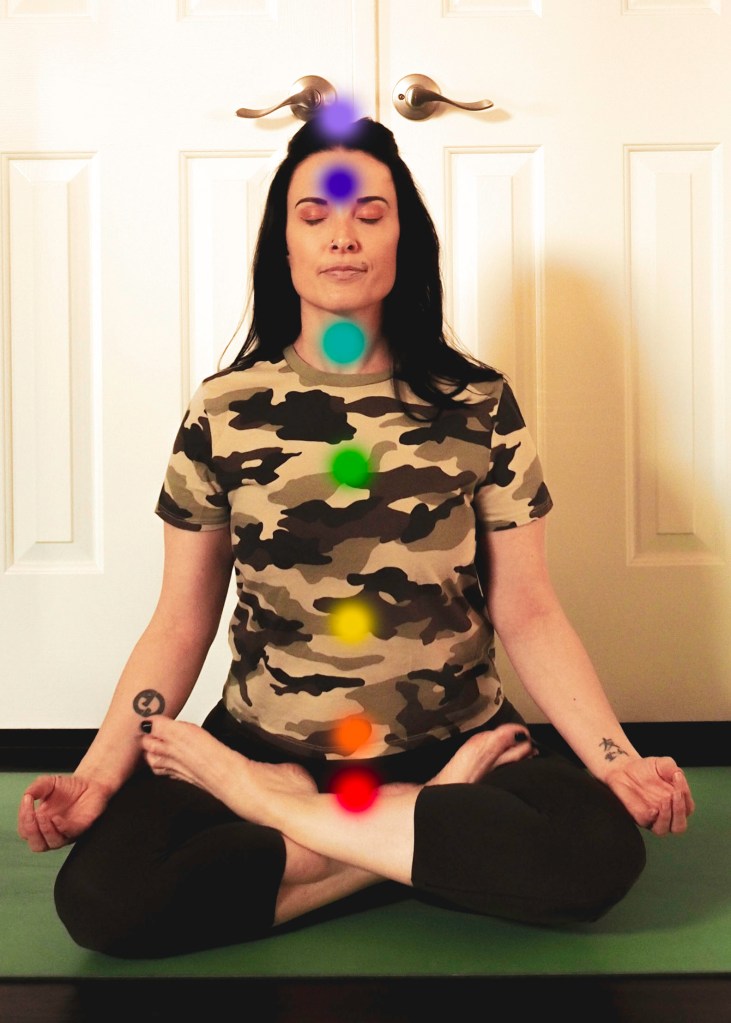
So you might be asking yourself, what the heck is a chakra? Well I’m going to tell you all about them! We have energy centers in our body, think of them as places where we harbor energy both positive and negative. Most books about chakras will focus on the seven main ones and these are the ones I will be breaking down for you.
The word chakra is Sanskrit for wheel, so envision these chakras as spinning wheels of energy. A balanced chakra will rotate at a steady pace moving the energy around in an optimal manner. When these chakra become unbalanced, the wheel is spinning to fast or is sluggish and this can manifest into physical ailments.
So what do you do if you have a chakra out of balance? You can go to an energy healer and get your chakras aligned or you can do some DIY. The next seven posts will give you some helpful tips on yoga poses, breathing exercises and self-care that will improve the rotation of each chakra.
Since there are so many different yoga poses, oils and crystals that can be used to help in balancing your chakras, I will be breaking up each chakra into three posts. Each post will have a different activity or exercise to try. My hope is that there will be something for everyone!





 Yoga 2 Peaces