The Svadhishthana or sacral chakra is located above the root chakra and below the navel. Consider this chakra your sexual center and where your sense of self is reflected. This can be your self-esteem, self-worth, or self-confidence.
The sacral chakra, or the second chakra center is associated with the color orange, the element of water and can be blocked by guilt. It’s symbolized by a beautiful orange lotus with six petals and focuses on sexuality and creativity. When the sacral chakra is balanced and harmonious, we feel comfortable in our own skin, comfortable with our sensuality and able to enjoy the pleasures of life in a healthy manner. One of the best ways to balance your sacral chakra is to do something creative that you love.
Signs that your sacral chakra is imbalanced can be low self-esteem, lack of confidence, addiction, trouble getting motivated, a lack of sex drive, infertility, issues with reproductive organs, impotence, kidney, bladder and bowel problems. If you experience issues with intimacy or an overwhelming sense of guilt your may have a deficient svadhishthana chakra.
Pranayama
If you are looking for a breathing exercise to spark your sacral chakra, Dirga or Three Compartment Breath is a great one. You can further your balancing by performing it in Reclined Bound Angle Pose (Supta Baddha Konasana).
- Begin seated on your mat and bring the souls of the feet together letting the knees fall open to the side. If this is too much of a stretch for your hips, you can place blocks, blankets or pillows under the knees and thighs to make this a more relaxing pose.
- Place the hands behind you on the mat with the fingers pointing toward your seat.
- Lower down onto your forearms.
- Gently come down all the way onto the back.
- Place your arms along side with the palms face up or you can place one hand on the heart and one hand on the sacral chakra, between the pelvis and the bellybutton.
- For Dirga or Three Compartment Breath, you will begin by inhaling into the belly allowing your abdomen to press up toward the ceiling.
- You will continue that inhale by now filling up the chest area.
- And finally you will direct the last of your breath to fill the shoulders, throat and clavicle area.
- As you exhale, you will begin by exhaling from your shoulders and throat first, then release the air from your chest and lungs and finally, let the air escape from the belly area.
- Continue to breathe like this for five to ten more rounds.
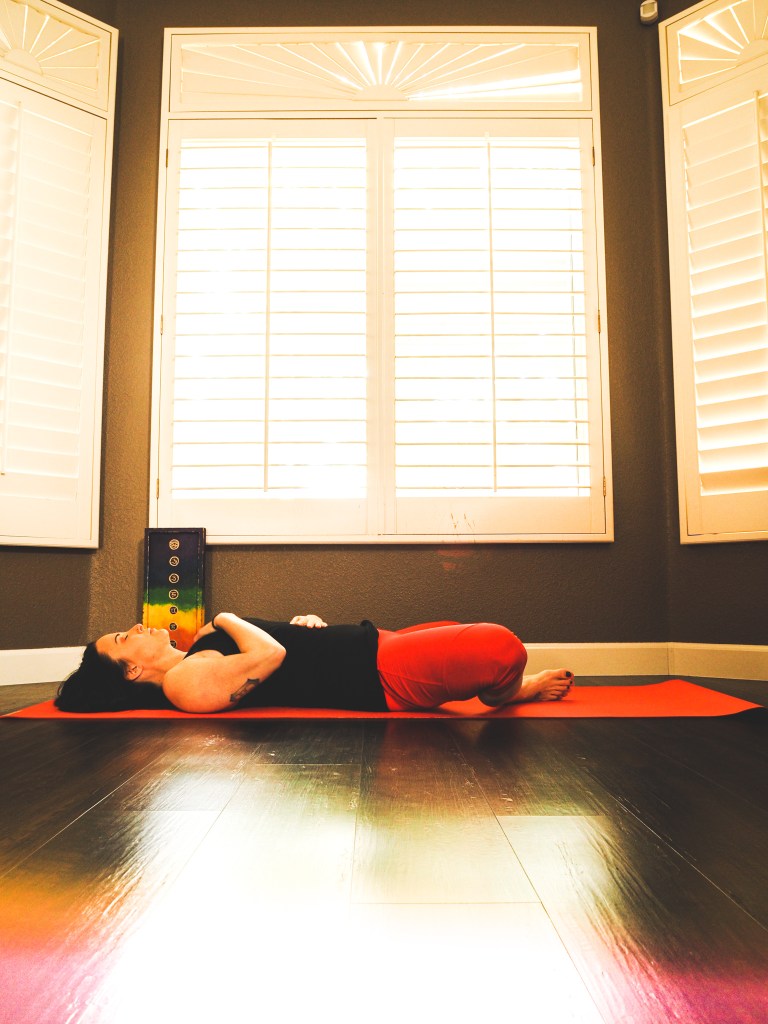
Image 1
Yoga
Yoga poses that balance the svadhishthana chakra tend to flow easily like with sun salutations (surya namaskar). Vinyasa also promotes breath and awareness of breath and how it helps to move us along in these flow styled classes. The sacral chakra is linked to the sexual reproductive organs, hips and lower back. Poses that focus on these areas help to balance the second chakra center.
- Modified Sun Salutations (Surya Namaskar A) If you have taken a yoga class, you have probably done a sun salutation of some sort. This flow is often used to warm the body up naturally to prepare for deeper stretches.
- Start out in Mountain Pose (Tadasana)
- Inhale and reach the arms up (Image 2).
- Exhale and swan dive forward (Image 3), coming into a forward fold (Uttanasana) (Image 4).
- Inhale half lift
- Keep the back flat and torso parallel to the mat
- Keep the hands on the mat (Image 5) or bringing them to the shins (Image 6).
- Extend the crown of the head toward the front of the room
- Shoulders are drawn down the back
- Exhale and plant the hands down on the mat (Image 7), step the right foot back (Image 8), step the left foot back, coming into a high plank (Image 9).
- Lower down onto the knees (Image 10), pitch the shoulders forward so they come past the wrists (Image 11).
- Exhale and tuck the elbows along your side, bringing the chest parallel to the mat with the arms bent at a 90 degree angle coming into a modified Chaturanga (Image 12).
- Inhale into Baby Cobra (Image 13) or Upward Facing Dog (Image 14). Baby Cobra is less pressure on the lower back and Upward Facing Dog is a more intense backbend.
- Lower the hips down onto the mat.
- Either keep the arms bent for Baby Cobra or straighten the arms for Upward Facing Dog.
- Lift the chest.
- Shoulders down and away from the ears.
- Weight is on the tops of the feet.
- If you come into Baby Cobra, the thighs are engaged but resting on the mat.
- If you come into Upward Facing Dog, the thighs are lifted off the mat.
- Keep the neck and head in line with the spine.
- Exhale into Downward Facing Dog (Adho Mukha Svanasana) by pressing the hips up toward the ceiling and either flip one foot over at a time or roll over the toes (Image 15, 16 and 17).
- Stay in Downward Facing Dog for 5 breaths.
- Inhale and look up to the hands (Image 18).
- Bend the knees and walk the feet up to the hands (Image 19 and 20).
- Inhale and come into Half Lift (Image 21).
- Exhale and fold forward.
- Put a bend in the knees and inhale slowly rolling up to standing letting the head be the last thing to come up (Image 22, 23 and 24).
- Exhale and bring your hands to heart center in Anjali Mudra (Image 25).
- Click here for additional cues to execute this pose.
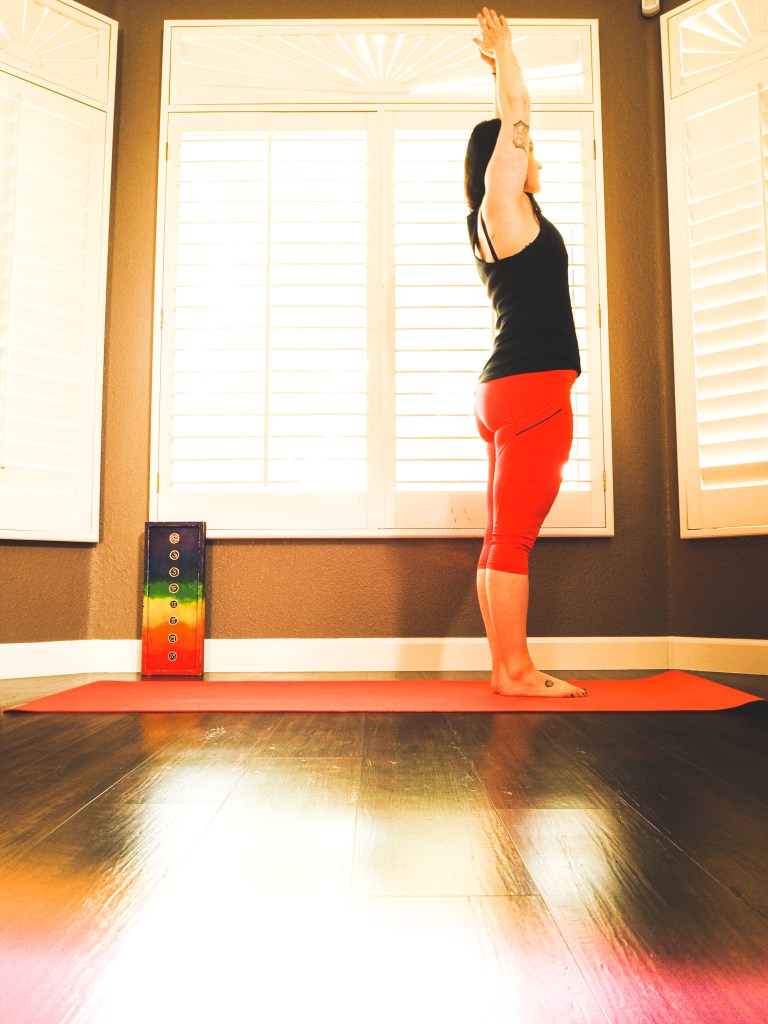
Image 2 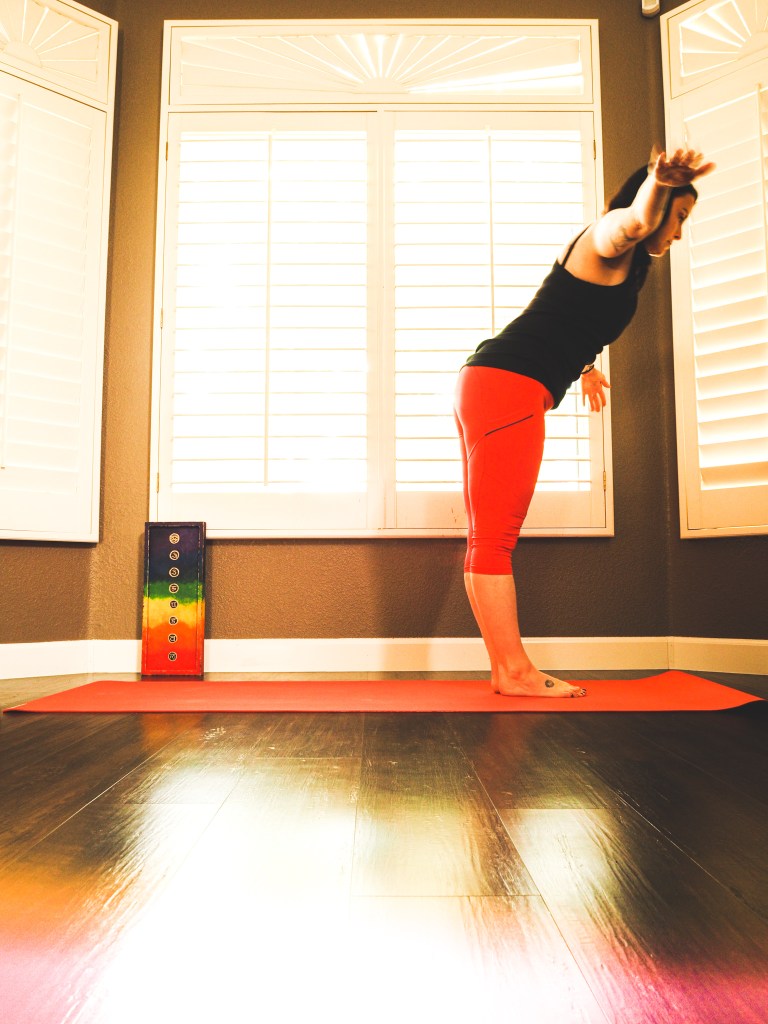
Image 3 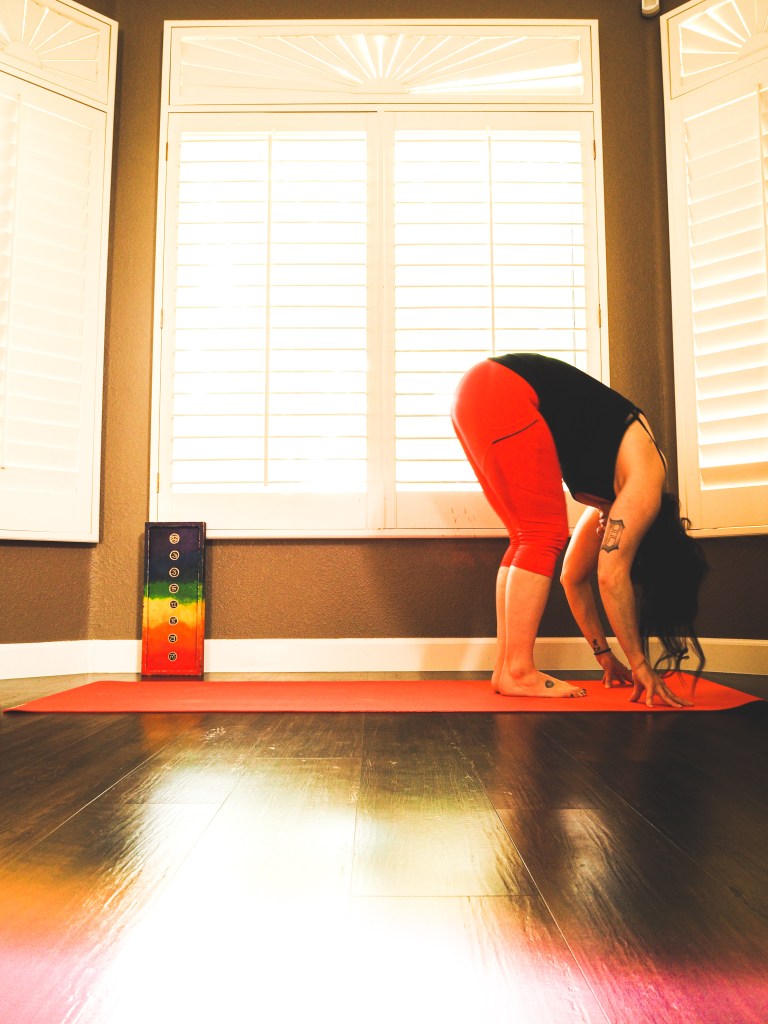
Image 4 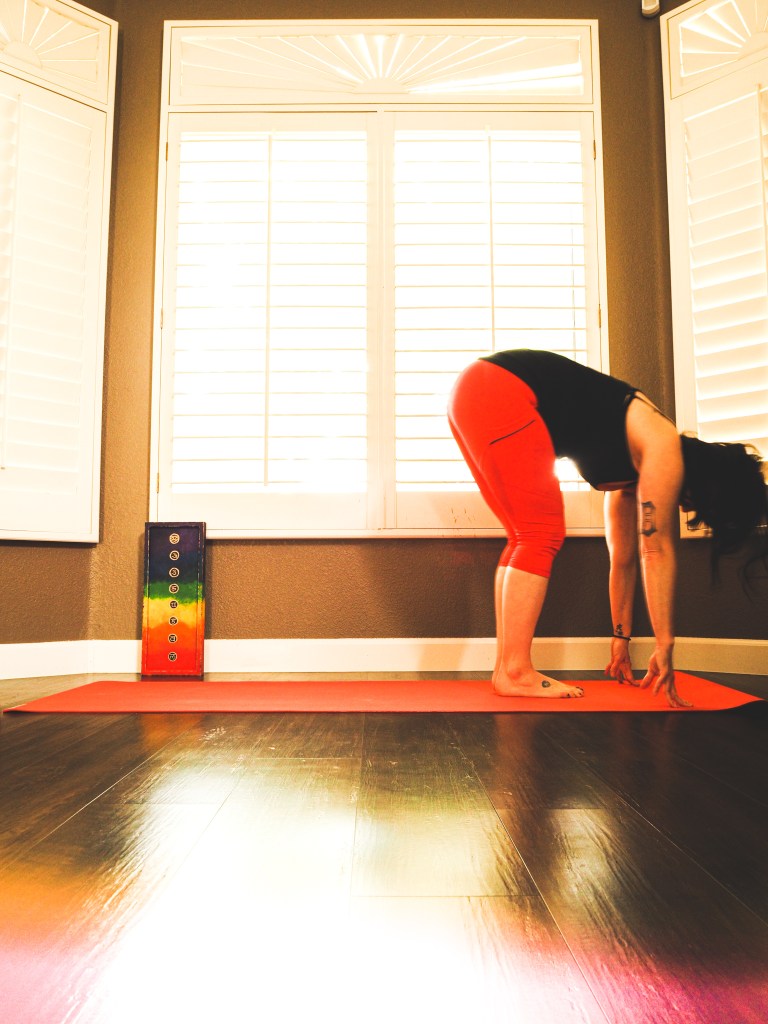
Image 5 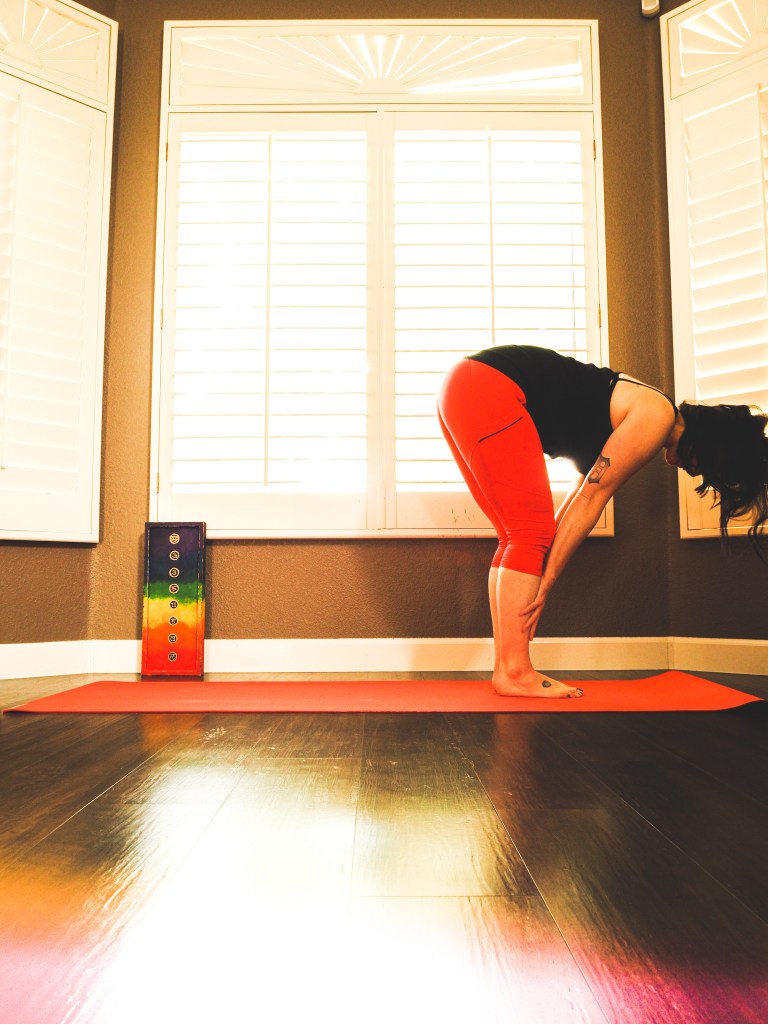
Image 6 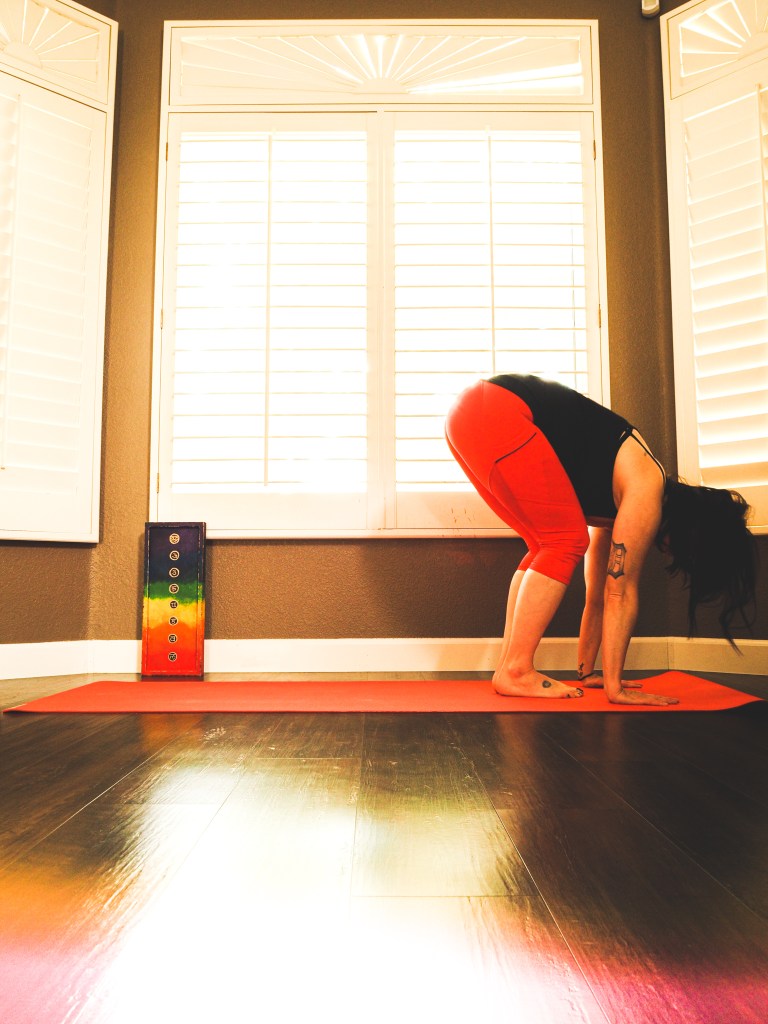
Image 7 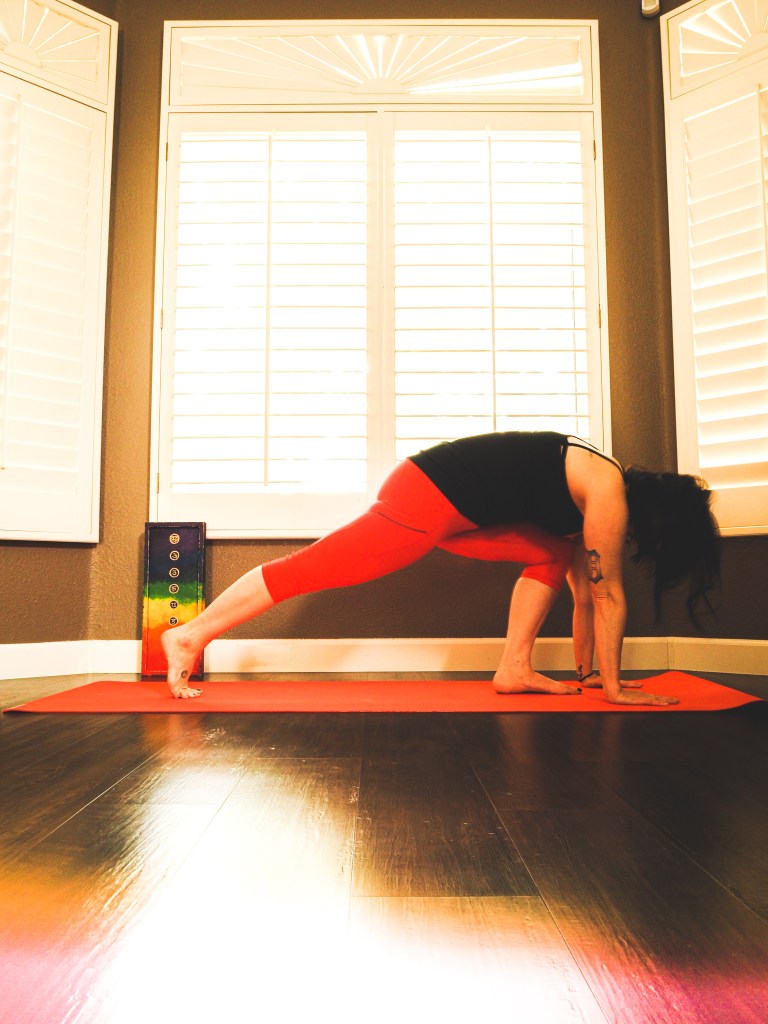
Image 8 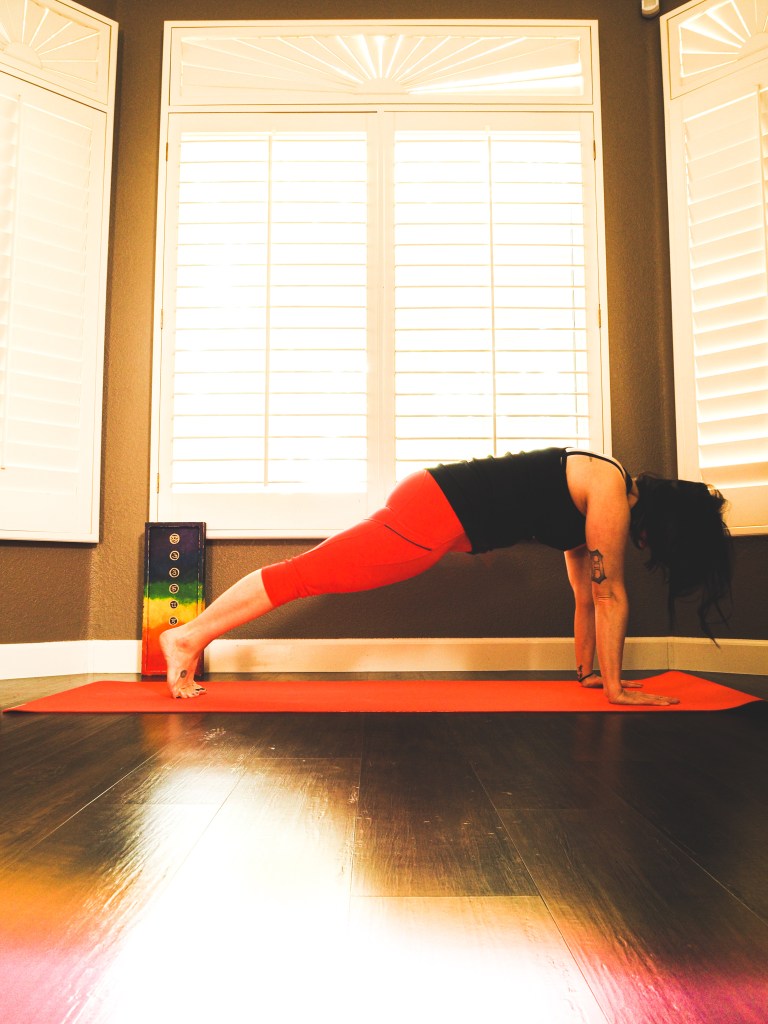
Image 9 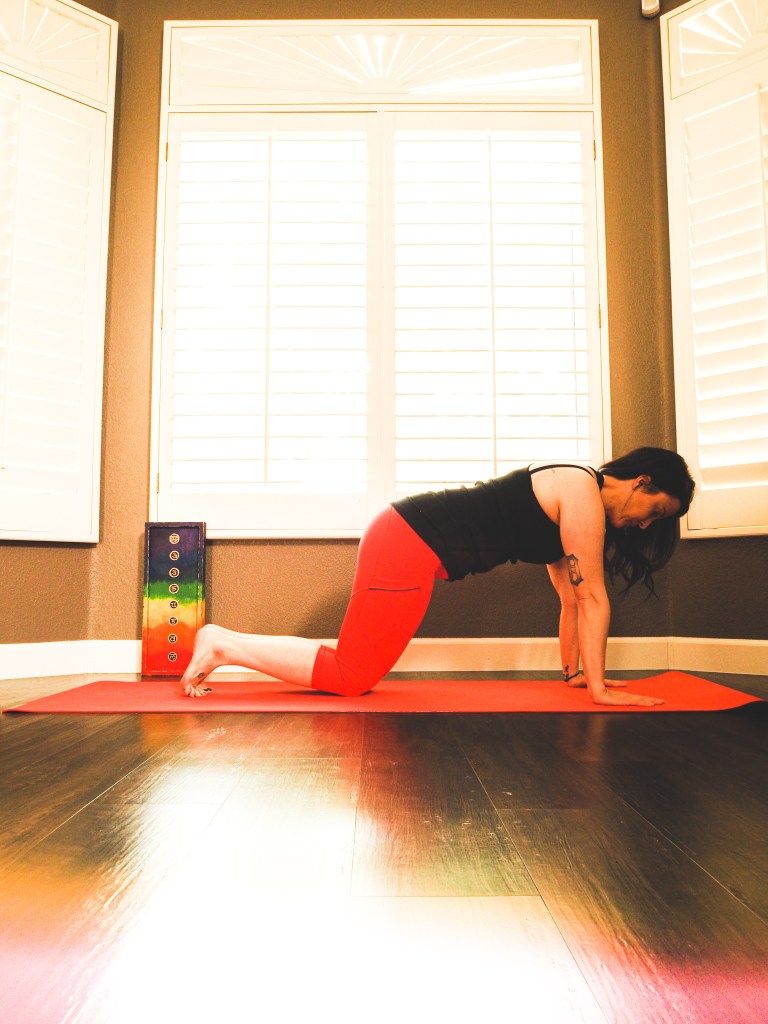
Image 10 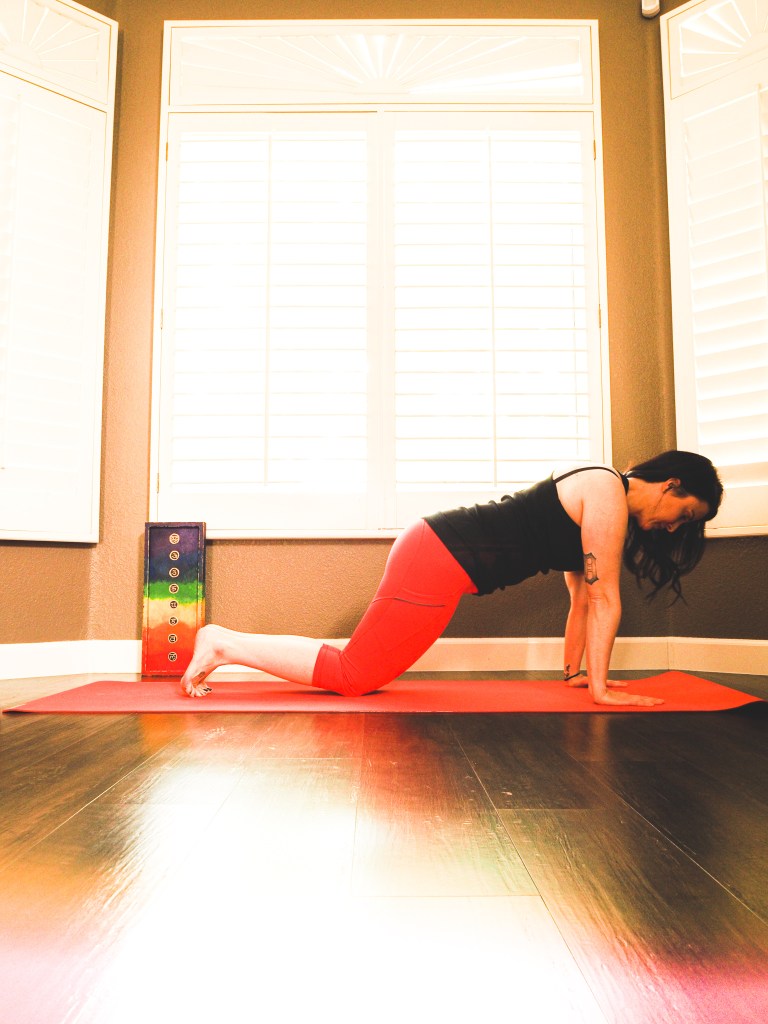
Image 11 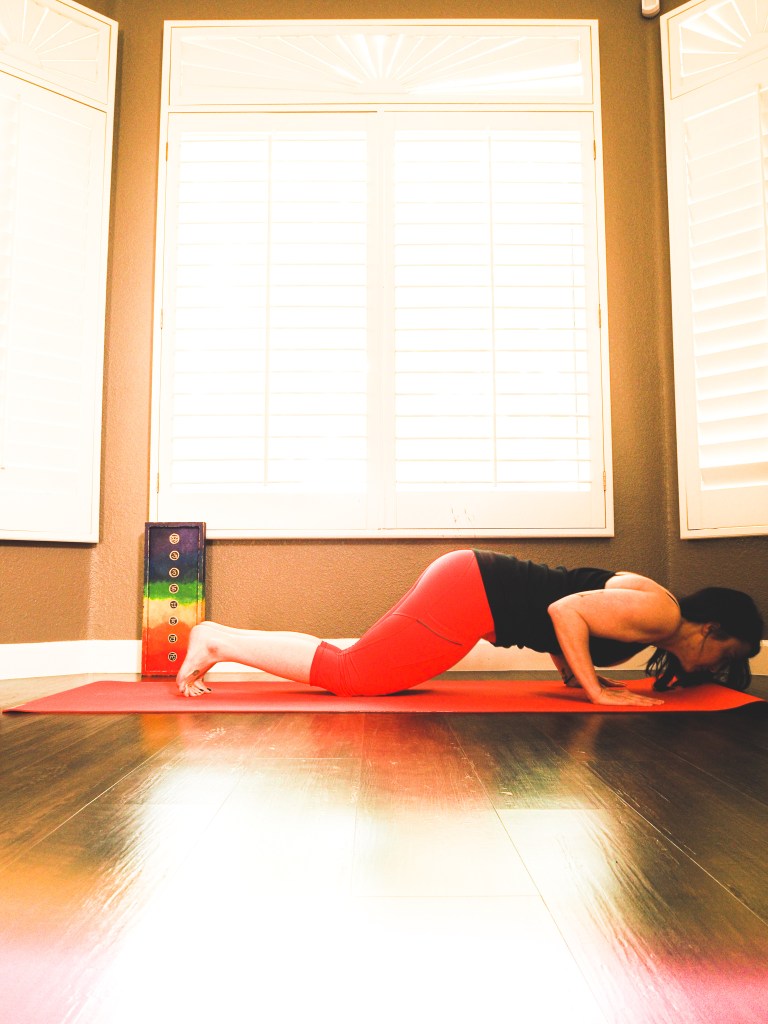
Image 12 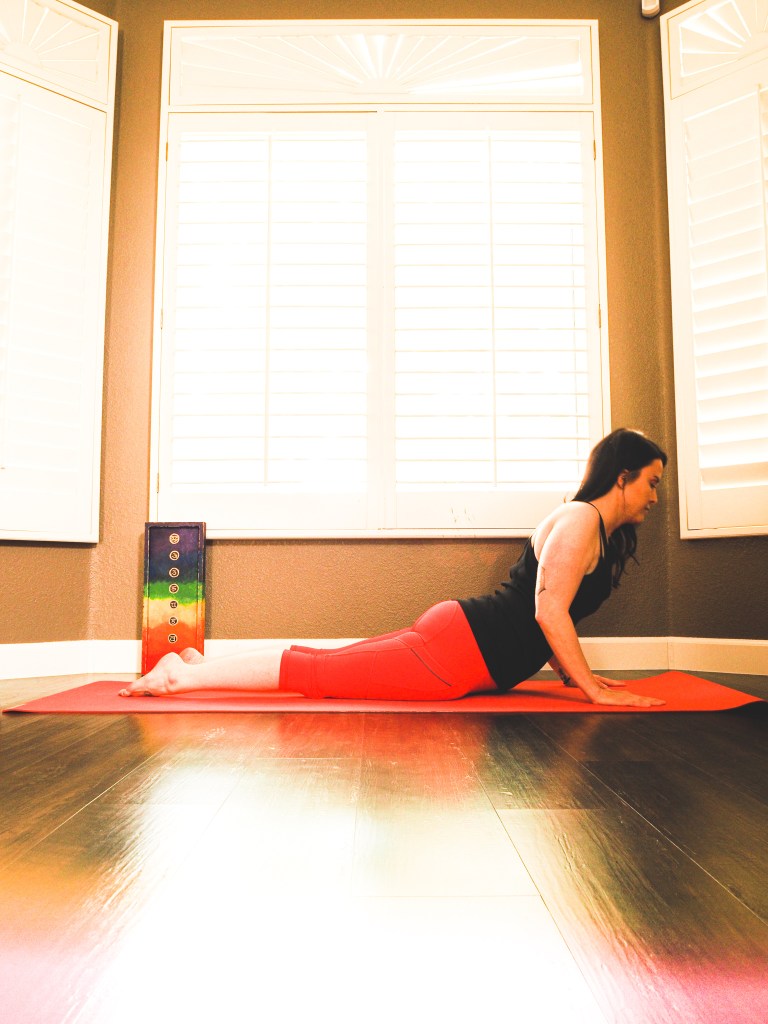
Image 13 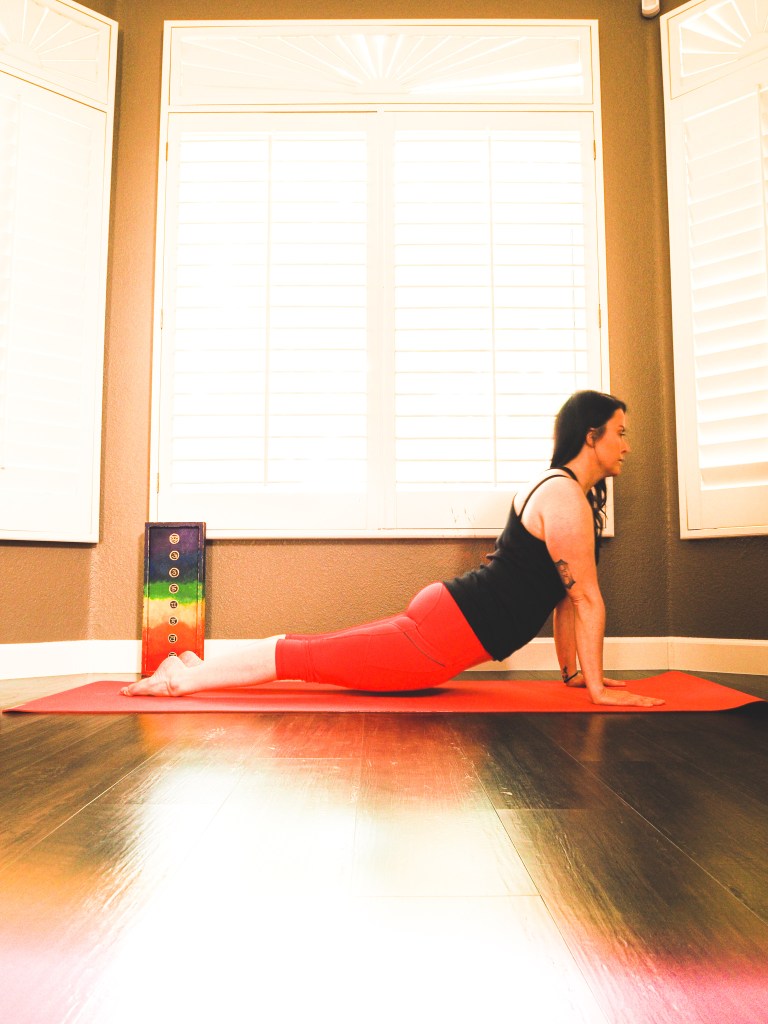
Image 14 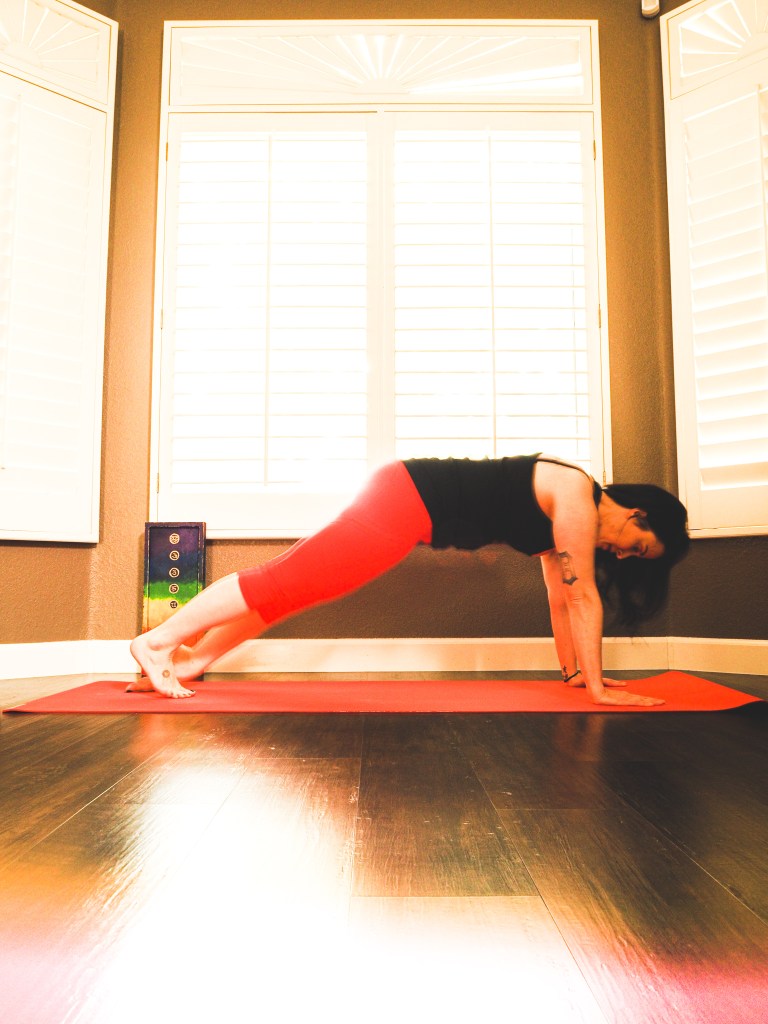
Image 15 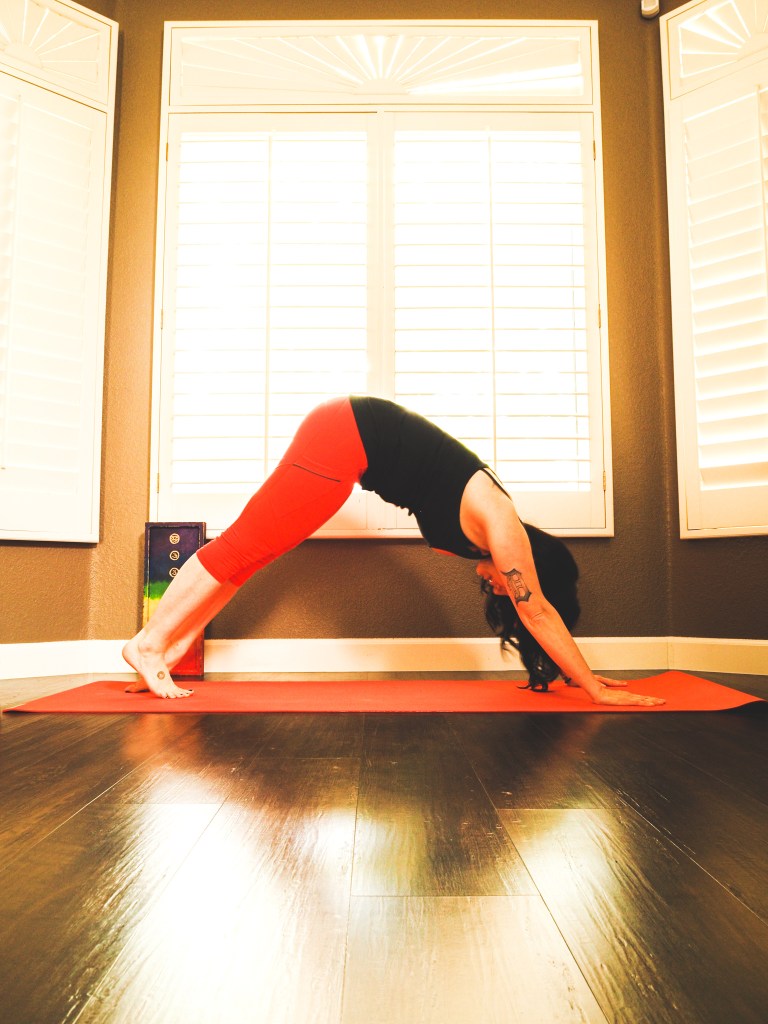
Image 16 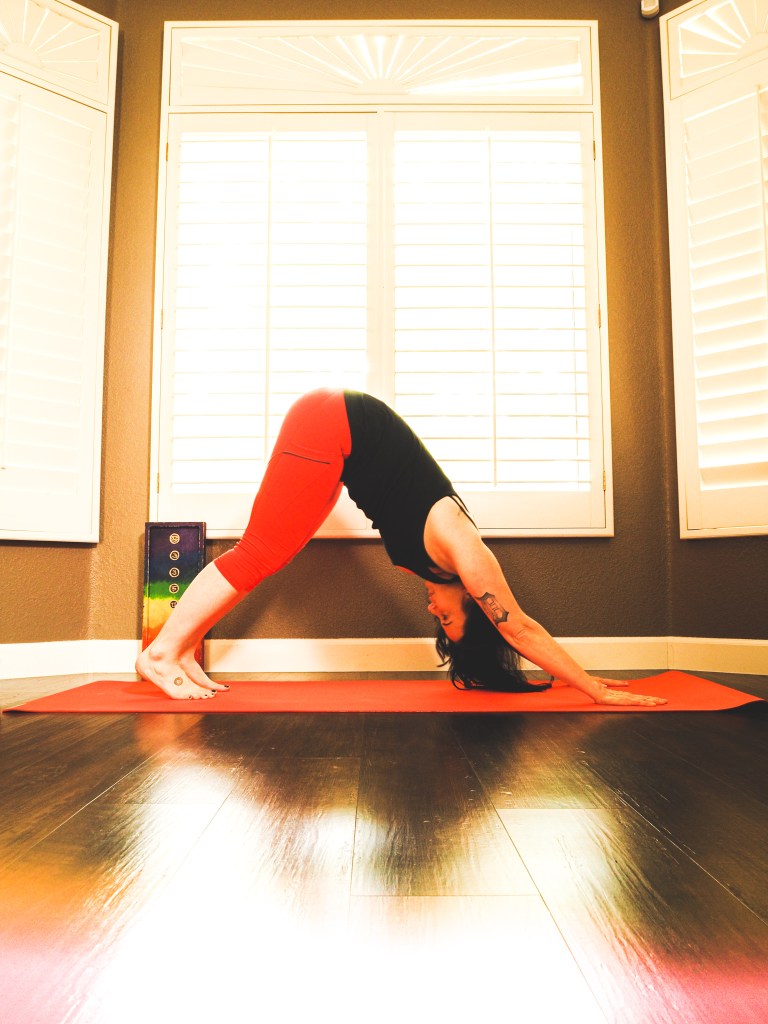
Image 17 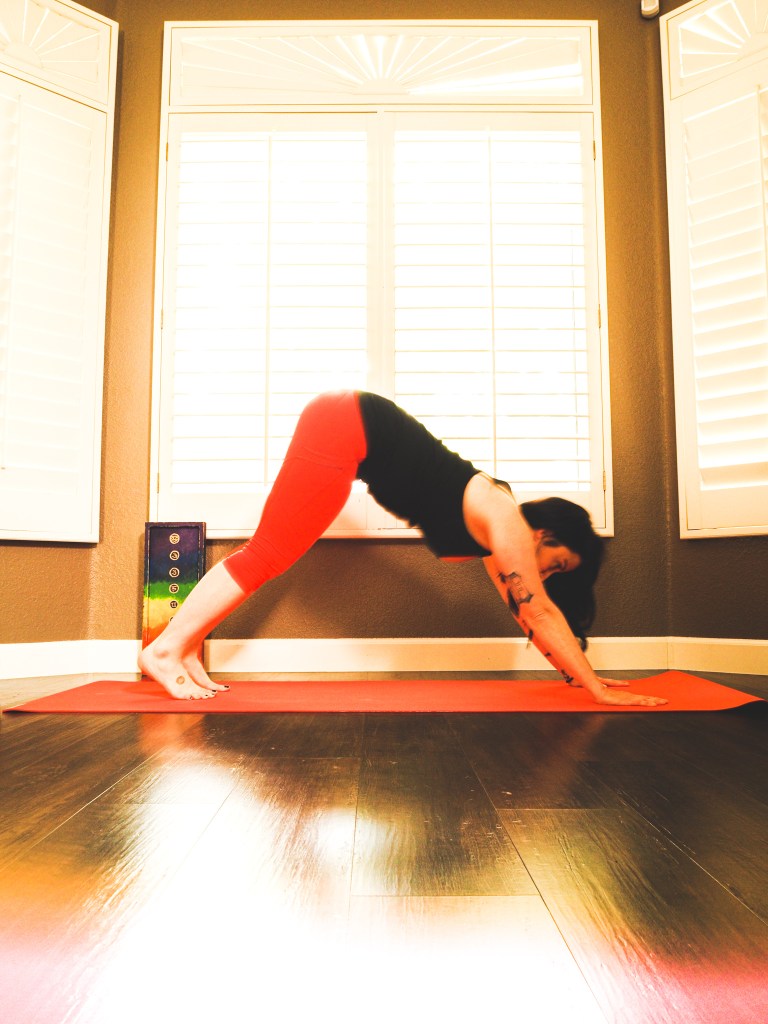
Image 18 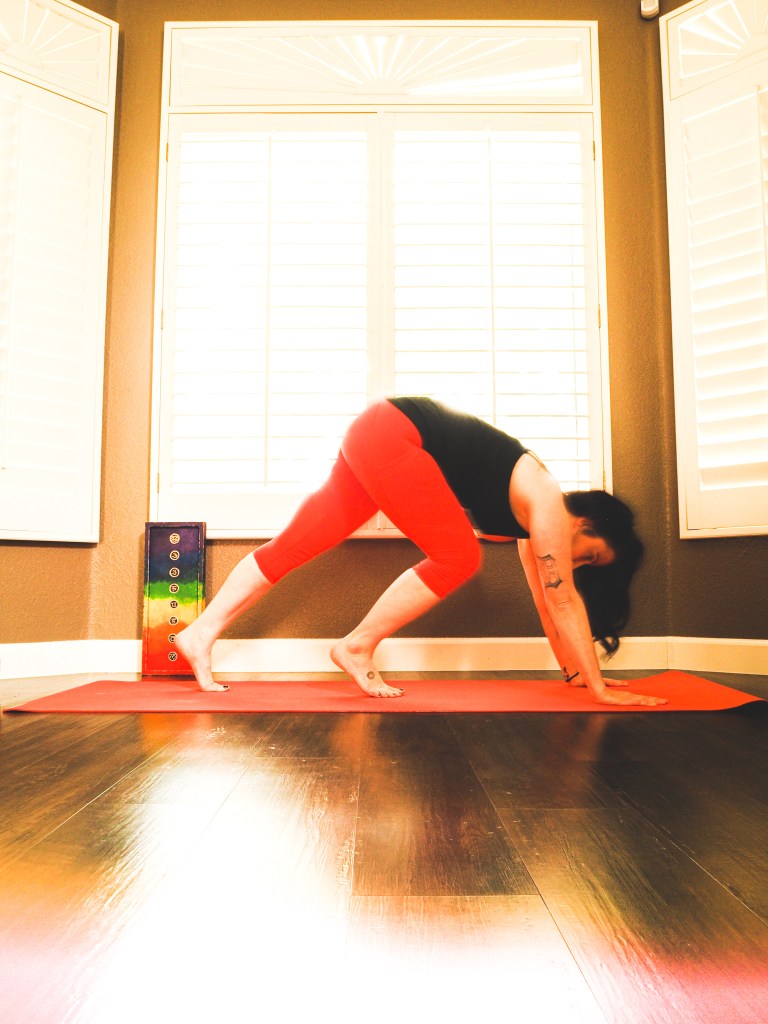
Image 19 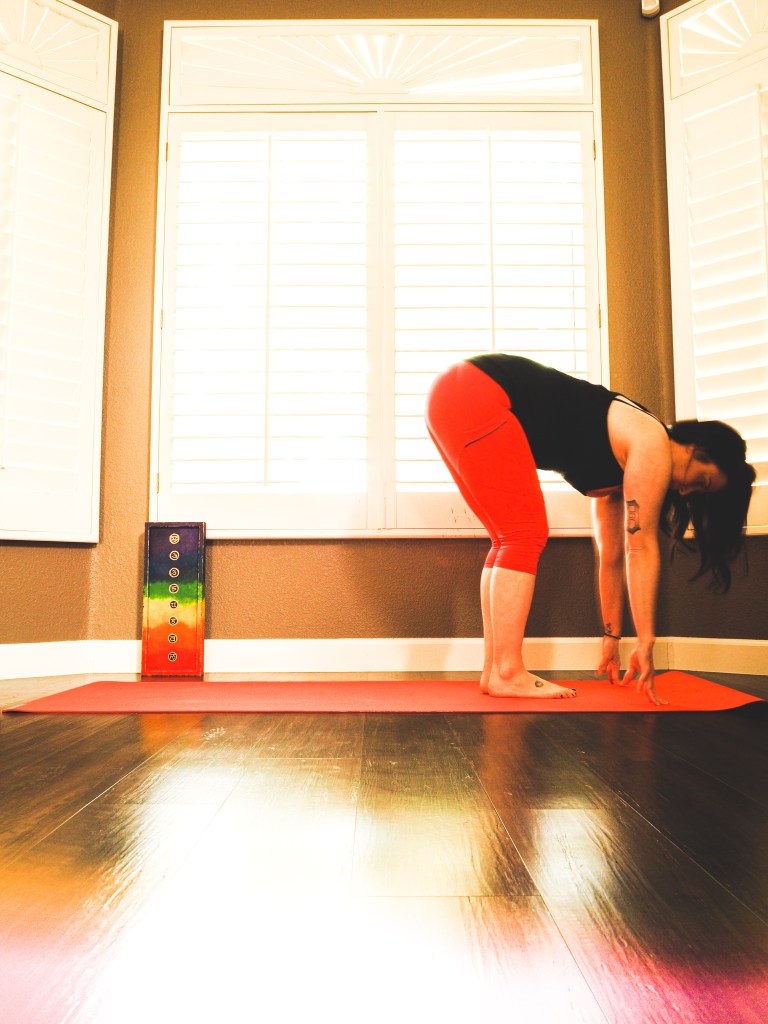
Image 20 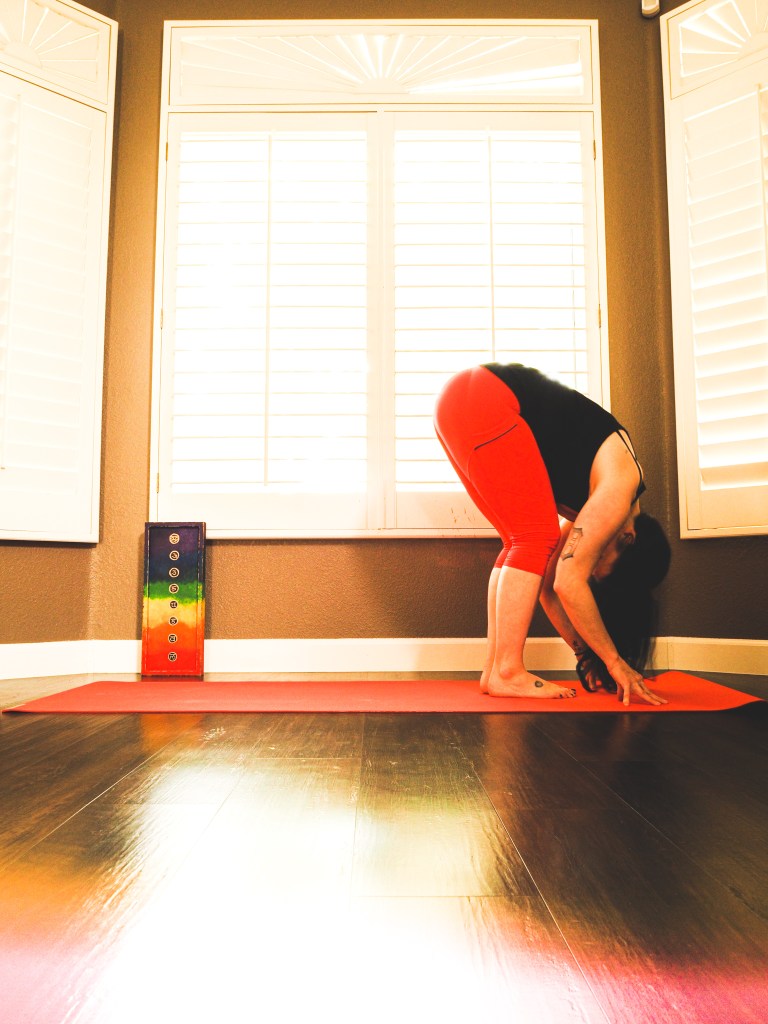
Image 21 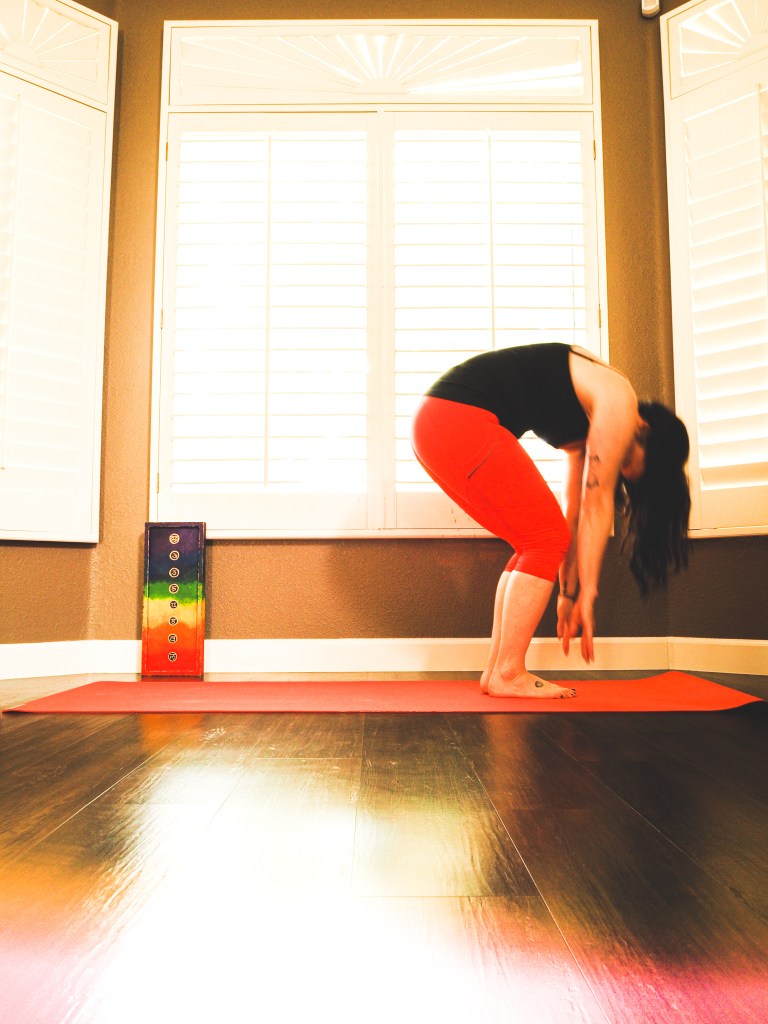
Image 22 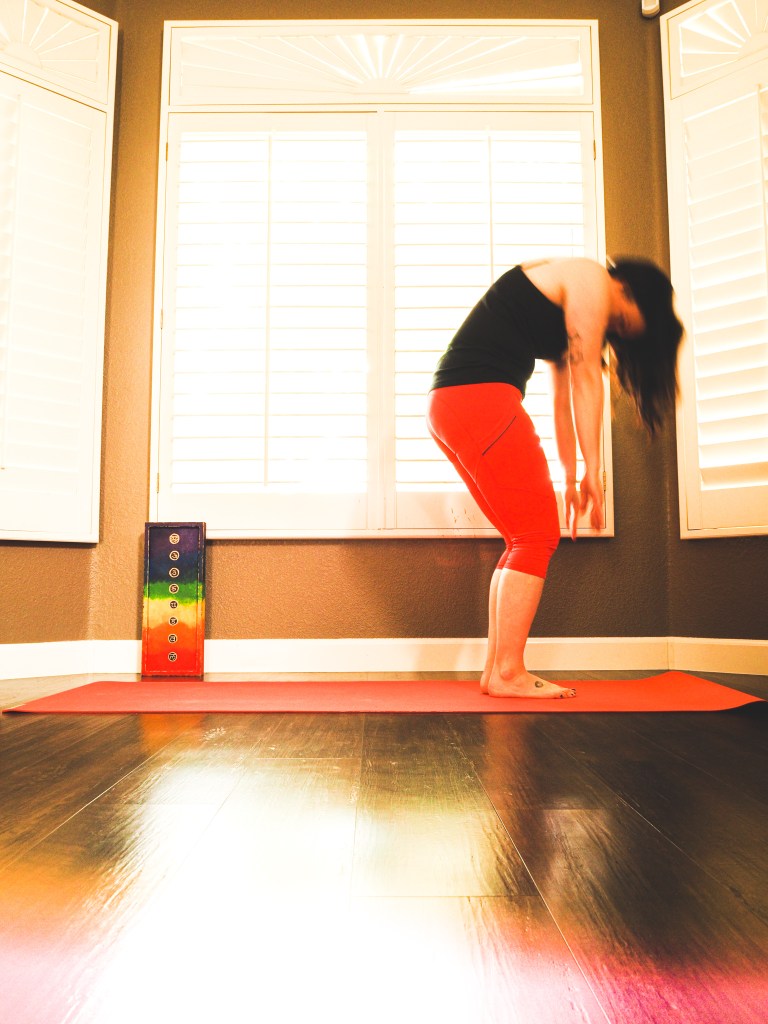
Image 23 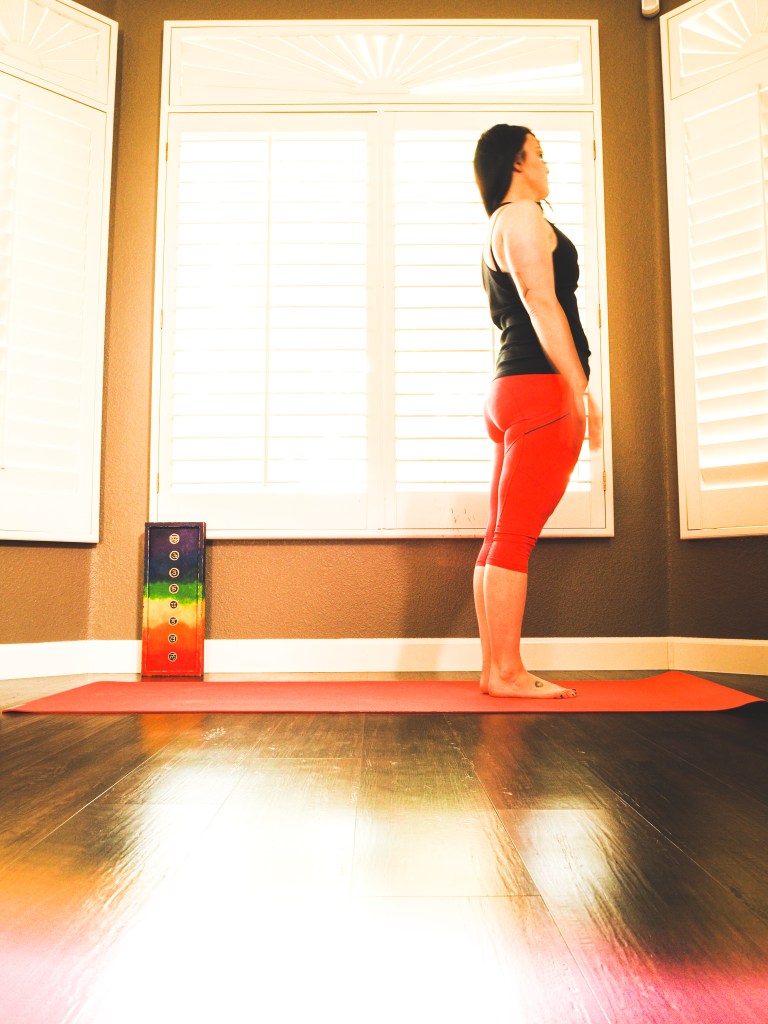
Image 24 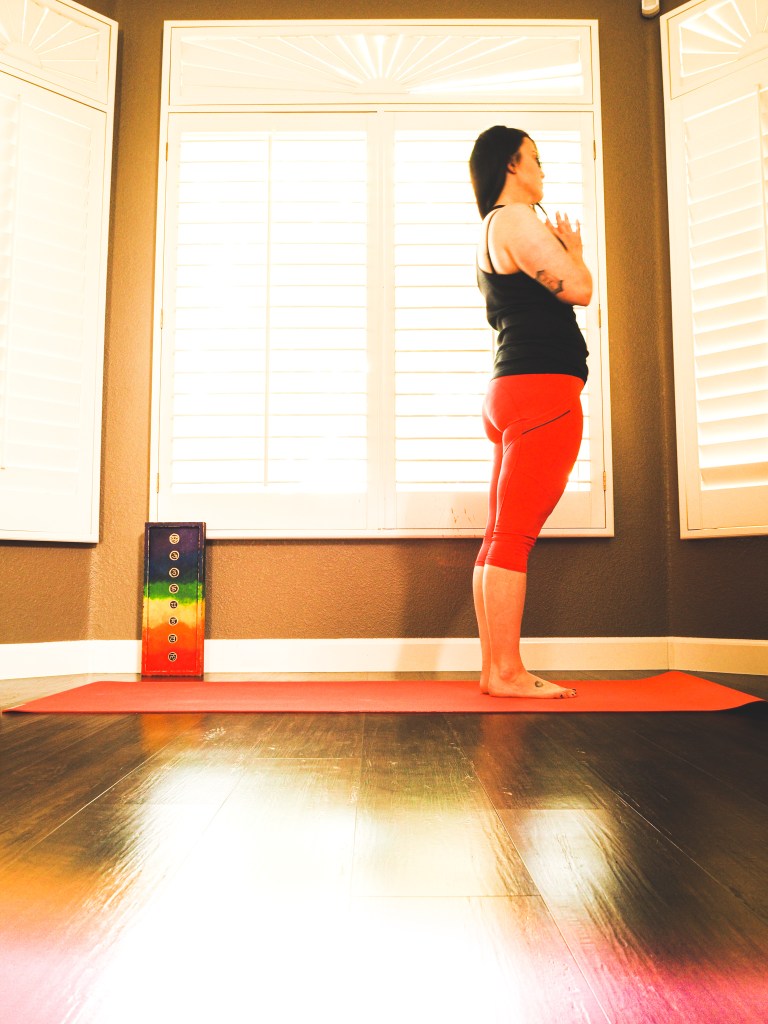
Image 25
Oils
- Citrus Bliss (Doterra Blend)
- Wild Orange
- Neroli
- Sandalwood
Crystals
- Orange Carnelian
- Orange Calcite
- Orange Aventurine
 Yoga 2 Peaces