With COVID-19 taking over the world, many of us have more free time than ever before. Some people are taking this opportunity to work on themselves and improve their physical and mental health. I figured what better time than now to share some chakra work that we can do together to help us feel better and live happier.
When you do chakra work, typically you will start at the root chakra because much like building a house, if you do not have a strong foundation you can’t build a solid home. You want to be grounded and stable first and then you can work your way up. This blog will dedicate three posts for each of the main seven chakras, but if you feel you need more time to spend on a certain chakra, please take all the time you need. Once you feel stable and balanced, move on at your own pace.
The Muladhara or root chakra is located at the base of the spine near the tailbone or coccyx area (three lower vertebrae). Think of this chakra as the cellar where you harbor your survival instinct, your desire for safety and security, and your basic needs such as food and shelter. It drives your desire to create a safe, comfortable home environment; be financially secure; and have loving relationships.
The muladhara chakra is associated with the color red, the element of earth and can be blocked by fear. The root chakra is symbolized by a deep red lotus flower with four petals and focuses on grounding and stability. A balanced root chakra results in a strong, rooted and secure individual.
Some health conditions that may indicate an unbalanced root chakra are eating disorders, anxiety, depression, issues withe the colon, bladder, kidneys, bowel movements, legs, feet, lower back and prostate. If you tend to be very fearful or lack a feeling of belonging, you may be experiencing a deficiency in your root chakra.
Pranayama
A great breathing exercise to ignite your muladhara chakra is Ujjayi breathing. Try performing this pranayama while seated in Sukhasana. For additional cues on how to get into this easy seated pose, check out my previous post here and for instructions on how to perform Ujjayi breath, click here.
Yoga
Yoga poses that balance the muladhara chakra promote grounding either physically through the feet, legs and sit bones, or through a sense of moving into stillness with seated forward bends that allow you to surrender to the earth. As you move through these poses, imagine your body energetically connecting with the earth and becoming one.
- Mountain Pose (Tadasana or Samastitihi) is the foundation for all standing yoga poses. It looks simple, but when done correctly it is great for grounding, balance and posture.
- Stand nice and tall at the front of your mat with your big toes touching and the heels slightly apart.
- Lift all ten of your toes off the mat.
- Starting with the pinky toes, slowly place them back down onto the mat moving inward until you plant the big toes back down onto the ground. Notice how the arches of the feet remain lifted. This engages your Pada Bandha and helps with balance.
- If you have difficulty balancing in Mountain Pose, try standing with the feet hip distance apart.
- Lift the knee caps by engaging the quads.
- Slightly tuck the tailbone.
- Engage your core by pressing your belly button back toward your spine.
- Relax the shoulders and draw the shoulder blades down the back.
- Place the arms are along your side, finger tips spread wide, palms facing the front of the room.
- Lengthen the neck so that the crown of the head presses up toward the sky.
- Really focus on the feeling of the feet connecting to the earth.
- Forward Fold (Uttanasana)
- From Mountain Pose, inhale reaching the hands over head (Image 1 and 4).
- Exhale and hinge from the hips (not the waist), keeping the back flat and fold forward (Image 2 and 5).
- Relax the neck and let the head fall heavy (Image 3 and 6).
- Try to keep your knees straight, but not locked. If this is uncomfortable, put a slight bend in the knees.
- Bring the hands down onto the mat. If they do not touch the ground comfortably, put a slight bend in the knees to bring the ground to you.
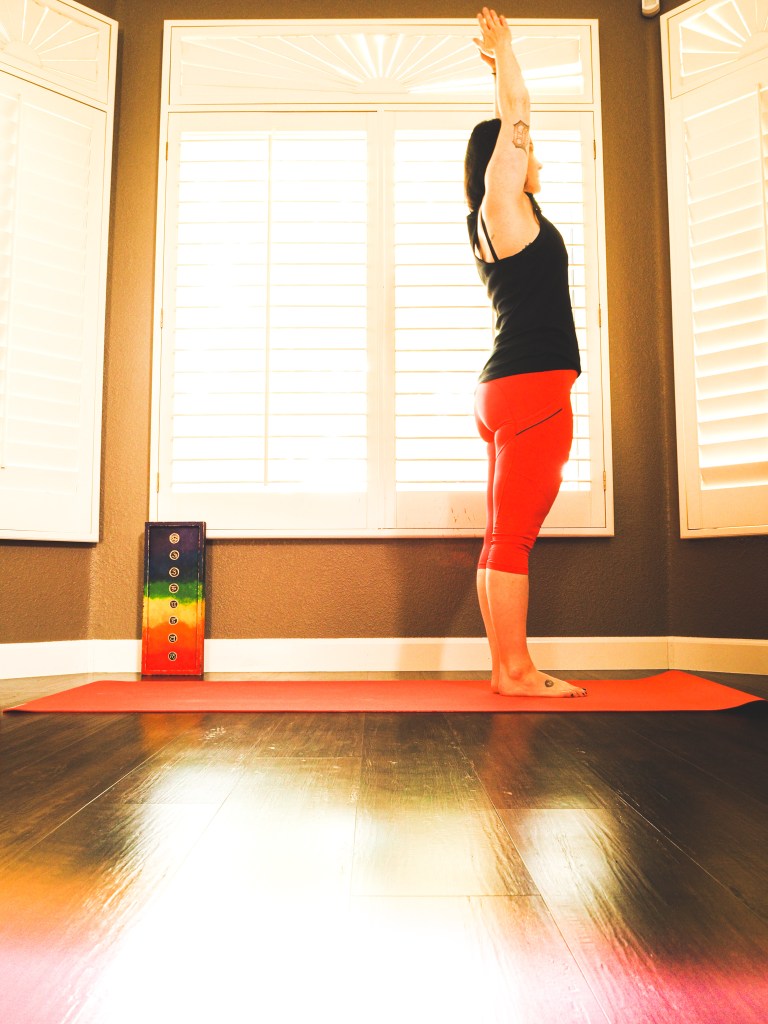
Image 1 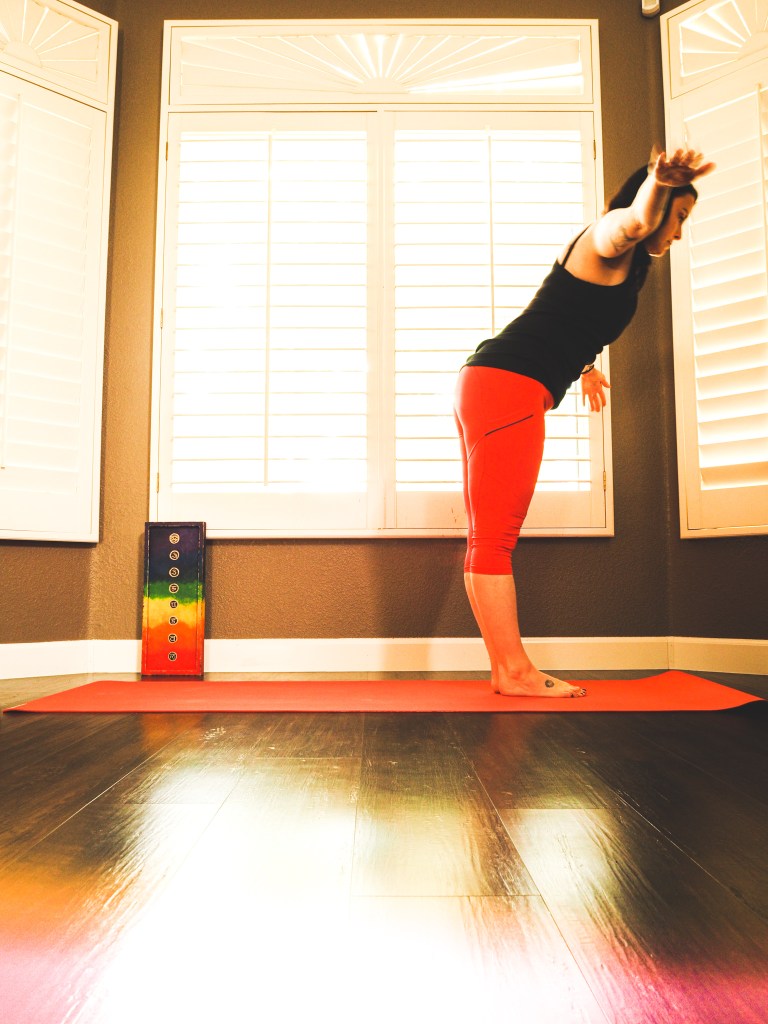
Image 2 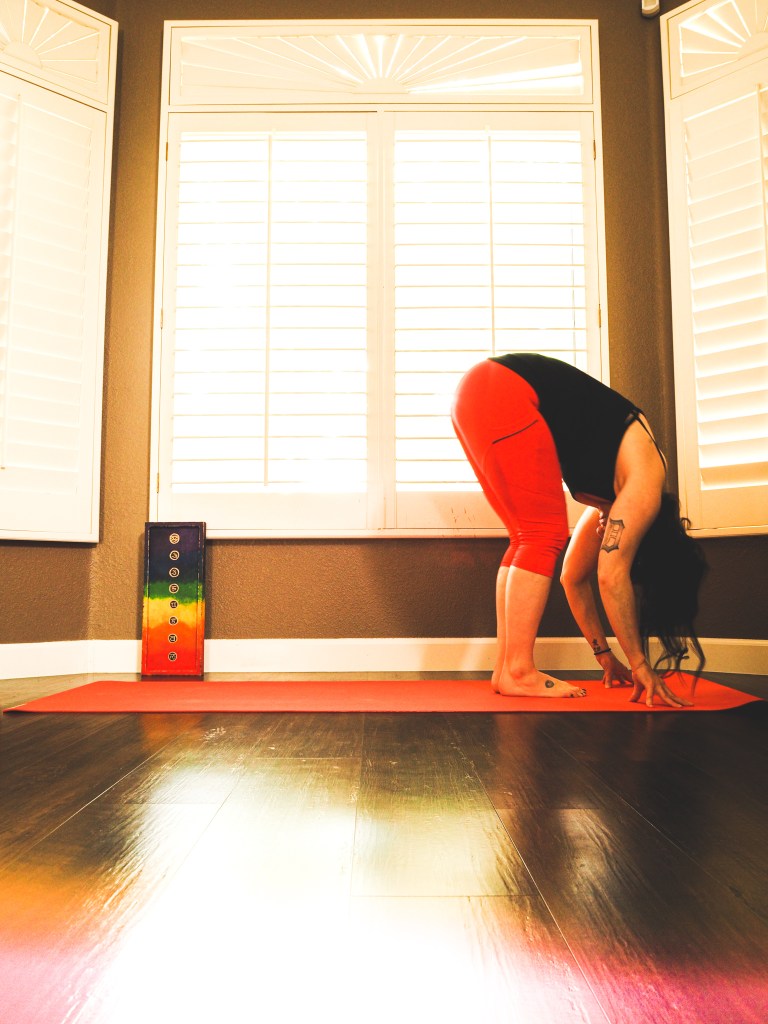
Image 3 
Image 4 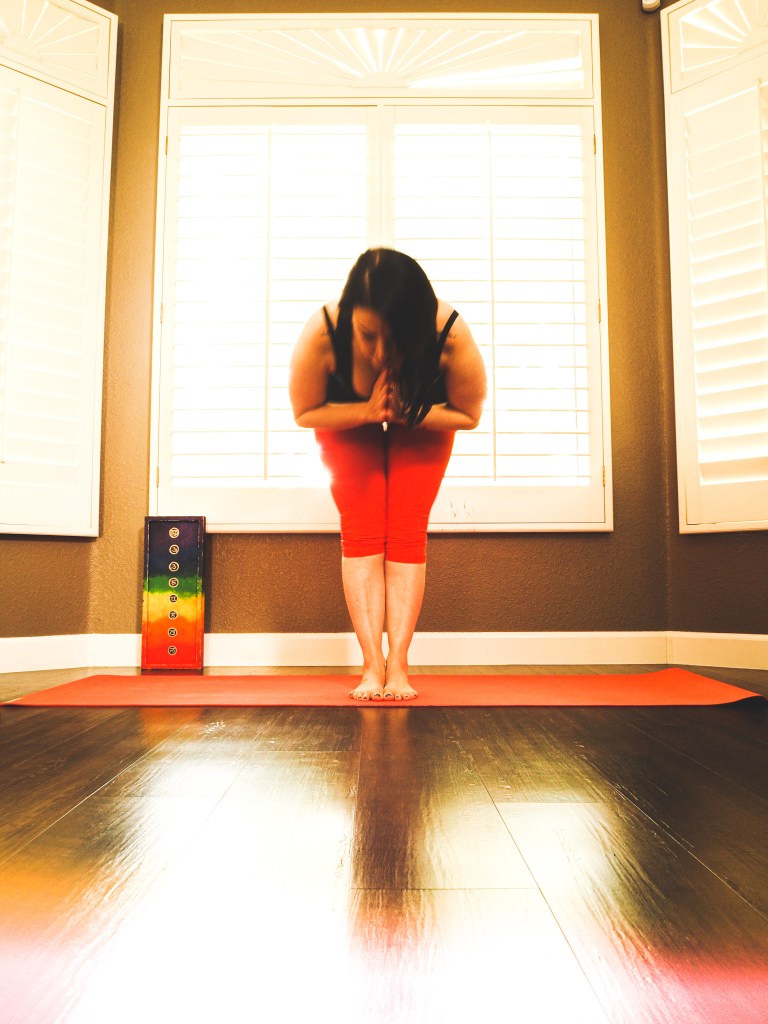
Image 5 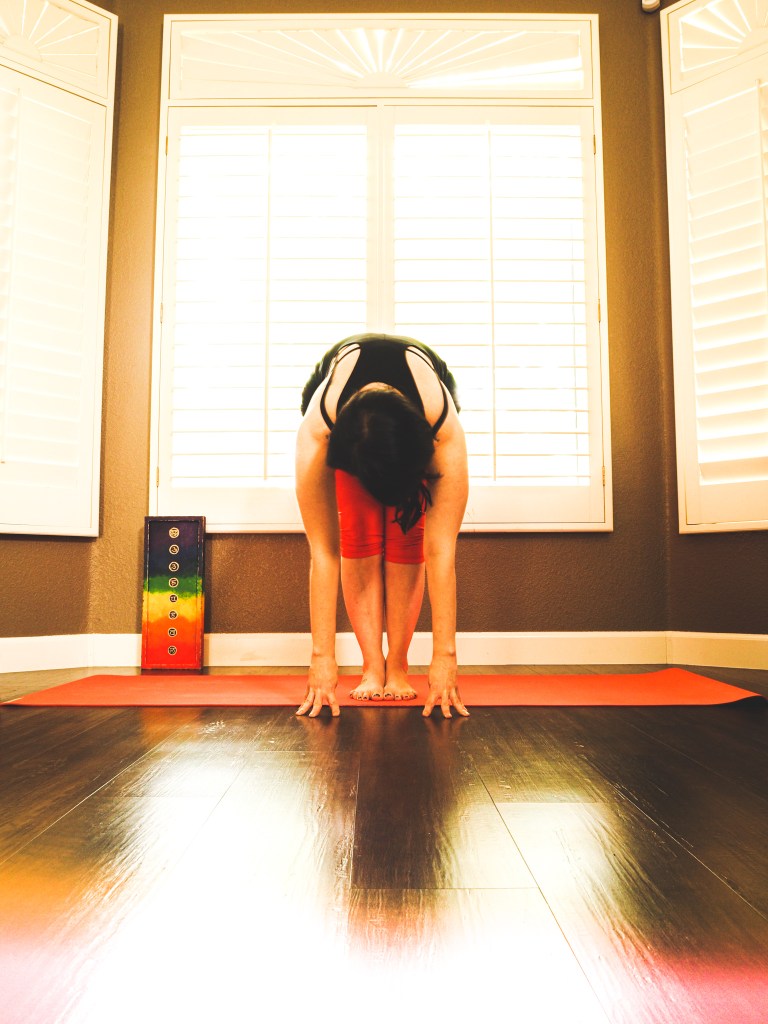
Image 6
- Variation 1: Grab opposite elbows
- Right hand grabs left elbow, left hand grabs right elbow (Image 7).
- Let the torso gently rock side to side.
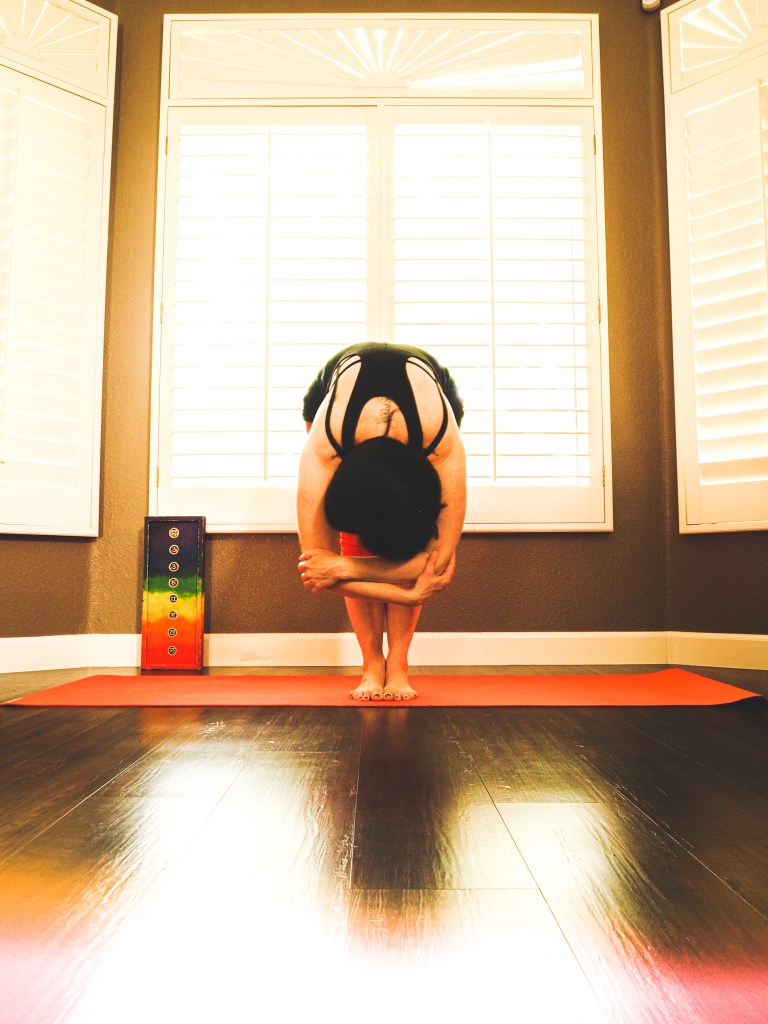
Image 7
- Variation 2: Big Toe Pose (Padangusthasana)
- Bring the feet hip distance apart if you need a little more balance.
- Take your pointer and middle finger of both hands and loop them around the big toe, right fingers to right big toe and left fingers around left big toe (Image 8).
- Take a deep inhale, lengthening the spine and straightening the arms (Image 9).
- Exhale and gently pull on the big toes, letting the elbows bend out to the sides and draw the torso closer to the tops of the thighs (Image 10).
- Keeping the legs straight will produce a deeper hamstring stretch, but you can always put a slight bend in the knees.
- Keep the back flat, avoiding rounding the spine.
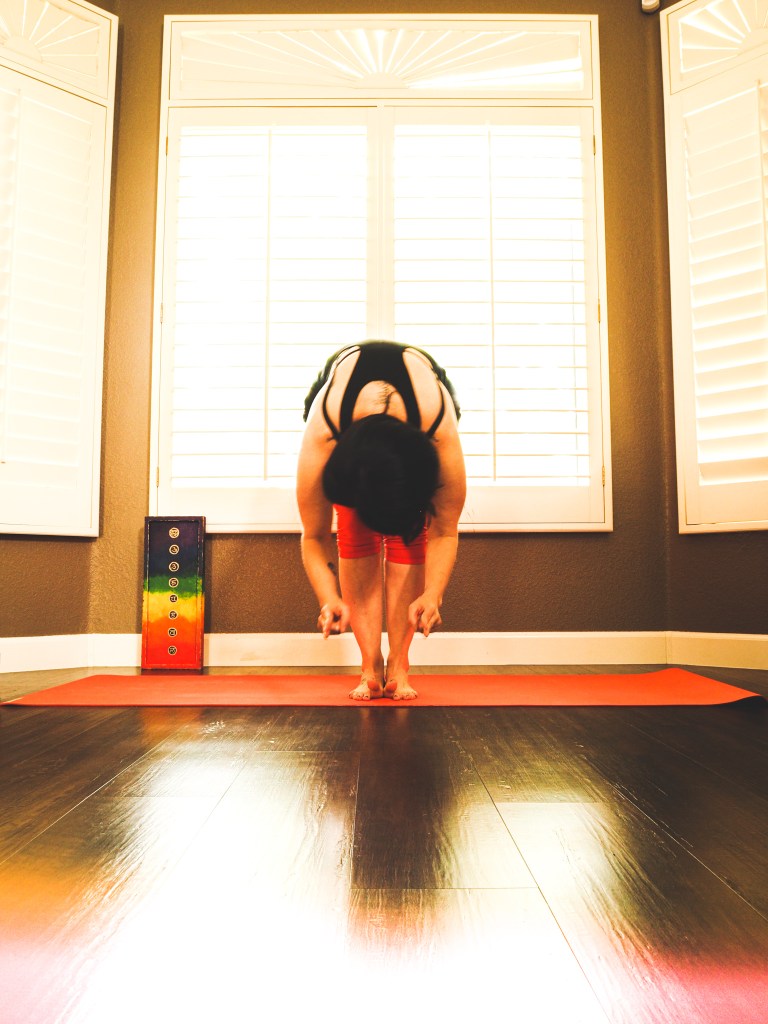
Image 8 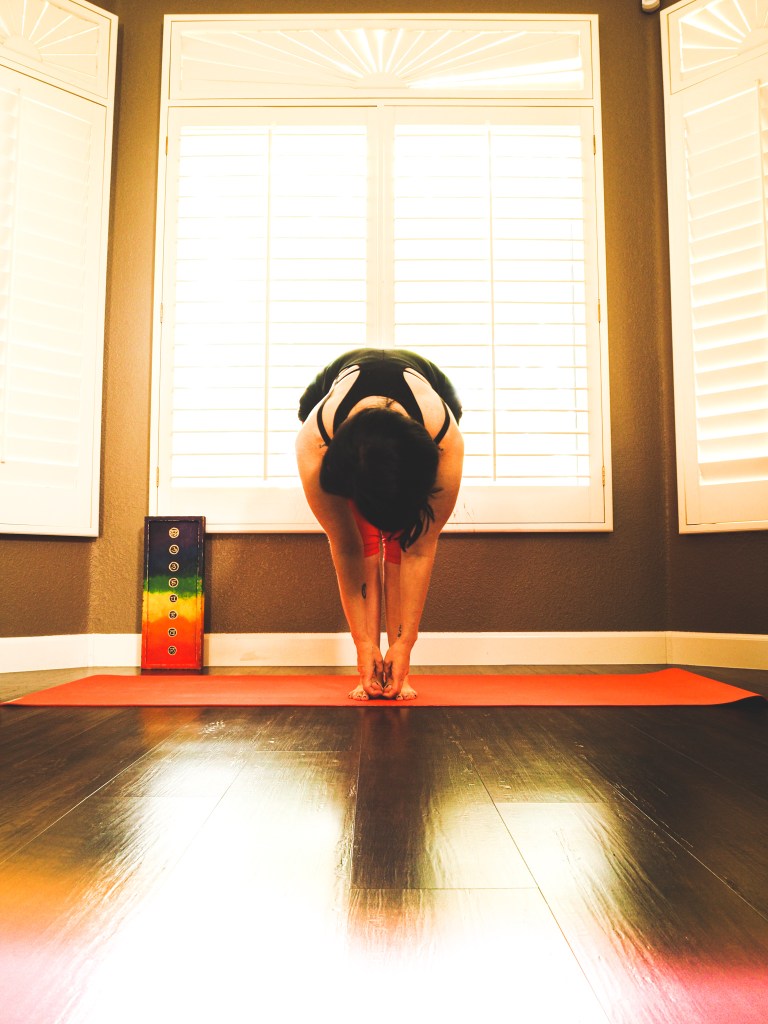
Image 9 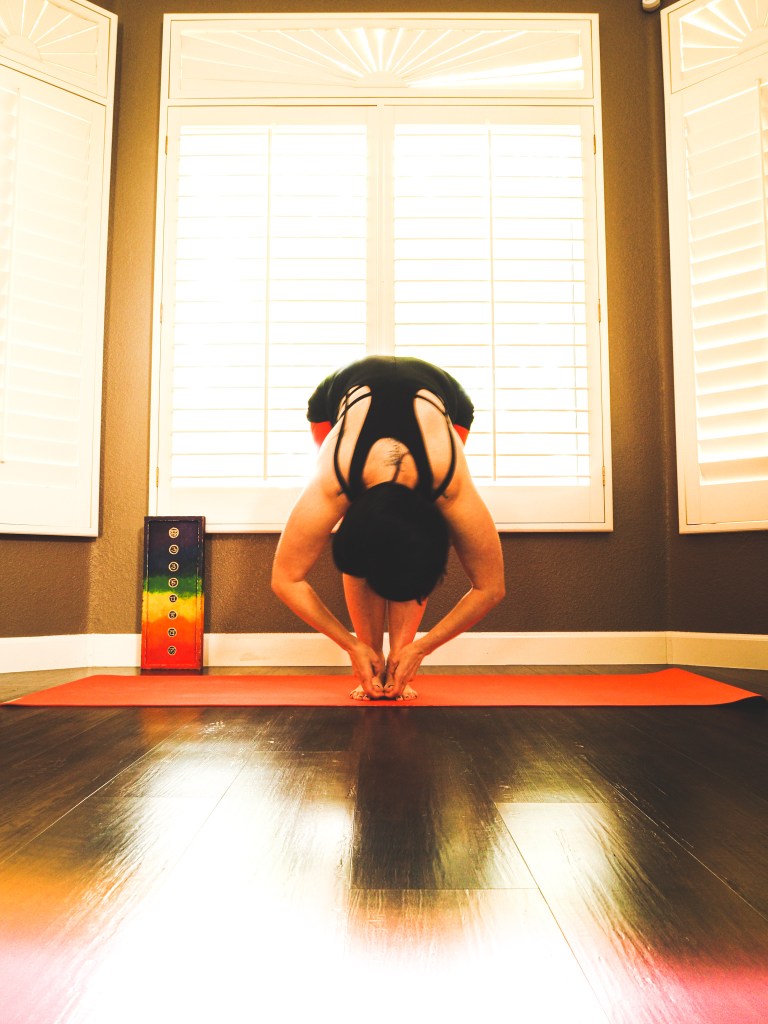
Image 10
- Variation 3: Gorilla Pose (Padahastasana)
- Bring the feet hip distance apart.
- Actively press the hips up toward the ceiling.
- Lift the front of the right foot keeping the heel on the mat (Image 11).
- Slide the right hand with the palm face up, under the right foot until the toes touch the wrist crease (Image 12).
- Plant the right foot back down on the hand (Image 13).
- Do the same with the left foot and hand.
- Take a deep inhale, lengthening the spine and straightening the arms (Image 14).
- As you exhale, bend the elbows and draw the torso toward the thighs (Image 15).
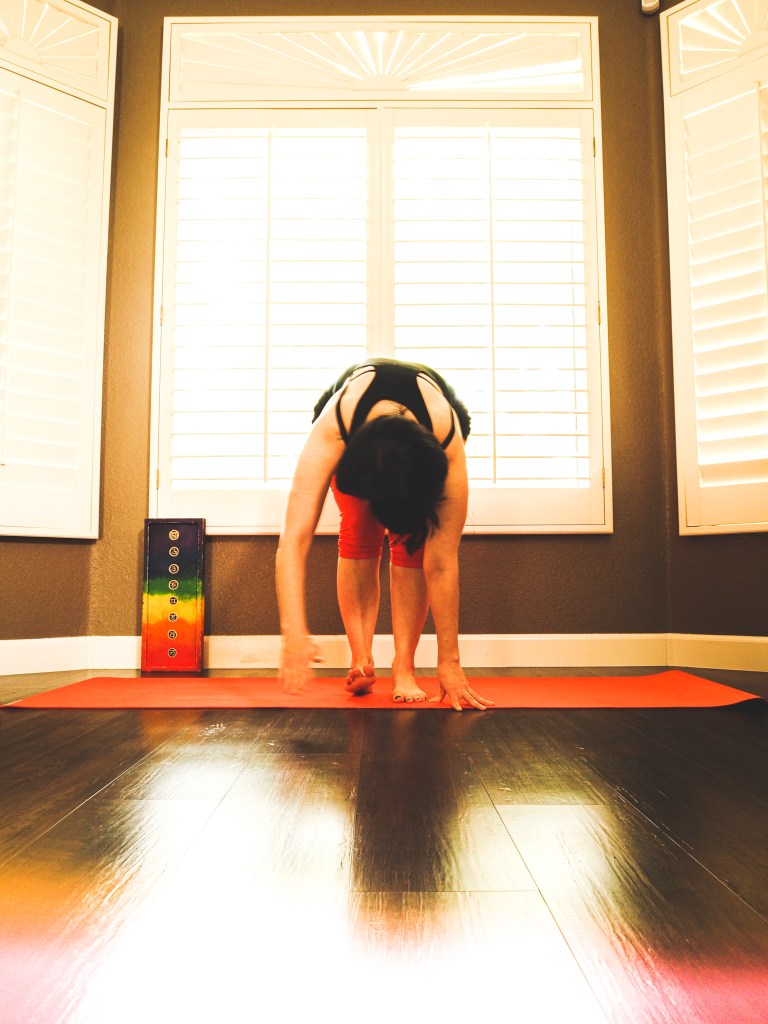
Image 11 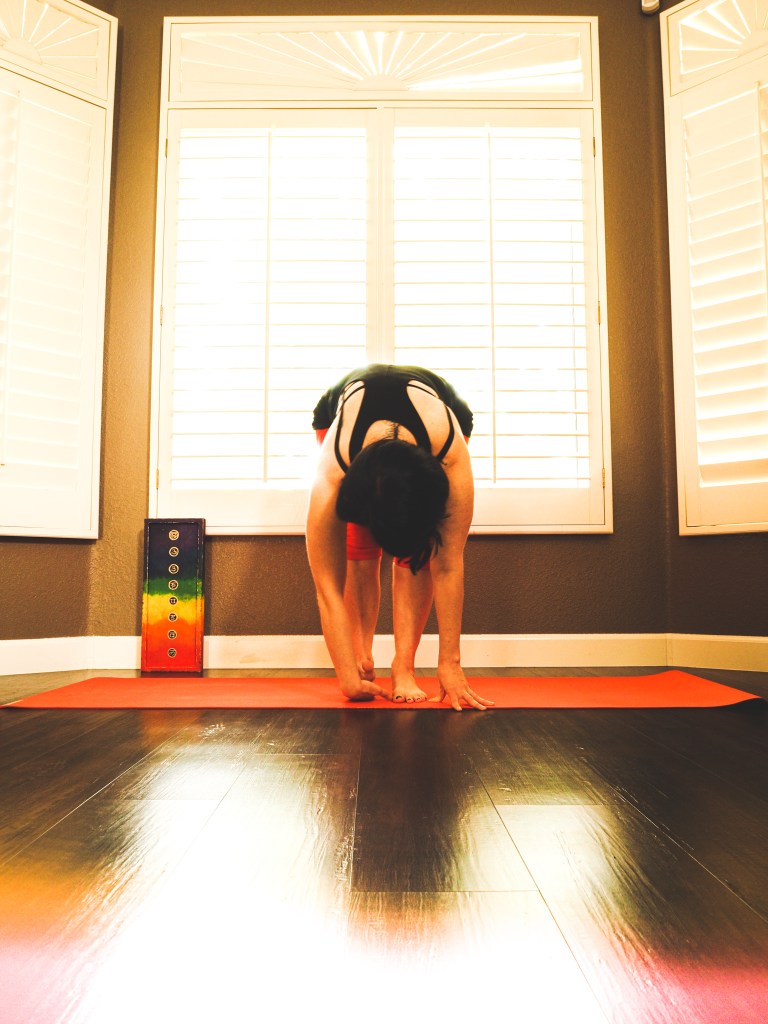
Image 12 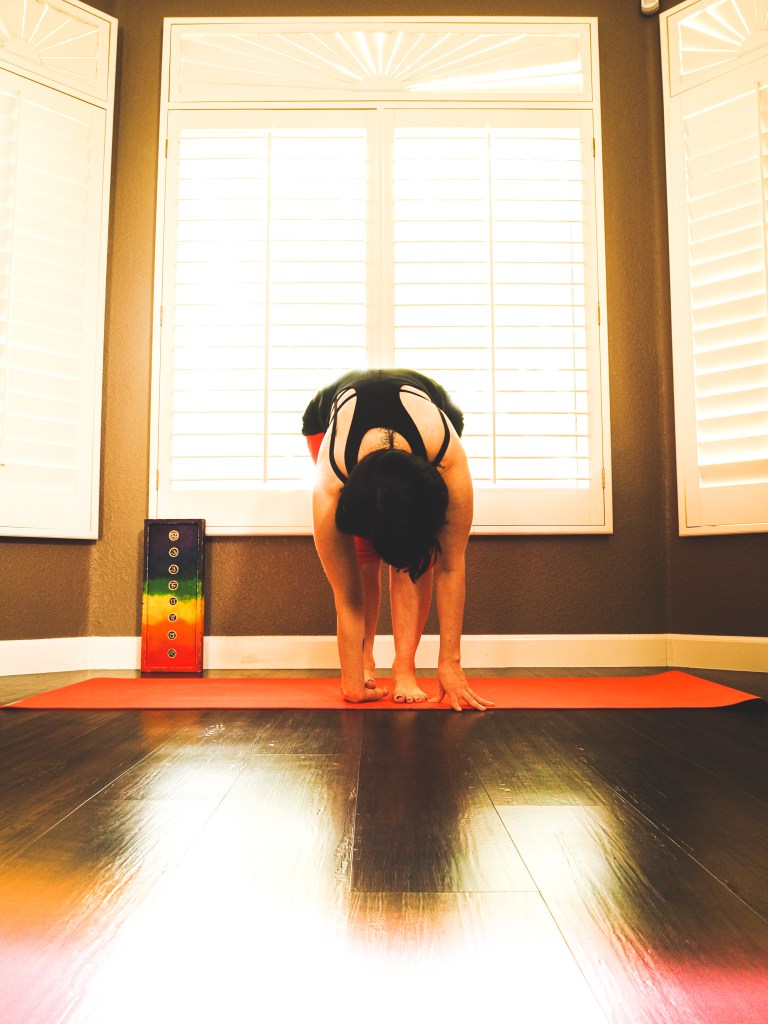
Image 13 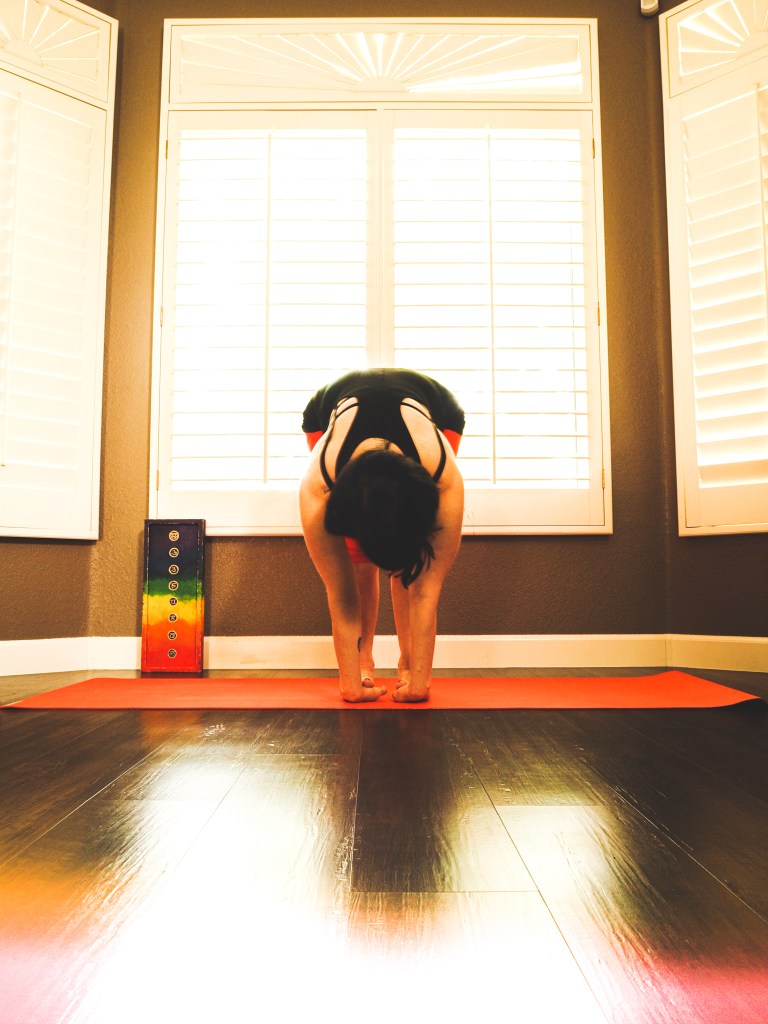
Image 14 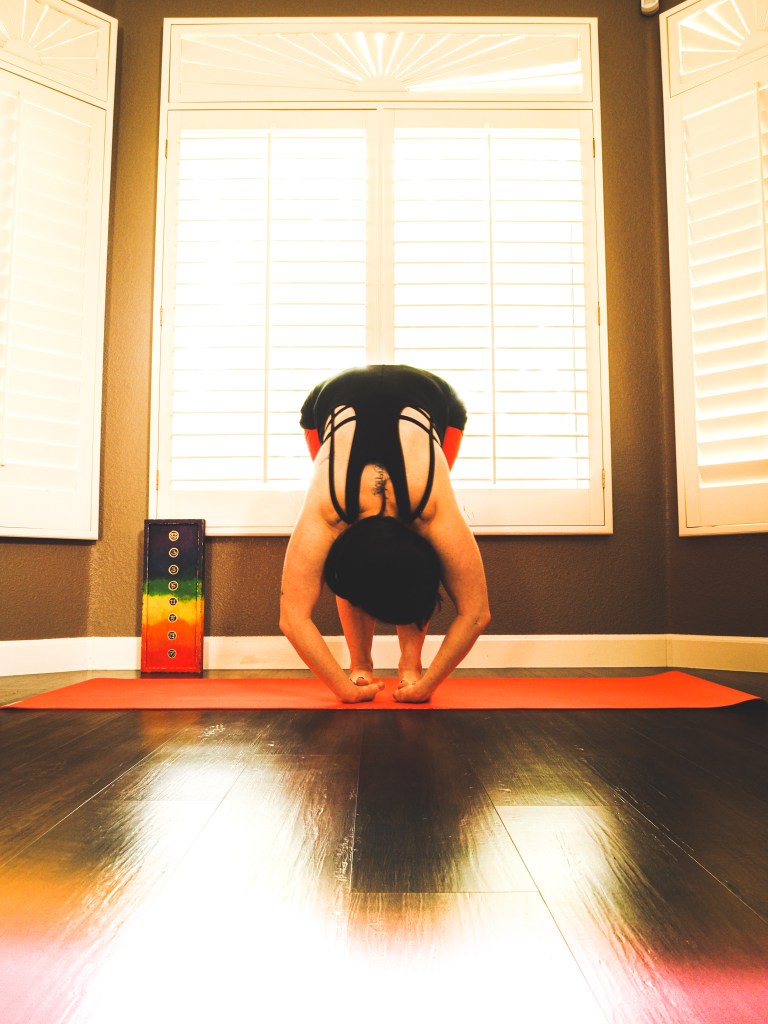
Image 15
- Be sure you are keeping the neck relaxed and head heavy regardless of which variation you are in.
- To come out of the poses, either release the elbows, unhook the toes or lift one foot at a time to release one hand at a time and plant the hands firmly down on the mat.
- Put a slight bend in the knees.
- Slowly roll up to standing as you stack vertebrae on top of vertebrae.
- Yogi Squat (Malasana)
- From Mountain Pose (Image 16), heel toe your feet out to the edges of the mat (Image 17 and 18).
- Bring the hands to heart center in Anjali Mudra or prayer hands.
- Try to keep the toes pointed to the front of your mat.
- Keeping the back nice and tall, begin to bend the knees and lower the seat down toward the earth (Image 19).
- Use your elbows to press the knees open and stretch the hips open a little farther.
- Stay here for three to five long, deep breaths.
- Place the hands firmly down onto the mat (Image 20).
- Begin to straighten the legs and press the hips back up toward the ceiling (Image 21).
- Heel toe the feet back to hip distance (Image 22 and 23).
- Place a slight bend in the knees and roll up to standing nice and slow, stacking vertebrae on top of vertebrae.
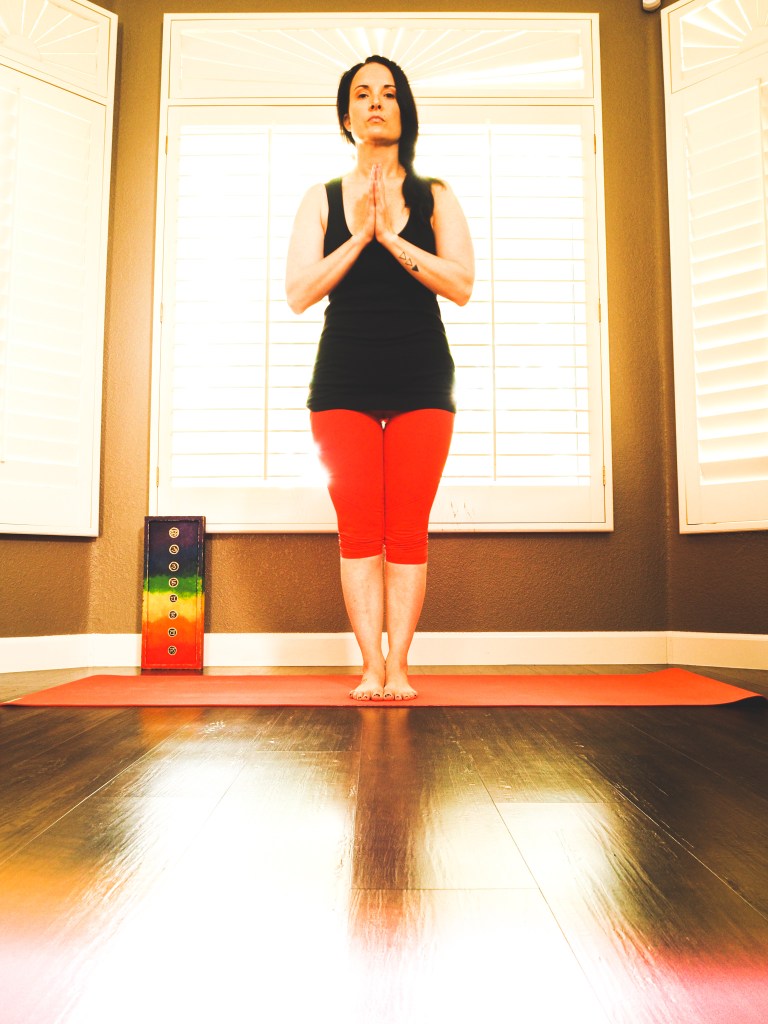
Image 16 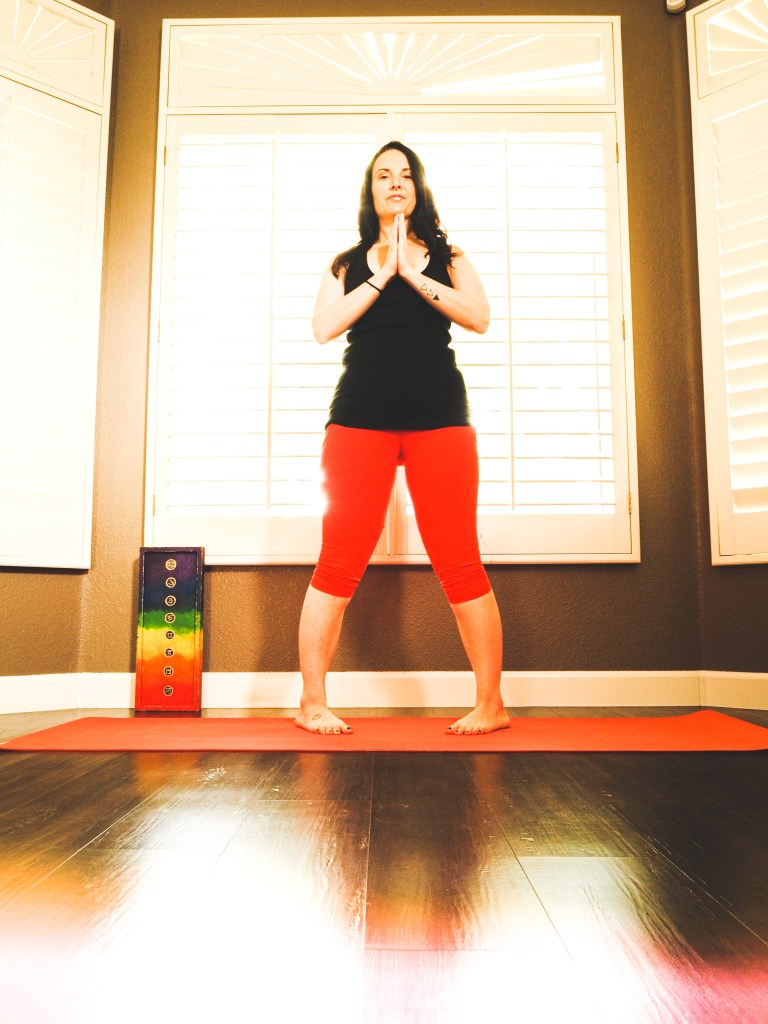
Image 17 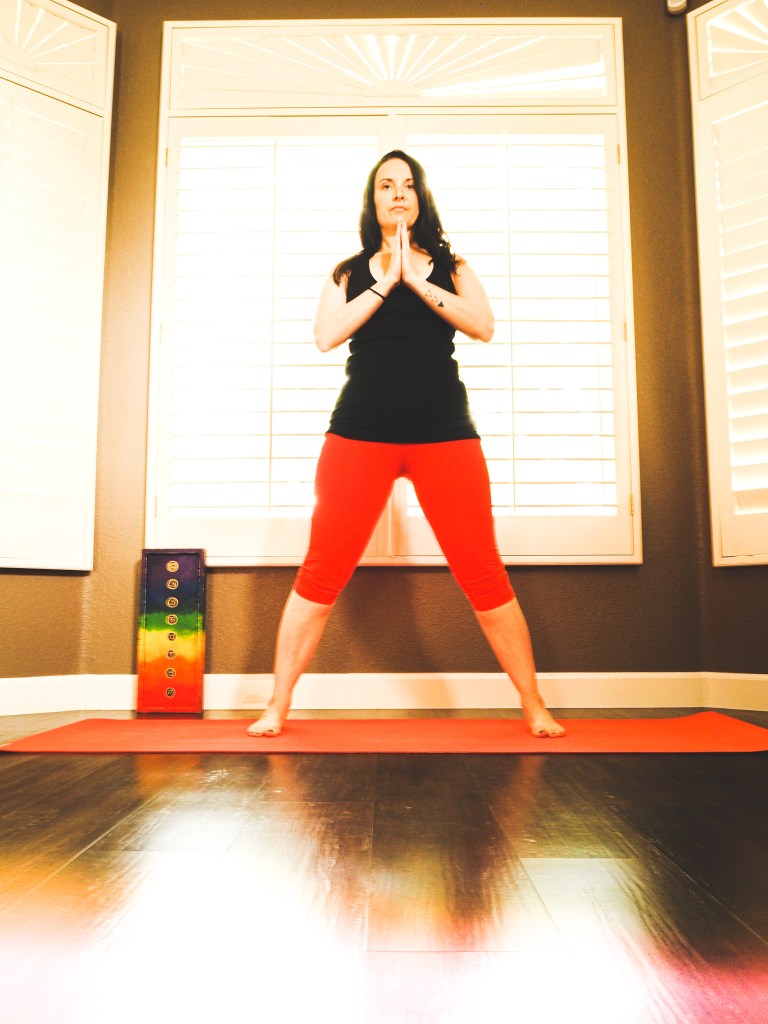
Image 18 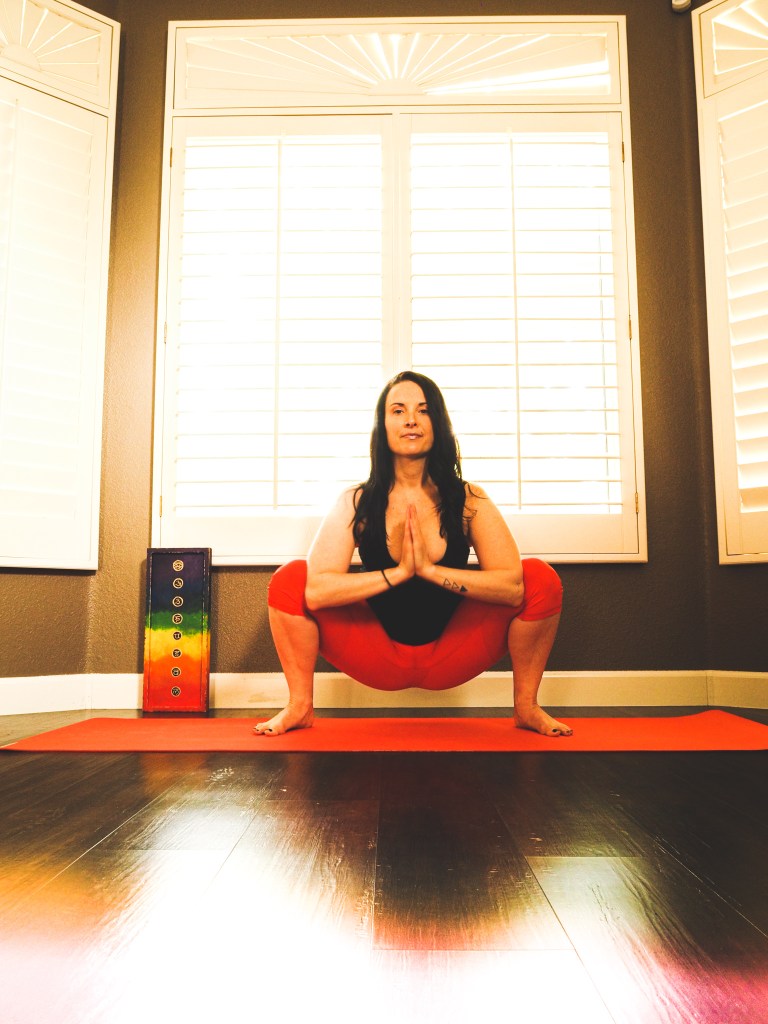
Image 19 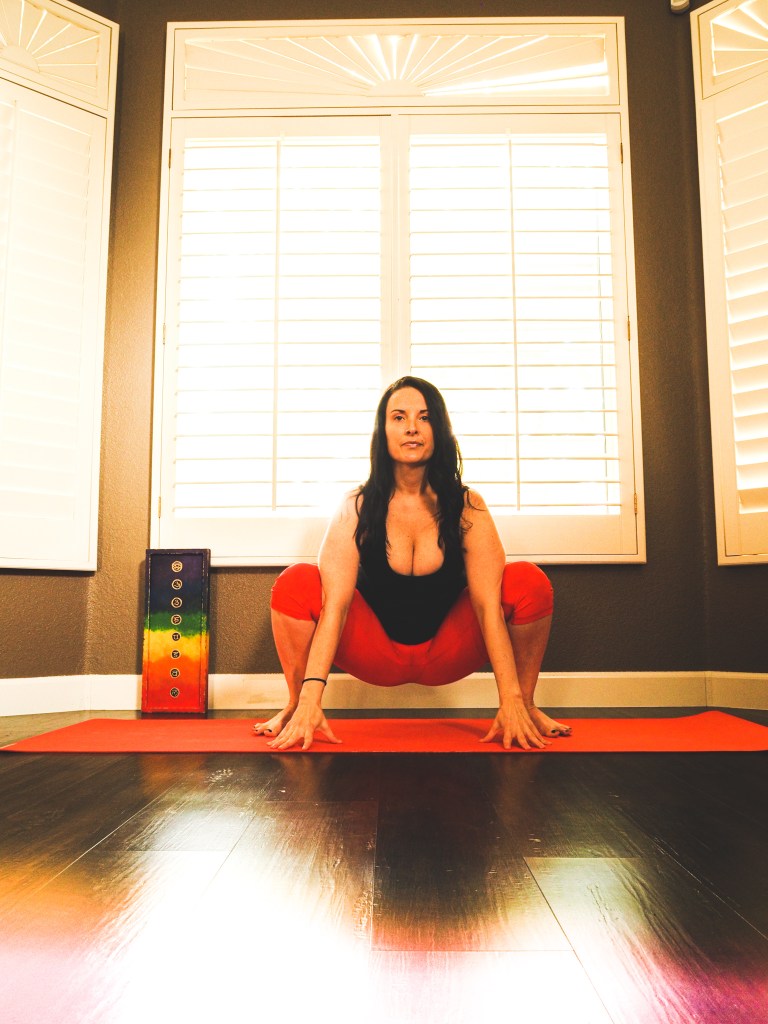
Image 20 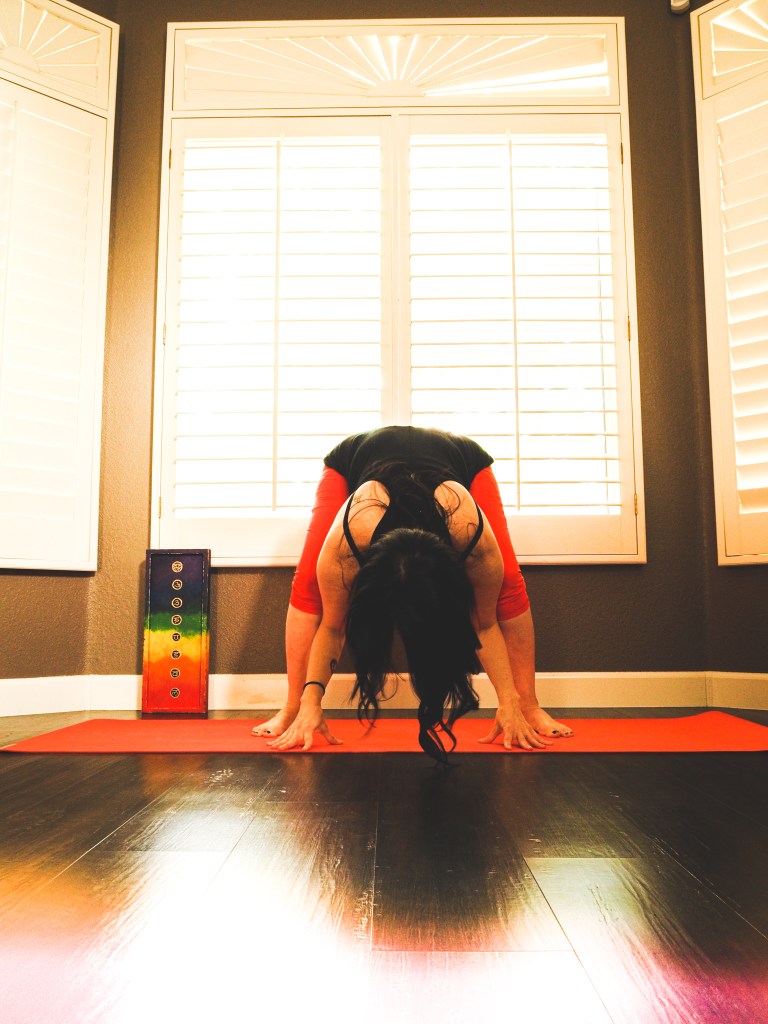
Image 21 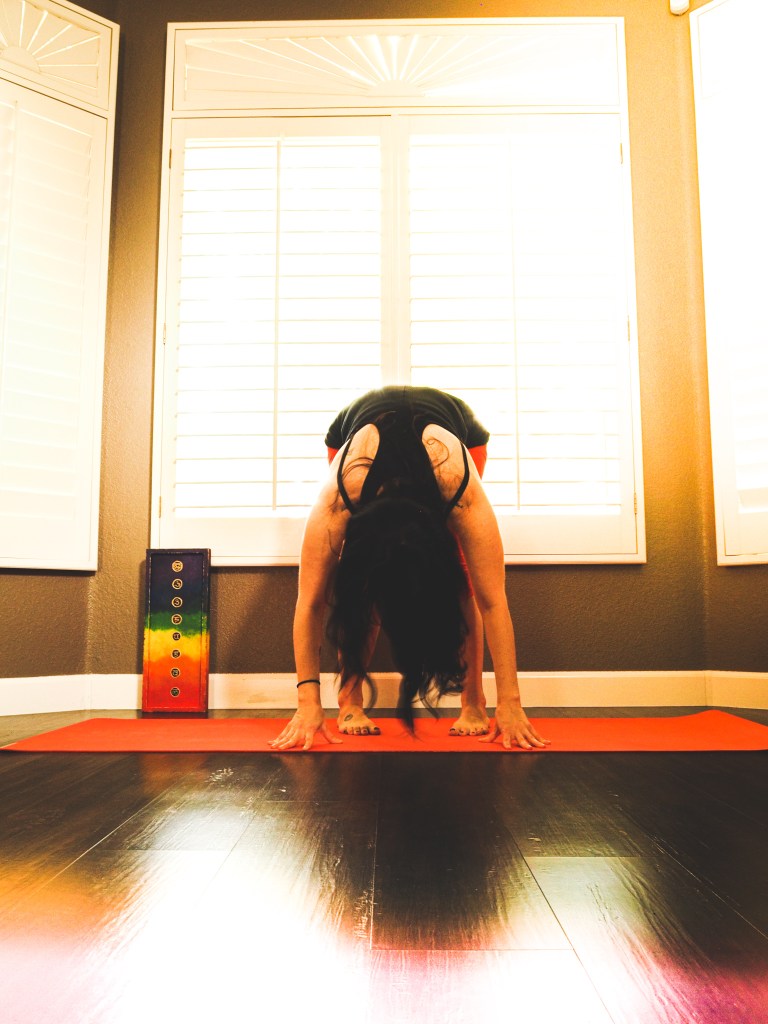
Image 22
Oils
- Passion (Doterra Blend)
- Frankincense
- Vetiver
- Sandalwood
- Myrrh
Crystals
- Red Jasper
- Smoky Quartz
- Garnet
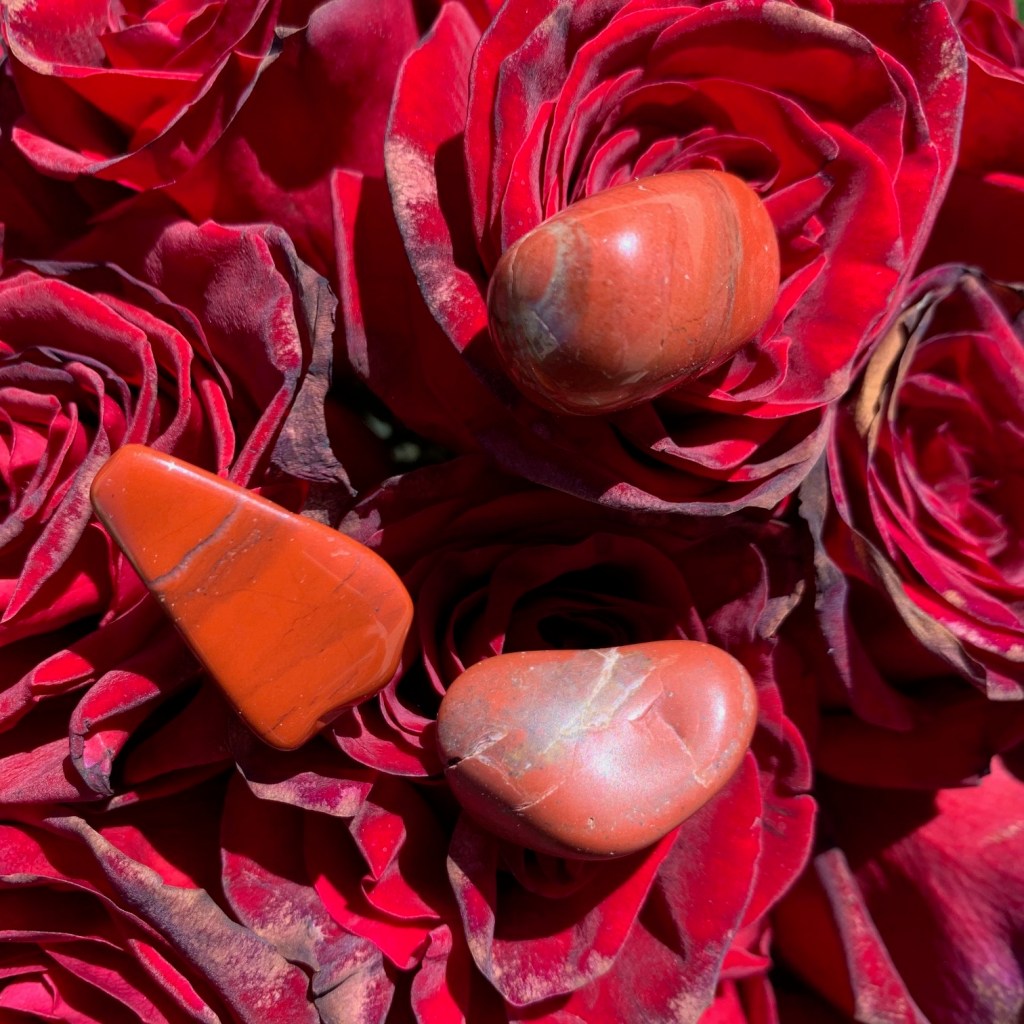
Red Jasper 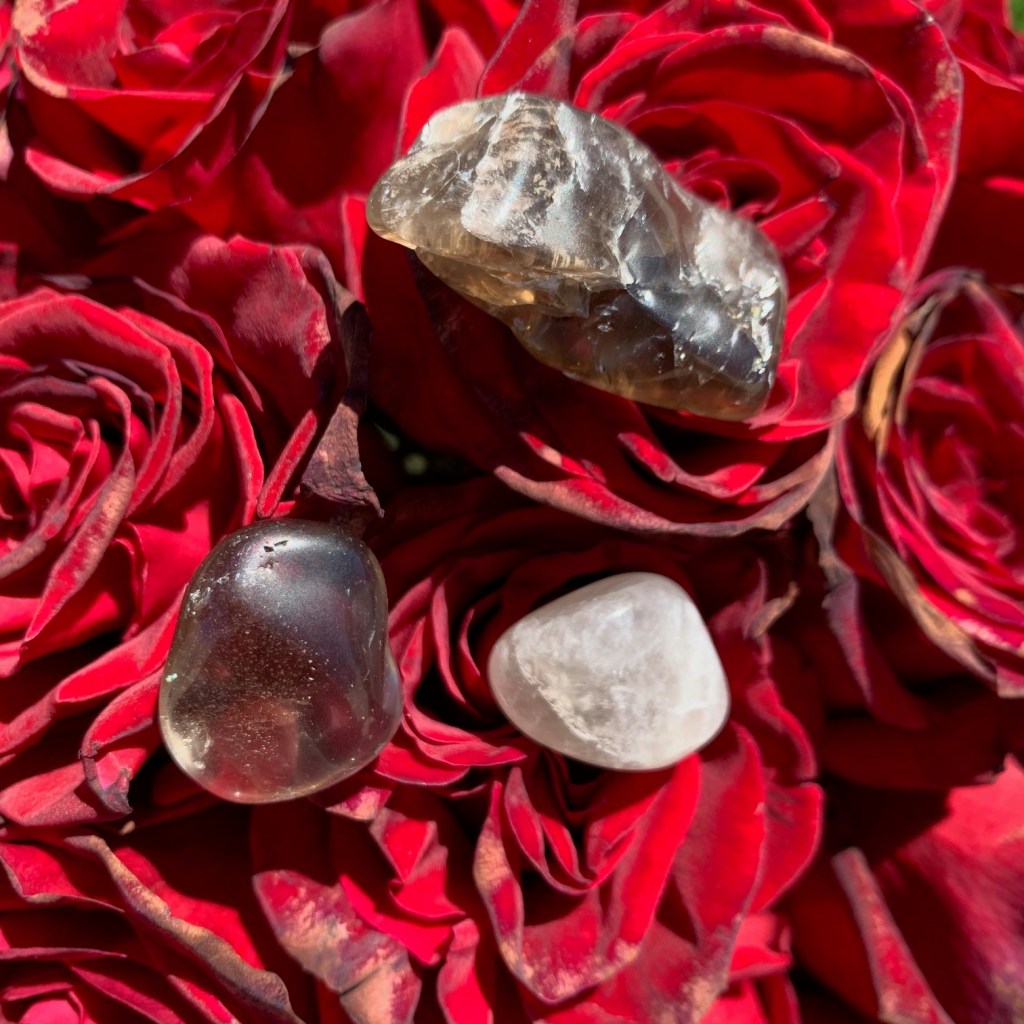
Smokey Quartz
 Yoga 2 Peaces